

Aaron Rodgers told reporters at Pittsburgh Steelers organized team activities on Wednesday that the 2026 season will be his last. "This is it," the 42-year-old quarterback said, offering no hedge.
The Announcement That Left No Room for Ambiguity
The confirmation at OTAs was notably direct by Rodgers' own standard. In June 2025, when asked about his future, he said he was "pretty sure" the 2025 season would be his last. That construction gave him room to revisit the question — and he did, ultimately signing a one-year return contract with Pittsburgh for up to $25 million, with $22 million guaranteed, nearly doubling the $13.65 million he earned in 2025.
This time, he explicitly distinguished the two statements. The 2026 declaration, he indicated, carries none of the earlier ambiguity.
The contract covers what will be Rodgers' 22nd year in the league. He enters it ranked fourth on the NFL's all-time passing touchdowns list with 527, a four-time league MVP, and a 10-time Pro Bowler.

Why Mike McCarthy Changed Rodgers' Calculus
Rodgers said he gave serious consideration to walking away from football entirely after longtime Steelers head coach Mike Tomlin stepped down following Pittsburgh's 30-6 playoff loss to the Houston Texans in January 2026. The prospect of starting fresh with an unfamiliar coaching staff, at 42, was enough to make retirement feel like the logical next step.
McCarthy's hiring reversed that. Rodgers and McCarthy spent 13 seasons together with the Green Bay Packers, winning a Super Bowl together after the 2010 season. Rodgers called the reunion a "full-circle aspect" that piqued his interest in returning.
The significance of that relationship is practical, not just sentimental. A quarterback integrating into a new offense in his final season benefits from a coach who already understands his tendencies, preferences, and limits. Rodgers acknowledged there will still be adjustment — McCarthy introduced some terminology variations while coaching Dak Prescott in Dallas — and joked he might be "stubborn about" a few things. But the core familiarity reduces the onboarding burden that typically weighs on late-career quarterbacks in new systems.
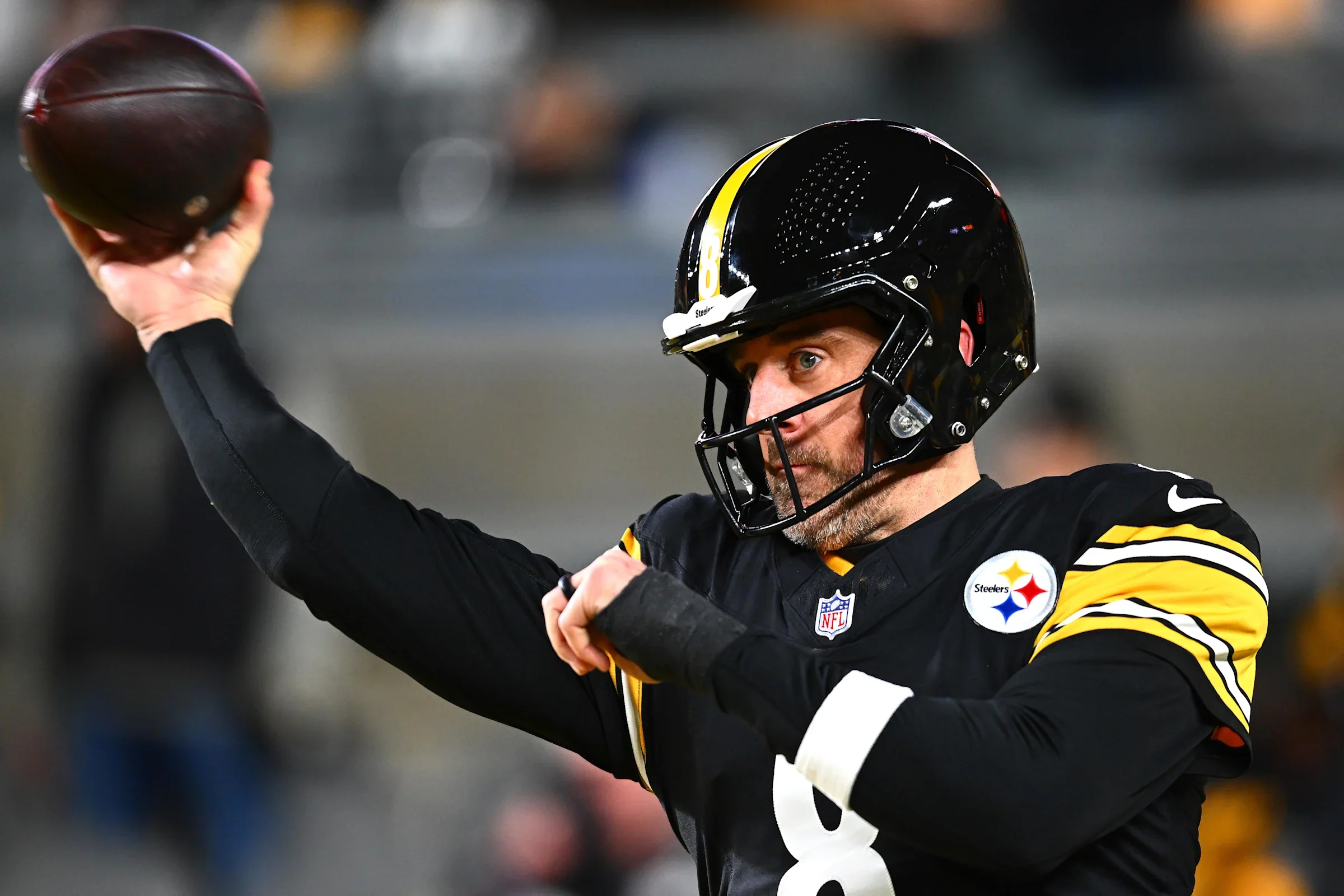
What Pittsburgh Gets in a Farewell Season
The Steelers' case for bringing Rodgers back rests on last season's results. Pittsburgh went 10-7, won the AFC North, and reached the playoffs behind Rodgers' 3,322 passing yards, 24 touchdowns, and 7 interceptions — efficient numbers for a 41-year-old quarterback operating in a run-oriented offense.
The organization has added around him heading into 2026. Pittsburgh acquired wide receiver Michael Pittman in a trade, drafted rookie receiver Germie Bernard, and added running back Rico Dowdle. The additions give Rodgers more variety in the passing game than he had last season, when the team's receiving depth was thin.
Whether the Steelers can convert a division title into a deeper playoff run — or whether a 42-year-old quarterback in his final season can sustain the efficiency he showed in 2025 — remains genuinely open. But the confirmation itself closes a different question that had been hovering over Pittsburgh's offseason since Tomlin's departure: Rodgers is the starter, this is his last season, and the organization is building the 2026 roster around that fixed point.

Spain's 2026 World Cup Squad: Zero Real Madrid Players
Spain's 2026 FIFA World Cup squad is officially confirmed. Luis de la Fuente's selection marks a historic first: not a single Real Madrid player is included in the 26-man roster.
![Manchester United's Bruno Fernandes has equalled the Premier League assist record with one game still to play [Phil Noble/Reuters]](/uploads/1779552726027-Man_Utd___s_Fernandes_trumps_Arsenal_to_Premier_League_player_of_season_award.webp)
Bruno Fernandes Wins PL Player of the Season 2025-26
Bruno Fernandes wins the Premier League Player of the Season award for 2025-26, equalling the single-season assists record of 20, set by Thierry Henry and Kevin De Bruyne.
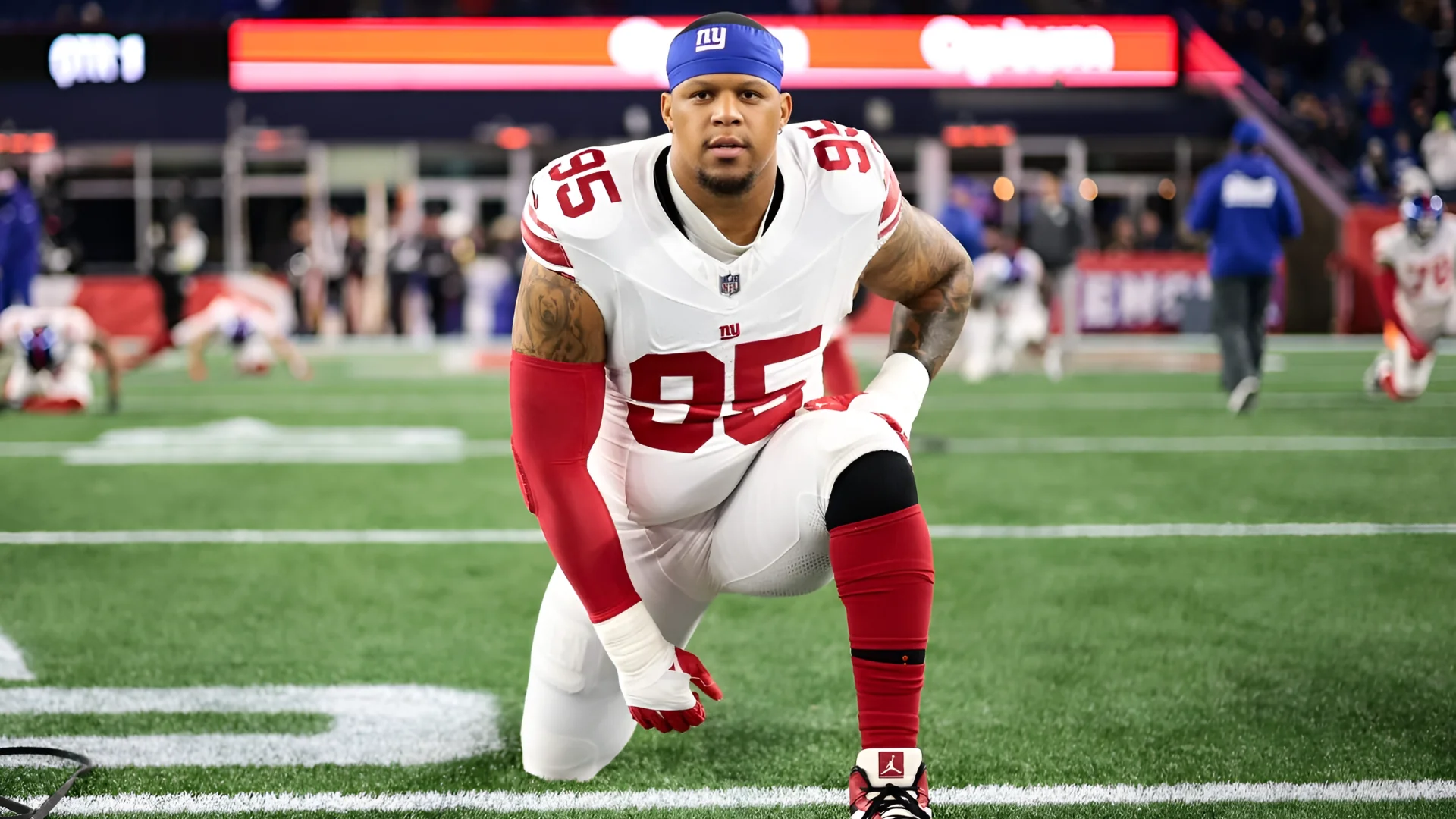
Giants DL Roy Robertson-Harris Tears Achilles at OTAs
Roy Robertson-Harris, the Giants' starting defensive end, tore his Achilles at OTA practice on May 22, leaving New York with a severely depleted defensive line heading into the 2026 season.
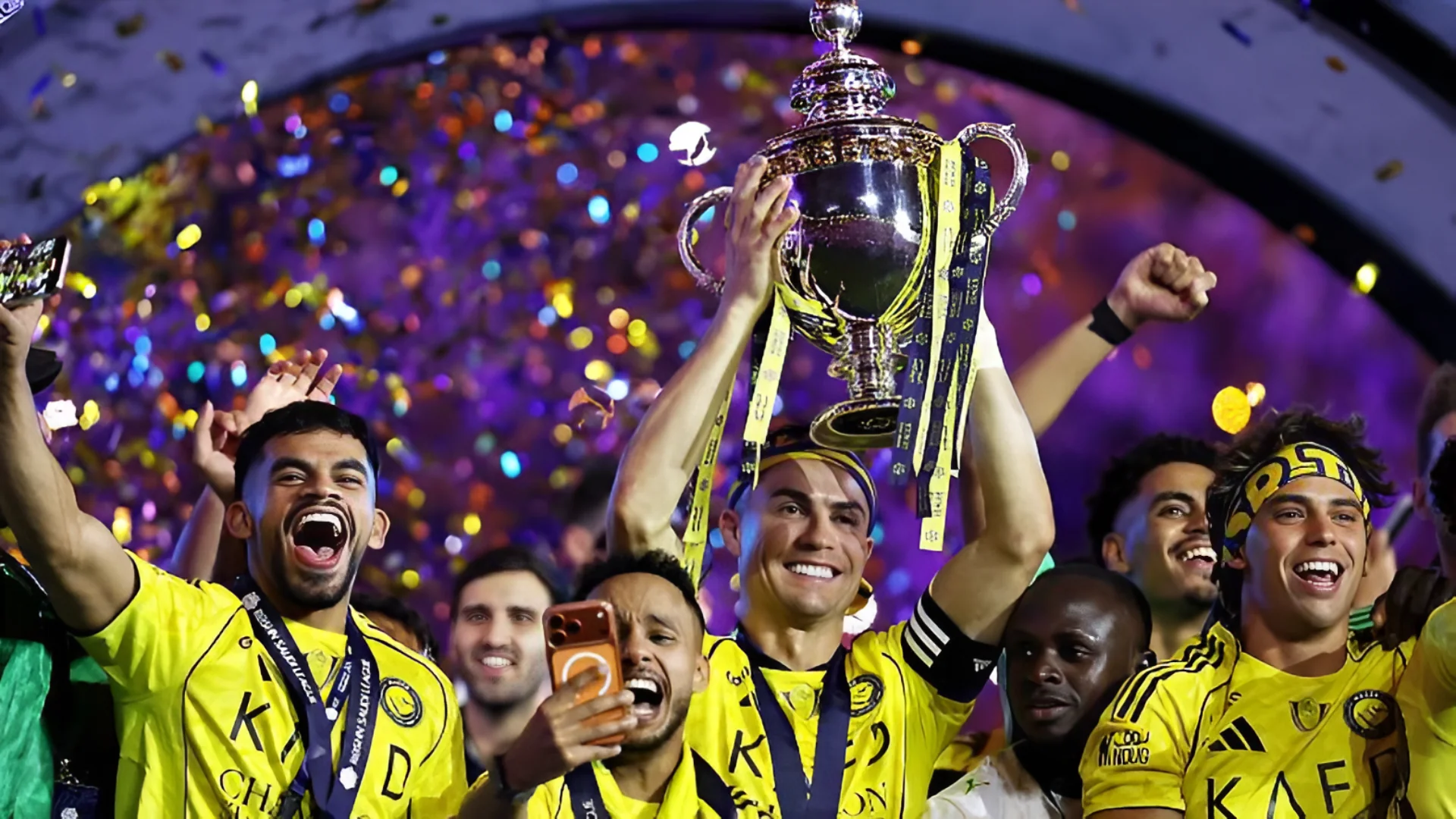
Ronaldo Wins First Saudi Pro League Title with Al Nassr
Cristiano Ronaldo scored twice, including a free-kick, as Al Nassr defeated Damac 4-1 on the season's final day to win the 2025–26 Saudi Pro League title — his first official honour in Saudi Arabia.
Comments (0)
Please sign in to join the discussion.
No comments yet.
Be the first to share your perspective on this topic.