
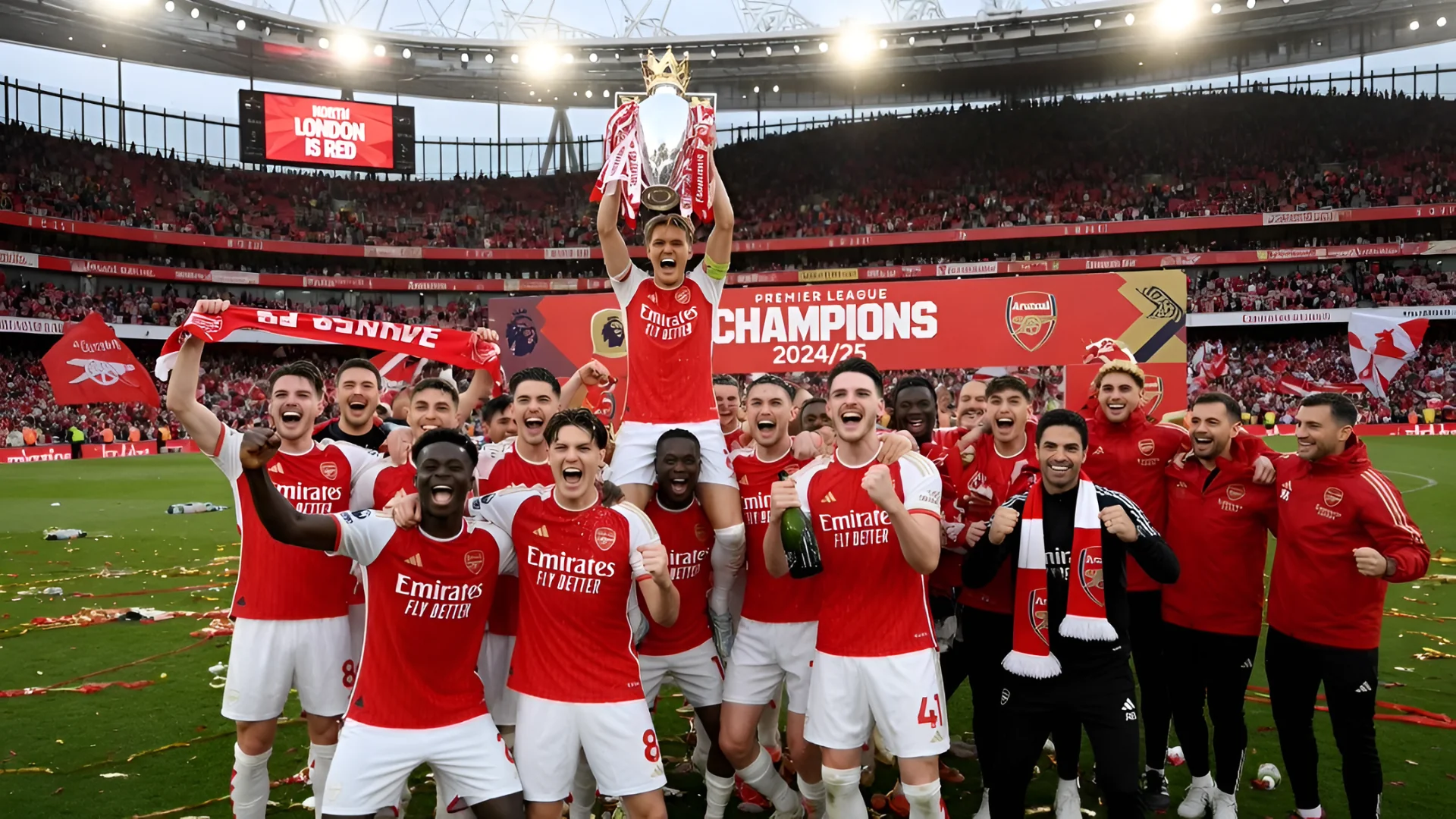
Arsenal clinched the 2025/26 Premier League title on the night of Tuesday, May 19, without kicking a ball — their championship confirmed when Manchester City could only draw 1-1 at Bournemouth, ending a 22-year drought stretching back to Arsene Wenger's unbeaten 2003/04 campaign.
How the Title Was Confirmed at Vitality Stadium
The deciding moment arrived at the Vitality Stadium on the south coast. Eli Junior Kroupi put Bournemouth ahead in the 38th minute, and although Erling Haaland equalized for City in the 90th minute, the single point was mathematically insufficient to keep the champions' defense alive. The draw meant Arsenal could not be caught at the top of the table with one round of matches remaining.
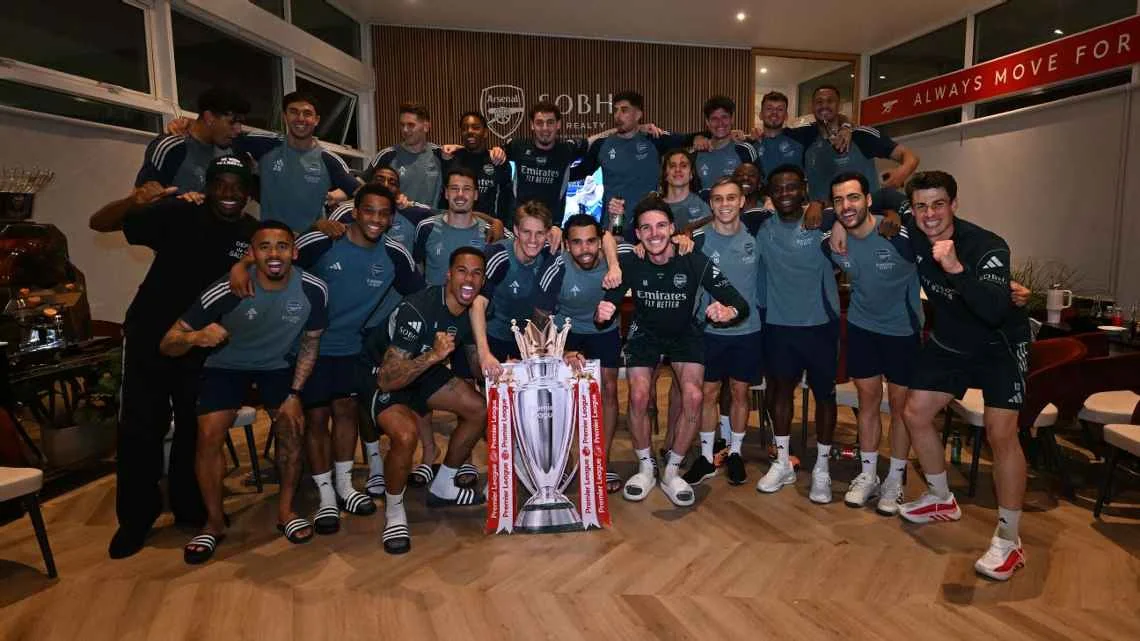
The entire Arsenal first-team squad and coaching staff had gathered at their London Colney training ground to watch the match together. At the final whistle, the celebrations began. Thousands of supporters converged on the Emirates Stadium and filled the streets of Islington well into the early hours of Wednesday morning, according to coverage of the celebrations. Thierry Henry, one of the club's most celebrated former players, publicly thanked Arteta's squad through Arsenal's official channels for ending what he called a long wait, as recorded on the club's social media reaction page. Pep Guardiola, speaking after his side's draw at Bournemouth, offered a gracious acknowledgment of Arsenal's achievement, according to his post-match comments published by Manchester City.
The Seven-Year Rebuild Arteta and Edu Designed From Day One
The title does not arrive as an accident. According to ESPN's detailed account of the internal strategy, when Mikel Arteta was appointed manager in December 2019, he and Technical Director Edu Gaspar presented the club's hierarchy with a five-phase roadmap — a staged plan to rebuild Arsenal's culture, squad, and competitive ceiling from the ground up.
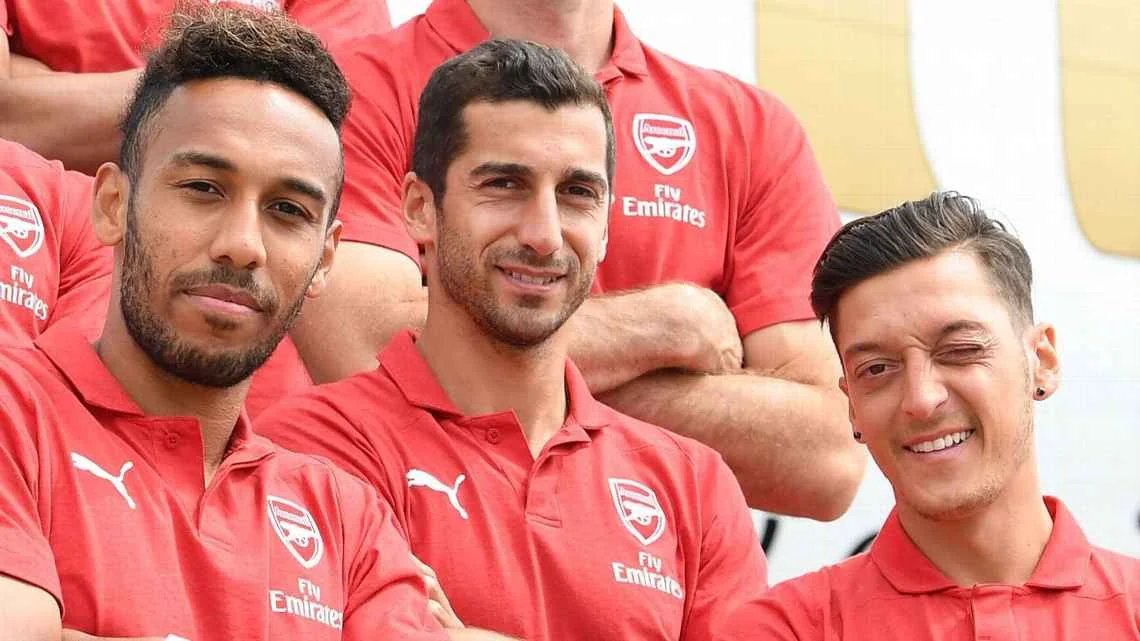
The first phase involved removing high-wage or disruptive senior players, a process that included the exits of Pierre-Emerick Aubameyang and Mesut Özil, among others. The second phase reoriented the squad around young, dynamic players, with Bukayo Saka and Martin Ødegaard becoming the spine of the team's identity. A third phase brought in experienced operators with winning pedigree to complement that youth core. The fourth phase targeted transformative additions — the club-record acquisition of Declan Rice being the clearest example. The fifth phase, described as sustained domination, was the target all previous phases were building toward.
What makes the roadmap more than a retrospective narrative is the evidence of sequential execution. Arsenal's back-to-back 8th-place finishes in 2019/20 and 2020/21 were the expected cost of phases one and two. A near-miss on Champions League football in 2021/22 and then three consecutive runner-up finishes from 2022/23 through 2024/25 reflected a team that had cleared the structural ceiling of mediocrity but had not yet broken through against the specific opponent holding the summit — Guardiola's City. The 2025/26 season, built on a described elite defensive foundation and set-piece efficiency, finally changed that arithmetic. The ceiling-breaking element was not a single signing but the cumulative effect of phases arriving in the right sequence.
What Comes Next for a Club Suddenly Facing Two Trophies at Once
The immediate schedule sets up a historical possibility unlike anything Arsenal supporters have seen in the modern era. The club will lift the Premier League trophy on Sunday, May 24, at Selhurst Park following their season-ending fixture against Crystal Palace. Six days later, on Saturday, May 30, Arsenal face Paris Saint-Germain in the Champions League Final in Budapest — a match that would, if won, deliver the club's first European Cup in their history.
Islington Council and Arsenal have confirmed plans for a trophy parade on Sunday, May 31, beginning at 2:00 PM. Should the club defeat PSG, that parade would mark not just a league title but a continental double — the kind of achievement that would require an entirely separate historical frame than ending a 22-year domestic drought.
The Champions League Final remains unresolved. What is already settled is that Arsenal used a methodical, multi-year process, a willingness to absorb painful early finishes, and a clear structural progression to reach a place no Arsenal team has reached since the season they went unbeaten through an entire Premier League campaign.
Spain's 2026 World Cup Squad: Zero Real Madrid Players
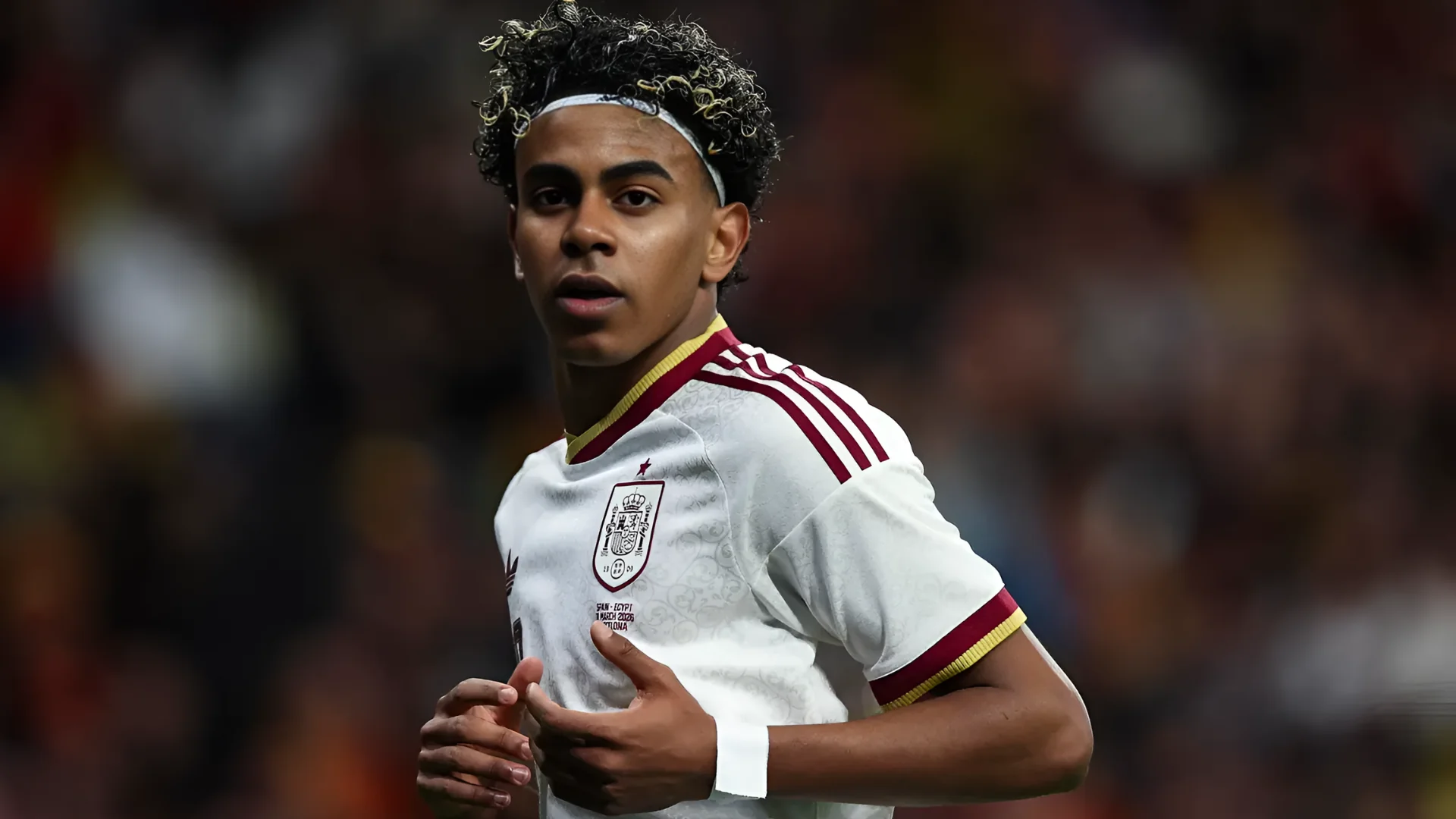
Spain's 2026 FIFA World Cup squad is officially confirmed. Luis de la Fuente's selection marks a historic first: not a single Real Madrid player is included in the 26-man roster.
![Manchester United's Bruno Fernandes has equalled the Premier League assist record with one game still to play [Phil Noble/Reuters]](/uploads/1779552726027-Man_Utd___s_Fernandes_trumps_Arsenal_to_Premier_League_player_of_season_award.webp)
Bruno Fernandes Wins PL Player of the Season 2025-26
Bruno Fernandes wins the Premier League Player of the Season award for 2025-26, equalling the single-season assists record of 20, set by Thierry Henry and Kevin De Bruyne.
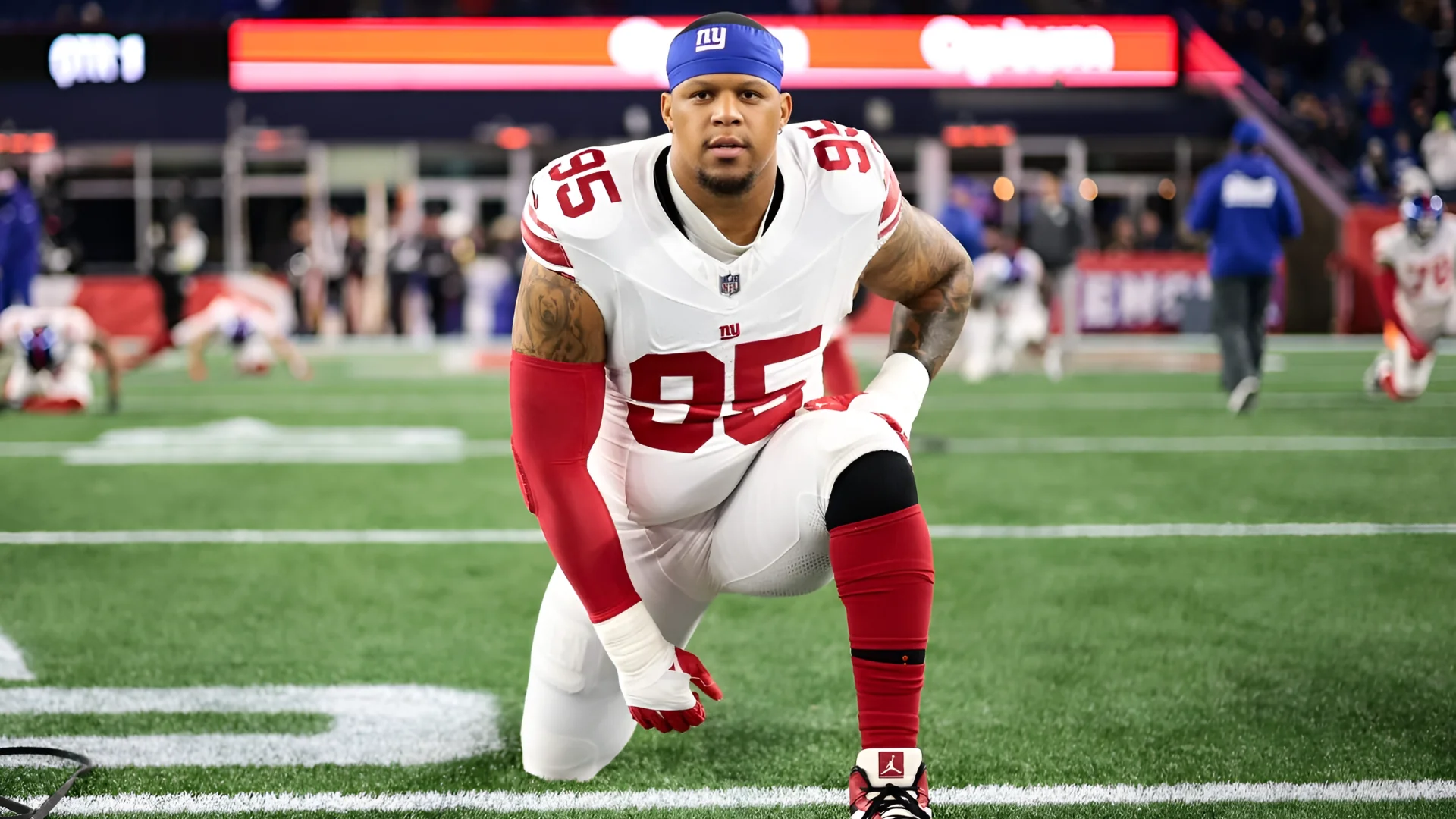
Giants DL Roy Robertson-Harris Tears Achilles at OTAs
Roy Robertson-Harris, the Giants' starting defensive end, tore his Achilles at OTA practice on May 22, leaving New York with a severely depleted defensive line heading into the 2026 season.
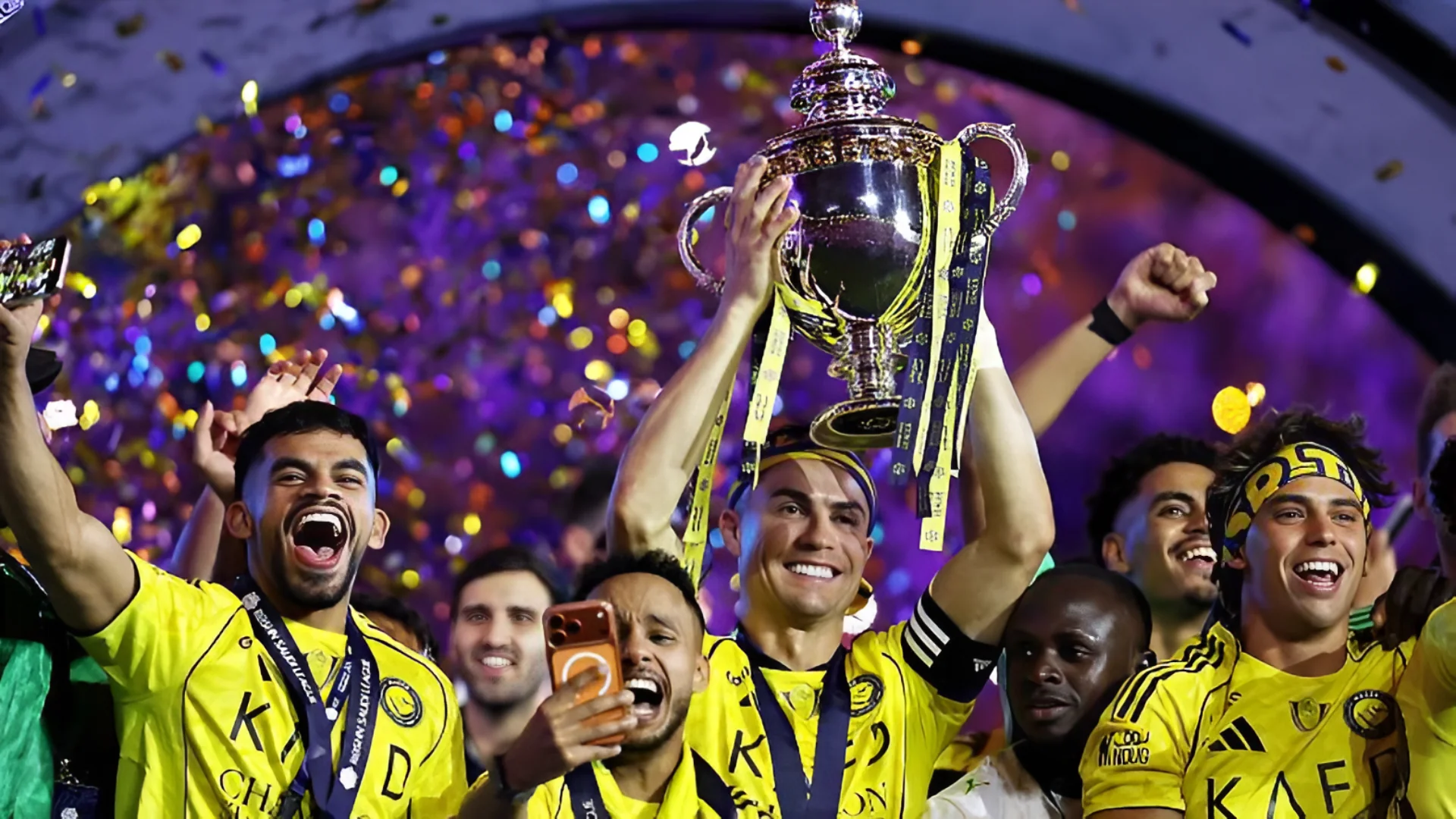
Ronaldo Wins First Saudi Pro League Title with Al Nassr
Cristiano Ronaldo scored twice, including a free-kick, as Al Nassr defeated Damac 4-1 on the season's final day to win the 2025–26 Saudi Pro League title — his first official honour in Saudi Arabia.
Comments (0)
Please sign in to join the discussion.
No comments yet.
Be the first to share your perspective on this topic.