
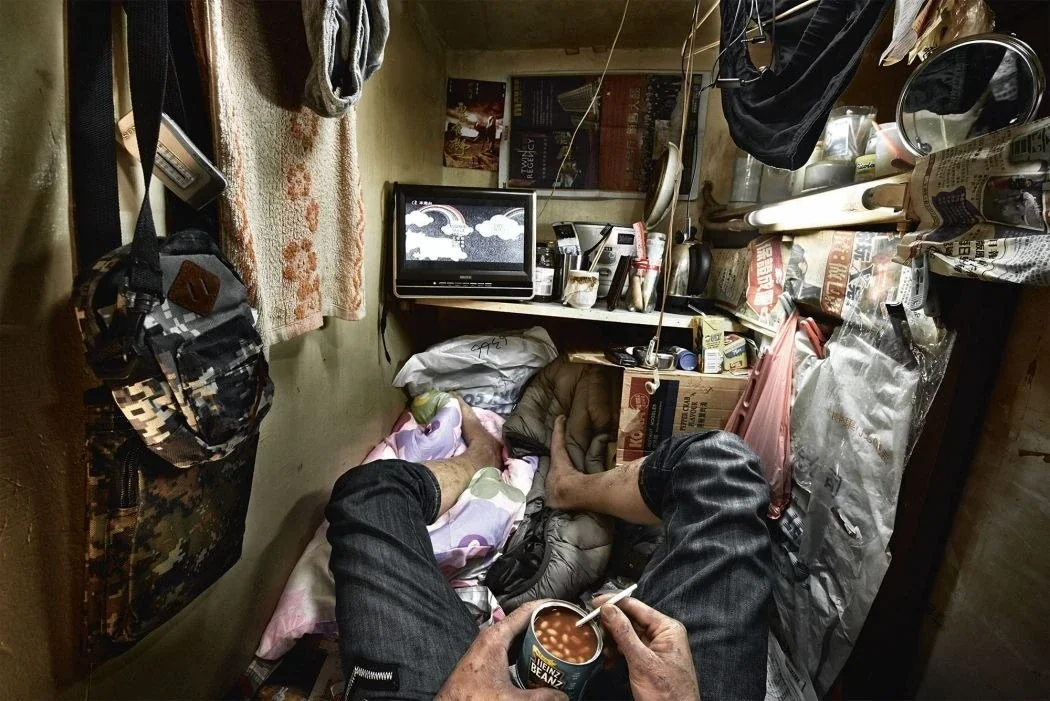
Hong Kong has held the title of the world's most expensive housing market for 14 straight years. For an estimated 200,000 to 220,000 residents, that statistic translates into something specific: a windowless cell of roughly 16 square feet, stacked among twenty or thirty identical units on a single floor.
How a single floor becomes twenty illegal coffin cells
A documentary following residents of these subdivided units shows how landlords convert an 800-square-foot apartment, or an entire floor, into 20 to 30 separate cells through illegal horizontal and vertical partitioning. The resulting spaces are small enough that some residents cannot stand up straight, fully stretch out, or change clothes without difficulty. Larger tenants struggle to close their doors at all.
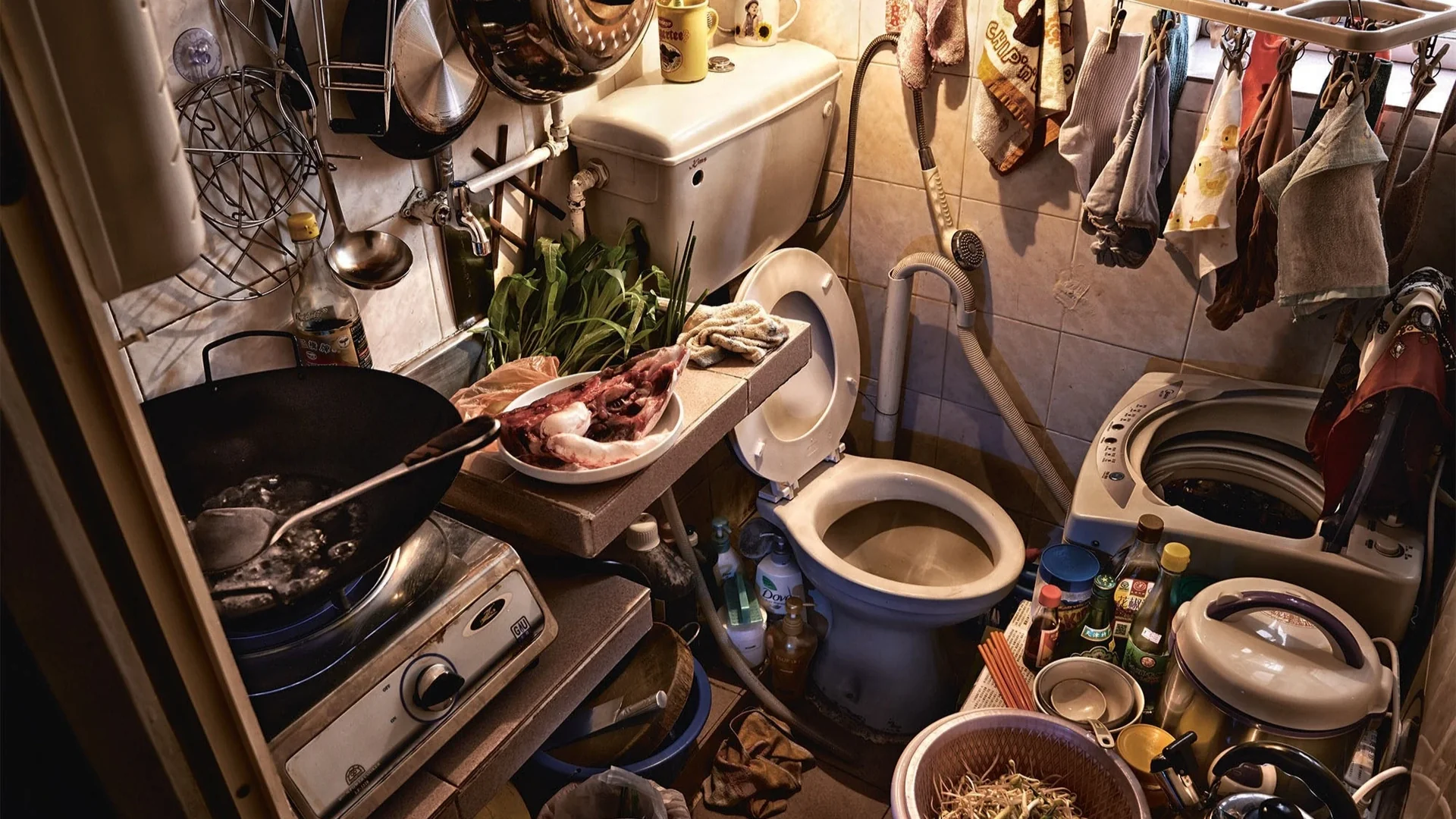
None of the units have a dedicated kitchen. Residents prepare meals and wash vegetables in shared bathrooms, often directly over toilets that lack lids, which the documentary connects to a risk of E. coli and salmonella exposure. The subdivisions are illegal, but the practice persists because demand for any indoor space, at any size, remains high enough to sustain it.
Why coffin homes carry health and fire risks beyond crowding
The lack of windows and poor ventilation push indoor air pollution in these units to roughly four times the level considered safe, according to the documentary, with high humidity and mold compounding the problem. Bed bug infestations are common enough that some residents sleep without mattresses, and cockroach presence is described as heavy throughout the buildings.
Electrical systems in these subdivided floors are also under strain. Resident Coco, who appears in the documentary, describes watching neighbors die in the cramped units without the deaths being immediately discovered: "I've seen three people pass away in these rooms." The bodies, she says, go unnoticed until decomposition makes their presence apparent. The same overloaded wiring that supports illegal subdivisions raises the risk of fire in spaces with almost no room to escape.
The income math that traps tenants in 16 square feet
The economics behind coffin homes are stark when set against the rest of Hong Kong's housing market. A standard one-bedroom apartment rents for around $4,000 a month or sells for more than $1 million, figures well beyond reach for the city's lowest earners. Wealth concentration compounds the gap: just 75 people are reported to hold 10% of Hong Kong's total fortune.

For tenants at the bottom of that scale, a coffin home is the only available option, and it is not cheap relative to income. A part-time cleaner earning about $650 a month pays $320 — nearly half of that income — for a 16-square-foot space. A metalworker earning $1,250 a month occupies a similarly tight cell. Government-subsidized public housing exists as an alternative, but the waitlist routinely runs past ten years, long enough that it offers little near-term relief. The Hong Kong government has set 2049 as its target year for resolving the broader housing shortage, a timeline that leaves an entire generation of coffin home residents waiting it out in place.
Why even death in Hong Kong offers no cheap escape
The documentary frames the scarcity of space as a problem that follows residents past their lifetimes. A permanent burial plot can cost up to $128,000. Public graves are cheaper but are rented for only six years, after which the remains must be exhumed, cremated, and placed in columbarium drawers roughly the size of a shoebox.
The comparison the documentary draws most pointedly is to Hong Kong's prisons. A standard cell allots roughly 80 square feet of personal space and includes a private toilet — five times the floor area of a coffin home, with sanitation that coffin home residents go without. Long-term residents interviewed in the film describe their outlook in correspondingly bleak terms: one, who has lived in a coffin unit for 18 years following past gambling debts, expects to still be there or worse within a decade; another expects not to live to see it. Their accounts suggest that for residents without savings or family support, the coffin home is not a temporary stop but the likely end point of a housing market that offers no cheaper alternative, in life or after it.

Intermittent Fasting: Benefits, Risks, and Who Should Avoid It
New research confirms intermittent fasting produces similar weight loss to calorie counting, with added psychological benefits. But for people with diabetes, eating disorders, or certain medical conditions, the risks are real.


Dua Lipa's Wedding Dress: The Chanel Gown Explained
Dua Lipa married Callum Turner in a Sicilian celebration anchored by a Chanel Haute Couture gown hand-embroidered with 480,000 crystals and completed by Chanel's historic Maisons d'Art ateliers over nearly 4,000 hours.


Best Prime Rib Restaurants Across the US
A state-by-state guide to the best prime rib restaurants in the US, covering cut size, preparation style, regional traditions, and when each spot is open.

Best BBQ Side Dishes for Summer 2026
A practical guide to the best summer barbecue side dishes, covering potato salads, coleslaw variations, pasta salads, elevated baked beans, corn preparations, and food safety tips for outdoor gatherings.
Comments (0)
Please sign in to join the discussion.
No comments yet.
Be the first to share your perspective on this topic.