
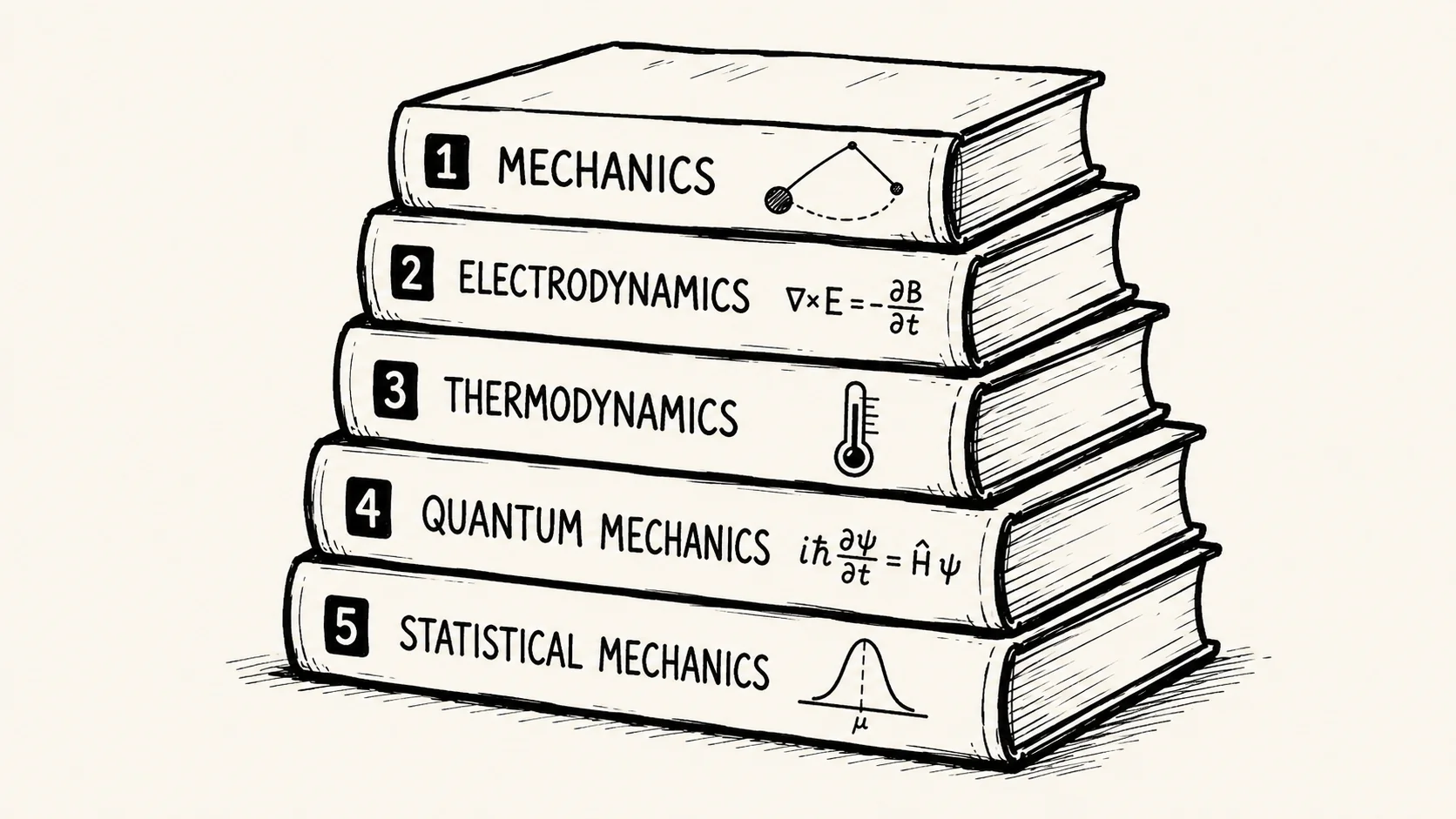
Susan Rigetti's guide, "So You Want to Learn Physics…", lays out a sequence of textbooks meant to take a reader with only high-school math through the equivalent of an undergraduate and graduate physics education. It has circulated online since 2015, and Rigetti says more than 600,000 people have used it — a figure that comes from her own account and isn't independently verified.
A Nine-Stage Curriculum Built to Mirror a Physics Degree
The guide's undergraduate track runs nine stages, each keyed to a specific textbook: mechanics and electrostatics from Young and Freedman's University Physics, waves and vibrations from French and King, classical mechanics from Taylor, electrodynamics from Griffiths, quantum mechanics from Griffiths again, and thermal physics from Schroeder, followed by electives in areas like cosmology and particle physics. Calculus is introduced alongside the first mechanics course rather than as a separate prerequisite, and later stages shift to more advanced math — linear algebra, complex analysis, partial differential equations — pulled from Zill's Advanced Engineering Mathematics.
The ordering isn't incidental. The guide's core premise is that physics has to be learned sequentially because each topic depends mathematically on the one before it, and Rigetti frames working through problem sets, not reading alone, as the actual mechanism of understanding.
What Graduate-Level Self-Study Adds, and Where the Guide Draws a Line
A second track, added in the guide's 2021 update, covers graduate-level material: mathematical methods from Arfken, Weber, and Harris; electrodynamics from Jackson, which Rigetti calls "the bible" of the field; quantum mechanics from Sakurai; general relativity from Carroll and Misner, Thorne, and Wheeler; and quantum field theory from Zee and Peskin and Schroeder.
Rigetti is explicit that completing the undergraduate sequence is meant to approximate a bachelor's degree and GRE readiness, and that the graduate core approximates a master's. She's equally explicit that a PhD is not reachable through self-study alone, since it requires years of supervised research and a dissertation — a distinction the guide draws itself rather than one imposed by outside critics. What the sequence offers, in other words, is coursework equivalence, not a credential.
Physics Bachelor's Degrees Have Declined for Four Straight Years
The guide's claims sit against a separate, independently sourced trend: AIP's data on degree completions shows U.S. institutions awarded 7,776 physics bachelor's degrees in 2023-24, down 6% from the year before and 16% below the all-time high of 9,296 set in 2019-20. That marks a fourth consecutive year of decline, following a 15-year run of growth that had more than doubled degree production from a 1999 low to 7,526 degrees by 2014. Graduate output has softened too: 1,945 physics PhDs were conferred in 2023-24, down 1.5% year over year, and AIP's departmental roster counts 723 institutions offering a physics bachelor's, a net loss of 34 departments over five years.
There's a partial counter-signal: junior-level physics major enrollment rose 7% over the two years before 2023-24, which AIP researchers suggest may point to the degree decline stabilizing. Still, no public dataset tracks how many people are pursuing self-study physics education, so it's not possible to say whether resources like Rigetti's guide are absorbing interest that would otherwise go toward a formal degree, or whether the two trends are unrelated. The guide's readership figure and the AIP's degree numbers describe two different populations, measured two different ways, and treating a rise in one as an explanation for a fall in the other isn't something the available data supports.
What the guide does offer, on its own terms, is a specific, testable claim: a defined reading list, in a defined order, that a self-directed learner can check their progress against — separate from, and not a replacement for, the institutional path the degree data describes.

Dior Beats Chanel for Taylor Swift's Wedding Gown
Jonathan Anderson designed custom Dior couture for Taylor Swift and Travis Kelce's wedding, a high-stakes celebrity commission LVMH needed as it competes with Chanel in a slow luxury market.

Savory, High-Protein Snacks Are Replacing Sugar Bars
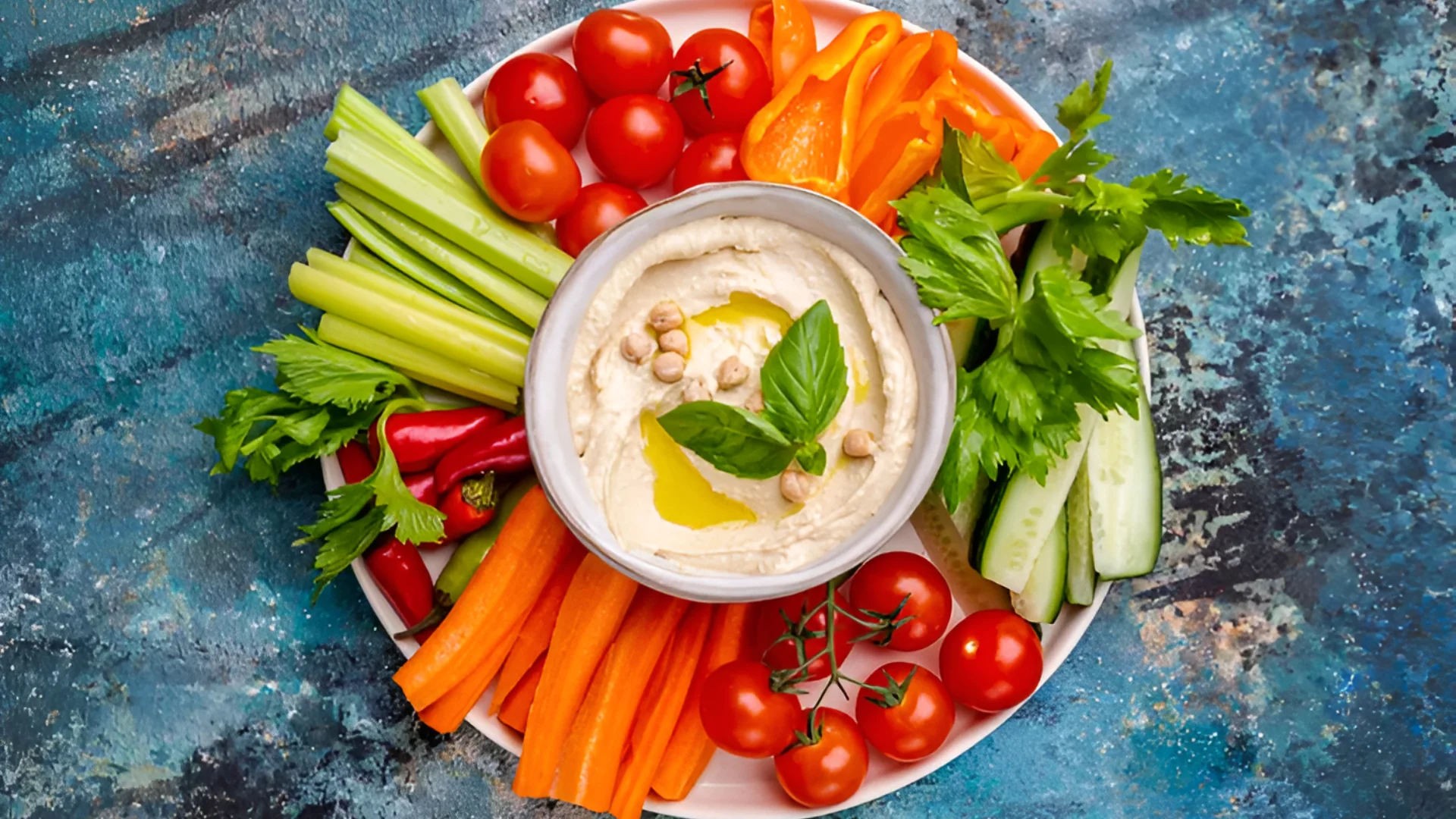
Sugary bars are losing ground to savory, protein-forward snacks as "functional indulgence" and whole-food ingredients reshape what health-conscious shoppers reach for.

Taylor Swift and Travis Kelce's Reported MSG Wedding: What the Sources Actually Show
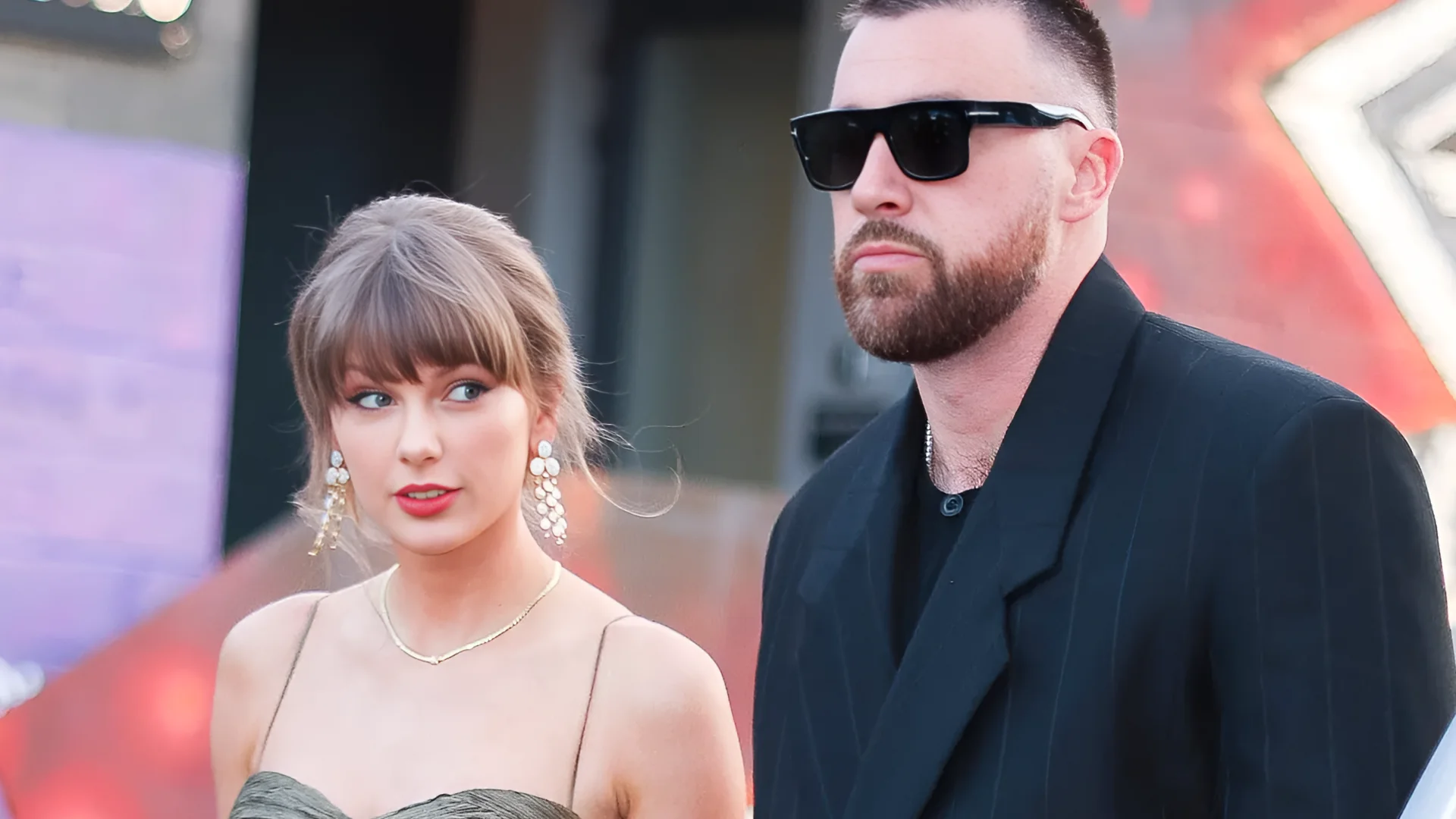
A breakdown of what permits, security documents, and sourced reporting reveal about the reported Taylor Swift and Travis Kelce wedding at Madison Square Garden on July 3, 2026.

Intermittent Fasting: Benefits, Risks, and Who Should Avoid It
New research confirms intermittent fasting produces similar weight loss to calorie counting, with added psychological benefits. But for people with diabetes, eating disorders, or certain medical conditions, the risks are real.
Comments (0)
Please sign in to join the discussion.
No comments yet.
Be the first to share your perspective on this topic.