

The Chargers' new offensive coordinator isn't fixing a broken quarterback. He's rebuilding the mechanics around a very good one — starting with how Herbert's feet hit the ground.
The Problem That Made a Change Necessary
The 2025 season left a clear record. Justin Herbert was sacked 54 times, second-most in the NFL, and absorbed a league-high 263 pressures behind an offensive line depleted by injury. He played the final month with a fractured left hand. Greg Roman's system had been built around Herbert's elite arm strength — his ability to extend broken plays and drive the ball downfield from collapsing pockets. That capacity kept the offense functional. It also put Herbert in the line of fire on nearly every meaningful snap.
The numbers from that season sit in sharper relief when placed next to the structural problem they represent: Herbert was being asked to hold the ball until something opened downfield, which meant he was still in the pocket when edge rushers arrived. The scheme treated arm strength as a pressure valve. McDaniel's job, arriving from Miami, is to remove the need for that valve entirely.
How McDaniel Is Rebuilding the Drop-Back
McDaniel's solution is primarily mechanical. The philosophy he installed in Miami — and is now bringing to Herbert — centers on getting the ball out before edge rushers can close, by syncing the quarterback's footwork precisely to the timing of route breaks. If the receiver cuts at three steps, the quarterback's feet need to match that moment exactly, so the throw is already leaving the hand when the window opens.
Herbert had operated with variable footwork in previous seasons, sometimes parallel-footed, sometimes staggered. Under the new system, those variations are being replaced with a unified drop-back pattern in which each step corresponds to a specific route depth. The skill being developed is anticipation — throwing to a spot before the receiver has turned — rather than reaction. "He understands how defenses are ever-changing," Herbert said of McDaniel, "and it's his goal to be able to take away the pass rush. If you're getting the ball out quickly, there's really nothing they can do about it."
McDaniel has been careful not to frame this as remediation. "It wasn't like I was trying to fix something that was like, 'This is broke,'" he said. "We're looking at a player that is very, very talented and top tier in achievement his whole career... I'm trying to find the margins." That framing matters: the adjustment being made is not correcting a flaw in Herbert's mechanics, but recalibrating a highly functional system toward a different kind of output — shorter decision windows, higher efficiency, less physical cost.
The downstream effect on Herbert's habits is significant. His previous system rewarded holding the ball — trusting arm strength to generate completions from imperfect situations. That habit is now being actively unlearned, traded for rhythmic timing where the release is triggered by footwork pattern, not by downfield read resolution.
A Lighter Spring Built Around One Specific Goal
The offseason schedule reflected how seriously the coaching staff took the mechanical transition. During OTAs in April and May, the Chargers restricted Herbert's throwing volume — a deliberate departure from his historical routine of throwing hundreds of passes daily. On dedicated footwork days, Herbert worked entirely without a football, or used a weighted mechanical ball, ingraining movement patterns before layering in live throws. Backup quarterbacks Trey Lance and DJ Uiagalelei ran the bulk of 7-on-7 team reps during that period.
Jim Harbaugh explained the reasoning simply: "Justin throwing, in mid-season form, in April and May and June has been the way we've done it... We're going to try it a different way this year... I think it's smarter." The logic is that footwork patternization — the internal clock that tells the body where to be before the mind consciously processes a read — needs to be encoded through repetition at lower volume, not overwritten by high-volume conditioning throws.
By mandatory minicamp in mid-June, Harbaugh announced Herbert had completed the initial patternization phase and was now throwing daily as part of a structured ramp-up toward training camp. The progression from footwork-only drills to full throws tracks as a planned sequence, not an injury management response. The following timeline shows how that sequence unfolded across the spring.
What Remains Unproven
The mechanical work completed this spring addresses a real structural problem. Whether it resolves the problem in live games is a separate question. Footwork synchronization in controlled OTA settings — against known routes, familiar receivers, no defensive pressure — is a different environment than a third-and-eight in the fourth quarter against a defense running a coverage shell Herbert hasn't seen before.
The translation risk is specific: anticipation throws require the quarterback to commit to a spot before the receiver has separated. In practice, that commitment is relatively low-cost. In games, a well-disguised coverage, a linebacker cheating into a throwing lane, or a receiver running his route a step slow can turn the same throw into an interception. Herbert's arm strength and release velocity are not the variables under scrutiny. His internal clock — now being rebuilt through McDaniel's timing system — is the variable that will determine whether the 2025 punishment figures drop, or whether they represent a ceiling the new scheme only partially lifts.
McDaniel's framing of the project as "finding the margins" is accurate and appropriately restrained. Herbert is not being rebuilt because he was broken. He is being refined because the system he was operating in extracted an unsustainable physical cost. Whether the new system can deliver the efficiency gains McDaniel is targeting — and whether Herbert's receivers can consistently execute the precise route timing that anticipation throwing demands — will not be answered until regular-season defenses are on the field.
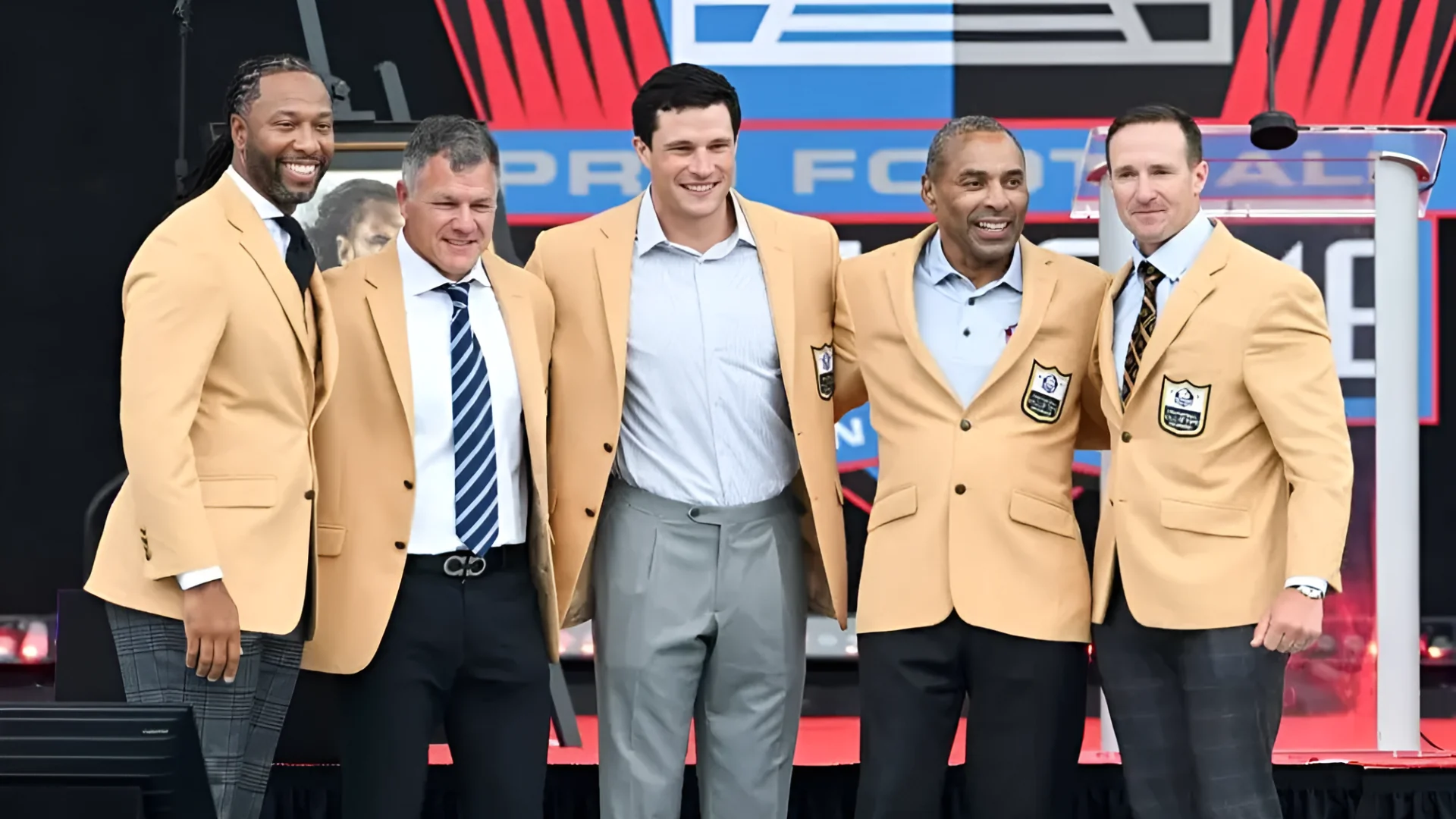
Drew Brees and Larry Fitzgerald Lead a Five-Man Class Into Canton
The 2026 Hall of Fame class enshrined Drew Brees, Larry Fitzgerald, Adam Vinatieri, Luke Kuechly, and Roger Craig, whose speeches ranged from comic to deeply personal.
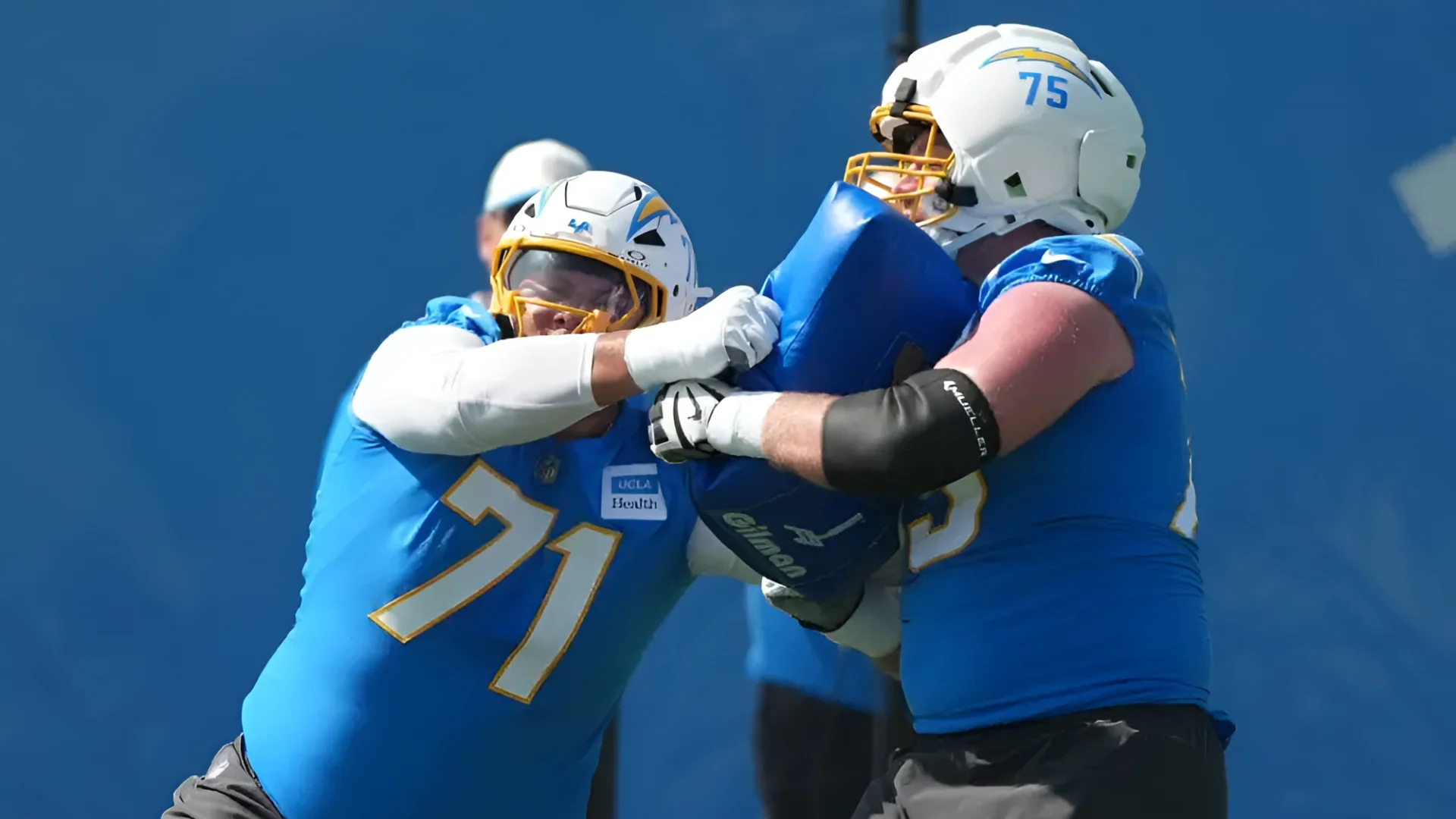
Mike McDaniel Is Asking Justin Herbert to Throw Before He's Sure
McDaniel's Day 3 film review shows Herbert testing anticipatory throws to Ladd McConkey as the Chargers reshape their passing timing in camp.
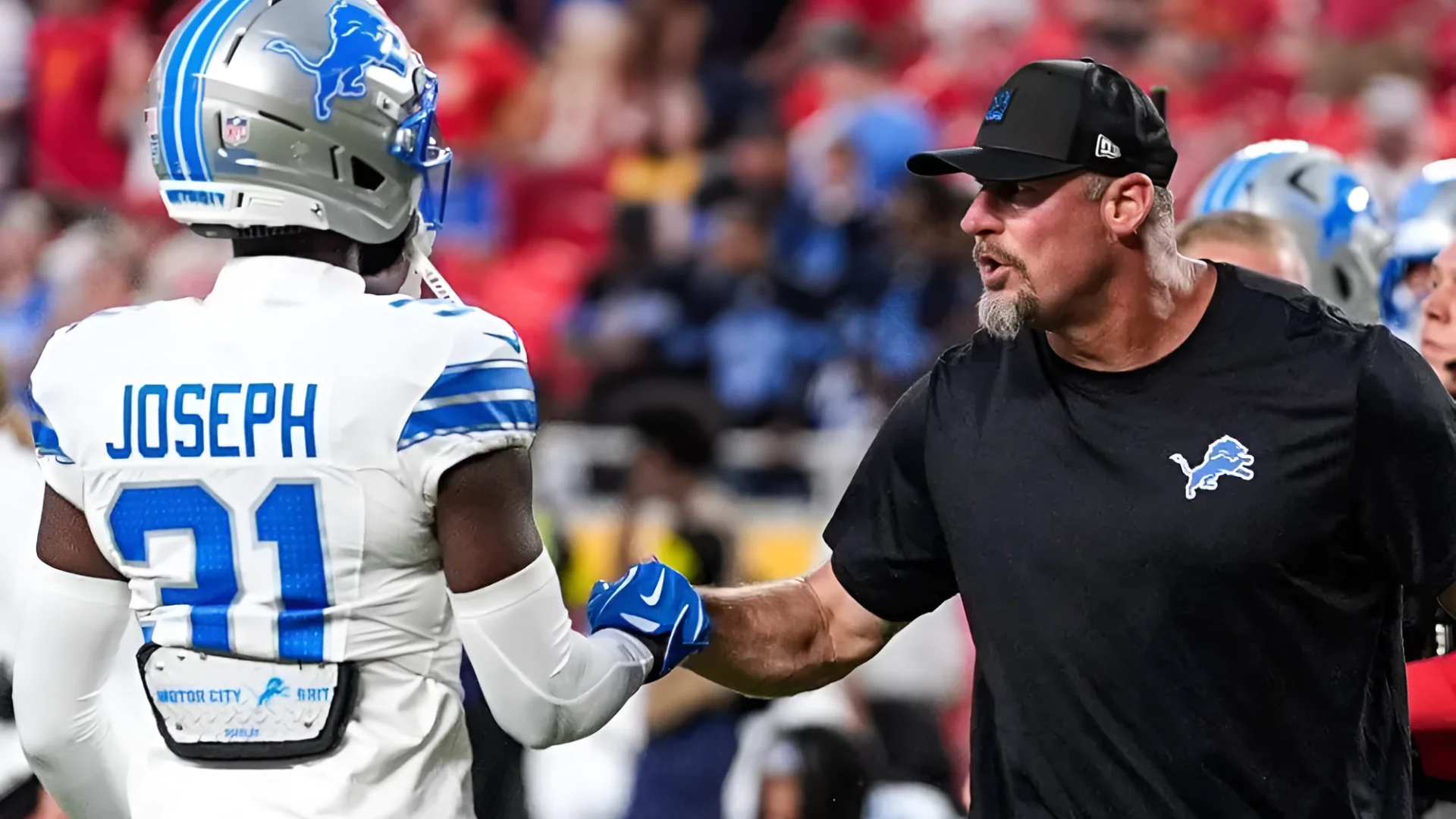
Lions Enter 2026 Camp With QB Stability and Two Real Position Fights
Detroit's 2026 training camp features a settled starting quarterback but open battles for backup QB, the No. 2 edge rusher spot, and right tackle.
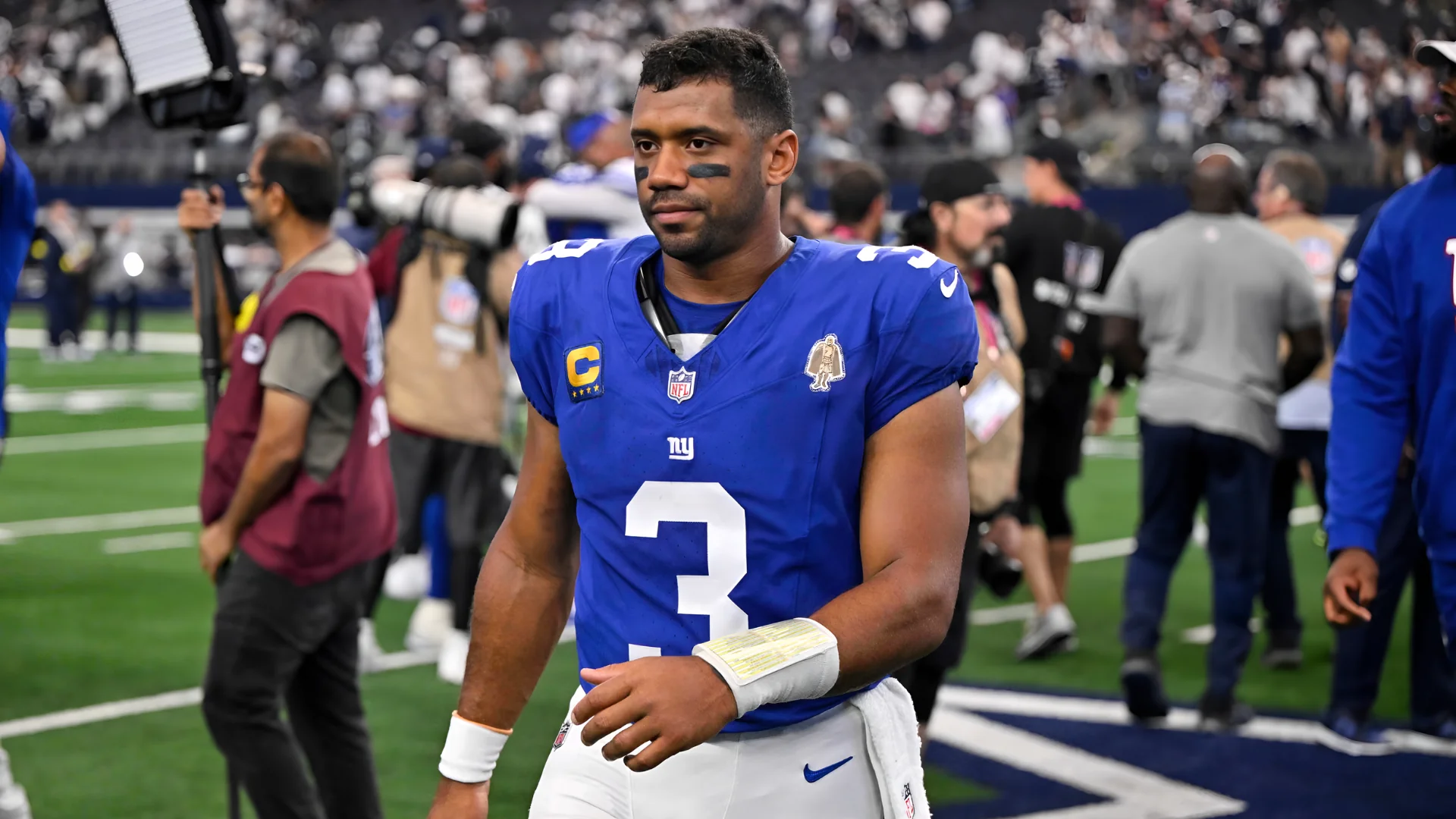
Russell Wilson Retires, Joins CBS Sports as NFL Analyst
Russell Wilson has retired from the NFL after 14 seasons, confirmed via social media on June 3, 2026. The 10-time Pro Bowler joins CBS Sports' The NFL Today, replacing Matt Ryan.
Comments (0)
Please sign in to join the discussion.
No comments yet.
Be the first to share your perspective on this topic.