

NASA has selected Relativity Space, the 3D-printed rocket company now led by former Google chief executive Eric Schmidt, to build and fly a private science orbiter to Mars by 2028, according to a report on the contract. The mission, named Aeolus, would be the first launch under the company's newly created Interplanetary Sciences Program.
A Company With Zero Orbital Flights Takes On an Interplanetary Mission
NASA announced the selection on June 17, 2026. Under the arrangement, Relativity Space will build the spacecraft, supply its Terran R rocket, and manage the cruise phase that carries the science payload to Mars. Once in place, the orbiter will also serve as a communications relay for hardware operating on the Martian surface.
The timeline is tight. Aeolus targets a launch window in 2028, and the mission would mark the first interplanetary flight of the Terran R, a rocket that has not yet flown at all. Relativity's only previous launch attempt came in March 2023, when its smaller Terran 1 rocket passed maximum dynamic pressure but suffered an upper-stage engine failure and fell into the Atlantic Ocean. The company has since retired Terran 1 to focus entirely on the larger, reusable Terran R, which is roughly comparable in weight class to SpaceX's Falcon 9 and is expected to make its first flight in late 2026 or 2027 from Cape Canaveral.
NASA Ames Is Building a Daily Picture of Mars's Atmosphere
While Relativity Space handles the spacecraft and rocket, the science payload itself is being designed, built, and integrated by NASA's Ames Research Center in Silicon Valley. The instrument suite includes four separate sensors: a Doppler Wind and Temperature Sounder for ozone measurements, a Thermal Limb Sounder, a Surface Radiometric Sensor Package, and a Wide-Field Context Camera.
Together, the instruments are meant to produce the first integrated, daily, global view of Martian winds, temperatures, dust, clouds, and surface energy balance. NASA's stated purpose for that data is practical rather than purely scientific: reducing the entry, descent, and landing risk for future robotic and crewed missions to Mars, where thin and unpredictable atmospheric conditions have complicated past landings.
The Contract Follows NASA's Established Pattern of Outsourcing Infrastructure
The structure of the Aeolus deal is not new for NASA, even if the destination is. It mirrors the commercial model the agency has already used for International Space Station cargo runs with SpaceX and for lunar lander missions with Firefly Aerospace: NASA designs and owns the science instruments, while a private company provides the launch vehicle and transportation at lower cost than a traditional in-house program.
NASA has not disclosed the financial terms of the contract, and Relativity Space did not respond to questions about pricing, according to the report. Separately, cross-industry reporting has indicated that an unnamed philanthropic entity may be backing or financing the mission, though Relativity has declined to confirm that backer's identity. That leaves an open question about how much of the mission's cost NASA itself is bearing versus outside funding — a detail that matters for assessing how repeatable this contracting model might be for future Mars science missions.
Schmidt's Broader Space Ambitions Now Include a Race to Mars
Relativity Space struggled with fundraising before Eric Schmidt took a majority stake and became chief executive in 2025. Since then, Schmidt has talked about using the company's infrastructure for other ventures, including orbital data centers and space telescopes such as the Lazuli project funded by Schmidt Sciences. The Aeolus contract extends that ambition to interplanetary territory, positioning a company that has reached orbit zero times directly against SpaceX, which already operates a mature Mars-capable architecture in development and a long track record of successful orbital and interplanetary-adjacent launches.
That contrast is the central tension in NASA's decision. The agency is exchanging a vendor with deep flight experience for one offering, at least implicitly, a different cost structure and a newly focused rocket program. Whether that bet pays off depends almost entirely on hardware that has not yet left the ground: Terran R has no flight history, and its first orbital launch — whenever it happens — will need to succeed well before the rocket is asked to perform a Mars-bound trajectory in 2028. Any slip in that schedule would compress an already tight runway between a rocket's maiden flight and its interplanetary debut.

Why Japan Is Losing the AI Race It Helped Create
From language tokenization barriers to corporate risk aversion and venture capital gaps, this explainer breaks down why Japan's AI position lags the US and China.
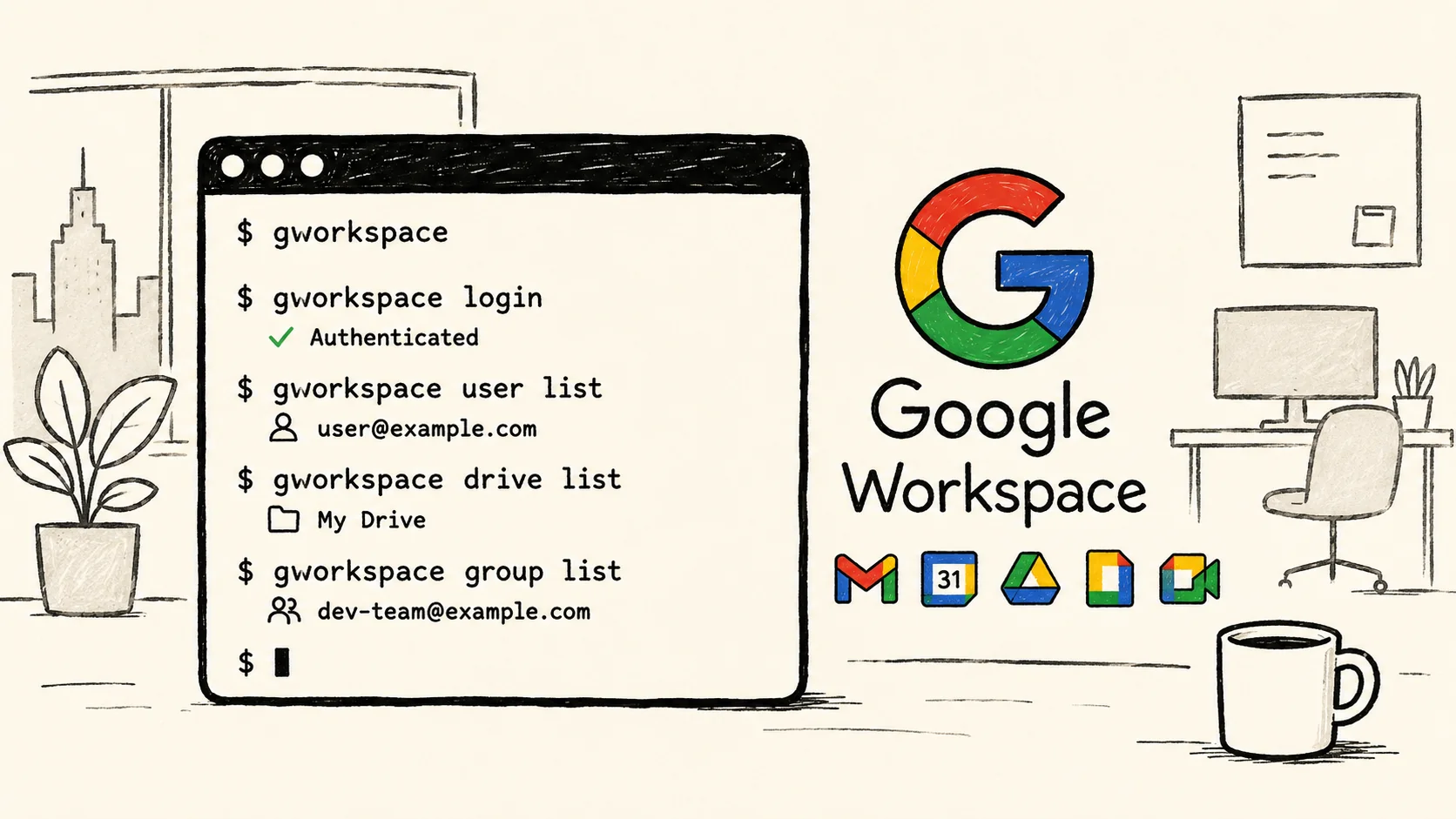
Google Fires DevRel Engineer Over Workspace CLI
Justin Poehnelt says Google fired him for building a Workspace CLI under the official GitHub org, two days before Google unveiled its own version.

The AI Subsidy Era Is Ending — and Enterprise Buyers Are Getting the Bill
A data-grounded analysis of the AI subsidy model's structural unsustainability, OpenAI's 2025 financial losses, and the 2026 pivot to token-based pricing that is already shocking enterprise customers.

Honor's X80 Pro Max Pairs an 11,000mAh Battery With a Two-Year Free Screen Warranty
Honor launched the X80 Pro Max in China on June 22, 2026, with a record battery, SGS-certified drop resistance, and a free two-year screen warranty.
Comments (0)
Please sign in to join the discussion.
No comments yet.
Be the first to share your perspective on this topic.