
You don't need a transatlantic flight or a passport to walk cobblestone streets, eat authentic schnitzel, or stand beside a centuries-old windmill. Across the United States, a handful of towns have preserved — or deliberately built — a European character that goes well beyond surface aesthetics. Some were founded by European colonizers. Others were settled by immigrant communities who replicated the architecture, food, and traditions of their homelands. A few reinvented themselves around European style for economic survival. The distinction matters when you're planning a trip.
Three Towns Where European History Is the Foundation
The deepest European atmosphere in the United States belongs to towns where the character was never manufactured — it was simply never erased.
New Orleans, Louisiana, carries the imprint of its French and Spanish founders more visibly than almost any other American city. The French Quarter's wrought-iron balconies, Creole townhouses, and cobblestone streets reflect two distinct colonial periods, and the café culture that fills its sidewalks has roots in both. The architecture here isn't a theme; it's the original built environment.
St. Augustine, Florida, is the oldest continuously occupied European-established settlement in the country. Its Spanish colonial character is anchored by the Castillo de San Marcos — a 17th-century masonry fort — and by Flagler College, whose red-tiled rooflines and towers echo the civic architecture of Seville. Walking its older streets requires no imaginative effort.
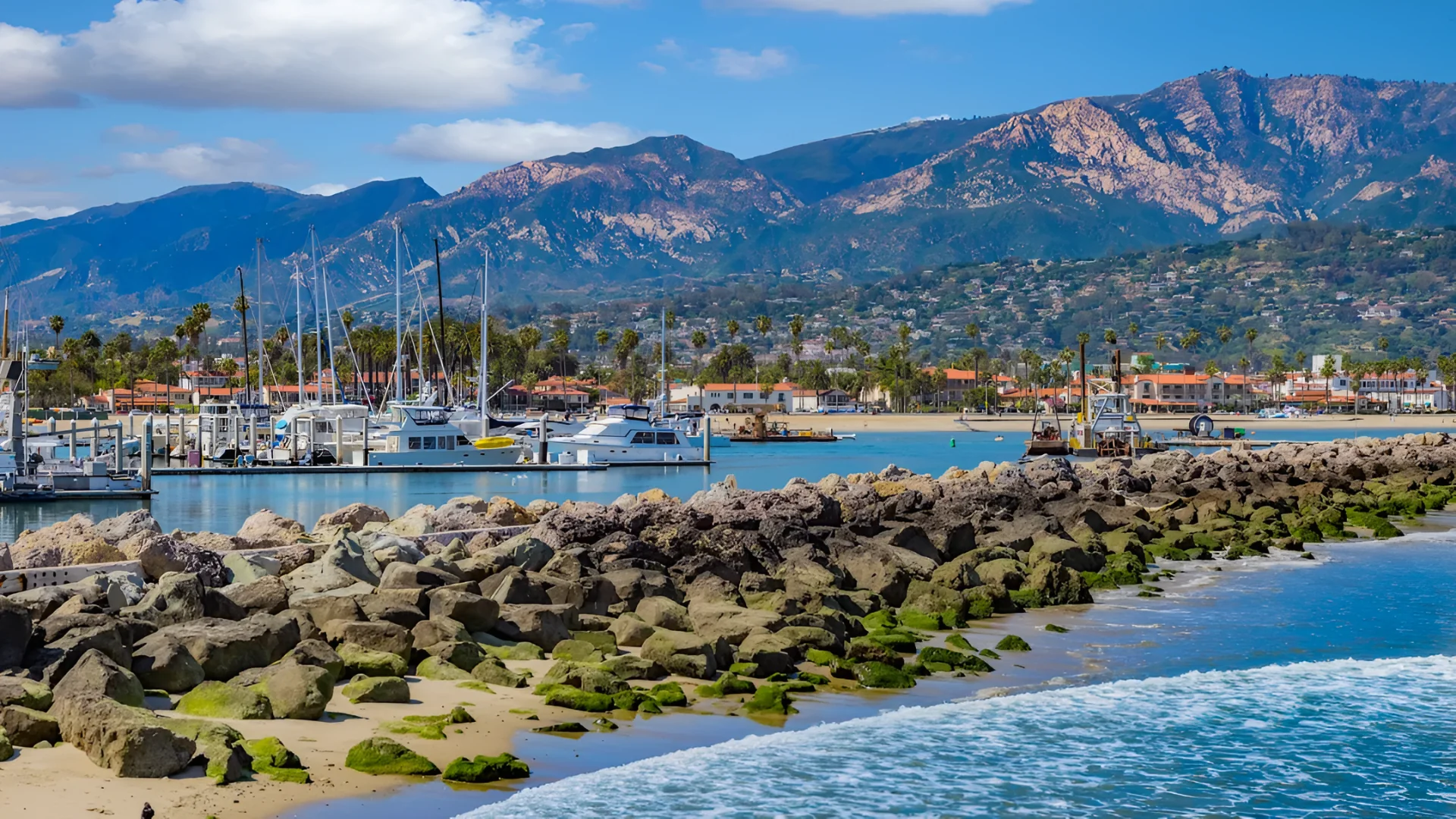
Santa Barbara, California, earned its "American Riviera" reputation through a different path. After a 1925 earthquake destroyed much of the downtown, the city rebuilt under strict Spanish Colonial Revival codes — meaning the Mediterranean uniformity visitors see today was an intentional civic decision rather than organic heritage. The result still holds: white stucco, red-tile roofs, and a coastal climate that mirrors southern Spain and the French Riviera.
The chart below shows the founding context and primary European influence for each of these three towns.
Towns Built by Immigrant Communities Who Brought Europe With Them
A different and arguably more intimate form of European character comes from towns where immigrant settlers consciously maintained the culture, language, and built environment of their homelands across generations.
Solvang, California, was established in 1911 by Danish immigrants seeking to preserve their culture in the American West. The town features working windmills, half-timbered buildings, a replica of Copenhagen's Little Mermaid statue, and bakeries serving aebleskiver — the traditional Danish spherical pancakes. It calls itself the "Danish Capital of America," and the descriptor is less marketing than accurate shorthand.
Holland, Michigan, was settled by Dutch immigrants in the 19th century. Its most tangible artifact is DeZwaan, a centuries-old authentic windmill physically transported from the Netherlands. Each spring, the Tulip Time Festival draws visitors to see millions of blooming tulips across a town that has maintained its Dutch civic character.
New Glarus, Wisconsin, settled by Swiss immigrants, preserves its Alpine identity through chalet-style architecture, yodeling traditions, and fondue restaurants. The nickname "Little Switzerland" is used by residents, not just tourism boards.
The horizontal bar chart below shows an ordinal editorial assessment of how strongly each of these towns signals its European heritage across four dimensions: architecture, food authenticity, cultural events, and immigrant lineage continuity.
Towns Reinvented Around European Style — and What That Distinction Means for Travelers
A third category of destination is worth understanding on its own terms. These are towns that adopted European aesthetics deliberately — often for economic reasons — rather than inheriting them through history or immigration.
Leavenworth, Washington, is the most complete example. Facing economic decline in the early 1960s after losing its railroad hub status, the town collectively voted to redesign its entire downtown as a Bavarian village. Today, the alpine chalets, German street signs, and schnitzel restaurants are real in the sense that they are maintained by resident business owners who have built genuine expertise in German food and craft traditions over decades. The annual Christkindlmarkt draws visitors who have also attended German markets and report a credible comparison. The authenticity is functional rather than ancestral.
Vail, Colorado, was purpose-built in the early 1960s with Austrian and Swiss Alpine resort architecture as its explicit template. Heated cobblestone walkways, hanging alpine flower baskets, and the Betty Ford Alpine Gardens give the pedestrian village a consistency that casual visitors find convincing. It was designed — not inherited — but it has been maintained and refined for over sixty years.
Napa Valley, California, works differently. Its European character is environmental and culinary rather than architectural. The rolling vineyard-covered hills and Mediterranean climate genuinely resemble Tuscany. Estates like Auberge du Soleil are explicitly Provençal in design and offer Michelin-starred dining. The comparison holds because the underlying geography supports it, not because a committee approved a building code.
Travelers who want heritage communities will find Solvang and New Glarus more layered. Travelers who want atmosphere, cuisine quality, and visual environment will find Leavenworth, Vail, and Napa fully satisfying. The chart below offers an ordinal comparison of these three designed or climate-driven destinations across European atmosphere, culinary quality, and visual consistency.
A Few More Worth the Drive
Beyond the ten destinations above, three towns merit attention for specific travelers. West, Texas, maintains a strong Czech heritage with kolache bakeries and polka halls that serve a genuine community rather than a tourist base. Tarpon Springs, Florida, has a well-documented Greek sponge-diving heritage that still defines its waterfront economy, with Greek Orthodox churches, tavernas, and a working sponge docks district. Lindsborg, Kansas, presents Swedish Dala horses and Midsummer festivals maintained by a community of Scandinavian descent that has kept that identity across more than a century.
None of these require special planning. A weekend drive and an open itinerary are the main requirements — and the only document you'll need is a driver's license.
Disneyland Shuts Six Attractions as Its 70th Anniversary Winds Down
A guide to which Disneyland attractions close, reopen, or run reduced hours in August 2026 as the resort's 70th anniversary celebration wraps up.

Big Boy No. 4014 Becomes First Locomotive of Its Size to Cross Horseshoe Curve
Union Pacific's Big Boy No. 4014 crossed Horseshoe Curve and rolled through Western Pennsylvania towns Saturday on its first-ever East Coast tour marking America's 250th anniversary.

Empire State Building Climbers Face Court Thursday
A daredevil couple known for skyscraper stunts scaled the Empire State Building's spire, unfurled a peace banner, got engaged, and were arrested on multiple charges.

Teen Falls Down Disneyland Ride Drop, Escapes Serious Injury
A teenager climbed out of a moving log on Tiana's Bayou Adventure at Disneyland, fell down the 50-foot waterfall drop, and was released from hospital with minor injuries. Cal/OSHA cleared the attraction after inspection.
Comments (0)
Please sign in to join the discussion.
No comments yet.
Be the first to share your perspective on this topic.