
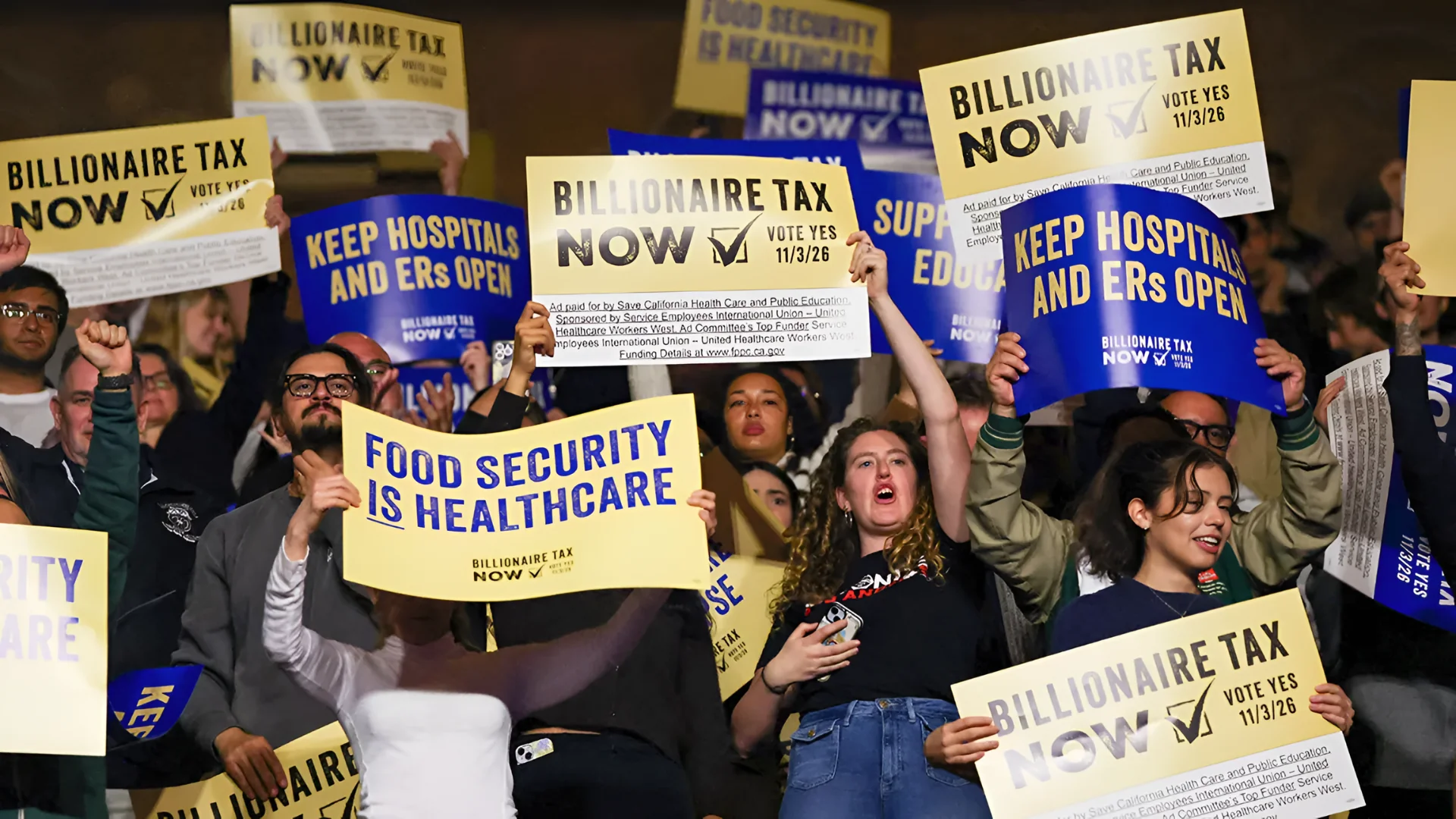
A union-backed initiative to levy a one-time 5% tax on the worldwide net worth of California's billionaires has officially qualified for the November 2026 ballot — over the active opposition of Gov. Gavin Newsom and a coalition of Democratic institutions that rarely break with organized labor this sharply.
A Tax Designed Around the People It Targets
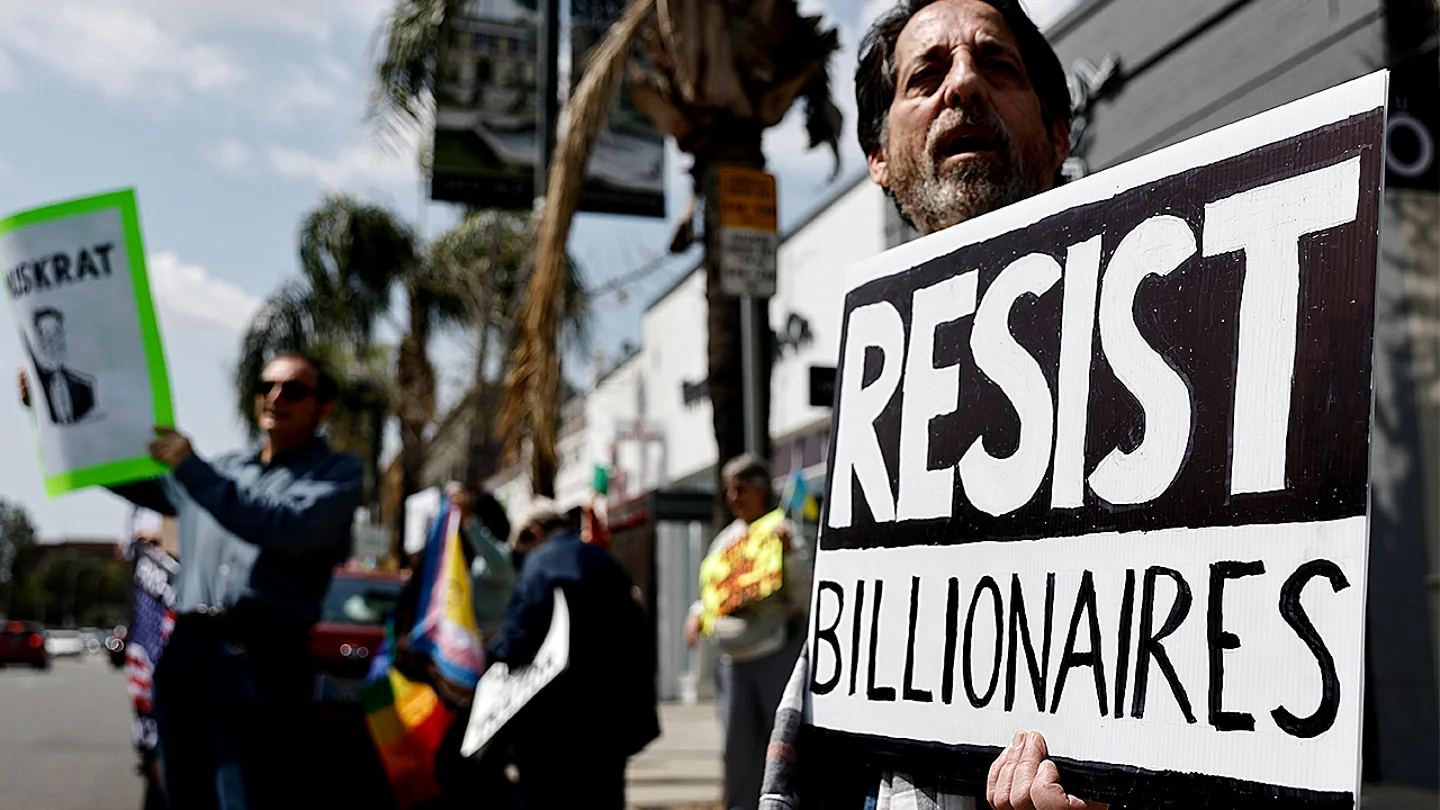
The "One-Time Wealth Tax for State-Funded Health Care Programs Initiative," filed under the California Billionaire Tax Act, would apply a single 5% levy on the total worldwide net worth of any California resident whose assets exceed $1 billion. The revenue is projected at roughly $100 billion over the 2027–2031 period, drawn from approximately 200 of the state's wealthiest individuals.
Ninety percent of that revenue would go toward stabilizing low-income healthcare programs, primarily Medi-Cal, which faces cuts stemming from the Trump administration's "One Big Beautiful Bill Act". The remaining 10% would fund public education and food assistance.
The measure was spearheaded by the Service Employees International Union-United Healthcare Workers West, which has framed it as an emergency response to federal safety-net reductions. Senators Bernie Sanders and Rep. Ro Khanna have publicly backed the campaign.
The chart below summarizes the measure's core parameters as supplied by its proponents.
The Retroactive Clause and the Capital-Flight Problem
One of the measure's most consequential design choices is its retroactive residency rule. The tax would apply to anyone who was a California resident as of January 1, 2026 — a date already in the past when the measure qualified for the ballot. This was not incidental. It was structurally necessary.
A forward-looking residency date would have given the state's wealthiest residents months of advance notice to establish domicile elsewhere before any liability attached. The retroactive clause closes that window. If the tax passes in November, it would apply to residents based on where they lived at the start of this year, regardless of where they move afterward.
The mechanism did not fully hold. Reports indicate that at least two prominent Californians — Google co-founders Sergey Brin and Larry Page — relocated out of the state around the January 2026 deadline, apparently in anticipation of the measure. Whether those departures occurred before or after the retroactive date — and whether any resulting liability would survive a legal challenge — is not established in publicly available reporting.
Whether the clause is constitutionally durable remains an open question. No source in this article's materials addresses a final legal determination.
Newsom's Opposition and the Intra-Party Fracture
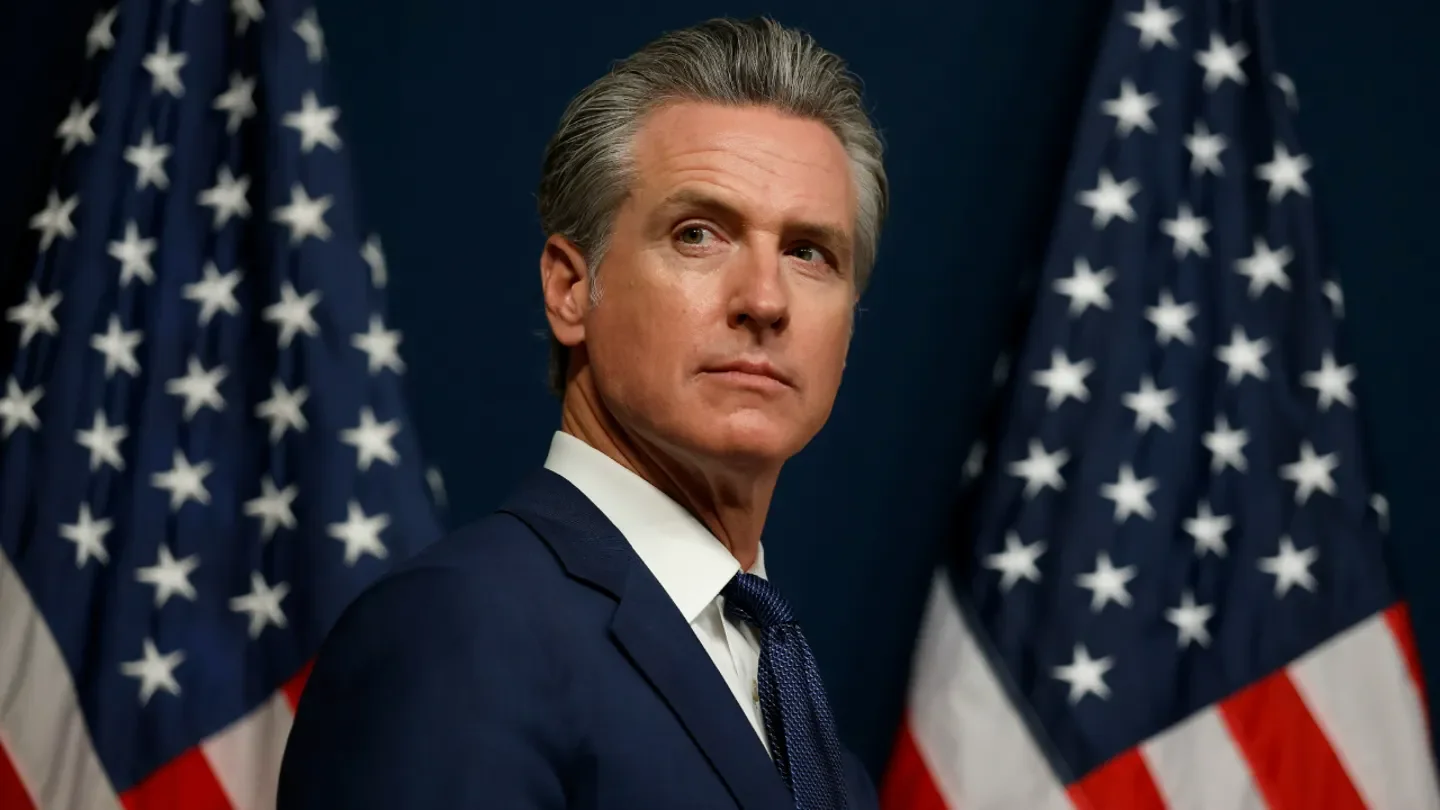
The sharpest political feature of this ballot campaign is not who opposes the tax from the right, but who opposes it from within the Democratic Party. Gov. Gavin Newsom has been among the most vocal critics, arguing that state-level wealth taxes initiate a competitive "race to the bottom" in which high-net-worth individuals gradually shift residency to lower-tax states, eroding the state's long-run revenue base rather than stabilizing it.
That is a meaningful critique. California already derives an unusually concentrated share of its income-tax revenue from a small number of very high earners. A permanent behavioral shift — even among a fraction of the roughly 200 individuals the tax targets — could produce revenue shortfalls that outlast the five-year window the initiative is designed to fill.
Newsom's position is reinforced by an unusual coalition of institutional opposition. The California Teachers Association and the California Medical Association — groups that frequently align with labor on tax and spending questions — have both come out against the measure. Their stated concern, per reporting on the opposition campaign, is that the initiative lacks a durable long-term funding structure: it raises a large sum once, then leaves the programs it funds searching for a new revenue source after 2031.
Opponents are also pursuing a counter-ballot strategy. Groups operating under "Building a Better California" are backing competing measures for November 2026 that would prohibit retroactive taxation and mandate new audits on special tax spending — measures designed, in part, to structurally undermine the wealth tax initiative whether or not it passes.
The chart below shows how projected revenue would be divided under the measure's stated allocation formula.
A Divided Electorate With the Vote Still Months Away
Despite the institutional Democratic opposition, the measure is not polling badly. A May 2026 survey by the Public Policy Institute of California found 54% of respondents in support and 45% opposed — a margin that reflects genuine public appetite for taxing billionaire wealth, but also a narrowness that leaves the outcome genuinely uncertain.
That gap matters for how both campaigns will spend the coming months. The SEIU-UHW and its allies will try to tie the tax directly to federal cuts to Medi-Cal and food programs — a frame that turns a complex fiscal instrument into a voter-legible emergency response. The opposition, led by Newsom's allies and business groups, will try to shift the frame toward long-run economic risk: billionaires leave, tax base narrows, programs lose funding anyway.
The polling data below captures where the electorate stood as of May 2026. Whether the competing counter-measures on the same ballot affect the outcome — by confusing voters, splitting the coalition, or depressing turnout among wealth-tax supporters — is not something the current polling addresses.
What the polling does not capture is the structural tension the ballot campaign has exposed inside California's Democratic Party. The SEIU-UHW and its federal allies — Sanders, Khanna — represent a labor-left coalition that sees the federal safety-net cuts as a crisis demanding an immediate, large-scale fiscal response, even at the cost of long-run revenue stability. Newsom and the institutional center of the party see the one-time design as a political sugar rush: it fills a gap for five years, triggers a legal and political fight over retroactive taxation, accelerates wealth migration out of the state, and leaves the programs it funds back at zero in 2032.
Both arguments are internally coherent. Which one California voters find more persuasive in November will shape not just this measure's fate, but the political calculus for how blue states respond to federal retrenchment going forward.

Andy Burnham Confirmed Labour Leader With Record 94% MP Backing
Andy Burnham won 379 of 403 Labour MPs' nominations, a modern-era record, as Survation found Labour level with Reform UK for the first time in a year.


Israel Tells US of a New Plot to Assassinate Trump as the Iran Ceasefire Collapses
Amid renewed US-Iran strikes and a fraying ceasefire, Israel warned Washington of a new, unverified plot to assassinate Trump.
Farage Faces Two Watchdogs Over Cottrell's Hidden Funding
A Sunday Times investigation says George Cottrell funded Farage's staff, security and housing before 2024. Two watchdogs are now weighing separate legal tests.
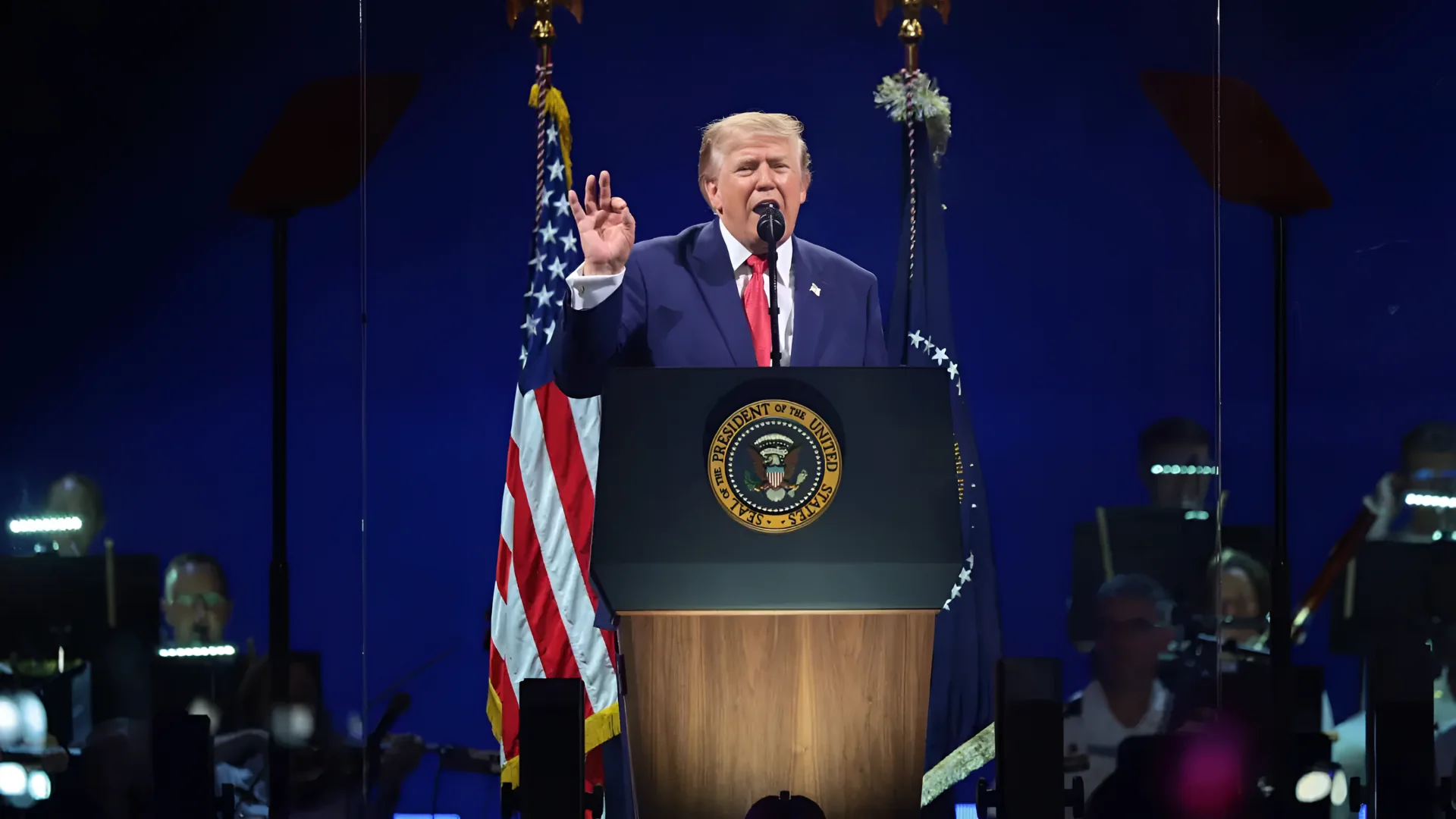
Storms Delay Trump's July 4 Speech, Not His Politics
A storm evacuation delayed Trump's America 250 keynote by nearly two hours, but the speech itself broke from past Independence Day addresses with midterms messaging.
Comments (0)
Please sign in to join the discussion.
No comments yet.
Be the first to share your perspective on this topic.