

China's flexible workforce is projected to reach 320 million people in 2026, up from 280 million last year, according to reporting on China's gig economy and welfare strain. The growth is masking uneven outcomes underneath it: wages are rising in some gig sectors and falling in others, and most workers remain outside the country's formal social insurance system.
Flexible Employment Nears Half of China's Urban Workforce
Flexible employment — work without a permanent full-time contract — now accounts for more than 40% of China's urban and township workforce, a scale think-tank estimates put close to the size of the entire United States population. The composition of that workforce has also shifted. More than 60% of flexible workers under 24 hold at least an associate degree, and the pool now includes laid-off white-collar employees alongside the rural migrant workers who have traditionally filled gig roles.
That shift is visible in individual cases: a 30-year-old former software tester in Beijing now drives for a ride-hailing app after losing his tech job, working from early morning until nearly midnight to clear roughly 6,000 yuan a month after vehicle and charging costs. Separately, official counts put the number of registered one-person companies — often AI trainers, cross-border e-commerce operators, and independent consultants — above 16 million as of mid-2025, pointing to a parallel rise in project-based, higher-skill flexible work alongside driving and delivery.
Wages Are Splitting Sharply by Sector
The gig economy is functioning as China's main employment buffer as the property downturn eliminates construction jobs and manufacturers cut headcount through automation and cost pressure. But the buffer itself is showing signs of strain. Food delivery riders — an estimated 16 million people — saw average hourly pay rise 11% to 37.3 yuan in 2025. Ride-hailing drivers, a larger pool of roughly 37.2 million, saw wages contract 1.8% over the same period.
The divergence points to oversupply in specific segments rather than a uniform gig-economy slowdown. At least four major cities, including the technology hub of Shenzhen, have issued public warnings about ride-hailing market saturation since April, according to coverage of ride-hailing overcapacity warnings. That distinction matters for anyone reading the sector's growth figures as a single trend: the same policy response — more workers entering flexible employment — is producing opposite wage effects depending on which platform economy they join.
State Media and Independent Reporting Disagree on What the Numbers Mean
A commentary published by People's Daily's opinion section pushes back on the idea that flexible employment is a disguised form of unemployment, framing it instead as a shift toward higher-skill, project-based work, according to the commentary arguing flexible work is not disguised unemployment. The piece cites strong top-tier earnings — maternity matrons averaging 10,128 yuan a month, food delivery riders 8,325 yuan, and truck drivers 8,279 yuan — as evidence the sector offers a genuine income path rather than a fallback.
Those figures describe peak earning potential rather than typical take-home pay. Reporting based on direct interviews with gig workers found schedules of nearly 17 hours a day were common among drivers pursuing income near that ceiling, once vehicle rental and operating costs were factored in. HSBC Asia economist Frederic Neumann has separately argued that the underlying lack of pay stability and job security among gig workers weighs on broader consumption and growth — a structural concern that headline earnings figures do not capture. The two accounts are not necessarily in conflict: the income exists, but it requires hours and intensity that a monthly average obscures.
Beijing's Welfare Dilemma: Insure Gig Workers or Protect Platform Jobs
State media-cited figures put basic medical insurance coverage among flexible workers at 91.5% and work injury coverage at 86.2%. Independent field reporting suggests actual voluntary, sustained contributions to China's formal welfare system are considerably lower, since unstable gig income leads many workers to favor personal savings over regular insurance payments. Central government transfers covering social insurance funding gaps have roughly tripled over the past decade to about 3 trillion yuan, now accounting for 10% of total government expenditure — evidence that the strain on the welfare system is already showing up in the budget, even before flexible employment reaches its projected 2026 scale.
This leaves regulators with a trade-off they have not resolved. Requiring platforms to fund more comprehensive welfare coverage for gig workers could ease the pension and insurance shortfall, but it would also raise costs for the platforms currently absorbing displaced construction and manufacturing workers — the same absorption capacity Beijing is relying on to keep headline unemployment from rising as those sectors continue shedding jobs. Neither side of that trade-off has been tested at the scale the workforce is now approaching, and the coverage statistics cited above have not been independently verified against actual enrollment data.
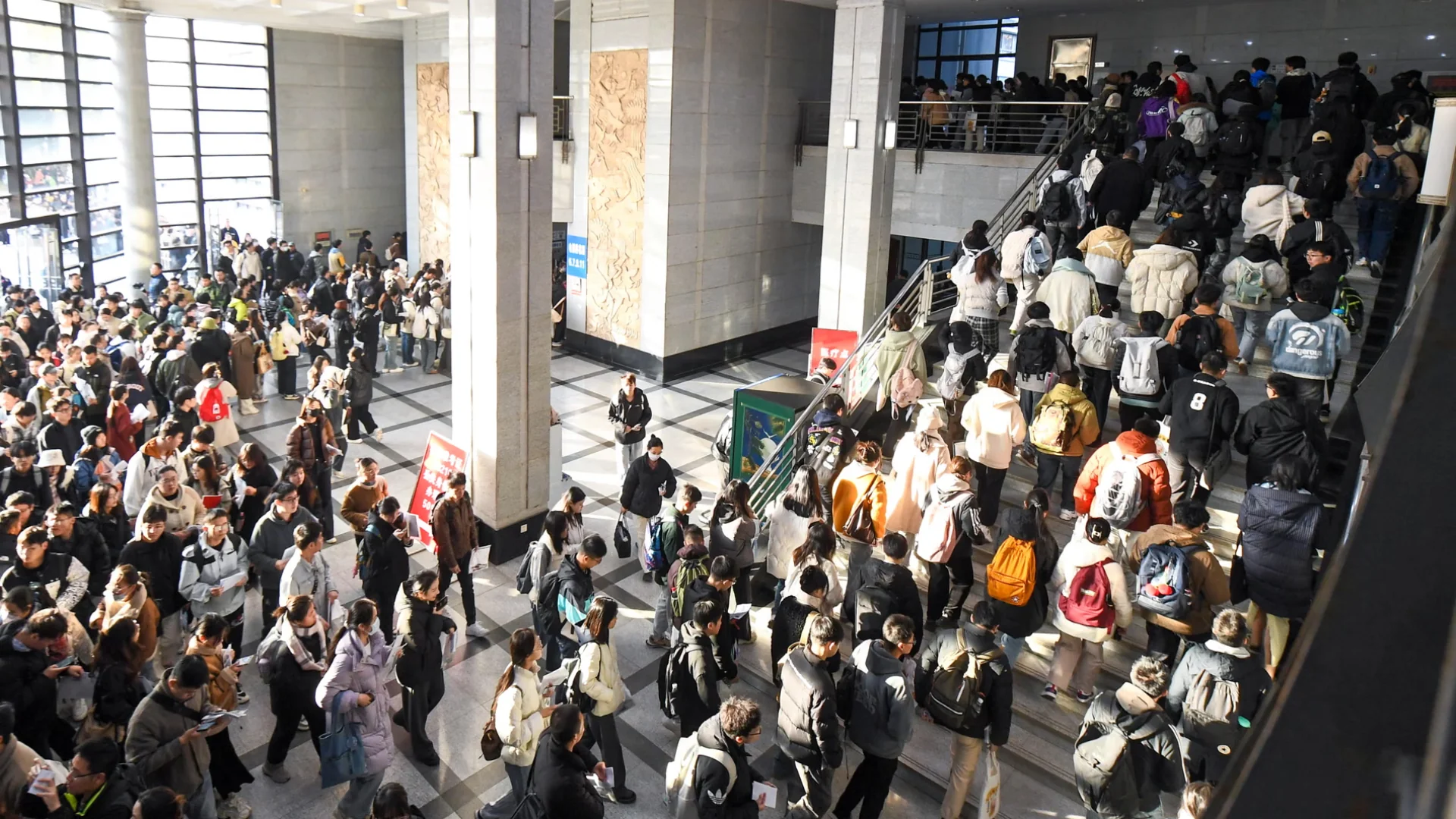
Asia’s Youth Job Squeeze: Inside China’s Record Graduate Influx and Vietnam’s AI Skills Gap
China's record 12.7 million graduates face a 15.6% youth jobless rate as AI reshapes hiring; Vietnam shows the same skills-gap pattern at smaller scale.

CoreWeave and Nebius Are Chasing $145 Billion in AI Deals on $16 Billion of Revenue
Microsoft, Meta and Nvidia have committed more than $145 billion to neoclouds CoreWeave and Nebius, whose combined 2026 revenue is projected near $16 billion.

Stablecoins Hit $300B, But Are They Really Money?
Dollar stablecoins now total $300 billion, yet contract terms, custody structure, and unresolved settlement law leave most retail holders as unsecured creditors, not depositors.

June Jobs Report: Fewer Workers, Not More Hiring
The U.S. added only 57,000 jobs in June 2026 while 720,000 workers exited the labor force, driving the unemployment rate down for the wrong reasons.
Comments (0)
Please sign in to join the discussion.
No comments yet.
Be the first to share your perspective on this topic.