

The U.S. economy added just 57,000 jobs in June 2026, a sharp miss against expectations, while the unemployment rate ticked down to 4.2% for reasons that have little to do with hiring strength.
Payroll growth slows to 57,000, well below forecasts
June's payroll gain of 57,000 confirmed what the labor force participation data had already signaled: hiring has cooled sharply. The figure fell well short of economists' expectations, extending a slowdown that has been building for months. At the same time, the unemployment rate slipped to 4.2%, its lowest level in a year — a number that on its own would read as encouraging.
A falling jobless rate driven by an exodus, not by hiring
The mechanics behind the improved unemployment rate are the real story. Reporting on the labor force contraction describes the drop as occurring for "the wrong reasons": the labor force shrank by 720,000 people in June alone, as discouraged job seekers stopped looking for work altogether. Because the unemployment rate only counts people actively seeking a job, a large enough exodus can push the rate down even while actual employment conditions worsen. That is what happened here — the overall labor force participation rate fell to 61.5%, its lowest level since March 2021, and, excluding the pandemic period, the lowest reading in 50 years, since June 1976. The same reporting notes that long-term unemployment — workers out of a job for 27 weeks or more — has stayed elevated, holding above 27% of the total jobless pool, a sign that those still searching are struggling to find a way back in.
Workers in their prime earning years are dropping out fastest
The contraction was not evenly distributed across age groups. Coverage of the June labor force data points to prime-age workers, those between 25 and 54, as the group that pulled back the most: their participation rate fell 0.6 percentage points to 83.3%, the lowest reading since December 2023. Within that group, workers aged 25 to 34 were hit hardest, with participation down 1.6% from May and 1.0% from a year earlier — a group typically seen as the core of the workforce, not the segment expected to be pulling back. Older Americans moved in the opposite direction: participation among those 65 and older ticked up slightly, a shift the reporting attributes in part to an aging population, with adults over 60 now making up roughly a quarter of the U.S. population. That divergence complicates any simple reading of the participation-rate decline as uniform discouragement — it is concentrated in exactly the age bracket the economy relies on most.
A stagnant hiring process compounds the exit from the workforce
The people still searching for work describe a market defined by friction rather than opportunity: low-wage offerings, rigid entry-level requirements, and a hiring process increasingly mediated by automated application screeners, alongside a rise in listings that are never actually filled. None of that shows up directly in the unemployment rate, but it helps explain why so many workers chose to leave the labor force rather than keep searching within it. This is not an isolated U.S. dynamic — the same slowdown in American hiring is showing up alongside cooling inflation readings in the Eurozone, suggesting labor markets are flattening in tandem across major economies rather than as a uniquely domestic phenomenon. Whether this cooling extends the pattern seen in April's jobs report or reflects a new phase of the slowdown is not yet established by the available data, and it remains one of the open questions the labor market data does not answer on its own.
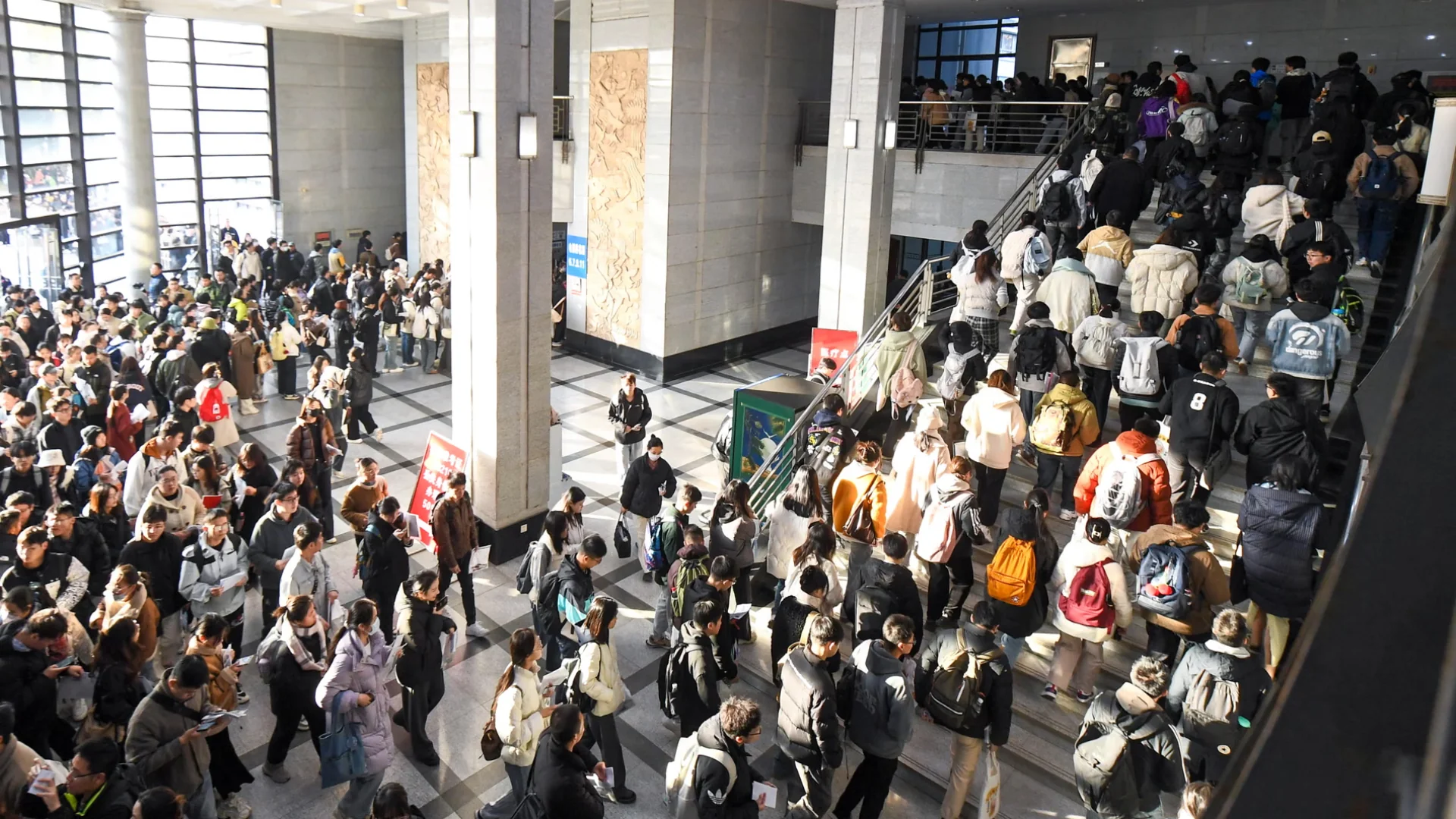
Asia’s Youth Job Squeeze: Inside China’s Record Graduate Influx and Vietnam’s AI Skills Gap
China's record 12.7 million graduates face a 15.6% youth jobless rate as AI reshapes hiring; Vietnam shows the same skills-gap pattern at smaller scale.

CoreWeave and Nebius Are Chasing $145 Billion in AI Deals on $16 Billion of Revenue
Microsoft, Meta and Nvidia have committed more than $145 billion to neoclouds CoreWeave and Nebius, whose combined 2026 revenue is projected near $16 billion.

China's Gig Workforce Set to Hit 320 Million in 2026
China's flexible workforce is projected to reach 320 million in 2026. Wages are splitting by sector, and most workers remain outside the welfare system.

Stablecoins Hit $300B, But Are They Really Money?
Dollar stablecoins now total $300 billion, yet contract terms, custody structure, and unresolved settlement law leave most retail holders as unsecured creditors, not depositors.
Comments (0)
Please sign in to join the discussion.
No comments yet.
Be the first to share your perspective on this topic.