
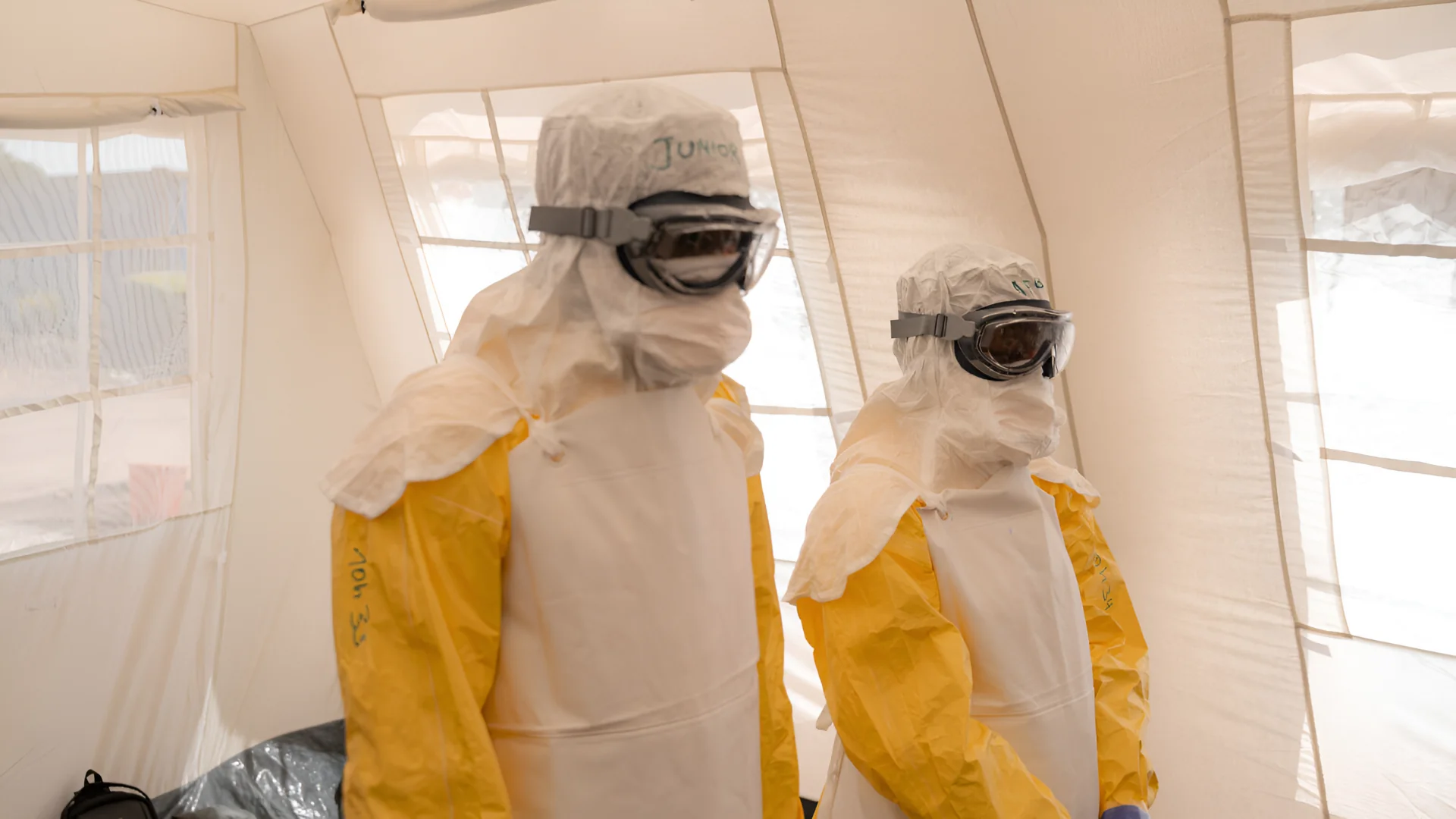
The Democratic Republic of the Congo is managing its most serious Ebola outbreak in years — and this one arrives with a critical handicap: the strain driving it has no licensed vaccine and no approved treatment.
The Bundibugyo Strain Closes Off the Standard Playbook
When the DRC Ministry of Health confirmed the outbreak on May 15, 2026, centered in Ituri Province, the WHO classified it as a Public Health Emergency of International Concern two days later. The speed of that escalation reflected something beyond case counts. The pathogen is Bundibugyo ebolavirus — a rare species that last caused a significant outbreak in 2007 and 2012. Ervebo, the vaccine widely deployed during the 2018–2020 Kivu outbreak and stockpiled for rapid response, targets only the Zaire strain. It offers no protection here.
That distinction matters operationally. The DRC's previous Zaire-strain outbreaks were contained in part because ring vaccination — vaccinating close contacts and contacts of contacts — could be deployed quickly once a case was identified. That option does not currently exist for Bundibugyo. The WHO has fast-tracked candidate vaccines and experimental therapies for prioritization, but officials caution that human clinical trials remain several months away from launching. In the interim, responders are working with isolation, contact tracing, and safe burial alone — in one of the least stable regions on the planet.
As of June 10–11, cumulative WHO data showed 676 confirmed cases in the DRC and 19 in Uganda, with 136 deaths recorded in the DRC and 2 in Uganda. The current case fatality rate of roughly 20% is lower than the 50–90% ranges seen in historical Zaire-strain outbreaks, but a one-in-five death rate with no licensed countermeasure available is not a reassuring figure. A CDC model projecting potential escalation to 20,000 cases underscores what an uncontrolled trajectory could look like. The chart below summarizes the core outbreak metrics as of mid-June 2026.
Ituri Province Holds 93% of Cases, but the Borders Are Leaking
The outbreak is concentrated but not contained. Ituri Province accounts for approximately 629 of the 676 confirmed DRC cases — around 93% of the national total. Within Ituri, three health zones carry the heaviest burden: Bunia with 185 cases, Rwampara with 137, and Mongbwalu with 132. The remaining roughly 175 classified Ituri cases are distributed across other zones. At least 94 confirmed positive patients remain unclassified by health zone, meaning the full geographic picture is still incomplete.
The cross-border situation in Uganda is more immediately alarming than the case count alone suggests. Of the 19 confirmed Ugandan cases, epidemiologists have traced 14 directly to cross-border imports from the DRC — most concentrated in the Kampala Metropolitan Area, covering Kampala and Wakiso districts. Five additional cases represent secondary localized transmission among healthcare workers and immediate family contacts. That healthcare-worker exposure is a recognized amplification risk: it signals that Uganda's facility-level infection controls are under strain even at low case volumes.
WHO epidemiologist Dr. Olivier le Polain has noted that cases are being identified in new health zones every day, adding that the detected count almost certainly understates the true scale of spread, given high population mobility throughout eastern DRC. Officials from both the WHO and the DRC have conceded that the virus likely circulated undetected through remote areas for months before the formal May 15 declaration. For more on why standard tools are failing in this outbreak context, see our earlier analysis. The chart below shows the geographic distribution of classified cases across the most affected zones.
Displacement Camps and Active Conflict Are the Amplifiers That Matter Most
The epidemiological numbers are serious. The structural conditions surrounding them are what makes containment genuinely uncertain. On May 31 and June 1, a mother and daughter died inside a crowded displacement camp in eastern DRC; post-mortem tests confirmed both deaths as Ebola, marking the virus's entry into a high-risk refugee environment. That particular camp holds more than 30,000 internally displaced people living in conditions where basic isolation is described by aid workers as nearly impossible.
Caitlin Brady, Country Director for the Danish Refugee Council in Congo, described the risk directly: the fear is not just that Ebola will spread inside the camps, but that panic will drive people to flee — contacts, ill individuals, and unaffected people alike — dispersing potential transmission chains across a wide area before they can be mapped. UNICEF's Global Incident Manager for Ebola, Dr. Douglas Noble, noted that most cases to date have been among socially and economically active adults, but warned that as the outbreak evolves, household transmission may shift the burden toward children.
Compounding this is the ongoing armed conflict in eastern DRC. Violent clashes between government forces and rebel militias disrupt contact tracing operations, cut off rural clinics from supply lines, and prevent safe burial teams from reaching affected areas — all three of which are foundational to Ebola response. The insecurity also impedes the kind of population movement monitoring that would allow epidemiologists to track cross-border transmission chains in real time.
A geopolitical dimension has added friction at the regional level. The United States government's plan to construct a 50-bed Ebola isolation and treatment facility at Kenya's Laikipia Air Base — framed as a measure to "prevent the Ebola outbreak from reaching our shores" by treating evacuated American nationals — triggered protests in which two people were killed, a Kenyan high court temporarily blocked the project, and significant anti-Western sentiment spread across East Africa. The controversy has not helped regional coordination at a moment when it is most needed. International aid agencies sounded alarms on June 12 over verified transmission inside refugee hubs, calling the risk of an uncontrolled regional flare-up imminent. The timeline below traces how the outbreak escalated from initial confirmation to a regional emergency across four weeks.
Alpha-Gal Syndrome: What a Tick Bite Does to Your Diet
Alpha-gal syndrome is a delayed food allergy caused by tick bites that sensitizes the immune system to a sugar molecule found in mammalian meat. Cases are surging in the Midwest and Northeast, with new state-level reporting mandates and federal labeling legislation underway.

ACOG Breaks from CDC on Maternal Vaccines in 2026
American College of Obstetricians and Gynecologists releases its own maternal vaccine schedule backing influenza, COVID-19, Tdap, and RSV shots, defying CDC rollbacks and countering RFK Jr.-era misinformation.

Daraxonrasib Nearly Doubles Pancreatic Cancer Survival
Trial results presented at ASCO 2026 show daraxonrasib nearly doubled median survival in advanced pancreatic cancer — a look at the data, the mechanism, and what remains unproven.
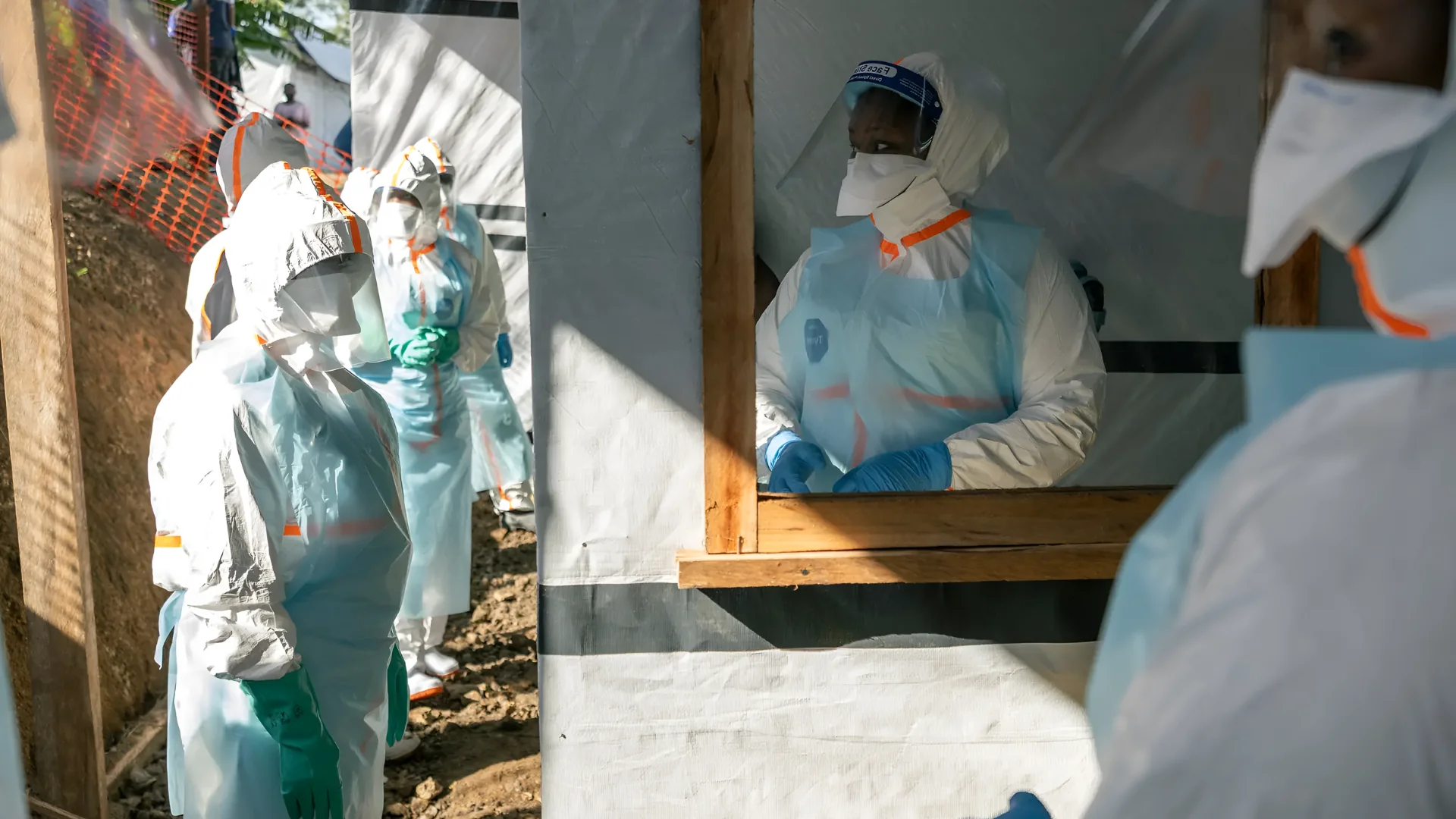
CDC Ebola Model Warns of 20,000 Cases in Congo
New CDC modeling shows the DRC Bundibugyo Ebola outbreak on a dangerous trajectory. With no approved vaccine and active conflict blocking contact-tracing, experts warn the current isolation rate is critically insufficient.
Comments (0)
Please sign in to join the discussion.
No comments yet.
Be the first to share your perspective on this topic.