
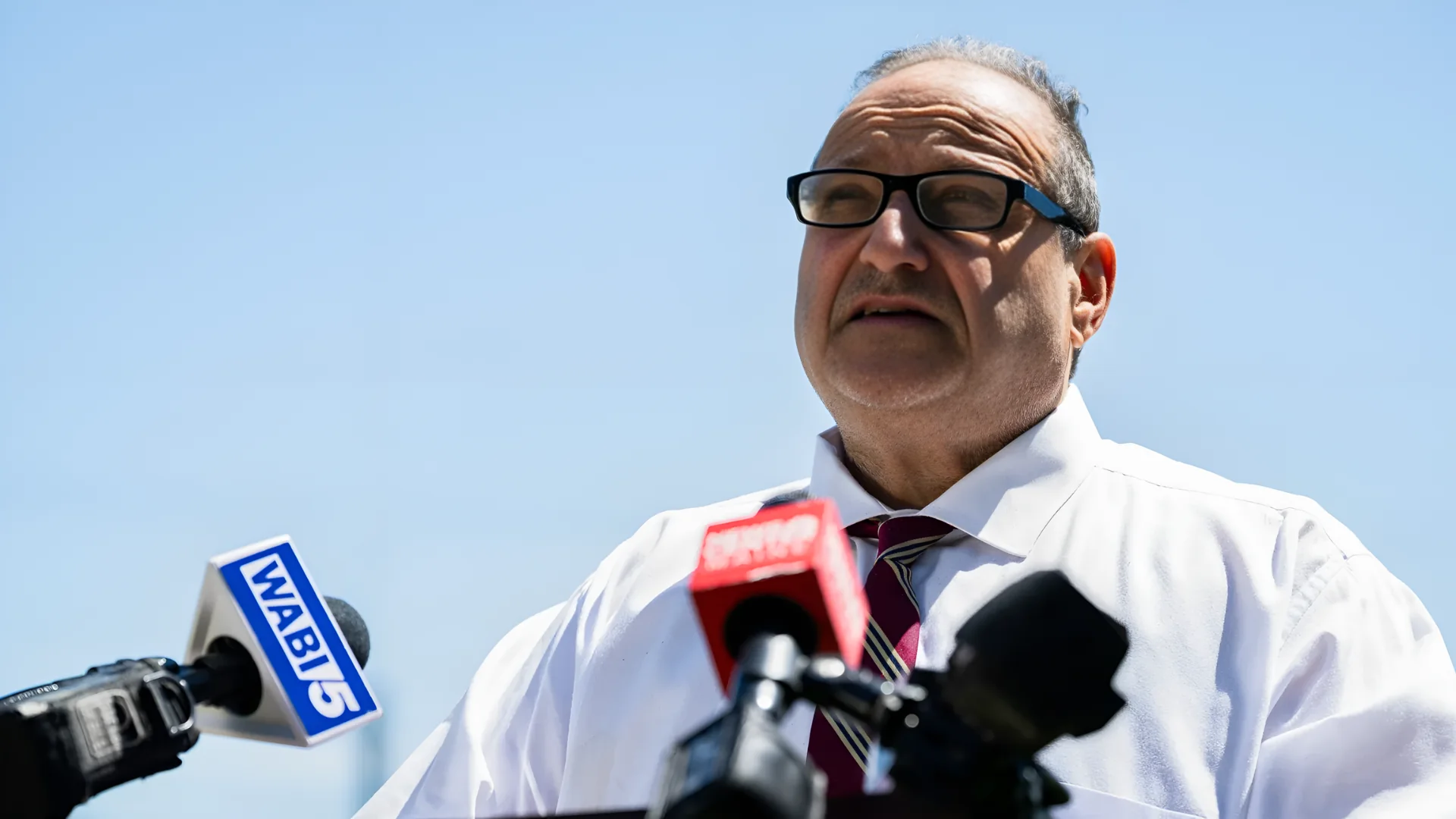
Maine's 2026 Democratic primary season concluded Friday when ranked choice tabulations confirmed the party's nominees in two contested races: former Secretary of State Matt Dunlap in the 2nd Congressional District and former House Speaker Hannah Pingree for governor.
Dunlap Wins a Three-Way ME-02 Contest the DCCC Was Watching
Matt Dunlap won the Democratic nomination in Maine's 2nd Congressional District through a ranked choice runoff, completing a tabulation process that began after the June 9 primary. Dunlap, a former Secretary of State and current State Auditor, faced state Sen. Joe Baldacci, former congressional staffer Jordan Wood, and social worker Paige Loud in the Democratic field.
First-round results from June 9 showed Baldacci leading with roughly 31.5%, with Dunlap at 28.9% and Wood at 28.7% — a three-way split tight enough to require ranked choice tabulation to determine the eventual nominee.
Dunlap now faces former Gov. Paul LePage, a Republican who was unopposed in his primary, in a general election contest for a seat Democrats are working to hold as part of their broader fight for House control. ME-02 is a competitive swing district, and the DCCC had been closely monitoring the race given its significance to House majority math.
The chart below shows where the first-round Democratic vote landed on June 9, before ranked preferences redistributed ballots to Dunlap.
Pingree Takes the Governor's Race After a Crowded Ranked Field

Hannah Pingree won the Democratic nomination for Maine governor, with Bobby Charles winning on the Republican side. They will face Independent gubernatorial candidate Rick Bennett in November.
Pingree, a North Haven resident who served four terms in the Maine House of Representatives including stints as speaker and majority leader, had worked in the Mills administration before launching her gubernatorial bid. The Democratic field also included Secretary of State Shenna Bellows, former state Senate President Troy Jackson, energy executive Angus King III, and former Maine CDC Director Nirav Shah — who had led in several early polls.
No candidate reached a majority on June 9, sending the race through ranked choice tabulation. Pingree's win was consistent with at least one pre-election simulation: a SurveyUSA poll that modeled ranked choice outcomes had projected Pingree narrowly winning despite placing third in first-choice votes.
Jackson's Loss Marks the Clearest Setback for Platner's Intraparty Reach

The gubernatorial outcome carries specific implications for Graham Platner, the progressive oyster farmer and military veteran who won the Democratic Senate nomination on June 9 to face Republican Sen. Susan Collins in November.
Former Maine State Senate President Troy Jackson, an economic populist who was Platner's top gubernatorial pick and had appeared alongside him at campaign events, was viewed as a top contender but did not advance. Platner had ranked Jackson first on his ballot when he voted early, citing shared views on labor organizing and economic policy. He ranked Bellows second and Pingree third.
That arrangement was part of a coordinated strategy. In late May, Platner joined Jackson, Pingree, and Bellows at a joint news conference in Portland, formalizing what had become an open alliance among the three gubernatorial candidates aimed at consolidating votes against primary leader Nirav Shah.
The alliance produced a split result. Pingree, Platner's third-ranked choice, won the nomination. His first choice, Jackson, did not. Jackson's loss is described as a blow to Platner as he seeks to unseat Collins in November's midterm elections, given Jackson had stood by Platner's candidacy through mounting fallout over allegations of abuse in past relationships with women and questions about a tattoo with Nazi origins that Platner later covered up.
Platner himself had won the Senate primary outright on June 9 with 71.9% of the vote, a result that did not require ranked choice tabulation. His Senate race against Collins remains one of the more closely watched contests in the 2026 cycle. Whether the loss of his closest intraparty ally in the gubernatorial race materially affects his general election standing is not yet clear from available sourcing.
What the Results Mean for Maine's November Ballot

Maine now has three competitive fall races shaped by the primary outcomes. Dunlap faces LePage in ME-02, a district that has historically swung between parties and that national Democrats view as a must-hold seat. Pingree faces Republican Bobby Charles and Independent Rick Bennett in the open governor's race. And Platner faces Collins in a Senate contest that Democrats need to flip if they hope to gain a Senate majority.
The ranked choice process that determined both the ME-02 and gubernatorial nominees stretched the primary calendar by ten days past the June 9 vote, a feature of Maine's electoral system that makes its intraparty dynamics more visible than in most states. The final vote margins for both Dunlap and Pingree had not been published in certified form at time of publication.

Bill Pulte Fires 51 ODNI Staff in First Week as Acting DNI
Acting DNI Bill Pulte removed 51 ODNI personnel in his first week, with bipartisan critics warning the cuts risk the post-9/11 intelligence coordination mission.

Starmer Announces Resignation, Clearing Labour's Path to Burnham
Starmer resigns as UK prime minister after Burnham's by-election win triggers cabinet defections; gilt yields rise as markets price in leadership transition risk.


UF Names Stuart Bell President Amid DEI Controversy
UF trustees voted June 10 to appoint former University of Alabama president Stuart Bell as UF's 14th president, ending a search repeatedly disrupted by conservative pressure over DEI records. A $1.45 billion stadium project was announced the same week.

UK Gives Apple and Google 3 Months on Child Nude Images
UK Prime Minister Keir Starmer has issued a three-month deadline for tech companies to activate or build default protections blocking minors from taking, sending, or viewing nude imagery on smartphones and tablets, with legislation threatened if they refuse.
Comments (0)
Please sign in to join the discussion.
No comments yet.
Be the first to share your perspective on this topic.