
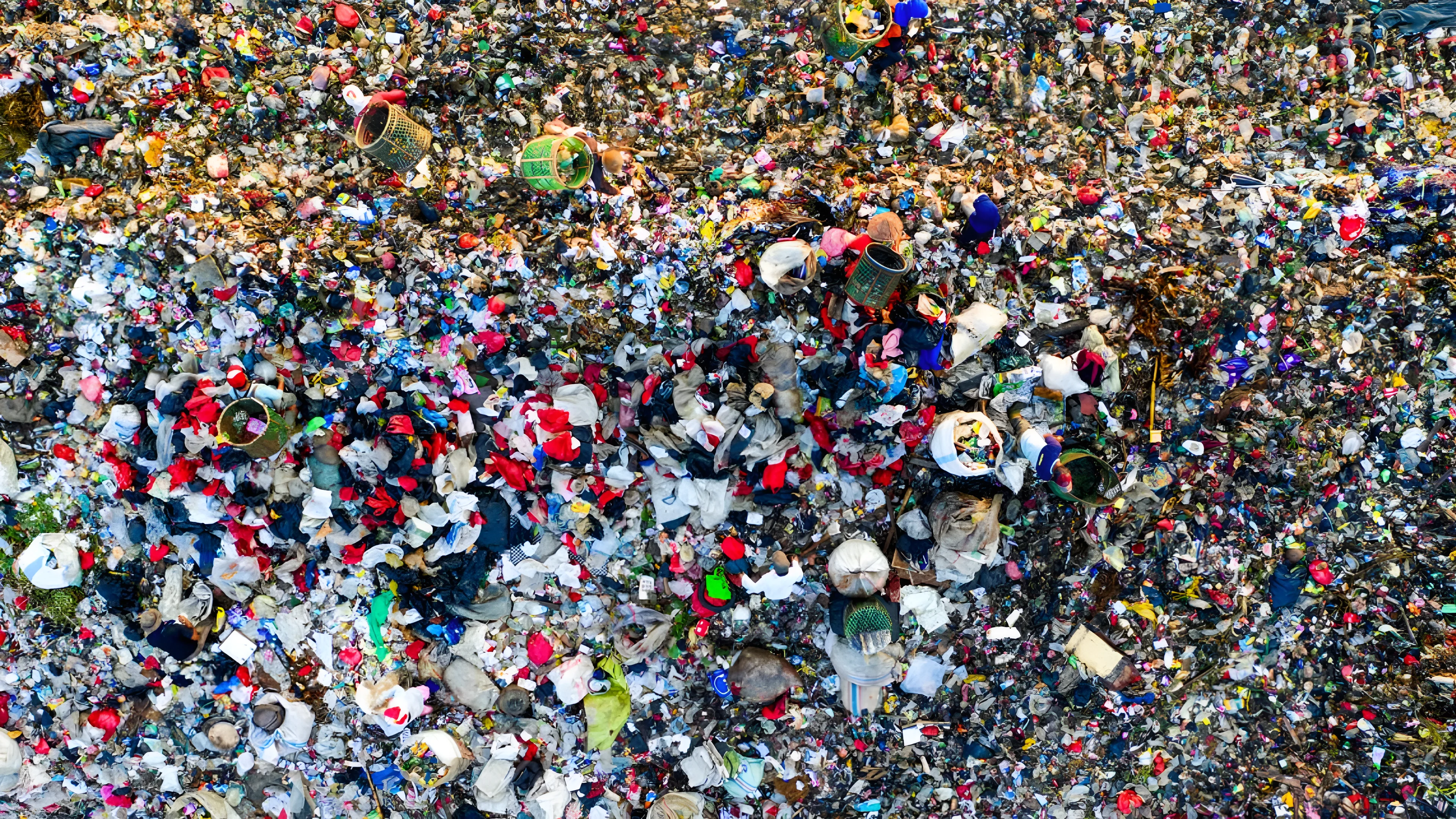
A coalition of 17 state attorneys general, led by Nebraska, has joined a national wholesalers' trade group in suing California over its landmark plastic packaging law, arguing the state is regulating commerce it has no authority to touch.
A 17-State Coalition Challenges SB 54's Reach Beyond California's Borders
The lawsuit, State of Nebraska et al. v. Heller et al., was filed June 22, 2026, in the U.S. District Court for the Eastern District of California. Nebraska Attorney General Mike Hilgers leads a bloc that also includes Alabama, Florida, Georgia, Idaho, Indiana, Iowa, Louisiana, Missouri, Montana, North Dakota, Oklahoma, South Carolina, South Dakota, Texas, Utah, and West Virginia. The National Association of Wholesaler-Distributors joined as the sole business plaintiff, representing companies that move packaged goods across state lines and into California regardless of where they are based.
The suit arrives just weeks after California's underlying regulations took effect on May 1, 2026, giving the plaintiffs a concrete compliance deadline to point to rather than a hypothetical future burden.
The Law at the Center of the Fight: From a Ballot Compromise to a $5 Billion Fund
The statute being challenged, SB 54, was signed by Governor Gavin Newsom on June 30, 2022, after negotiations with the American Chemistry Council produced a compromise designed to head off a stricter polystyrene ban that was headed for the November ballot.
The law's targets are specific and escalating. Single-use plastic packaging and food service ware must drop 25% by 2032. Plastic items sold or distributed in the state must be 30% recyclable by 2028, rising to 65% by 2032. Expanded polystyrene containers face a de facto ban tied to the same recycling-rate ladder, starting at a 25% threshold in 2023 and climbing to 65% by 2032. To fund cleanup and mitigation, plastic and packaging producers must pay $500 million annually for ten years into a pollution mitigation fund, a total of $5 billion. Noncompliance carries penalties of up to $50,000 per day.
Administering all of this falls to the Circular Action Alliance, a state-appointed Producer Responsibility Organization that producers must register with and pay fees to directly, rather than through a government agency.
Delegating Power to a Private Group Is the Crux of the Constitutional Claim
The plaintiffs' core arguments go beyond a simple dispute over recycling math. They contend SB 54 violates the Dormant Commerce Clause by reaching across state lines to dictate how out-of-state manufacturers must package and sell products just to access the California market. They also argue the law restricts and compels speech and association in violation of the First Amendment.
The most structurally distinctive claim concerns the Circular Action Alliance itself. The complaint argues that California has unlawfully delegated taxing and regulatory authority to a private third party, and that the fee methodologies CAA uses to assess producers are confidential and shielded from public scrutiny. That combination, plaintiffs argue, removes a layer of accountability that would normally apply if a state agency set and collected the fees directly.
Industry groups frame this as a matter of being forced to fund and answer to a private entity's internal rules in order to do business nationally, not merely a disagreement over environmental policy. National Stewardship Action Council and other proponents counter that the structure properly shifts the cost of managing packaging waste onto the companies that produce it, rather than leaving taxpayers and local governments to absorb it. Legal experts cited by the Natural Resources Defense Council and former EPA officials have characterized the suit as a familiar industry delay tactic and say they doubt it will succeed on Commerce Clause grounds, though that assessment is their prediction, not a settled legal outcome.
An Oregon Precedent—and a Second Lawsuit From the Other Direction
The California case does not arrive without a test run. In February 2026, a federal court in Oregon granted a preliminary injunction blocking a structurally similar extended producer responsibility law, with a trial on the merits scheduled for July 13–17, 2026. How that case resolves could shape the trajectory of the California suit, since both rest on comparable delegation and commerce-clause theories applied to comparable producer-responsibility structures.
California's law is also facing pressure from the opposite direction. A separate coalition of environmental groups, including the NRDC, is suing state regulators at CalRecycle, arguing the finalized rules are too lenient. That suit contends the regulations create loopholes, permit recycling methods the groups describe as illusory or environmentally unsound, and narrow the definition of covered materials in ways that amount to greenwashing.
The dispute over SB 54 is unfolding against a backdrop the law was written to address: the United States is the world's largest plastic polluter, with a domestic recycling rate that has historically run between 5% and 6%. California alone spends an estimated $500 million a year clearing plastic waste from its beaches and waterways. Whether SB 54 survives in its current form, gets narrowed by the courts, or is reshaped further by the CalRecycle litigation, the state's cleanup costs and the underlying recycling shortfall remain the baseline conditions any outcome will have to contend with.

A Windless Heat Mass Pushes France's Heat Record, UK Rail and Water Systems to the Brink
A slow-moving, windless heat mass from the Sahara set France's hottest day on record, triggering drownings, UK rail cuts, a reactor shutdown and hosepipe bans.

MMA Thermal Runaway: Garden Grove Tank Incident
A methyl methacrylate storage tank at GKN Aerospace in Garden Grove, California overheated in May 2025. This explainer covers the exothermic polymerization mechanism that makes MMA storage hazardous and what the incident timeline revealed.

Tap vs. Bottled Water: PFAS and Microplastics Risk
New research shows bottled water carries far more nanoplastics than treated tap water, while tap water faces PFAS contamination in nearly half of U.S. systems. What consumers can actually do.

Comments (0)
Please sign in to join the discussion.
No comments yet.
Be the first to share your perspective on this topic.