
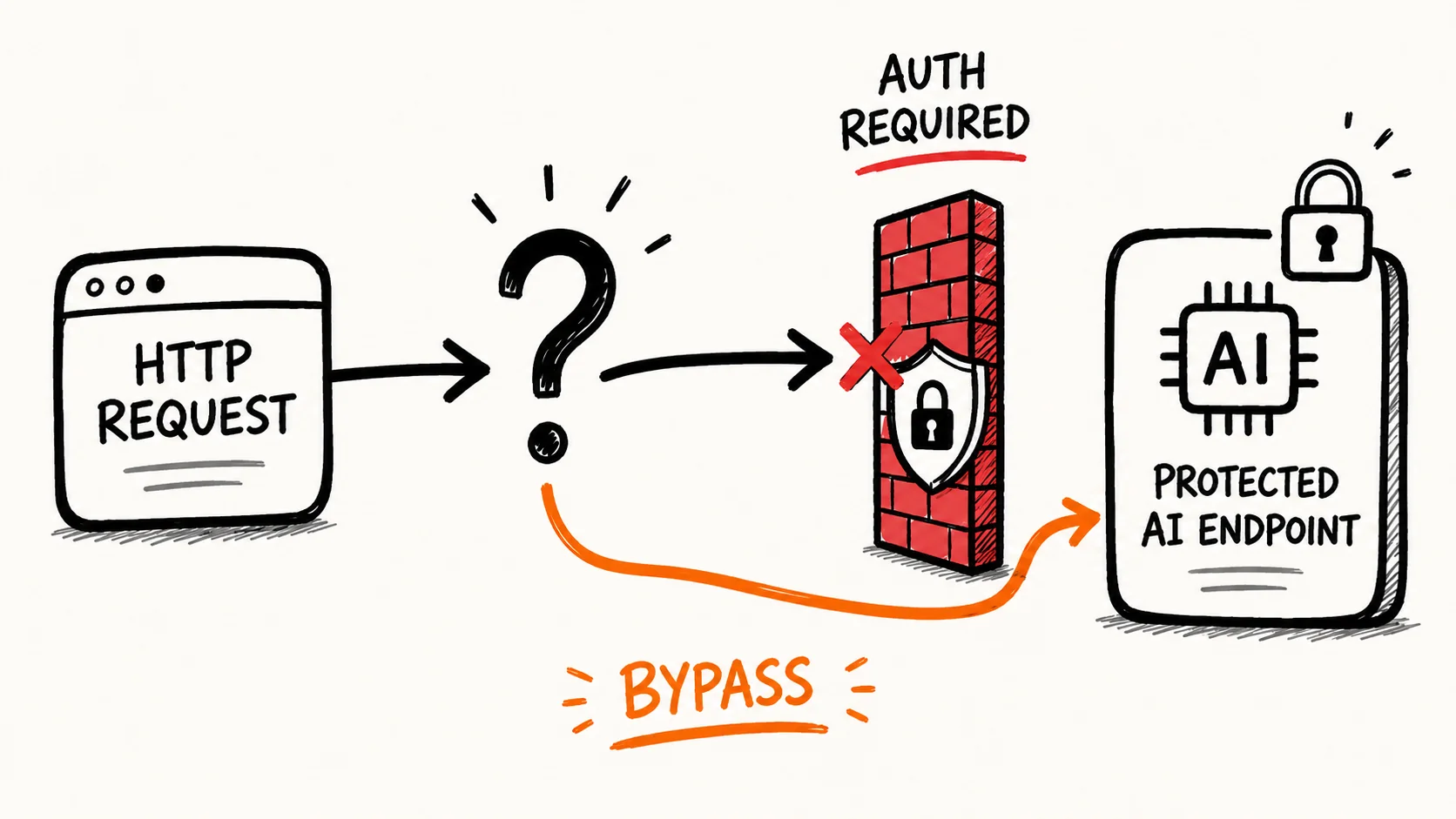
A single question mark appended to an HTTP Host header is enough to bypass path-based authentication in applications built on Starlette, the Python async web framework at the foundation of FastAPI, LiteLLM, vLLM, and most of the Python AI toolchain. The vulnerability, tracked as CVE-2026-48710 and disclosed publicly in late May 2026 by German security firm X41 D-Sec via OSTIF, is exploitable by any unauthenticated remote attacker with network access to an affected service.
How the Host Header Becomes an Authentication Bypass
Starlette reconstructs the full request URL by concatenating the value of the HTTP Host header with the incoming request path, then re-parses the assembled string. It does not validate the Host value against the character constraints defined in RFC 9112 or RFC 3986. When an attacker injects a URI-special character — ?, /, or # — into the Host header, the re-parse interprets it as a boundary character, shifting the path component of the reconstructed URL.
The result is a coordinate mismatch between two layers of the same stack. The underlying ASGI server routes the request based on the actual wire path it received — for example, /admin — and correctly hands it off to the admin handler. But before that handler executes, Starlette's path-based security middleware evaluates the poisoned, re-parsed URL, which no longer contains /admin as a protected path prefix. The middleware sees a different path, finds no matching restriction, and allows the request through. The handler runs.
This is demonstrable with a single curl command. A normal request to a protected route returns 403 Forbidden. The same request with Host: foo? instead of Host: foo returns 200 OK. The protected route executes. No credentials are required.
The root cause at the code level is the use of request.url or request.url.path in security middleware. Both properties return the reconstructed value. The raw wire path — unmodified by any Host concatenation — is available at request.scope["path"] and is unaffected by Host header content. The following flow shows how the two evaluation paths diverge.
Every Layer of the Python AI Stack Is Exposed
The impact of CVE-2026-48710 extends well beyond Starlette itself because Starlette is the ASGI foundation on which most of the Python AI and LLM infrastructure stack is built. FastAPI, which wraps Starlette directly, inherits the flaw in every application using its middleware for route protection. LiteLLM exposes admin and API key management interfaces through this path. vLLM's model and runtime control surfaces — including endpoints that can load plugins or execute tool calls — are reachable via the same bypass.
The severity varies by what each platform exposes behind protected routes. Where those routes handle only configuration reads, the risk is information disclosure and tenant isolation failure. Where they accept plugin loading, code evaluation, or tool execution, the risk rises to remote code execution. Internal cloud metadata services are reachable via SSRF from several of the affected platforms, depending on deployment topology.
The OSTIF disclosure notes that slow patching rates across live production services drove the decision to go public in late May 2026 despite ongoing exposure. The researcher, a senior security expert at X41 D-Sec, discovered the flaw during an OSTIF-funded audit of vLLM, with downstream notification assistance from AWS. The chart below reflects ordinal editorial assessments of control surface exposure for each affected platform category, derived from the OSTIF and badhost.org source descriptions.
Three Mitigations, One Must Be Applied Now
Three distinct remediation paths exist for CVE-2026-48710. They are not mutually exclusive — operators running exposed services should apply all three in parallel where possible.
The most direct fix is upgrading to Starlette 1.0.1, which patches the Host header reconstruction flaw directly. All container images, virtual environments, and vendored copies of Starlette must be rebuilt after the upgrade; updating the package in place without rebuilding images leaves the flaw active in any layer that vendored an older copy.
The code-level fix — applicable when a full upgrade cycle cannot proceed immediately — is replacing any use of request.url or request.url.path in security middleware with request.scope["path"]. The scope path is the raw value set by the ASGI server from the actual wire bytes; it is not subject to any Host header reconstruction and cannot be poisoned by this technique.
The infrastructure fix is deploying an HTTP/1.1-compliant reverse proxy — Nginx, Apache httpd, or Cloudflare — in front of the ASGI server. These proxies actively reject malformed Host headers by default, blocking the poisoned request before it reaches Starlette. For services already behind a properly configured reverse proxy, the exploit path is substantially narrowed, though not eliminated if the proxy configuration deviates from defaults.
X41 D-Sec has published Semgrep rules and CodeQL queries to identify vulnerable request.url usage in existing codebases. The badhost.org site offers a free remote scanner for public HTTP endpoints. This flaw shares structural characteristics with a prior Host-header-class supply chain compromise that demonstrated how header manipulation can undermine assumptions baked into framework internals. The cards below summarize the three mitigation lanes and their scope.

Drew Houston Steps Down as Dropbox CEO After 19 Years
Dropbox co-founder Drew Houston is stepping down as CEO after 19 years, naming Ashraf Alkarmi co-CEO and eventual sole successor as revenue growth stalls near zero and rivals deepen AI integrations into cloud storage.
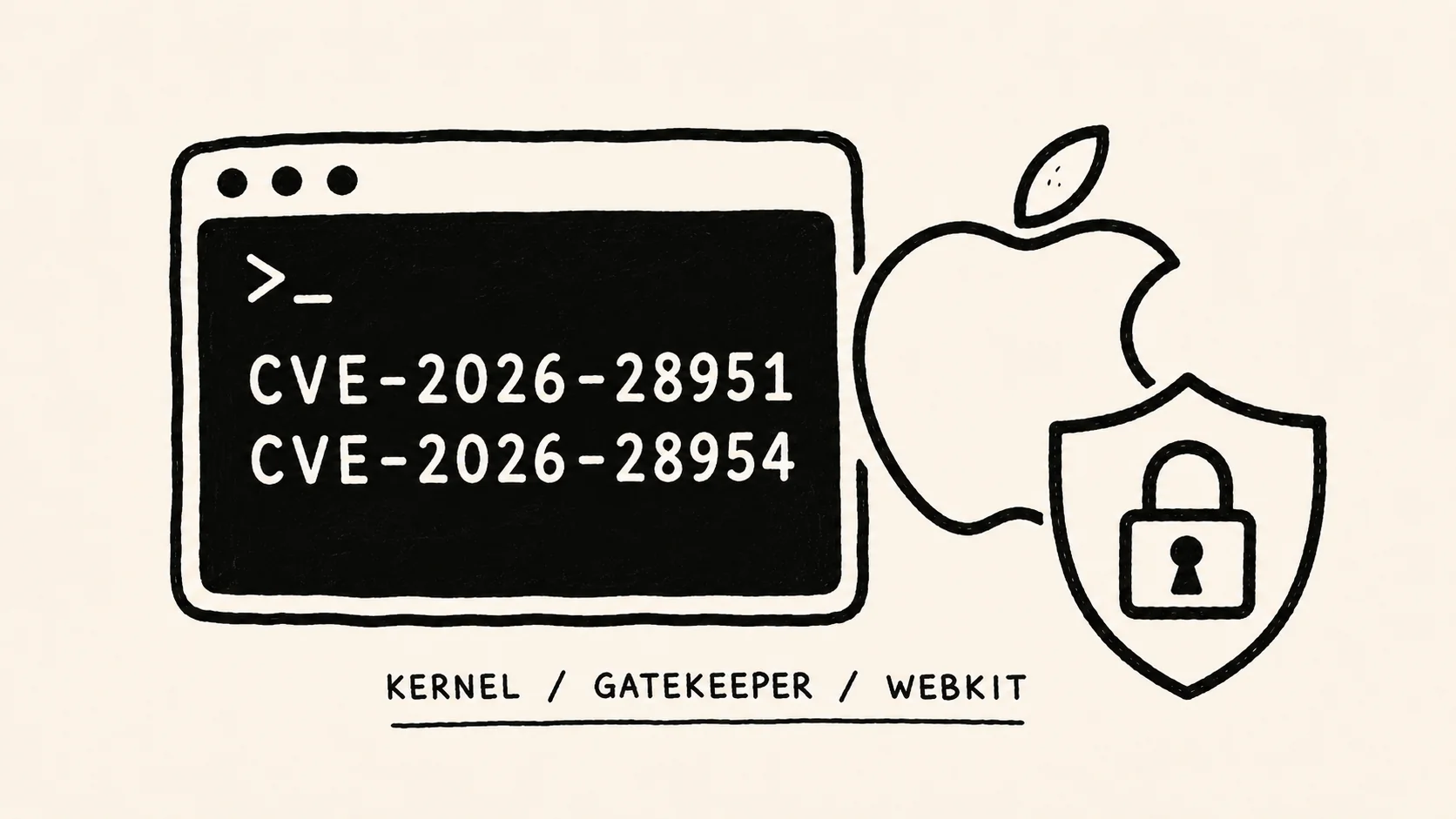
macOS Tahoe 26.5 Security Patches: Key Vulnerabilities Fixed
macOS Tahoe 26.5 patches kernel privilege escalation, memory corruption, a Gatekeeper disk-image bypass, and multiple WebKit content-processing flaws released May 11, 2026.
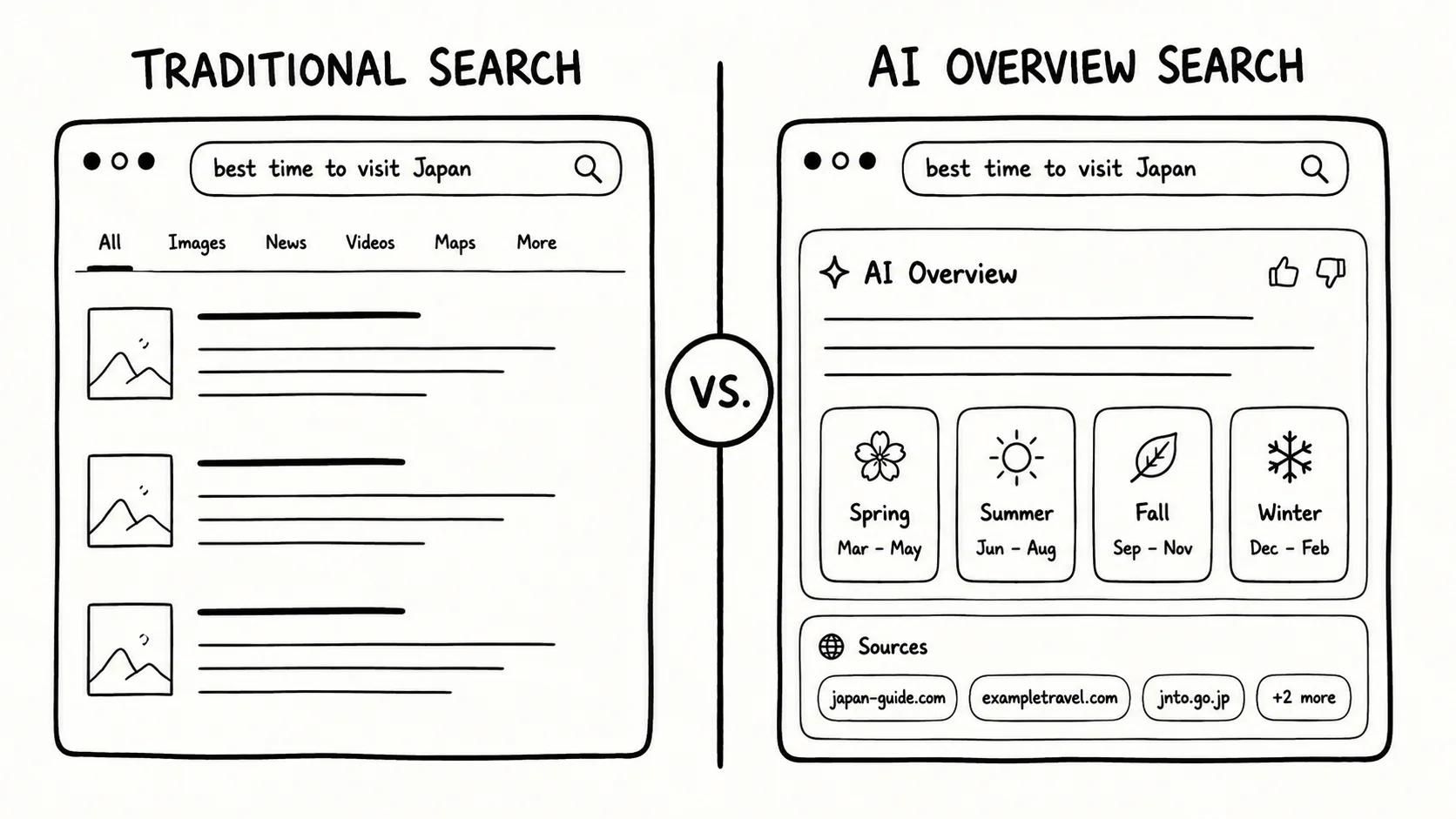
6 Search Engines to Use Instead of Google in 2026
As Google transforms its search results with AI-generated summaries following Google I/O 2026, six alternatives offer users more control: Kagi, DuckDuckGo, Startpage, udm14, Brave, and Ecosia.
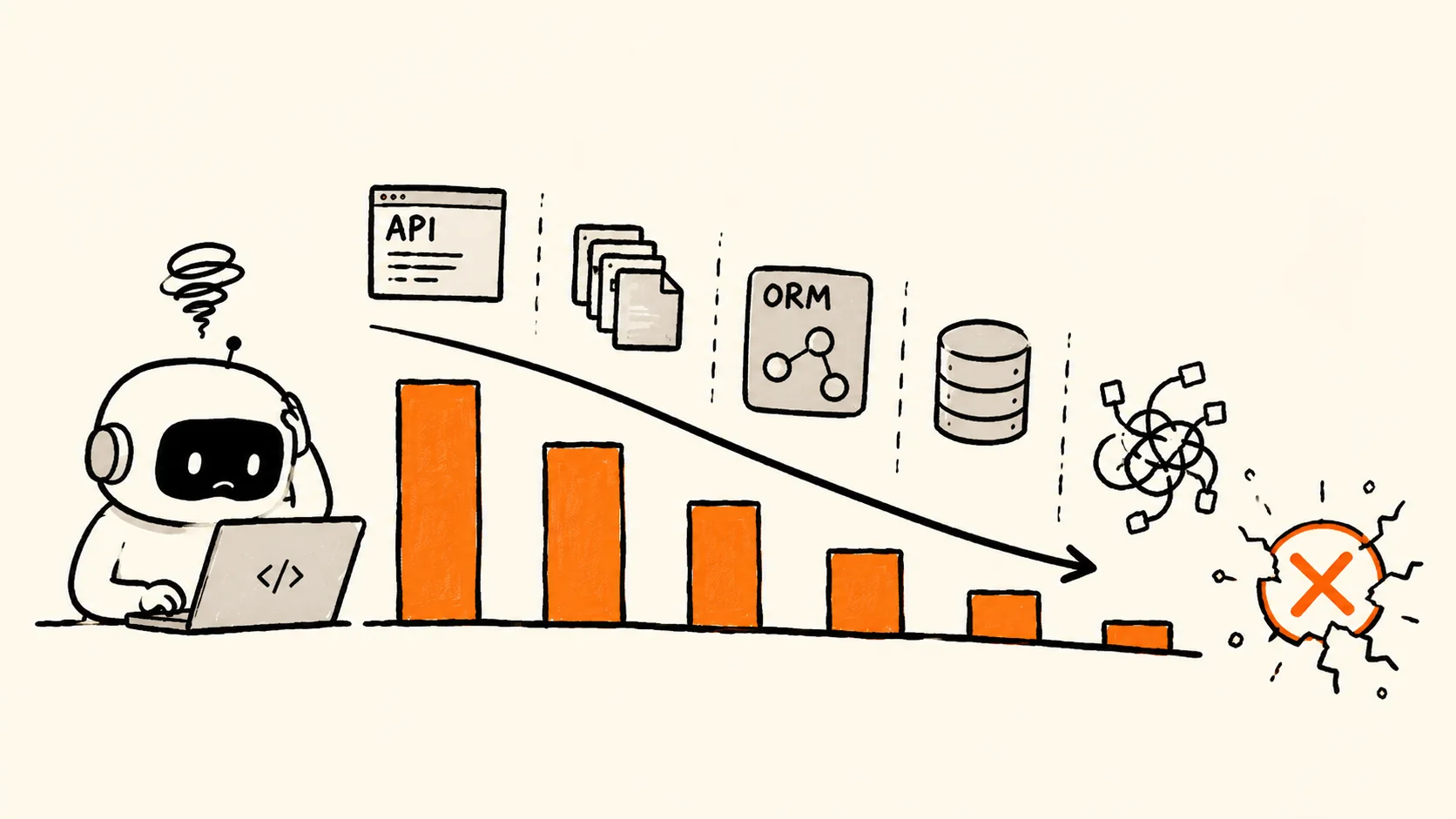
LLM Coding Agents Fail Under Production Constraints
Researchers identify "constraint decay" in LLM coding agents — a sharp performance drop as architecture, database, and ORM requirements stack up in production-grade tasks. Capable agents average 30 points lost; weaker ones near zero.
Comments (0)
Please sign in to join the discussion.
No comments yet.
Be the first to share your perspective on this topic.