

Drew Houston is stepping back from day-to-day control of the company he co-founded nineteen years ago. The leadership change arrives as Dropbox's revenue growth has effectively plateaued and rivals have embedded AI directly into the cloud storage and productivity tools competing for the same users.
Houston's Exit Comes as Revenue Growth Stalls Near Zero
Dropbox reported Q1 2026 revenue of $629.5 million, a year-over-year increase of less than one percent, according to CNBC's reporting on the announcement. That figure is not a sudden deterioration — it reflects a multi-year deceleration as enterprise buyers have found cloud storage increasingly bundled into platforms they already pay for. Microsoft has woven Copilot deeply into OneDrive and Teams. Google announced its Workspace AI agent platform at Cloud Next 2026. Both moves tighten the competitive perimeter around Dropbox's core storage and collaboration business without requiring customers to cancel and switch — they simply expand into tools they already have.
The company's market cap, sitting at roughly $6.5 billion at the time of the announcement, sits at approximately half its March 2018 IPO peak by the company's own account. Activist investor Half Moon Capital has separately been pressing Dropbox to eliminate its dual-class voting structure, adding governance pressure on top of the competitive strain. The chart below captures the three headline financial data points reported at the time of the transition.
A Three-Step Leadership Handover, Not an Abrupt Departure
Houston's exit follows a deliberate sequence rather than a clean break. Ashraf Alkarmi, 47, was named co-CEO effective immediately and will eventually assume the role as sole CEO; Houston will then move into an executive chairman position. Michael Torres, currently VP of product for Google Chrome, is joining Dropbox as Chief Product Officer on July 7, 2026.
Alkarmi joined Dropbox in November 2024 as senior vice president and general manager of its core business, arriving from Vimeo, where he served as Chief Product Officer. He also held product leadership roles at Amazon and Meta. His eighteen-month tenure has coincided with Dropbox's most visible AI push to date, including the development of Dropbox Dash — an AI-powered universal search tool designed to aggregate workflows across multiple workplace applications. The Torres hire, coming directly from Google Chrome's product team, suggests the new leadership pair intends to compete on interface and discovery rather than storage capacity alone. The timeline below maps the transition sequence from Alkarmi's appointment through the eventual sole-CEO handover.
Houston's AI Next Chapter and What the Dropbox Dash Bet Signals
Houston framed his departure on his own terms. Speaking to CNBC, he described his next focus as entrepreneurial and centered on artificial intelligence, and explicitly dismissed the possibility of conventional retirement. He also pushed back against what he called a "SaaS Apocalypse" narrative, telling the network that he has not encountered a customer who cancelled a Dropbox subscription specifically to use a foundation model like ChatGPT instead. That framing matters because it defines how the current leadership views the threat: not as direct substitution, but as platform-level displacement, where Google and Microsoft absorb collaboration workflows without requiring an explicit cancellation decision.
Dropbox Dash — the AI-powered search product built under Alkarmi's product tenure — represents the clearest answer the company has offered to that displacement risk. Rather than competing on storage, Dash attempts to position Dropbox as a cross-platform workflow aggregator, indexing and surfacing content across Slack, Google Drive, Notion, and other tools a knowledge worker uses simultaneously. Whether that is a defensible niche against the infrastructure investment Google and its enterprise partners are making in AI cloud services is unresolved, and the broader financial pressure on AI-adjacent software businesses remains significant. The flow below maps the strategic fork Dropbox is navigating: a core storage business under margin pressure from bundled competitors, and an AI search product that has not yet demonstrated the revenue contribution needed to change the company's growth trajectory.
Shares of Dropbox fell between roughly 1.4% and 2.4% on the day of the announcement. That reaction is muted relative to the scale of the transition, which may reflect that investors had already priced in the structural challenges the incoming leadership team now inherits.

BadHost Flaw Exposes AI Infrastructure to Auth Bypass
CVE-2026-48710 "BadHost" exploits Starlette's Host header reconstruction flaw to bypass authentication middleware in FastAPI, LiteLLM, vLLM, and most Python AI infrastructure. Patch to 1.0.1 immediately.

macOS Tahoe 26.5 Security Patches: Key Vulnerabilities Fixed
macOS Tahoe 26.5 patches kernel privilege escalation, memory corruption, a Gatekeeper disk-image bypass, and multiple WebKit content-processing flaws released May 11, 2026.
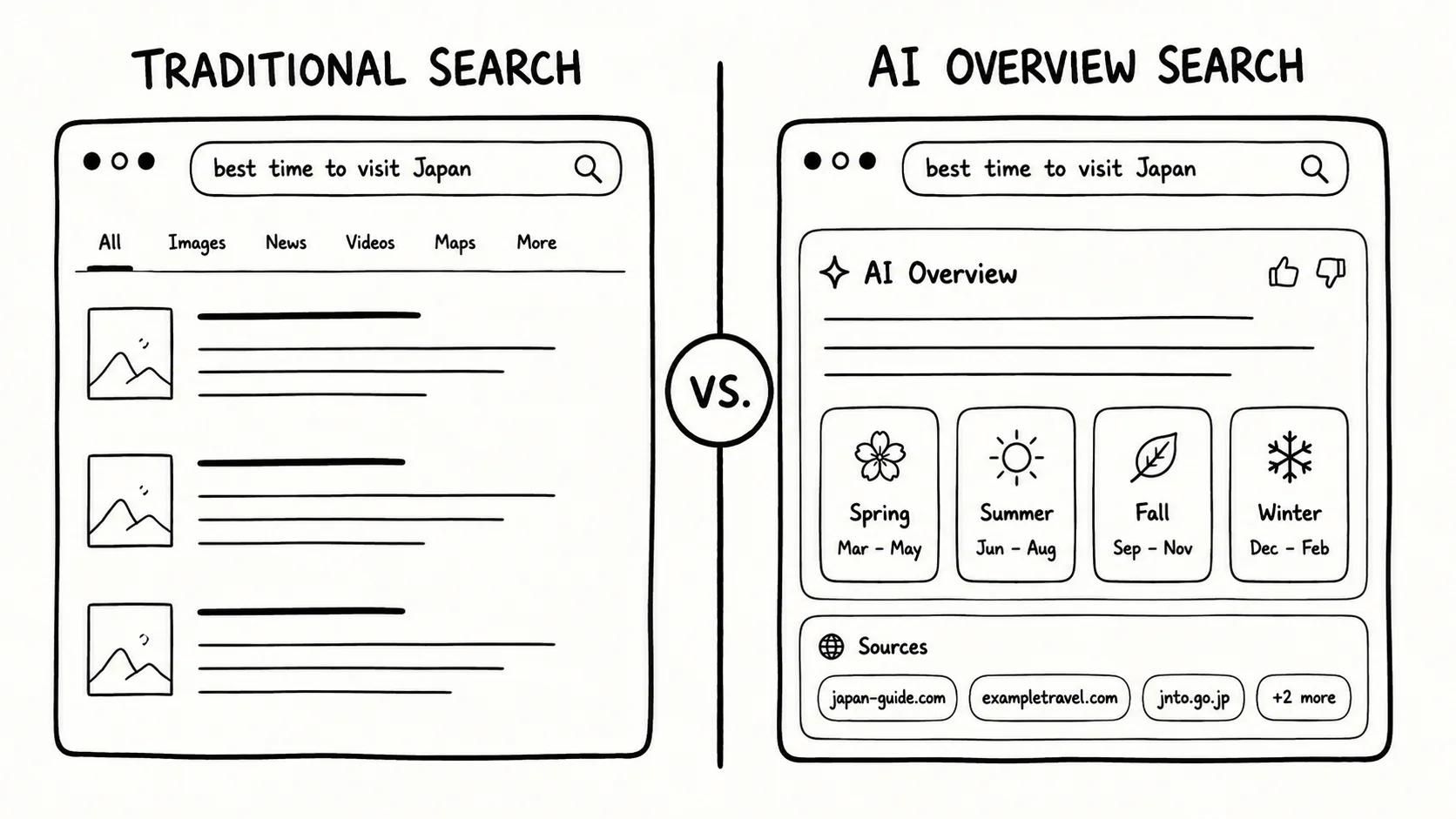
6 Search Engines to Use Instead of Google in 2026
As Google transforms its search results with AI-generated summaries following Google I/O 2026, six alternatives offer users more control: Kagi, DuckDuckGo, Startpage, udm14, Brave, and Ecosia.

LLM Coding Agents Fail Under Production Constraints
Researchers identify "constraint decay" in LLM coding agents — a sharp performance drop as architecture, database, and ORM requirements stack up in production-grade tasks. Capable agents average 30 points lost; weaker ones near zero.
Comments (0)
Please sign in to join the discussion.
No comments yet.
Be the first to share your perspective on this topic.