
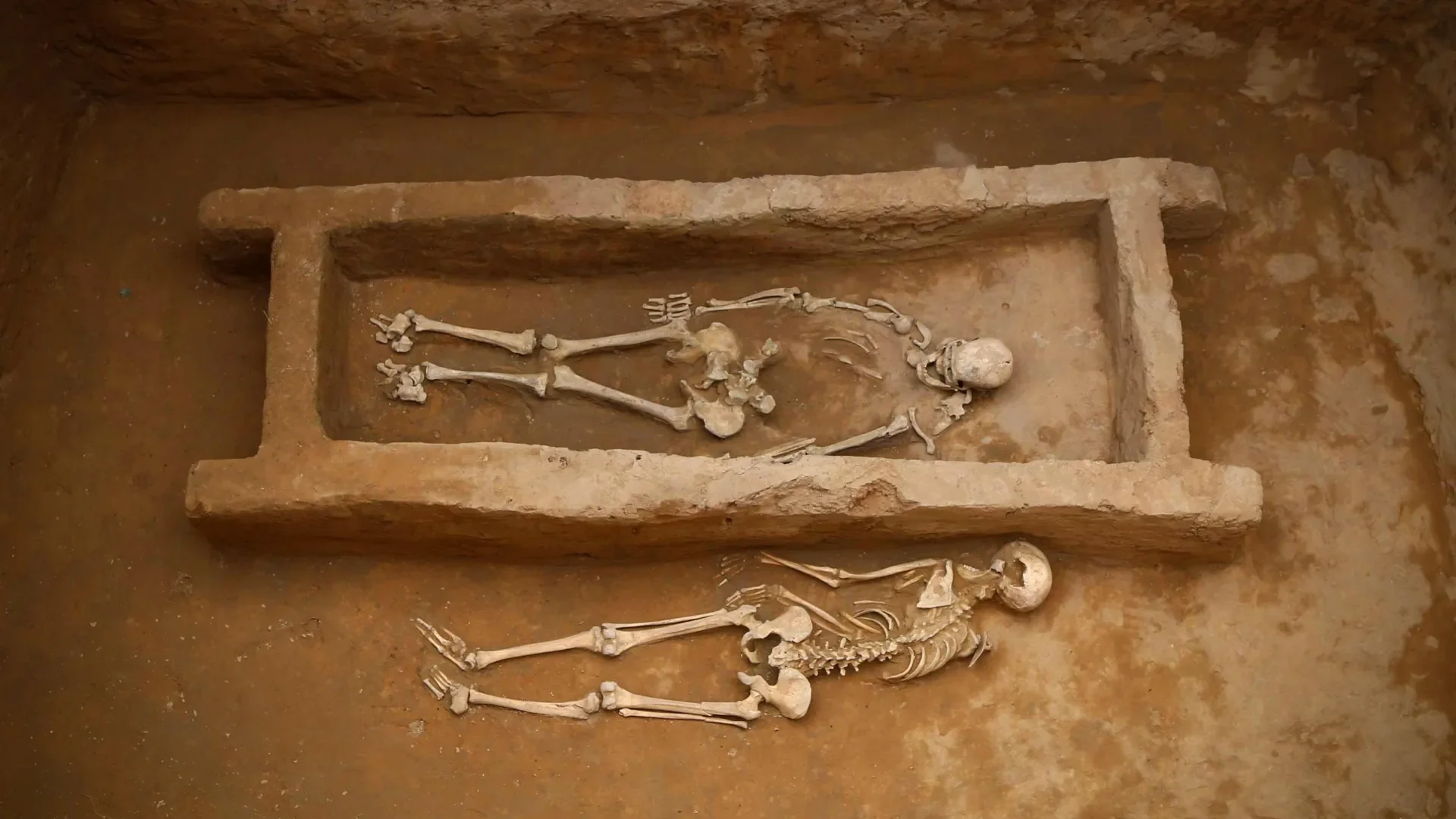
A 13-year ancient-DNA study of Shimao, a 4,000-year-old walled settlement in northern China, has reconstructed four generations of family ties among its tomb owners and found that nine of ten sacrificial victims examined at the site's East Gate were male, contrary to earlier interpretations that these sacrifices were female-biased based on skeletal morphology.
A Yangshao-Rooted Population That Held Steady for a Millennium
Shimao, in Shaanxi Province, was a stone-walled settlement of roughly four square kilometers dated to approximately 4,200 to 3,700 years before the present, a period archaeologists have linked to the emergence of socially stratified, state-level society in the region. According to the Nature study, the population most closely associated with Shimao culture was largely descended from local Yellow River farming communities that had lived in the same region roughly a thousand years earlier, a group linked to the Yangshao culture of the Loess Plateau. That continuity did not mean isolation: the same population showed genetic ties to distant southern and steppe populations, pointing to extensive prehistoric contact, including intermittent ancestry from a steppe-associated population in Inner Mongolia and southern ancestry patterns consistent with the northward spread of rice farming. The chart below traces that sequence — a stable local population punctuated by episodes of outside contact that never displaced it.
Four Generations of Fathers Traced Through 144 Shimao Genomes
The scale of the sampling is what made pedigree reconstruction possible. Over thirteen years, researchers generated genome-wide data from 169 ancient human samples, of which 144 were unrelated individuals used in the core population analysis, drawn from Shimao itself, its satellite settlements, and sites in southern Shanxi. From that pool, the study's kinship analysis identified 25 high-confidence pairs within second-degree relatedness — including one full-sibling pair and seven parent–offspring pairs — plus 31 more distant pairs suggestive of third- to fifth-degree kinship. Stitched together, those connections produced family pedigrees covering as many as four generations, revealing a hierarchy built on patrilineal descent, with women typically moving to join their male partners' families — a pattern confirmed independently through Y-chromosome haplogroups, which were far more uniform among male tomb owners than the diverse maternal lineages of the women buried beside them.
Male Skulls at the East Gate, Female Burials Beside the Elite
The most striking reversal concerns who was chosen for sacrifice, and where. More than 80 human skulls have previously been recovered from beneath Shimao's East Gate (Dongmen), long interpreted by earlier archaeological reports as predominantly female victims based on skeletal morphology. Genetic sexing of the examined Dongmen remains told a different story: nine of ten victims were biologically male, including three individuals previously classified as female by morphology. That pattern reversed sharply at the city's elite cemeteries. At Hanjiagedan, nearly all sampled sacrificed individuals were female — six of seven — and unrelated to the tomb owners they accompanied. At Huangchengtai, the presumed seat of the ruling class, fourteen of nineteen sacrificed individuals were female, and unlike the other sites, some of those victims showed second-degree kinship to one another, hinting that whole families or communities may have been selected together. The satellite site Zhaishan followed the same female-weighted pattern. The authors are careful to note that these are small subsamples, and the resulting sex-bias estimates carry real statistical uncertainty even as the pattern recurs across independent sites.
Taken together, the genetic, kinship, and sacrifice data point to a society where descent ran through fathers but where ritual roles, and occasionally elite status itself, were not assigned by sex alone. Two non-lineage women buried at Huangchengtai carried grave goods rivaling those of male tomb owners elsewhere in the city — a detail the authors flag as evidence that high social status and associated wealth may not have been constrained to men even within a patrilineal system. The paper's authors note that further sampling of individuals from intermediate social ranks will be needed to determine how permeable the boundary between Shimao's elite families and everyone else really was.

Gravity From Entropy Theory Explains How Life Emerges as Cosmic Entropy Rises
A Physical Review D study finds the universe's total entropy keeps rising while entropy per unit of volume falls as space expands, leaving room for structure.

Nanoplastics Push Bacterial Stress-Response Genes Up to 5-Fold in Drinking Water Biofilms
Nanoplastics raised bacterial stress-response genes up to 5.13-fold in a Water Research study, strengthening drinking-water biofilms against disinfectants.

AI Model Flags 261,000 Cancer Papers as Suspected Paper Mill Work
A BERT-based screening tool checked 2.6 million cancer papers and flagged 9.87% as textually similar to retracted paper mill studies, a new BMJ study finds.
A Two-Particle Dark Matter Model Tries to Explain Two Conflicting Anomalies at Once
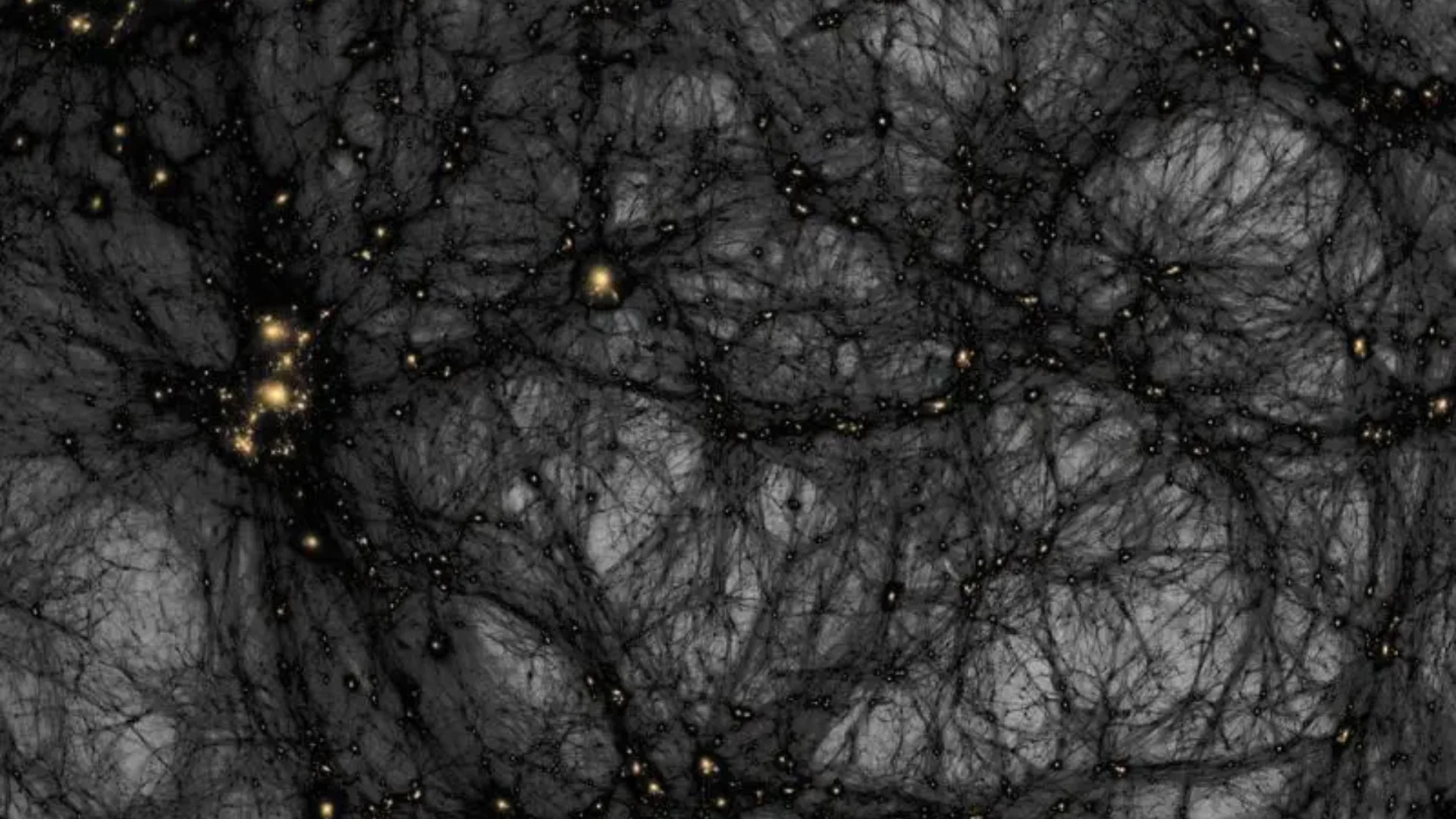
A Purple Mountain Observatory model with two dark-matter masses links diffuse dwarf-galaxy cores to a 3–6x lensing excess first reported by Meneghetti et al.
Comments (0)
Please sign in to join the discussion.
No comments yet.
Be the first to share your perspective on this topic.