
![DRC health workers retrieve the body of an Ebola virus victim from Rwampara Hospital morgue in Ituri province, June 09, 2026 [Anadolu Agency]](/uploads/1782059208554-More_than_70_medics_infected_with_Ebola_as_DRC_outbreak_spreads____fast___.webp)
The Democratic Republic of the Congo is battling its 17th Ebola outbreak under conditions that set it apart from every previous one: a strain for which no licensed vaccine or antiviral exists, a virus that has infiltrated a displacement camp housing 30,000 people, more than 70 infected health workers, and confirmed spread into Uganda.
Cases Are Climbing Past 800 — and Officials Say the Real Number Is Higher
The outbreak was officially declared in May 2026. By mid-June, WHO and ECDC tallies had documented more than 800 confirmed cases and over 130 deaths. But officials have said directly that actual figures are likely significantly higher, as limited surveillance capacity in conflict-affected eastern DRC leaves substantial transmission undetected.
On June 16, the Africa CDC issued a stark public assessment, warning that the current crisis has the potential to become the worst Ebola outbreak in history. The warning reflected not just case volume but the convergence of structural factors that previous outbreaks did not face simultaneously. The virus has also crossed into Uganda, a development that earlier reporting on the 676-case threshold and vaccine absence identified as a serious escalation risk even at lower case counts.
The figures below reflect the outbreak's documented toll as of June 19, 2026.
The outbreak has unfolded rapidly since the May declaration. The timeline below traces the documented escalation from the official declaration through the first cross-border confirmation.
Displacement Camps and Health Worker Attrition Are the Two Sharpest Amplifiers
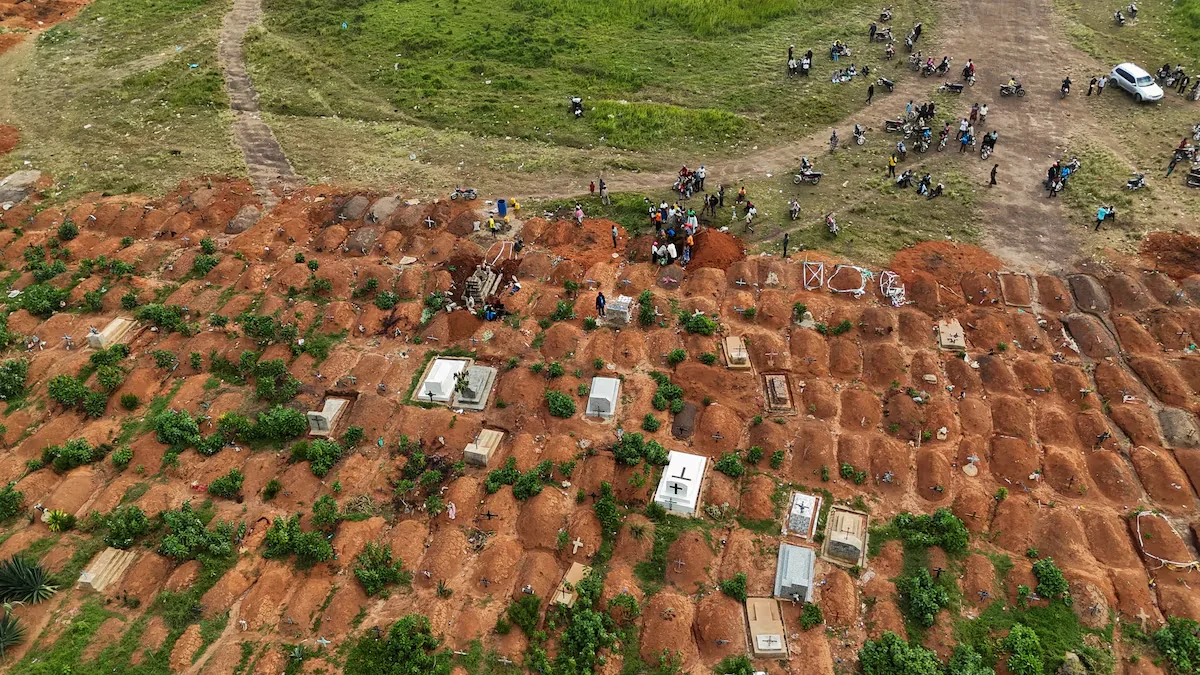
The virus's penetration into a displacement camp housing 30,000 internally displaced persons represents a qualitative shift in outbreak dynamics. At least 30 deaths have already been reported inside the camp. The conditions there — overcrowding, limited sanitation, and disrupted supply chains — are precisely those that sustain Ebola transmission chains. Reuters reported that residents have begun fleeing the camp in response, a pattern that historically seeds new transmission clusters in areas beyond the original response perimeter.
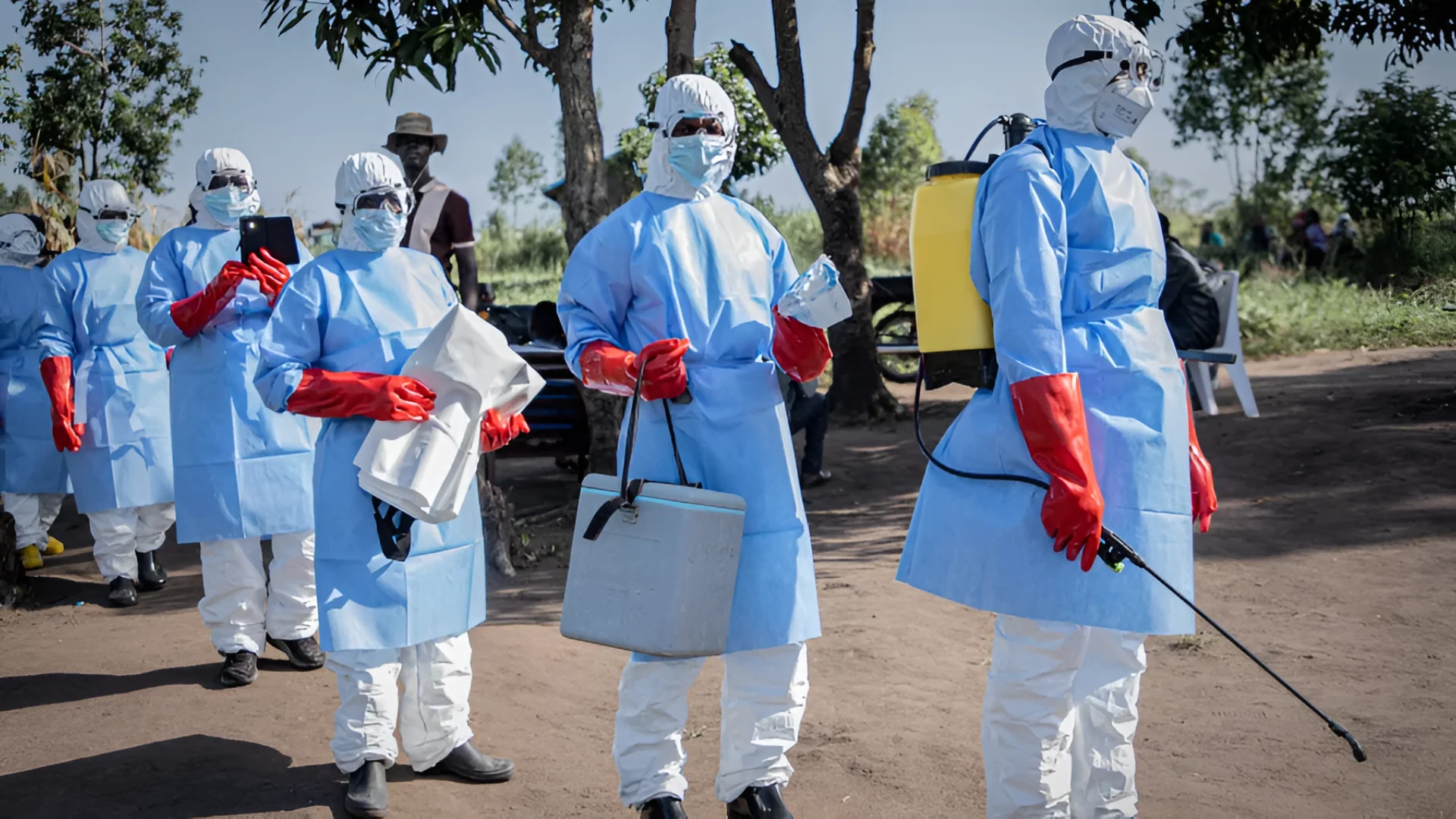
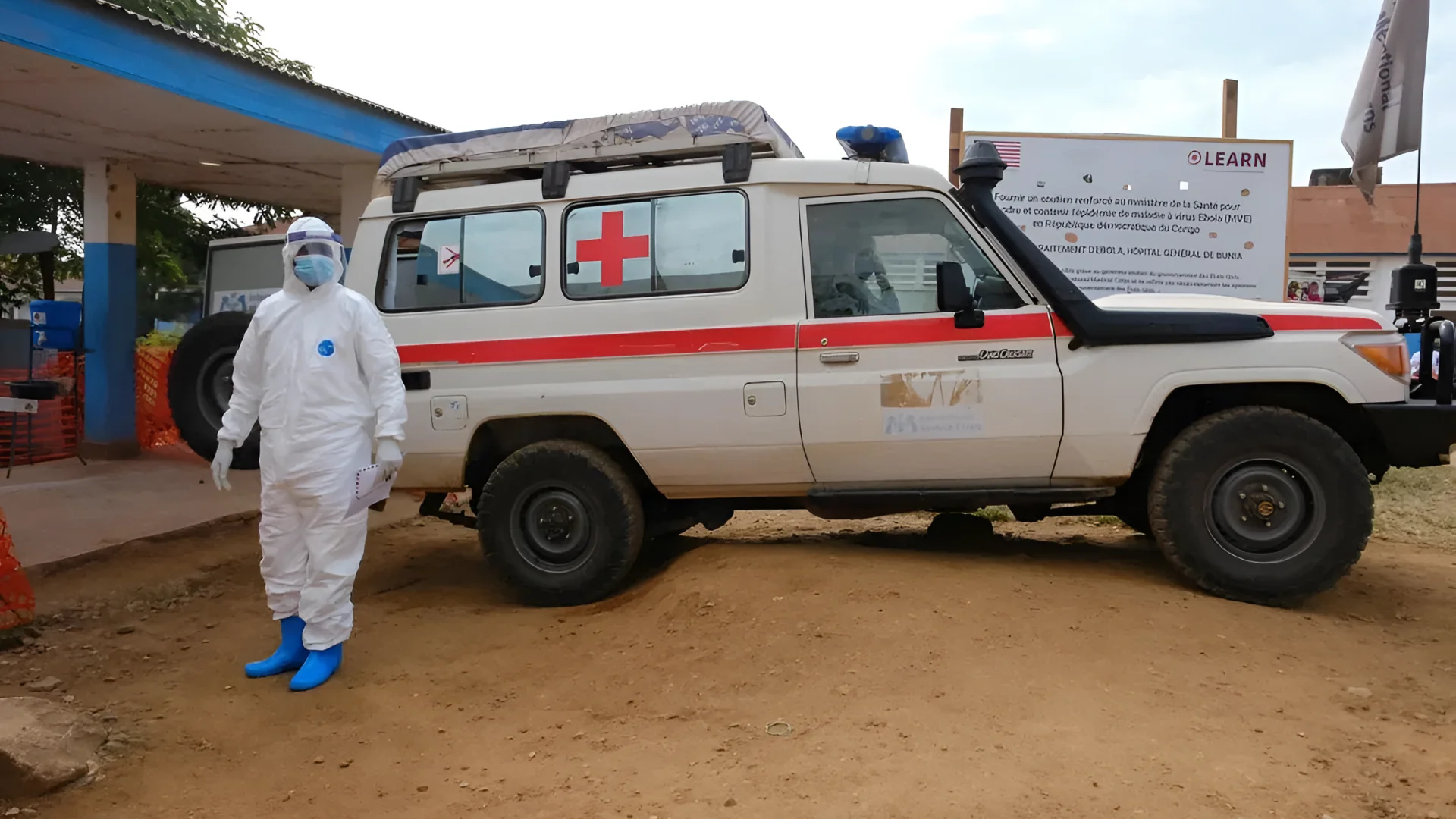
The parallel deterioration of health worker capacity compounds this problem in ways that are not easily offset by external surge support. More than 70 medical workers had been infected as of June 19, according to Al Jazeera, crippling the local clinical workforce at the moment it is most needed. This is not simply a numbers problem: each infected health worker removes a trained contact tracer, a safe burial team member, or a treatment facility staff member from the response — while simultaneously consuming treatment resources intended for the general population.
UNICEF officials have warned that as household transmission increases, children will become increasingly exposed. Early-phase Ebola outbreaks in this region have typically progressed from socially active adults — those moving through markets, health facilities, and community events — toward household contacts including dependent children. That shift, officials say, is now underway.
The scale and pace of deterioration across these two vectors — displacement and health worker attrition — is what the Africa CDC assessment captured when it raised the possibility of a historically unprecedented outcome.
The Bundibugyo Strain Has No Licensed Vaccine and No Approved Treatment
The 2018–2020 Kivu outbreak, the largest Ebola crisis in DRC history at the time, was eventually brought under control in part through the deployment of the rVSV-ZEBOV vaccine, which is licensed against the Zaire ebolavirus strain. That tool does not exist for the Bundibugyo strain. No licensed vaccine and no specific antiviral treatment have been approved for Bundibugyo ebolavirus. Response teams are operating with supportive care, contact tracing, and quarantine as their only proven tools while emergency clinical trials are established — a process that takes weeks to months to produce usable efficacy data.
This is the central constraint that makes the 2026 outbreak structurally different from the crisis it most closely resembles. As earlier reporting on the 676-case threshold and vaccine absence noted, the absence of a ring-vaccination option forces responders back to 1970s-era containment protocols: find cases, trace contacts, isolate, and repeat. In a displacement camp context, with armed conflict disrupting movement and community trust already fractured, those protocols face severe operational limits.
The chart below reflects how response teams' four primary containment tools compare in operational viability given the current structural conditions, scored on an ordinal editorial scale based on source-reported conditions.
Armed Conflict and Community Mistrust Are Constraining Every Response Tool
The absence of a vaccine is a fixed constraint. The conditions in eastern DRC amplify it. Health workers operating in the region face armed conflict that blocks access to outbreak zones, families who forcibly remove suspected Ebola patients from treatment centers, and communities that have, in some documented cases, attacked safe burial teams. These are not peripheral complications — they are the operating environment within which every containment protocol must function.
Armed groups in eastern DRC have made parts of the affected area inaccessible to response teams. Contact tracing, which requires identifying and monitoring everyone who has had exposure to a confirmed case, depends on freedom of movement. Quarantine enforcement requires sustained community cooperation. Safe burial — critical for interrupting Ebola's transmission route through infectious remains — requires teams that can safely reach and process burial sites without being driven off. Each of these protocols is degraded by the same security and trust environment.
Community mistrust has deep roots. Previous outbreak responses in eastern DRC, including during the 2018–2020 Kivu crisis, documented similar patterns of treatment center avoidance and resistance to contact tracers, driven in part by a community perception that entering Ebola treatment facilities was equivalent to a death sentence. That perception, even when inaccurate, is operationally consequential: it pushes cases underground, delays isolation, and prolongs transmission chains.
The compounding nature of these factors — no vaccine, camp overcrowding, 70+ infected health workers, cross-border spread, and security-constrained response — is what distinguishes this outbreak from the 16 that preceded it, and what prompted the Africa CDC's June 16 assessment. Understanding the outbreak's intersection with hunger and funding gaps is also necessary to understand the ceiling on what response teams can practically deliver.
The diagram below maps how these factors feed into a self-reinforcing transmission loop.
The core dynamic is self-reinforcing: cramped displacement conditions accelerate household spread, community resistance blunts containment protocols, health worker infections reduce the response workforce, and all of it compounds against an absence of any licensed pharmaceutical countermeasure. Whether the Africa CDC's worst-case framing translates into actual trajectory depends in large part on whether international support can scale faster than these amplifying factors.
DRC Ebola Outbreak Surpasses 1,000 Cases: Children Most at Risk
A WHO-declared public health emergency, the DRC Ebola outbreak now tops 1,000 cases. Children are dying at nearly twice the rate of adults, contact tracing covers only 58% of known contacts, and a $20 million funding gap threatens the six-month response plan.

Ultra-Processed Foods and Brain Health: What Studies Show
Research from Monash University, Harvard, and studies of tens of thousands of adults connects ultra-processed food intake to measurable cognitive decline, dementia risk, Parkinson's symptoms, and depression — with actionable thresholds in the data.
DRC Ebola Outbreak 2026: Hunger and Funding Gaps
The 2026 DRC Ebola outbreak has recorded 896 confirmed cases and 232 deaths in under a month, driven by Bundibugyo strain, no approved treatment, patient escapes linked to hunger, and $810M in pledged funds still undelivered.

Alpha-Gal Syndrome: What a Tick Bite Does to Your Diet
Alpha-gal syndrome is a delayed food allergy caused by tick bites that sensitizes the immune system to a sugar molecule found in mammalian meat. Cases are surging in the Midwest and Northeast, with new state-level reporting mandates and federal labeling legislation underway.
Comments (0)
Please sign in to join the discussion.
No comments yet.
Be the first to share your perspective on this topic.