
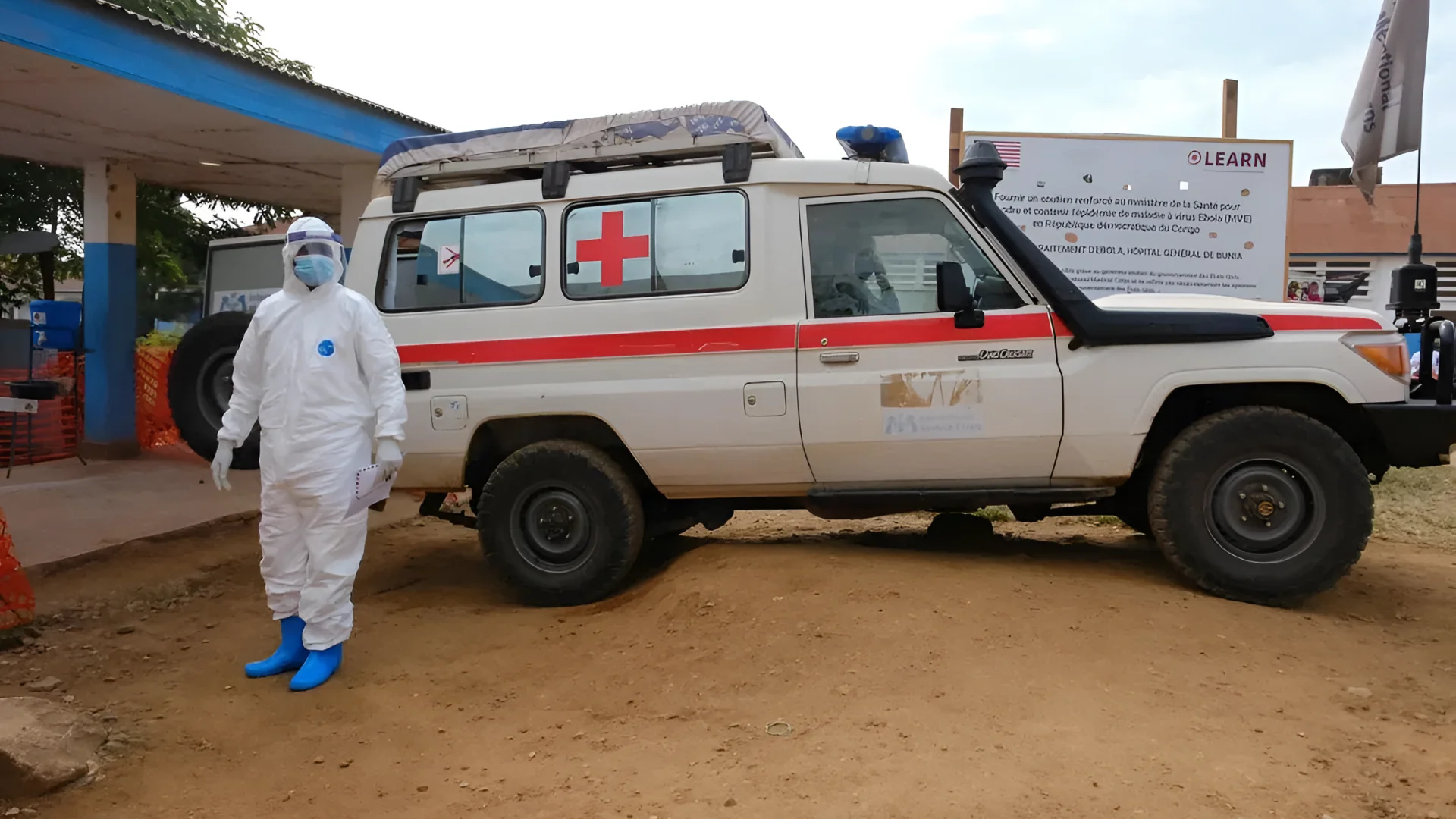
In under a month, a rare Ebola strain with no approved vaccine or treatment has killed at least 232 people in the Democratic Republic of Congo, spreading across 32 to 33 health zones and reaching Uganda. Epidemiologists at Africa CDC say the outbreak is advancing nearly three times faster than any recorded Ebola event at the same early milestone.
A Strain the Medical System Cannot Yet Treat
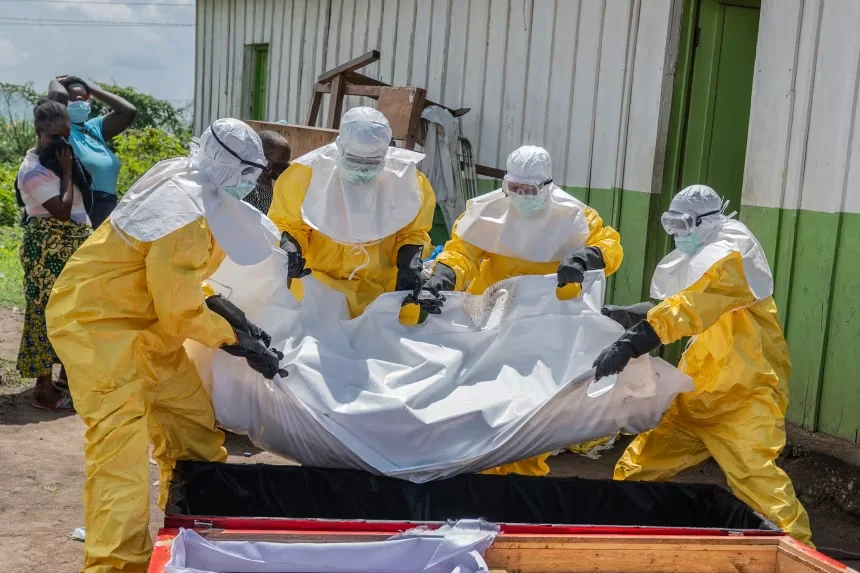
The pathogen driving this outbreak is not the Zaire strain responsible for most of the DRC's past Ebola epidemics, and that distinction is operationally significant. This is the Bundibugyo virus, a rare strain historically associated with a 30% to 50% case-fatality rate. No approved vaccine exists for it. The Zaire-strain vaccine Ervebo cannot be deployed here. Candidate vaccines and monoclonal antibodies specifically targeting Bundibugyo are months away from availability, according to earlier case count reporting.
As of around June 17, WHO tallies recorded 896 confirmed cases and 232 deaths in the DRC, with an additional 19 confirmed cases and 2 deaths in Uganda, concentrated in the Kampala metropolitan area. Africa CDC epidemiologists reported that case numbers surged roughly 38% in a single week — a pace nearly three times more aggressive than Uganda's 2000 outbreak, which had 281 confirmed cases at a comparable milestone. The current reported case-fatality rate in the DRC is approximately 26%, but field epidemiologists caution that unrecorded community deaths make this figure a likely underestimate.
The outbreak's geographic footprint — Ituri province as the primary epicenter, with over 90% of cases concentrated around Mongbwalu, Bunia, and Rwampara, and secondary spread reaching Butembo and Goma in North Kivu — reflects both the density of population movement in eastern DRC and the limitations of a diagnostic system initially miscalibrated for this pathogen. Field tests in Bunia were set up to detect the Zaire strain and returned false negatives for weeks; samples had to be physically transported to Kinshasa before the Bundibugyo strain was identified. That delay cost containment time that cannot be recovered.
The following four metrics capture the outbreak's scale as of mid-June 2026.
How Hunger Is Dismantling Isolation Protocols
Eastern DRC was already experiencing an acute hunger crisis affecting close to 10 million people before the outbreak began. That pre-existing condition has become one of the outbreak's primary transmission amplifiers.
Health authorities have documented more than 150 escapes of suspected or confirmed patients from treatment and isolation units since late May 2026. These are not spontaneous acts of panic. They follow a structural logic: local custom requires families to supply food to hospitalized relatives, but strict bio-containment measures prevent family members from entering. When a household's primary earner is placed in isolation — or forced into contact-monitoring lines that prevent them from working — dependents face starvation. Patients break quarantine to find food or to earn wages, re-entering communities while still potentially infectious.
One documented instance captured the dynamic precisely: eleven suspected patients fled a clinic simultaneously in Bambu because no food was being provided inside the facility. Responders familiar with previous crises also noted a perverse inversion — in Uganda in 2022, some impoverished residents reportedly presented with simulated symptoms specifically to gain access to isolation wards where regular meals were guaranteed, risking cross-infection in the process.
The virus has also penetrated internal displacement camps in Ituri, where roughly 5 million people displaced by local ethnic conflicts are sheltering. Camps like Kpangba, hosting approximately 30,000 residents, have become high-risk transmission environments: hundreds of people sharing single latrines, open defecation common, and limited capacity for contact tracing. According to Reuters reporting from June 19, at least 30 deaths are associated with accelerating spread inside or near overcrowded settlements. The index case in Kpangba — a 60-year-old woman who tested positive on May 30 — escaped quarantine before contact tracers could locate her and died the following day; her daughter died shortly after.
Community mistrust has compounded the containment problem. WHO vehicles have been pelted with rocks. Safe and dignified burial teams operating in Mongbwalu have faced direct attacks. Some families have buried victims in secret to circumvent health mandates, in each case reintroducing highly contagious remains into community environments. The pattern mirrors the 2018–2020 North Kivu outbreak, during which more than 25 health workers were killed.
The following diagram shows the structural chain through which hunger converts isolation policy into a transmission pathway.
A Funding Shortfall and a Staffing Deficit That Leave Responders Exposed
The response infrastructure needed to contain an outbreak of this speed does not currently exist in the field, and the gap is not primarily a logistical one — it is a financial one.
Of the more than $900 million pledged internationally to fight the crisis, approximately $90 million — around 10% — has actually been released to responders on the ground, according to Africa CDC figures reported by AP News. That chasm between pledge and disbursement is not new in outbreak response, but at this scale and speed it is operationally disqualifying. Africa CDC epidemiologists estimate that an effective field response requires approximately 540 deployed personnel; as of mid-June, 84 have been deployed — roughly 16% of the required complement.
The staffing shortfall directly limits the activities that determine outbreak trajectory: contact tracing in congested displacement camps, safe and dignified burial team deployment in communities that are actively resisting, supply chain maintenance for personal protective equipment, and community engagement programming designed to reduce the mistrust that has turned health workers into targets.
CDC modeling projections have flagged the risk of exponential escalation if the current staffing and funding gaps persist into July. The outbreak is already nearly three times more aggressive than Uganda's 2000 benchmark. The difference between a contained outbreak and a multi-province sustained emergency is measured in weeks at this pace, and in hundreds of millions of dollars that have been committed but not moved.
The chart below shows the gap between what has been pledged and what has been deployed, across both funding and field personnel.
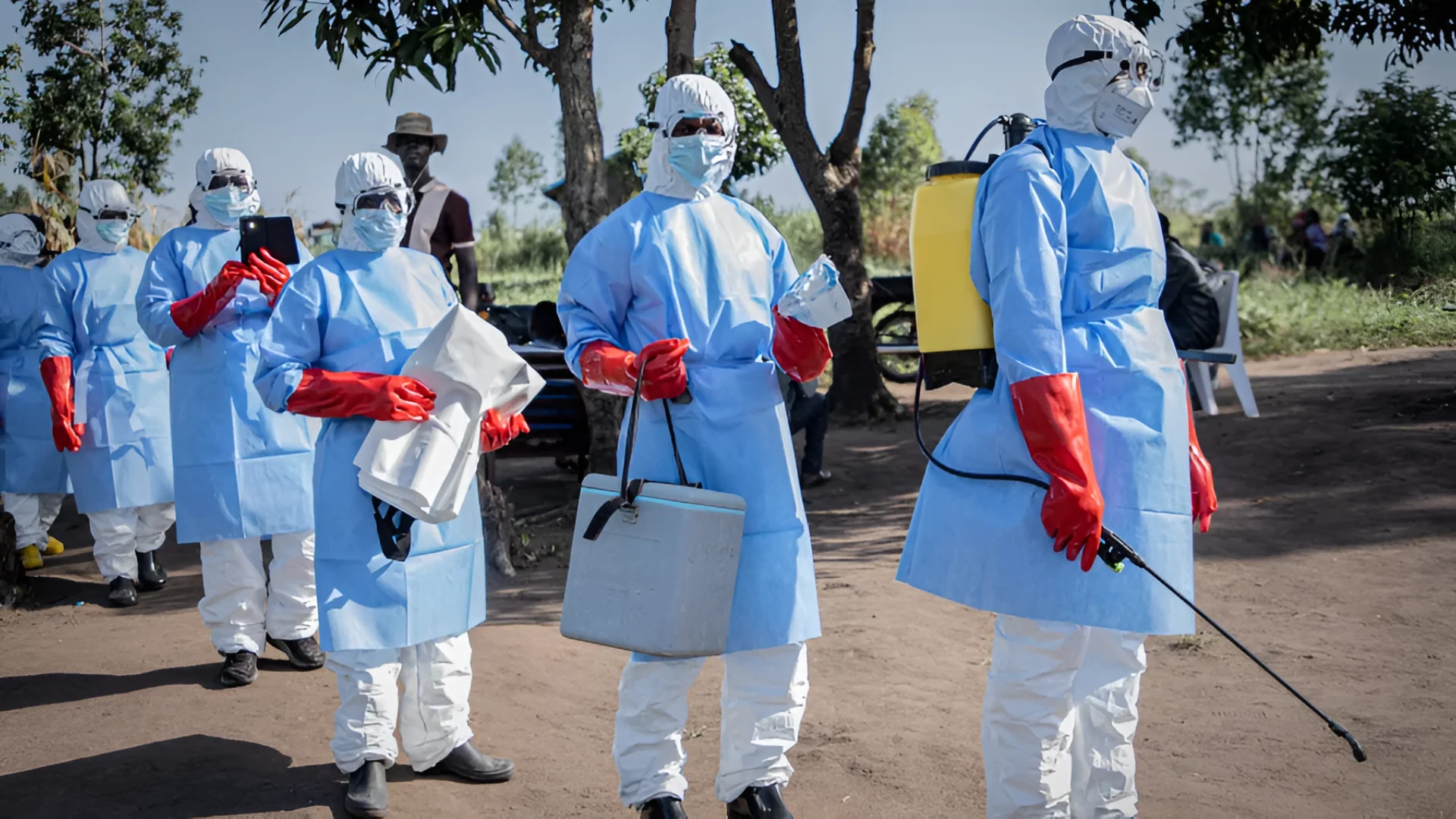
DRC Ebola Outbreak Surpasses 1,000 Cases: Children Most at Risk
A WHO-declared public health emergency, the DRC Ebola outbreak now tops 1,000 cases. Children are dying at nearly twice the rate of adults, contact tracing covers only 58% of known contacts, and a $20 million funding gap threatens the six-month response plan.

Ultra-Processed Foods and Brain Health: What Studies Show
Research from Monash University, Harvard, and studies of tens of thousands of adults connects ultra-processed food intake to measurable cognitive decline, dementia risk, Parkinson's symptoms, and depression — with actionable thresholds in the data.
![DRC health workers retrieve the body of an Ebola virus victim from Rwampara Hospital morgue in Ituri province, June 09, 2026 [Anadolu Agency]](/uploads/1782059208554-More_than_70_medics_infected_with_Ebola_as_DRC_outbreak_spreads____fast___.webp)
DRC Ebola 2026: Why This Outbreak Is Different
The DRC's Bundibugyo Ebola outbreak declared in May 2026 has grown past 800 confirmed cases, reached displacement camps holding 30,000 people, and spread to Uganda, while health systems face 70+ infected workers and no approved treatment.

Alpha-Gal Syndrome: What a Tick Bite Does to Your Diet
Alpha-gal syndrome is a delayed food allergy caused by tick bites that sensitizes the immune system to a sugar molecule found in mammalian meat. Cases are surging in the Midwest and Northeast, with new state-level reporting mandates and federal labeling legislation underway.
Comments (0)
Please sign in to join the discussion.
No comments yet.
Be the first to share your perspective on this topic.