
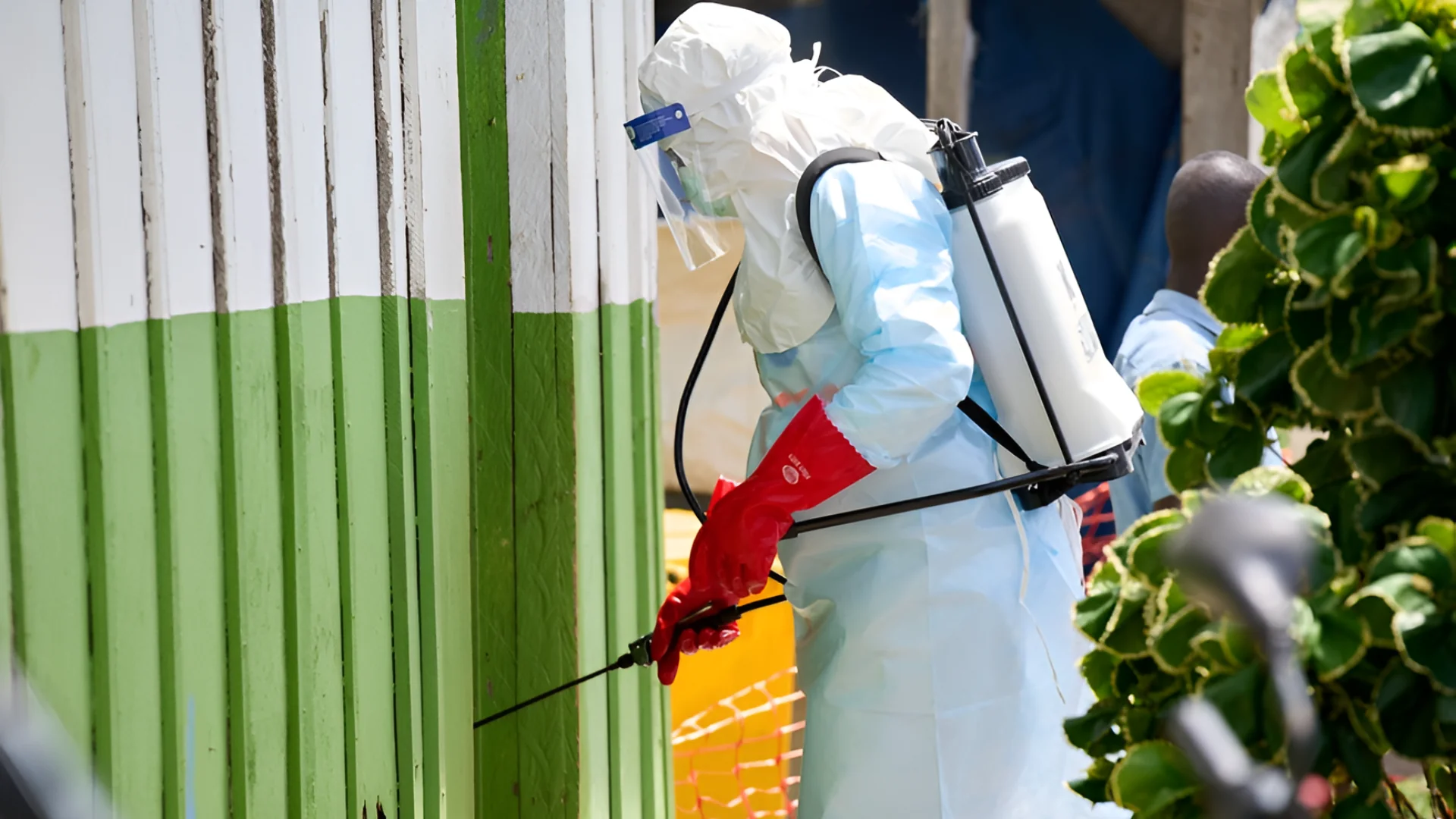
A Bundibugyo ebolavirus outbreak that the World Health Organization declared a global health emergency on May 16 has prompted the CDC to invoke emergency border powers and consolidate all health screening for at-risk US-bound travelers at a single airport in Virginia.
Why Bundibugyo Makes This Outbreak Harder to Contain Than Past Ebola Emergencies
The current outbreak began in the Ituri Province of the Democratic Republic of Congo in late April 2026 and has since crossed into Uganda. As of late May, the WHO was tracking between 750 and 830 or more suspected cases and roughly 177 to 186 suspected deaths — figures the agency itself treats as undercounts, given how difficult case detection is in the affected region.
The strain driving the outbreak, Bundibugyo ebolavirus, presents a specific clinical problem that distinguishes it from more recent West African or DRC outbreaks: there are no approved, licensed vaccines or targeted therapeutics for it. The experimental vaccines and antibody treatments that were deployed during the 2018–2020 DRC Kivu outbreak were developed against the Zaire strain. They do not apply here. Medical responders are working with supportive care — rehydration and symptom management — rather than a licensed treatment protocol.
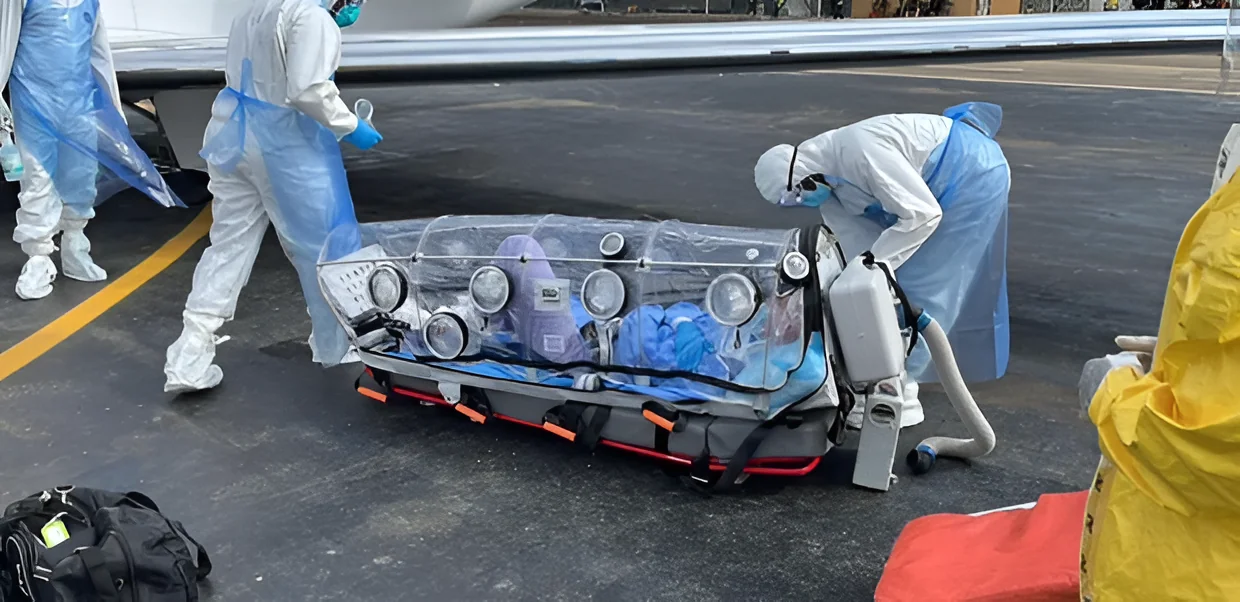
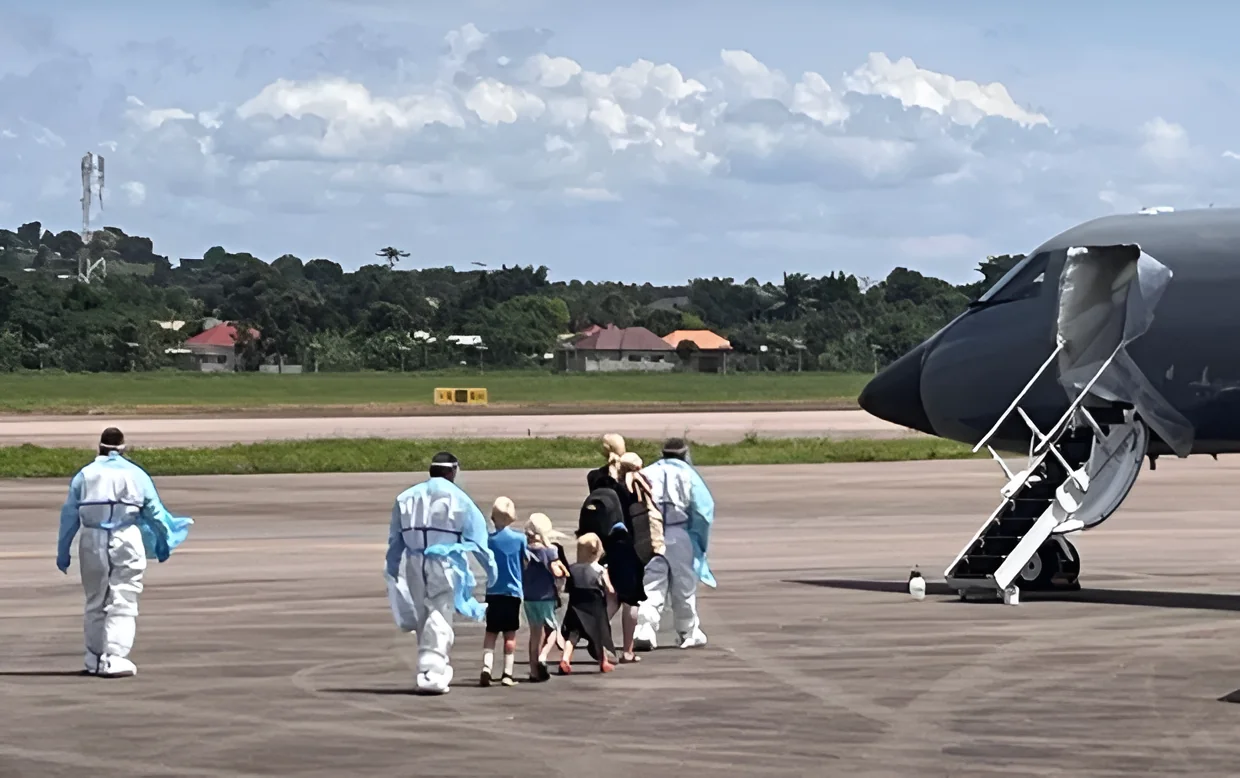
That treatment gap shapes how seriously health authorities are treating even a relatively small number of cases reaching international travel networks. The evacuation of Dr. Peter Stafford, an American missionary physician who contracted Ebola during surgery at Nyankunde Hospital in Bunia, to a high-security isolation unit at Charité University Hospital in Berlin illustrates the scale of individual case management. His wife, their four children, and a separately exposed colleague, Dr. Patrick LaRochelle — quarantined in Prague — were reported asymptomatic and under monitoring as of late May. No contact with either the Bundibugyo strain or an untreated case should be assumed manageable without controlled isolation.

What the CDC's Title 42 Order Actually Restricts — and Who It Covers
On May 18, 2026, the CDC issued a 30-day order under Title 42 public health authority. The order bars entry into the United States for non-US citizens or non-US passport holders who have been present in the DRC, Uganda, or South Sudan within the preceding 21 days. The 21-day window corresponds to the maximum known incubation period for the virus — the outer bound of the interval during which an exposed person could develop symptoms without yet showing them.
The order does not bar US citizens, nationals, or lawful permanent residents — green card holders — from returning. Those travelers are not turned away at the border. They are, however, subject to the screening protocol described below.
South Sudan's inclusion alongside DRC and Uganda reflects a precautionary geographic designation. As of the order's publication, confirmed transmission had not been independently reported there, but the country shares porous borders with both affected nations, and its inclusion reflects CDC's standard practice of buffering the restriction zone against documented spread paths.
What Happens at Dulles and Why Other Major Hubs Are Not Processing These Arrivals
Effective May 21, 2026, any US-bound flight carrying passengers — including returning US citizens and green card holders — who were in the DRC, Uganda, or South Sudan within the past 21 days must land at Washington Dulles International Airport (IAD) in Virginia. Flights that would otherwise terminate at major hubs such as Houston's George Bush Intercontinental Airport or Chicago O'Hare are being actively redirected. Those airports are not equipped or staffed to conduct the required screening.
At Dulles, CDC personnel — with at least 10 additional staffers deployed specifically for this operation — and Customs and Border Protection officers escort flagged travelers to a dedicated screening area. The process involves temperature checks, a symptom evaluation, and a review of travel history. Travelers who are asymptomatic are permitted to continue to their final destinations. Their contact information is forwarded to the local health department at their destination, which then conducts follow-up monitoring for the full 21-day incubation window.
Travelers who present with symptoms consistent with Ebola at the screening checkpoint are isolated on-site and transported to a designated hospital for testing. The CDC has not publicly named which hospitals are pre-designated for this step in the Washington-area response plan.
The funnel model — concentrating screening at one airport rather than distributing it across dozens of international terminals — reflects a lesson drawn from the 2014–2016 West African Ebola response, when distributed screening across multiple US airports produced inconsistent protocols and gaps in follow-up contact. Centralizing the intake allows for consistent staffing, equipment, and chain-of-custody on contact data. Its practical limitation is that it extends travel time for any passenger rerouted away from their intended hub, and it creates a single point of operational failure if staffing or equipment at Dulles is overwhelmed.
What the WHO's Emergency Declaration Changes — and What It Does Not
The WHO's declaration of a Public Health Emergency of International Concern on May 16 triggers a set of international obligations under the International Health Regulations. Member states are expected to share surveillance data, coordinate border health measures, and avoid travel restrictions that go beyond what the evidence supports — a provision that puts the US Title 42 order in mild tension with WHO guidance, which generally discourages broad entry bans as ineffective and potentially counterproductive to outbreak reporting from affected countries.
The PHEIC designation does not, on its own, unlock new vaccine or treatment supplies for Bundibugyo. Research into Bundibugyo-specific countermeasures has lagged behind Zaire-strain development because Bundibugyo outbreaks have historically been smaller and less frequent. The 2007 outbreak in Uganda, which was the first recognized Bundibugyo event, resulted in 149 confirmed and probable cases. The current outbreak has already far exceeded that scale, which is part of what prompted the emergency declaration.
For travelers and the general public in the United States, the practical near-term reality is as follows: the entry ban applies to a narrow category of non-US travelers from three specific countries; returning Americans face screening and 21-day monitoring rather than exclusion; and the absence of an approved vaccine means the US response depends on surveillance, isolation, and contact tracing rather than a pharmaceutical layer of protection.
Ebola Bundibugyo Outbreak DRC 2026: What's Driving It
A Bundibugyo ebolavirus outbreak declared a PHEIC by WHO in May 2026 has surpassed 900 suspected cases in eastern DRC, with no approved vaccine and containment blocked by war, displacement, and community mistrust.

QuEChERS-GC-MS Detects PAHs in Food: Key Findings
A peer-reviewed 2025 study from SeoulTech optimized a QuEChERS-GC-MS method for PAH detection in foods, reporting validated recovery rates of 86–109% and LODs as low as 0.006 µg/kg.


Tap vs. Bottled Water: PFAS and Microplastics Risk
New research shows bottled water carries far more nanoplastics than treated tap water, while tap water faces PFAS contamination in nearly half of U.S. systems. What consumers can actually do.

How Much Exercise Does Your Heart Actually Need?
New observational research published in the British Journal of Sports Medicine links 10 weekly hours of exercise to a 30%-plus drop in cardiovascular risk, well above the 150-minute WHO guideline.
Comments (0)
Please sign in to join the discussion.
No comments yet.
Be the first to share your perspective on this topic.