
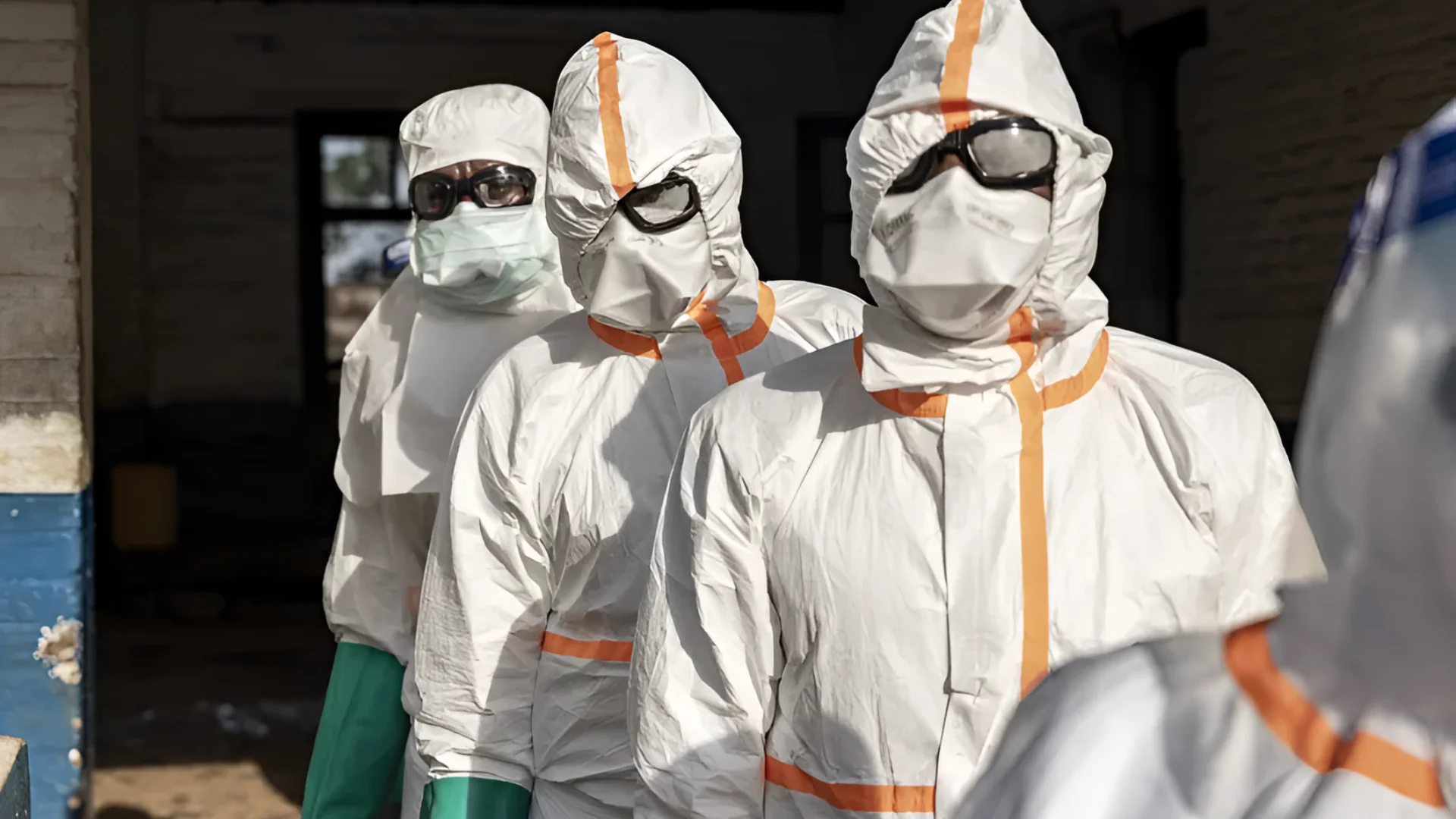
The Democratic Republic of the Congo is battling its worst Ebola outbreak in years — one driven by a rarer strain with no approved vaccine, detected weeks later than it should have been, in a region already fractured by war and mass displacement.
An Outbreak Without a Vaccine or a Head Start
On May 17, 2026, the World Health Organization declared the outbreak a Public Health Emergency of International Concern. As of May 24–25, suspected cases have surpassed 900, with at least 101 laboratory-confirmed infections and an estimated 177 deaths reported to WHO. Uganda confirmed five cases and two deaths after an infected traveler crossed the border from the DRC, signaling the outbreak's regional reach.
The core problem is what the virus is. This outbreak is driven by the Bundibugyo ebolavirus — not the Zaire strain that most people associate with Ebola and that existing approved vaccines such as Ervebo are designed to prevent. No approved vaccine or targeted therapeutic currently exists for Bundibugyo. Jean Kaseya, Director-General of the Africa CDC, said he is in "panic mode" over this gap, adding that any experimental vaccine candidate could take "quite some time" to reach human clinical trials and that anyone offering a specific timeline "is not telling the truth."
The numbers below reflect official WHO and DRC government tallies. Experts and on-the-ground responders caution that absent surveillance infrastructure across eastern DRC's remote terrain means actual infections and fatalities are almost certainly higher.
How Three Weeks Were Lost to a Diagnostic Blind Spot
The outbreak did not begin unnoticed. The first victim died in Bunia on April 24. The body was repatriated to the Mongbwalu health zone — a densely populated mining area — which accelerated community transmission before any containment could begin. A second patient fell ill on April 26, prompting samples to travel to Kinshasa.
What followed was a critical diagnostic failure. Health facilities tested for the common Zaire ebolavirus, the strain behind the region's past outbreaks. Bundibugyo returned false negatives. By May 5, social media alerts were flagging roughly 50 unexplained deaths in Mongbwalu, including four health workers, but official confirmation did not arrive until May 14–15, when the Bundibugyo strain was finally isolated. Matthew Kavanagh, director of the Georgetown University Center for Global Health Policy and Politics, put it directly: because early tests looked for the wrong strain, the response lost weeks of critical containment time.
The false-negative problem is structural, not accidental. Diagnostic protocols in eastern DRC were designed around the far more common Zaire strain. There was no standing protocol for Bundibugyo surveillance. When the virus behaved like Ebola but registered negative on standard tests, it moved unchallenged through a high-density community for nearly three weeks before the lab system caught up.
The timeline below maps the key moments from first death to the WHO declaring a global emergency.
Six Layers of Containment Failure Operating at Once
The diagnostic delay was the ignition, but what has turned this outbreak into a sustained crisis is a convergence of structural conditions that undermine every standard Ebola response tool.
Eastern DRC — specifically Ituri and North Kivu provinces — is an active conflict zone. Rwanda-backed M23 rebels contest territory in a region where the government's operational reach is limited. Medical personnel had already fled before the outbreak began. Between one and two million people are currently displaced in the area, and humanitarian workers warn that the virus could reach dense, poorly sanitized displacement camps near Bunia. Ahmed Mahat, the International Medical Corps response manager in Bunia, said plainly: "The virus is far ahead of us. And it's spreading fast."
Community resistance adds a further layer that health workers describe as among the most dangerous in the field. Angry residents have attacked medical infrastructure. In Rwampara, relatives of an Ebola victim attempted to forcibly retrieve the body — which remains highly infectious after death — from a hospital, ending in a confrontation that destroyed two isolation tents. A clinic in Mongbwalu was separately burned down by local residents. Traditional mourning practices involving physical contact with the deceased are driving localized superspreader clusters. An aid coordinator who spoke to CNN described the situation as a "game of catch-up" driven by insufficient basic infection prevention supplies at health centers.
The financial dimension compounds all of this. Recent international aid cuts have left clinics across eastern DRC without basic personal protective equipment. As of May 23–24, response teams were still scrambling to set up rudimentary triage tents outside hospitals in Bunia. The chart below shows an ordinal assessment of the five most significant structural impediments to containment, derived from sourced field and expert reporting. These are editorial severity scores, not epidemiological indices.
What Official Numbers Conceal
There is a significant data integrity problem layered beneath all of this. The Congolese Ministry of Communication reported 119 suspected deaths total, but its own region-by-region breakdown sums to 220 — a discrepancy of roughly 100 deaths that officials have not publicly addressed. WHO's figure of 177-plus deaths sits between these two numbers but has not been reconciled with either.
The likely explanation is mundane but serious: surveillance infrastructure in remote jungle areas is thin or absent, and reporting chains through active conflict zones are unreliable. Experts working on the response treat the official figures as lower bounds, not estimates of the actual toll. A responder quoted by CNN acknowledged that basic infection prevention and control measures have not reached many of the affected health centers.
This matters for how the outbreak should be read. The case count of 904 suspected and 101 confirmed does not describe the outbreak's real scale — it describes what the system has been able to see and test. The gap between those two figures, and the discrepancy in the death counts, is a direct measure of how blind the surveillance system remains.
The United States moved on May 21 to reroute all inbound flights carrying passengers who had transited the DRC, Uganda, or South Sudan in the past 21 days to Washington Dulles for enhanced health screening. That response reflects how international health systems typically react when a PHEIC is declared: tighten the border while the source outbreak remains in play.
What it cannot do is substitute for what the outbreak actually needs: a functioning vaccine, adequate PPE reaching frontline clinics, a stable enough security environment for contact tracers to operate, and a community engagement approach that has not yet succeeded in a region where medical institutions are already viewed with deep suspicion by many residents.
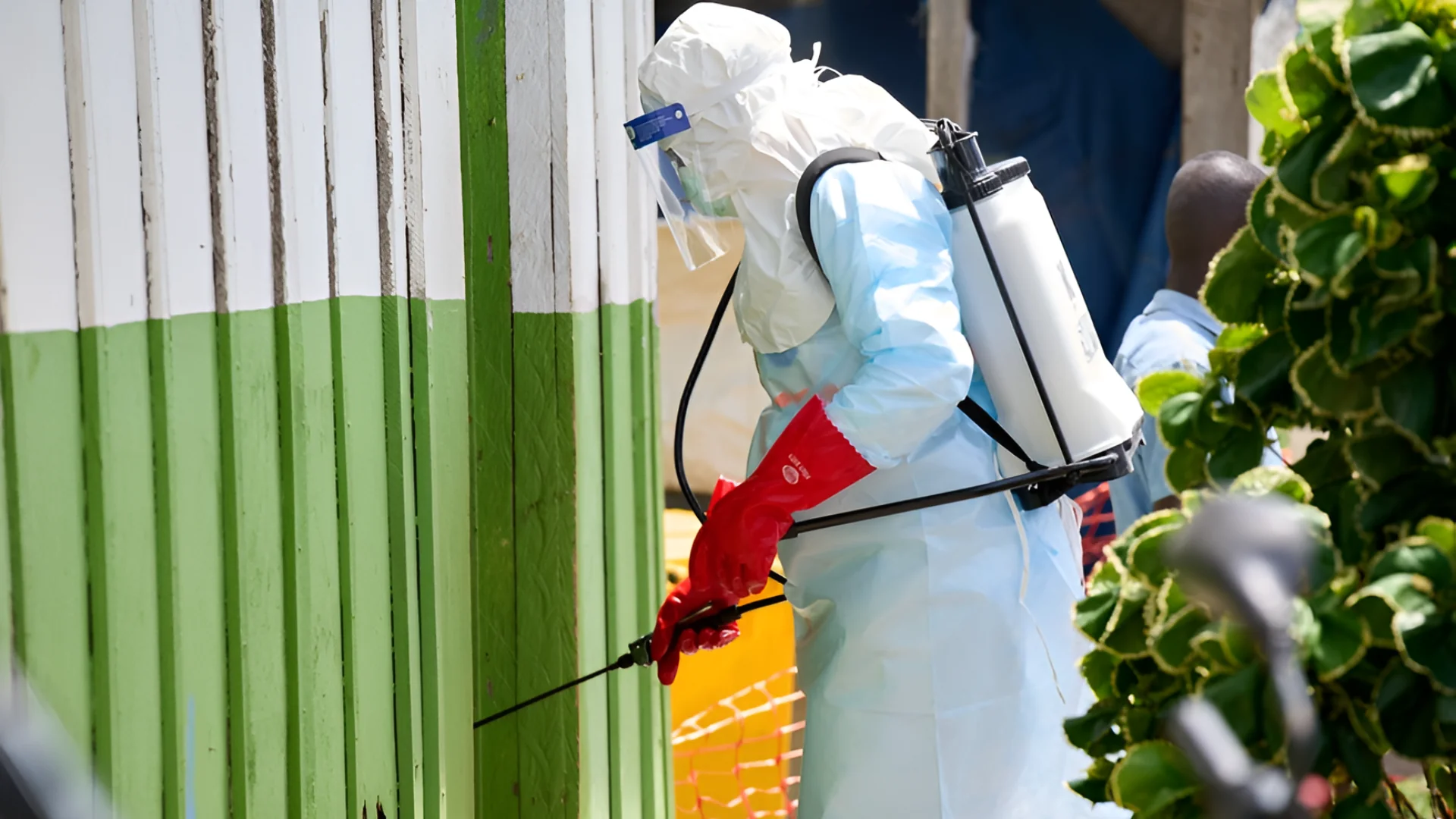
Ebola 2026: US Travel Ban and Dulles Screening Explained
A Bundibugyo ebolavirus outbreak declared a PHEIC by the WHO has prompted the CDC to issue a 30-day entry ban and route all at-risk US-bound passengers through Washington Dulles for health screening.

QuEChERS-GC-MS Detects PAHs in Food: Key Findings
A peer-reviewed 2025 study from SeoulTech optimized a QuEChERS-GC-MS method for PAH detection in foods, reporting validated recovery rates of 86–109% and LODs as low as 0.006 µg/kg.


Tap vs. Bottled Water: PFAS and Microplastics Risk
New research shows bottled water carries far more nanoplastics than treated tap water, while tap water faces PFAS contamination in nearly half of U.S. systems. What consumers can actually do.

How Much Exercise Does Your Heart Actually Need?
New observational research published in the British Journal of Sports Medicine links 10 weekly hours of exercise to a 30%-plus drop in cardiovascular risk, well above the 150-minute WHO guideline.
Comments (0)
Please sign in to join the discussion.
No comments yet.
Be the first to share your perspective on this topic.