
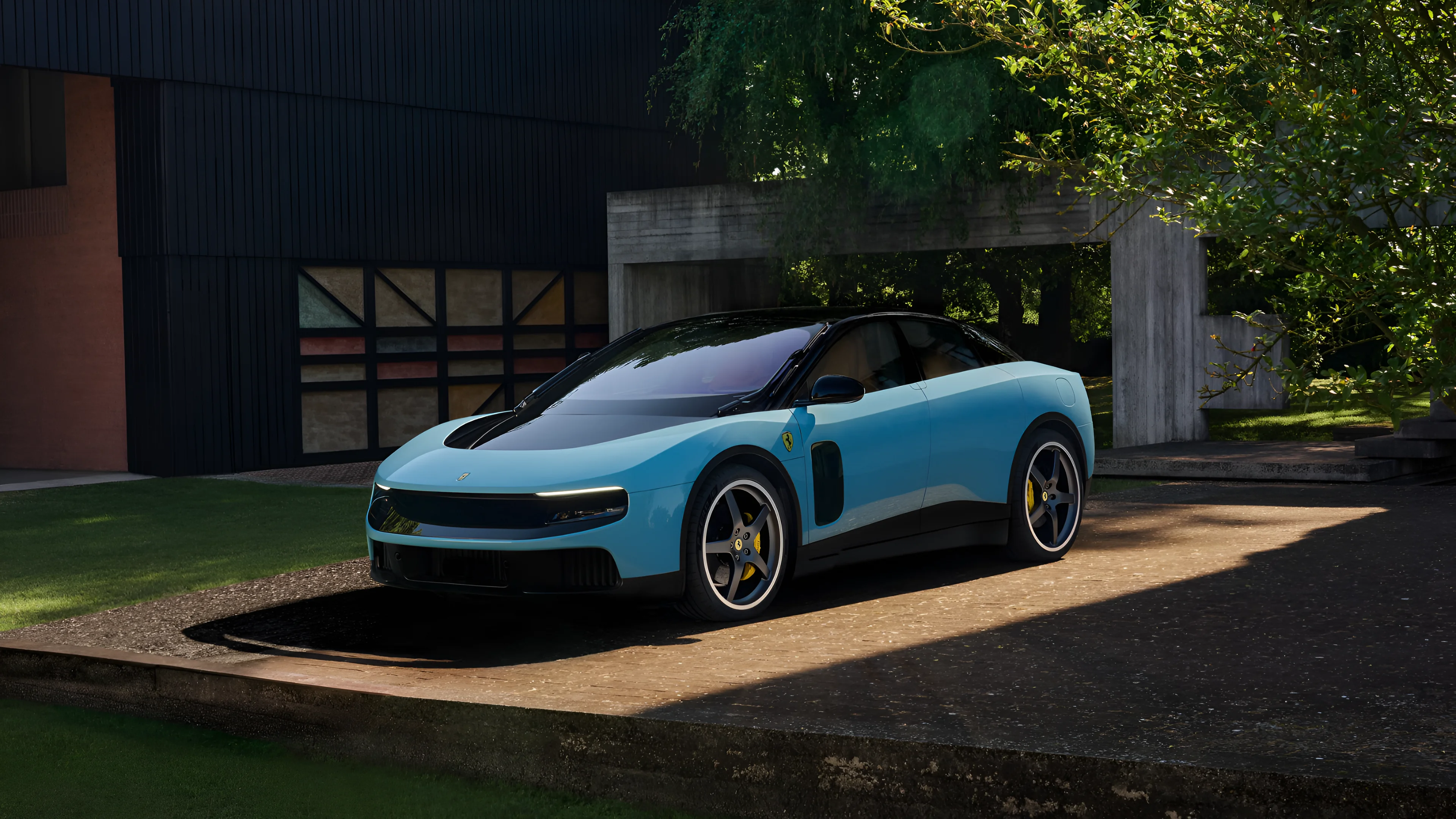
Ferrari unveiled the Luce — its first fully battery-electric vehicle — at Rome's Vela di Calatrava on May 22, 2025, setting a base price of roughly €550,000 ($640,000) and handing the exterior and interior design to LoveFrom, the studio co-founded by former Apple design chief Sir Jony Ive and designer Marc Newson. The result is a five-seat, 1,035-horsepower grand tourer that trades conventional EV range expectations for driving dynamics — and briefly sent Ferrari's Milan-listed shares down approximately 6% on the day of the reveal.
A Quad-Motor Powertrain Built Around Formula 1 Magnetic Geometry
The Luce's drivetrain was developed entirely in-house in Maranello. It uses four independent synchronous permanent-magnet motors arranged in what Ferrari describes as a Formula 1-derived Halbach array configuration. A Halbach array orients the magnets in a rotating pattern that concentrates the magnetic field on one side of the array, increasing torque density without proportionally increasing motor mass — a meaningful gain in a vehicle that curbs at 4,982 pounds. The front pair of motors disconnect during highway cruising to prioritize efficiency; full four-motor operation activates on demand.
Power delivery is managed through full torque vectoring across both axles, paired with four-wheel steering and a 48-volt active suspension system evolved from the technology Ferrari introduced on the F80 and the Purosangue. The active suspension eliminates the need for conventional anti-roll bars. An overhead console pull handle unlocks an additional 54 horsepower above the standard 1,035 hp output — a deliberate physical gesture in a car that otherwise minimizes driver-interface hardware.
The battery is a structural 880-volt, 122-kWh pack using NMC cells supplied by South Korean manufacturer SK On. The 880V architecture supports peak DC charging at 350 kW and allows the pack to absorb up to 500 kW of regenerative braking energy — figures that place it at the current ceiling of available public charging infrastructure. The chart below summarizes the key performance figures sourced from the reveal.
LoveFrom and the End of In-House Ferrari Design Orthodoxy
For most of Ferrari's post-war history, exterior and interior styling was the domain of Pininfarina or, since 2014, Ferrari's internal Centro Stile led by design director Flavio Manzoni. The Luce breaks that pattern by placing the entire design brief with LoveFrom — the independent creative collective Ive and Newson established after Ive's departure from Apple in 2019. Manzoni's team collaborated on the project, but the primary creative direction came from outside Maranello for the first time in over a decade.
The result is visually coherent with LoveFrom's known aesthetic priorities: material integrity over surface styling, transparency, and the elimination of decorative elements that don't carry structural meaning. The Luce's upper body is largely glass-clad using strengthened Corning-supplied glazing; headlights and taillights glow through flush primary panels rather than protruding from the bodywork. The door arrangement — conventional front-hinged doors paired with rear coach doors — enabled the five-seat interior layout that no front-engine Ferrari has previously offered. Inside, the instrument cluster uses three physical metal-ringed analog-style dials over a digital background, and the car activates when the driver physically docks the key fob into the center console. The timeline below traces the key development milestones from Ive's Apple departure to the Rome reveal.
The 330-Mile Range Is a Deliberate Trade-Off, Not an Engineering Ceiling
The Luce's WLTP-rated range of 330 miles — equivalent to roughly 280 miles on the EPA cycle — is modest for a 122-kWh battery. At that capacity, most high-efficiency platforms achieve 400 miles or more under WLTP conditions. Ferrari's executives acknowledged the gap at the reveal, stating that range was explicitly subordinated to driving dynamics in the development hierarchy. The weight distribution (47:53 front/rear), the active suspension calibration, and the quad-motor torque vectoring were tuned for lateral and longitudinal performance envelopes that consume energy more aggressively than the efficiency-optimized calibration of range-focused competitors.
This is a different engineering posture than, for example, the Lucid Air, which uses a similar voltage architecture (900V) partly to maximize drivetrain efficiency and achieve its headline range figure. Ferrari's use of 880V architecture was driven by charging performance and regenerative power absorption capacity, not efficiency-maximization. The choice reflects the brand's core buyer profile: a customer who is unlikely to depend on the Luce as a daily-range vehicle and who values the 2.5-second 0–62 mph time over an extra 80 miles between charges. The bar chart below contextualizes the Luce's rated range against other high-performance EVs in or near its price bracket.
A 6% Share-Price Drop and a Polarized Public Reaction
Ferrari's Milan-listed shares fell roughly 6% on the day of the Luce reveal. The drop reflects a recurring tension in luxury-automotive equity markets: investors weigh whether a legacy performance brand's entry into electrification strengthens or dilutes the brand premium that underpins its pricing power and margins. Ferrari's previous EV-adjacent move — the hybrid Purosangue SUV — also generated initial investor hesitation before the model's commercial reception clarified the demand picture.
Online reaction to the Luce was divided. Some observers drew comparisons to Jaguar's 2024 brand relaunch, which attracted significant criticism for departing from the brand's traditional styling vernacular. Others noted that Ferrari's engineering specification — particularly the Halbach array drivetrain and the 880V charging architecture — suggests a genuine performance-engineering priority rather than a cosmetic rebrand. The glass-and-steel cabin, the analog-digital instrument cluster, and the physical key-dock ignition were read by some as a coherent design philosophy and by others as nostalgic overcorrection in an era of screen-forward cockpits. Priced at €550,000 with European deliveries beginning in late 2026 and US market entry in Q2 2027, the Luce will be one of the most expensive non-limited-edition models Ferrari has offered in its modern era.
The Luce's sound design is the one area where Ferrari appears most conscious of managing the emotional gap between combustion and electric. Rather than synthesizing a simulated engine note — an approach used by several EV manufacturers — the system captures and amplifies natural physical vibrations from the axles and powertrain hardware. Volume scales with the e-manettino dial across three modes (Perfo, Tour, and Range) and plays both inside the cabin and externally. Whether that approach satisfies buyers who associate Ferrari's identity with a specific acoustic signature is a question the order book, rather than the reveal audience, will ultimately answer.
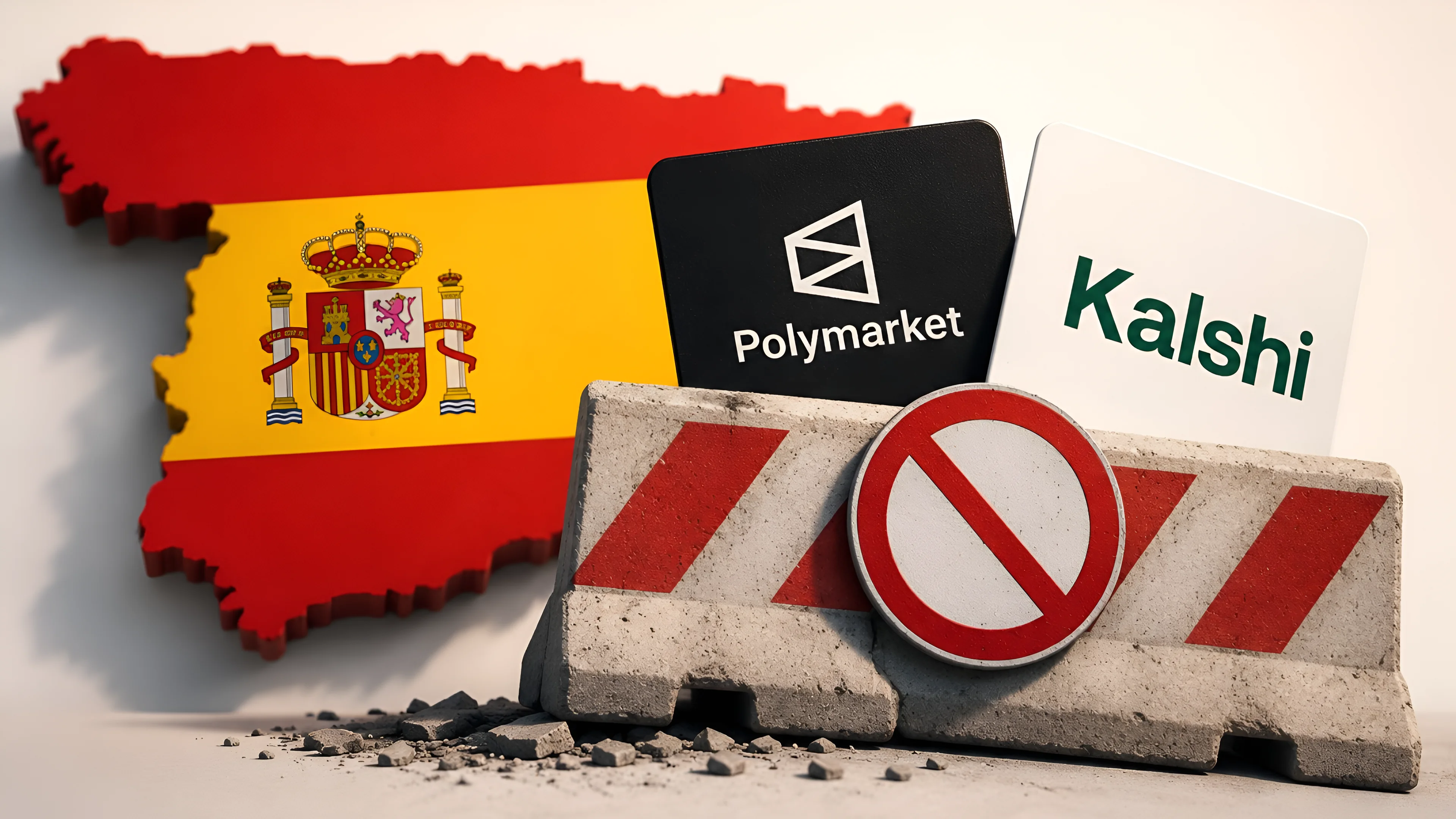
Spain Blocks Polymarket and Kalshi Over Gambling Licences
Spain's DGOJ ordered ISPs to block Polymarket and Kalshi on May 26, 2026, citing no gambling licences, no age verification, and no self-exclusion controls. The action joins Indonesia, India, France, and others in a widening global split over how to classify prediction markets.
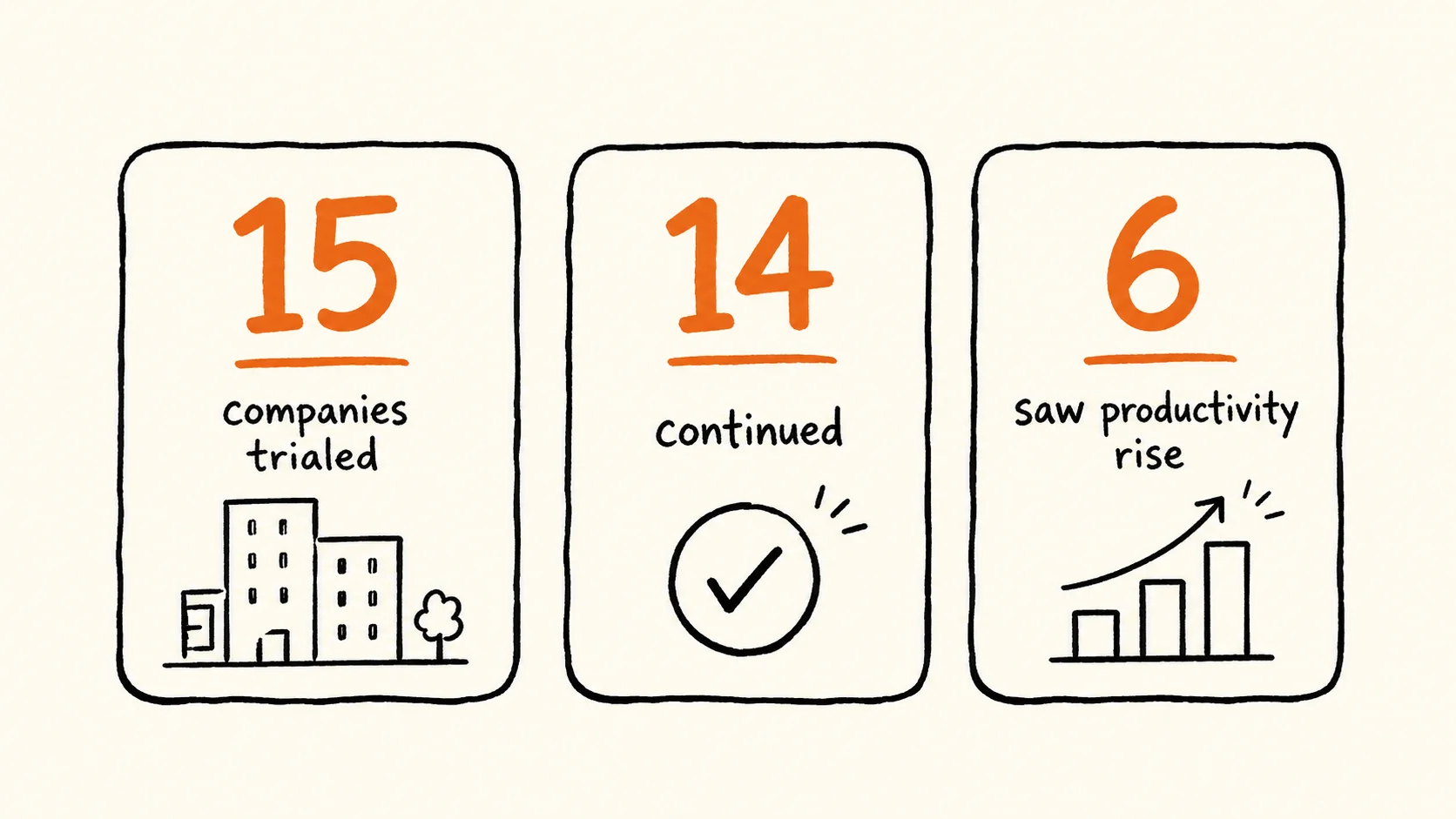
Four-Day Work Week: What Australian Data Actually Shows
A Nature-published study of 15 Australian companies trialing the four-day work week found that 14 permanently continued it, with zero reporting productivity losses. Here's how the model works and where the limits are.
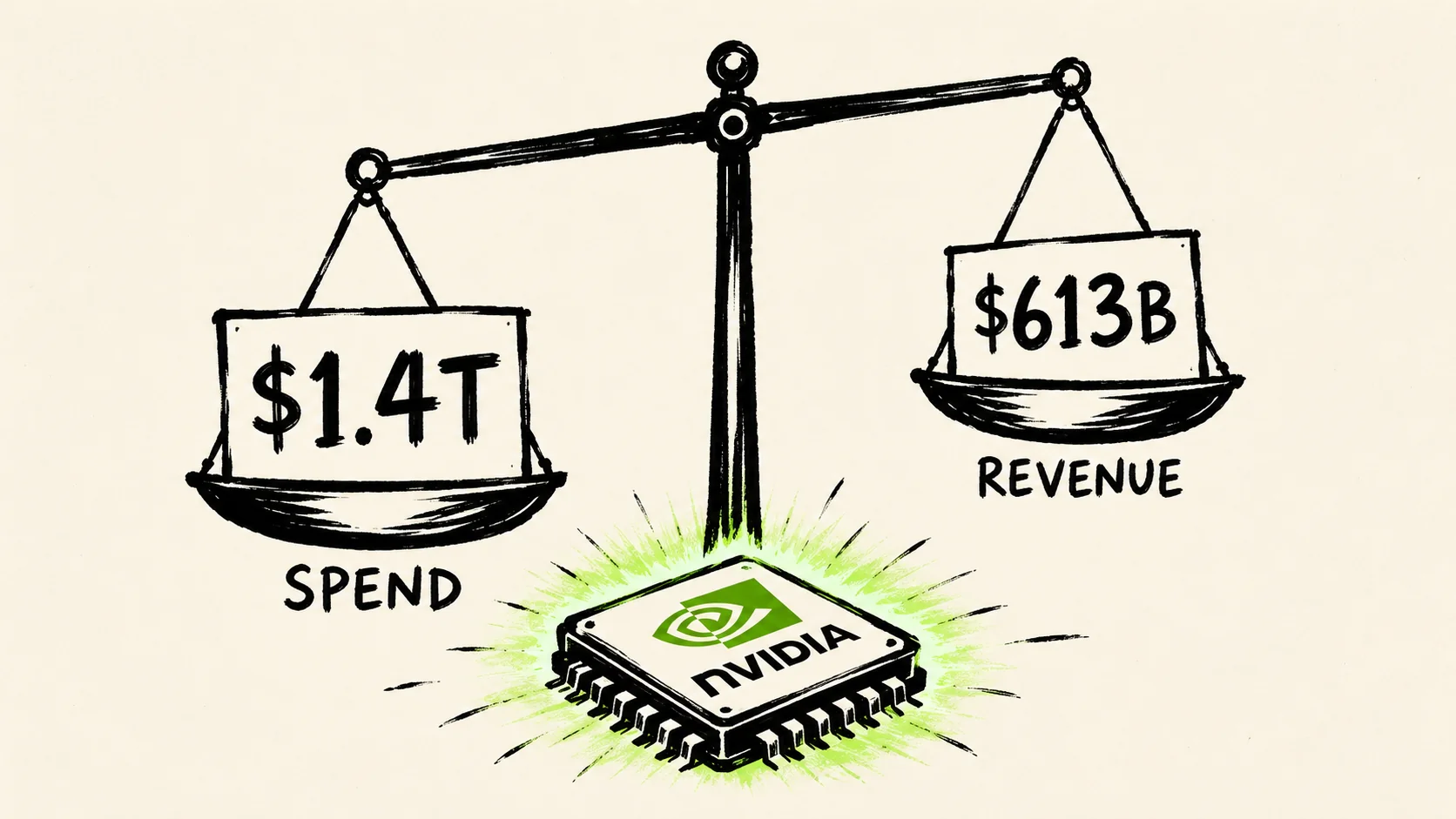
Frontier AI Industry Lost $787B Through May 2026
Cumulative capex across Amazon, Google, Microsoft, Meta, OpenAI, Anthropic, and peers has reached $1.4T against $613B in total revenue. Nvidia is the only net-positive participant in the frontier AI buildout.

Why Japanese Firms Do So Many Unrelated Things
Using Aoki's J-Firm framework, this analysis explains why Japanese corporations diversify across unrelated fields, what institutional structures enable it, and where the model breaks down.
Comments (0)
Please sign in to join the discussion.
No comments yet.
Be the first to share your perspective on this topic.