
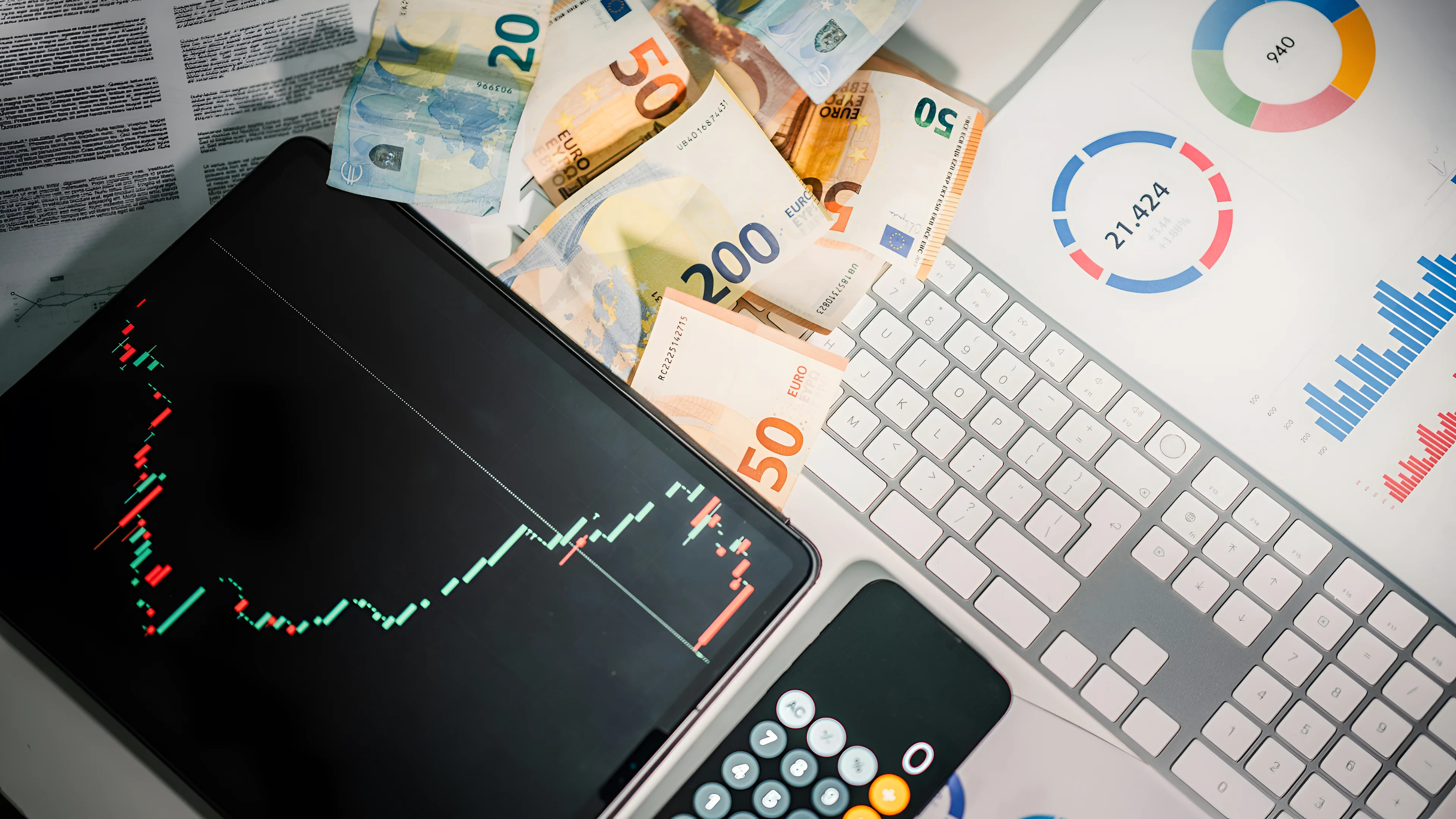
U.S. equity indexes have staged a full recovery from a March correction even as the conflict with Iran pushes crude oil above $107 a barrel, wholesale inflation runs at its fastest annual pace in years, and the bond market prices in a meaningful chance the Federal Reserve will raise rates again before year-end. The divergence between financial market performance and the underlying economic stress on households and borrowers is one of the defining conditions of mid-2026.
The Bond Market Is Flashing a Warning That Equity Investors Are Choosing to Ignore
Energy and markets expert Daleep Singh warned this week that the bond market is sending critical signals about the inflation consequences of the ongoing war, according to a CNBC report published May 16. The 30-year U.S. Treasury yield has breached 5%—its highest level since 2025—as breakeven inflation spreads widen, reflecting expectations that price pressures will persist longer than previously assumed.
Markets are now pricing in a 33% to 45% probability of an additional Federal Reserve rate hike later this year. That range effectively closes the runway for the rate cuts that investors had anticipated under outgoing Chair Jerome Powell and his nominated successor Kevin Warsh. The proximate trigger is the energy shock: Brent crude has been trading between $107 and $118 per barrel in May, driven by disruptions including temporary closures of the Strait of Hormuz. U.S. PPI surged 1.4% month-over-month in April 2026, reaching 6.0% year-over-year—a level that makes disinflation arguments difficult to sustain. Retail gasoline averages $4.22 per gallon nationally, compressing household discretionary budgets at the same time corporate earnings reports remain broadly resilient.
The gap between what bond markets are signaling and what equity markets are pricing is not simply a technical divergence—it reflects two distinct views of who absorbs the next shock first.
Equity Markets Have Recovered on a Bet That Policy Will Always Blink First
U.S. stocks entered correction territory on March 27, 2026, falling more than 10% from their February peak. By mid-May, that correction had been fully reversed. The tech-heavy Nasdaq is up 11% year-to-date, according to The Guardian's May 14 market analysis. The recovery has been driven, in part, by what market participants have labeled the "Taco" trade—shorthand for the assumption that the current administration will ultimately back down from its most aggressive policy positions, as it did when "liberation day" tariffs were delayed by hours after announcement.
Former IMF official and Cornell economist Eswar Prasad has cautioned that this investor posture carries structural moral hazard risk. The assumption that the Federal Reserve or the federal government will step in to contain systemic failures—as occurred with Silicon Valley Bank in 2023—may be suppressing genuine risk pricing at a moment when regulatory supervision has loosened. This dynamic does not mean equities will fall, but it does mean the current recovery may be less about fundamental strength than about the institutional expectation of a backstop.
The practical result for policy-focused investors is that equity volatility has been dampened by behavioral expectation, not by improved earnings visibility or resolved geopolitical risk. Higher mortgage rates, now at an 8-month high, and accelerating AI-driven layoffs have not yet translated into the kind of credit deterioration that would force a repricing. The question is whether that delay is a feature of resilience or a lag.
Intel's Surge Signals a Structural Shift From AI Training to AI Inference
The semiconductor story of 2026 is not a continuation of the Nvidia era—it is a rotation away from it. Intel, which required a federal government bailout just one year prior, has become the top-performing major chip stock of the year, with shares up 194.5% year-to-date and rising 114% in April alone, according to The New York Times' May 15 report on chip markets and emerging economies. By comparison, Nvidia's 2026 gains are roughly one-ninth of Intel's.
The underlying explanation is a product-cycle shift. Nvidia's decade-long dominance was built on graphics processing units optimized for training large AI models—computationally intensive, parallelized workloads that require massive memory bandwidth and high floating-point throughput. As the AI industry transitions from building foundational models to deploying them at scale, the demand emphasis shifts toward inference chips: processors designed to run trained models in real time, responding to individual user queries efficiently and at lower cost per query. Intel has positioned itself to capture that inference segment, and investors have repriced the stock accordingly.
This rotation has had an international spillover. Emerging market equity indexes in South Korea and Taiwan have surged, lifted by the performance of hardware and manufacturing firms central to the inference supply chain—TSMC, Samsung Electronics, and SK Hynix among them. The AI hardware boom, in other words, is no longer concentrating gains solely in U.S. large-cap technology; it is distributing them across the foundational manufacturing layer.
Defensive Capital Is Rotating Into Consumer Staples as Valuation Anxiety Builds
Not all investors are chasing inference chip momentum. A parallel rotation into defensive equities has been underway as inflation persists and the possibility of additional rate hikes compresses the valuation multiples that growth stocks rely on. Procter & Gamble has emerged as a focal point for this shift, according to a May 17 Motley Fool analysis.
P&G pulled back 14% from its February peak, bringing its forward dividend yield to approximately 3%—a level that makes it competitive relative to shorter-duration fixed income instruments in an elevated-rate environment. In April 2026, the company raised its dividend by 3%, extending a streak of consecutive annual payout increases to 70 years. That consistency is not incidental; it reflects an operational moat that is difficult to replicate. P&G spent $9.2 billion on advertising in its most recent fiscal year. For context, Colgate-Palmolive spent $2.7 billion and Clorox spent $800 million over comparable periods. That spending gap translates directly into shelf positioning leverage, pricing power with wholesale distributors, and the ability to pass on input cost inflation to consumers without proportional demand destruction—a critical advantage in a stagflationary environment where input costs remain elevated.
The rotation into P&G and comparable names reflects a specific view: that earnings predictability and pricing power are more valuable than growth optionality when the cost of capital is rising and the policy backstop may be less reliable than markets currently assume.
The layered picture that emerges from mid-May 2026 data is not a simple bull or bear story. Bond markets are pricing rising inflation risk and a narrowing path to rate cuts. Equity markets are recovering on behavioral assumptions about policy backstops. Semiconductors are rotating from one AI demand cycle to the next. And defensive capital is building positions in businesses that can sustain dividends through structural inflation. These forces are not in contradiction—they are the simultaneous responses of different investor time horizons to the same underlying uncertainty.
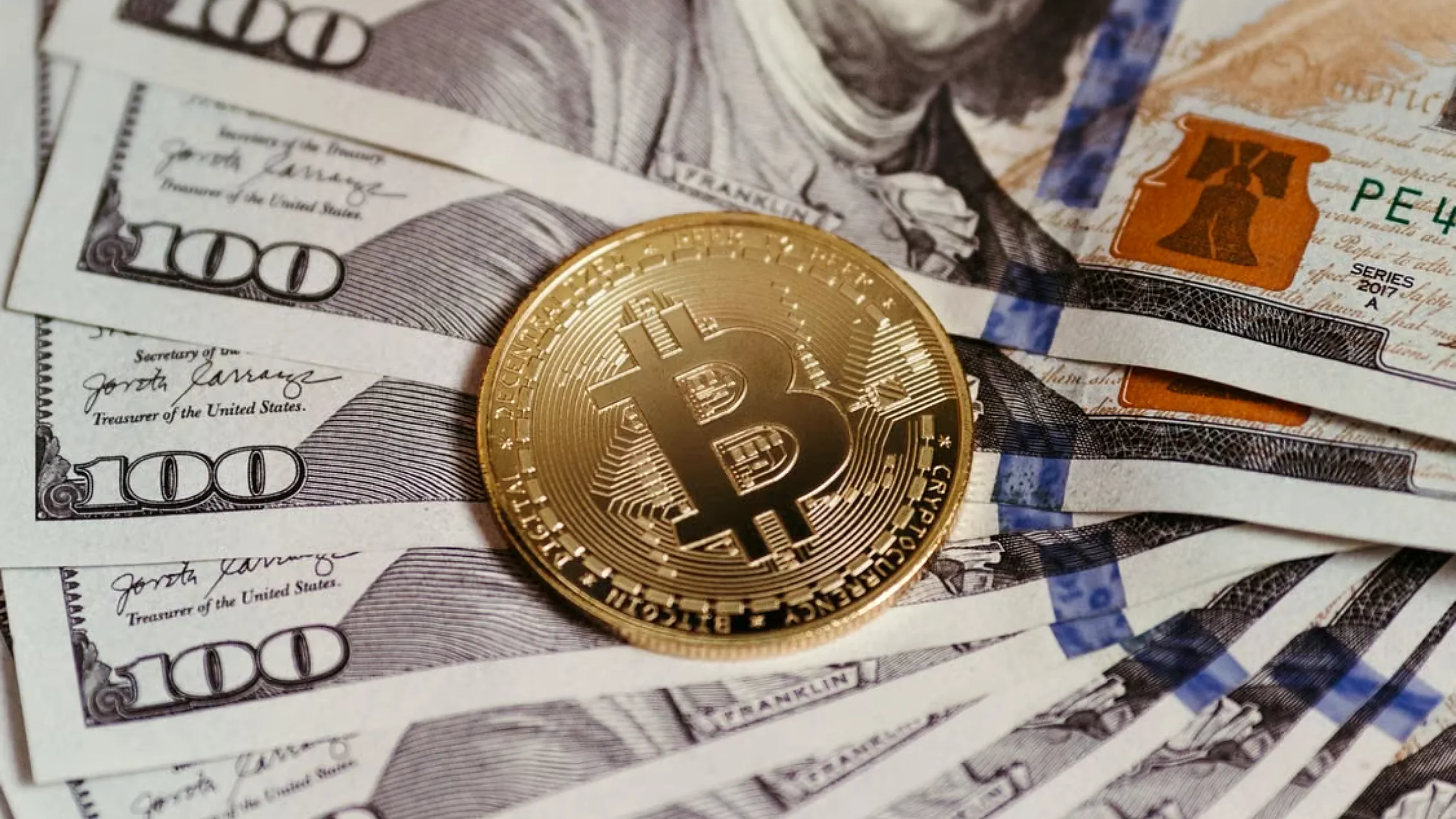
Treasury's $4 Billion Buyback Move Sent Gold and Bitcoin Surging This Week
Treasury doubled bond buybacks to $4 billion after a 19-year yield high, sending gold and bitcoin surging as bitcoin's reported peak varied by $6,200.

Why the U.S. Stepped In to Save Japan's Yen — and What It Risks
The U.S. Treasury sold euros, not dollars, to buy yen in the first joint U.S.-Japan intervention since 1998, after USD/JPY hit a 40-year low of ¥163.73.

Markets Aren't Uniformly Bullish on AI — the 2026 Data Shows They're Discriminating, and Correctly
AI stock valuations in 2026 aren't blanket hype. Google Cloud grew 63% while capex-heavy bets got punished. Here's what the earnings data actually shows.
Comments (0)
Please sign in to join the discussion.
No comments yet.
Be the first to share your perspective on this topic.