
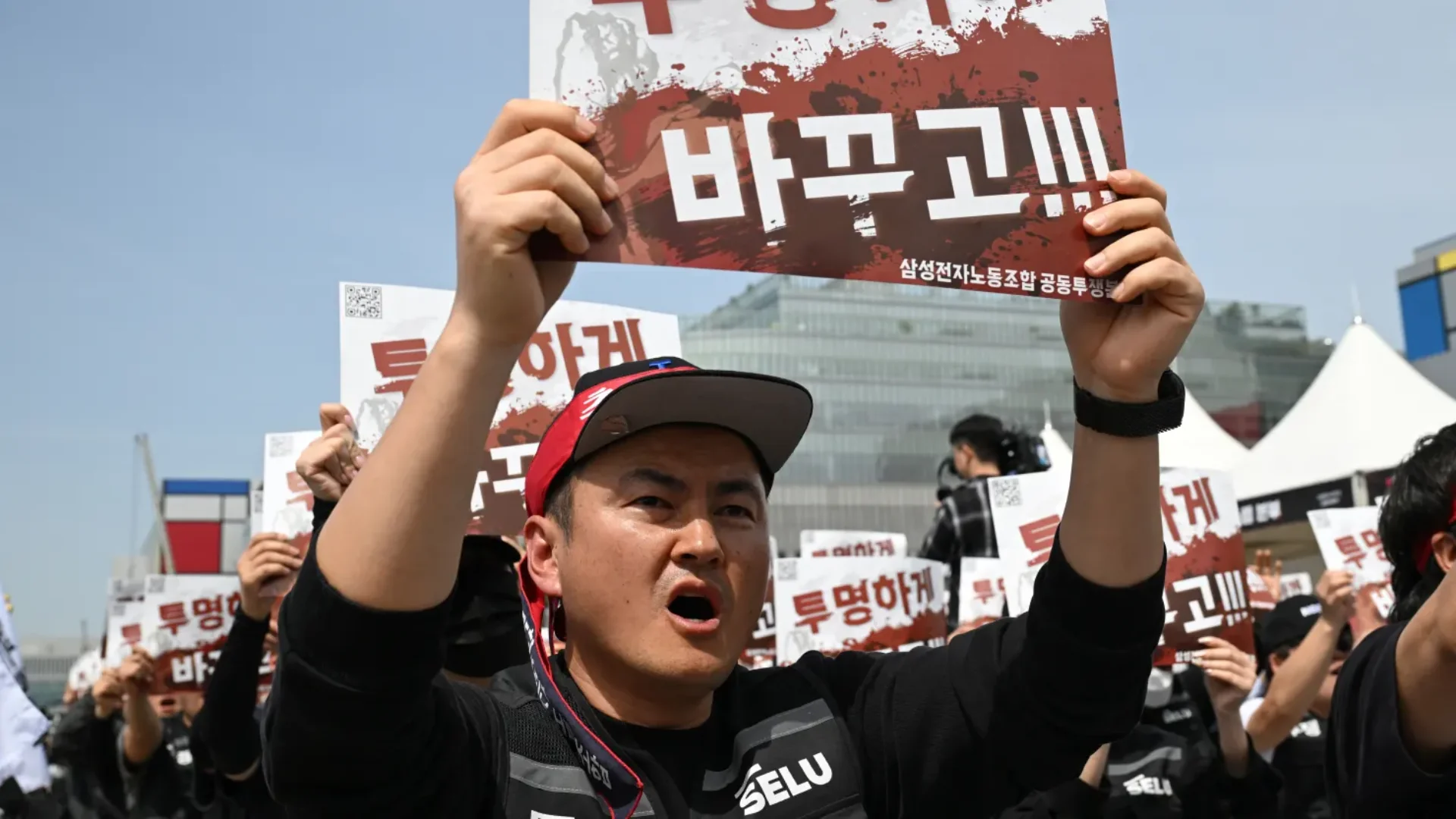
Samsung Electronics and its largest labor union returned to the negotiating table in Sejong on Monday in a second round of government-mediated wage talks, with a threatened 18-day walkout by up to 50,000 workers now scheduled to begin on Thursday. A partial court injunction against illegal union action, combined with pointed public remarks by South Korean President Lee Jae Myung, pushed Samsung shares up more than five percent on the day — but no deal has been announced.
A Bonus Formula Dispute at the Center of South Korea's Export Engine
The immediate trigger for the standoff is a structural disagreement over how Samsung distributes profits to workers. The union is demanding that Samsung remove its current performance bonus cap — currently understood to sit at 50 percent of annual salary — and formally commit to directing 15 percent of operating profit into a bonus pool, with that commitment written into employment contracts. Samsung has resisted permanently fixing that formula, saying instead that it would offer compensation above industry rivals' levels if it regains market leadership.
Management's counteroffer was a one-time payment of roughly $340,000 per worker, which the union rejected. The comparison that has sharpened tensions is this: SK Hynix workers are reportedly on track for guaranteed bonuses of approximately $477,000 in 2026 and close to $900,000 the following year, according to media reports describing the compensation gap. Under the union's proposed formula, applied to analyst projections of Samsung's 2026 operating profit at roughly 300 trillion won, per-employee bonuses in the semiconductor division would approach $408,000 — above the management counteroffer but below the SK Hynix trajectory.
The dispute has surfaced a deeper tension. A chip researcher who told Reuters on the sidelines of an April rally of roughly 40,000 workers that many colleagues had left for competing companies and that he himself had applied to work at Micron captures the retention risk underneath the compensation debate. Korea University law professor Park Ji-soon has said the case sets a potential precedent: if union demands advance through a strike, other companies could face significantly less favorable bargaining conditions.
The chart below compares the key compensation figures at the center of the dispute, as reported across multiple sourced accounts.
How the Dispute Escalated to a National Economic Crisis
The first formal mediation attempt, held at the National Labor Relations Commission in Sejong on May 11 and 12, lasted close to 17 hours before collapsing without a deal. Union head Choi Seung-ho said after the session that "the proposal only worsened" and declared the mediation fallen through. Talks then moved into an informal phase, with Samsung executives from the chip division making a rare direct visit to union leadership — a development that Bloomberg reported alongside a near-nine-percent share drop on May 16.
The political response accelerated over the weekend. Prime Minister Kim Min-seok convened an emergency meeting of ministers, describing a potential strike as posing unprecedented economic damage. Finance Minister Koo Yun-cheol called the failure to agree "deeply regrettable" and said a strike must be avoided at all costs. The government has the legal authority to invoke emergency arbitration that could suspend industrial action for up to 30 days, but has not yet done so. The presidential office said as recently as last week that there was "still time for labour-management dialogue" before committing to any such step.
On Monday morning, President Lee Jae Myung posted on X that "corporate management rights should be respected as much as labour rights" in South Korea's market economy — a statement widely read as nudging the union toward compromise. Samsung's shares reversed a 1.5 percent decline and closed up 5.2 percent at 284,500 won, also supported by a South Korean court partially granting Samsung's injunction against what the company described as potentially illegal industrial action, per Yonhap News Agency. The KOSPI index rose more than one percent on the day.
The timeline below traces the key escalation points from the April rally to the May 21 strike deadline.
What a Prolonged Strike Would Mean for AI Chip Customers and Samsung's Recovery
The financial stakes are not abstract. Samsung accounts for close to a quarter of South Korea's total exports, according to reports citing government and market data. More specifically, the company reclaimed the overall DRAM market share lead by the end of 2025 following a period of competitive pressure from SK Hynix in the high-bandwidth memory segment. Samsung's HBM4 chips, which entered mass production in February 2026, have reportedly outperformed early technical expectations, and the entire 2026 production run is said to be already sold out, according to Fortune's reporting on the company's supply position.
A disruption to that output would not pass through quietly. Samsung executives, in their direct meeting with union leadership last week, cited customer signals from Nvidia and other buyers: some indicated they might temporarily halt shipments during a strike because they could not guarantee product quality during an interrupted manufacturing cycle, according to media reports of the session. Samsung declined to comment on those reports. Samsung Chairman Shin Je-yoon was separately quoted as saying he was "worried about losing market leadership amid fleeing customers and falling competitiveness."
JPMorgan analyst Jay Kwon has estimated that if Samsung were to concede fully to the union's compensation formula, 2026 operating profit would face a 7 to 12 percent downside from higher labor costs alone. Adding approximately 4 trillion won in lost revenue from 18 days of reduced production, the total operating profit impact in JPMorgan's base case lands at roughly 2.1 to 3.5 trillion won — with worse outcomes if the strike expands or production recovery takes longer than assumed.
The American Chamber of Commerce in Korea said the labor uncertainty could affect confidence in Korea's reliability as a supply-chain partner, a concern that extends beyond Samsung into how global technology buyers assess Korean manufacturing risk. The broader question of how labor pressures intersect with macroeconomic strains in 2026 is visible in how quickly the stock market responded to any signal of de-escalation. The financial risk scorecard below summarizes the JPMorgan estimates.
Whether the second round of mediation will produce a settlement before Thursday morning remains unknown. The union has said it would engage in the talks in good faith. Samsung has said it will continue to pursue a negotiated outcome. South Korean government officials have signaled they are prepared to support dialogue to the end but have not yet triggered the emergency arbitration mechanism available to them. Both sides entered the Sejong session with the same fundamental disagreement in place — over whether worker compensation should be structurally tied to operating profit — that caused the first round to collapse.
Related Stories
Markets Surge While Economy Strains: May 2026
U.S. stock markets climbed back to record territory in May 2026 even as crude oil hovers near $110, wholesale inflation runs at 6%, and bond yields signal the Fed's rate-cut path may be closing.
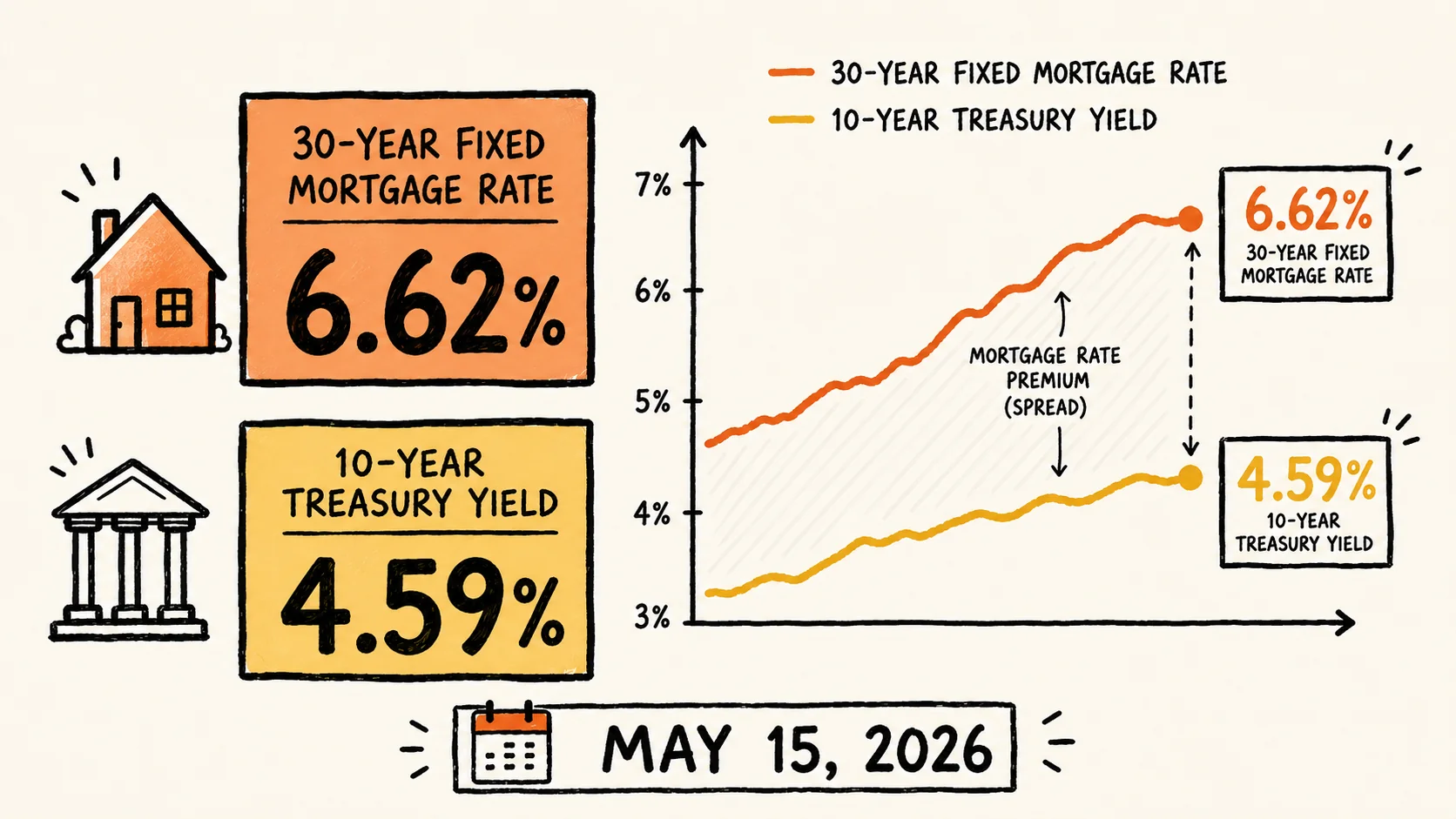
Mortgage Rates Hit 8-Month High at 6.62% — May 2026
Average 30-year fixed mortgage rates hit 6.62% on May 15, 2026, matching levels last seen in August 2025, driven by a 4.59% Treasury yield, 3.8% inflation, and a bond sell-off following the Trump-Xi summit.
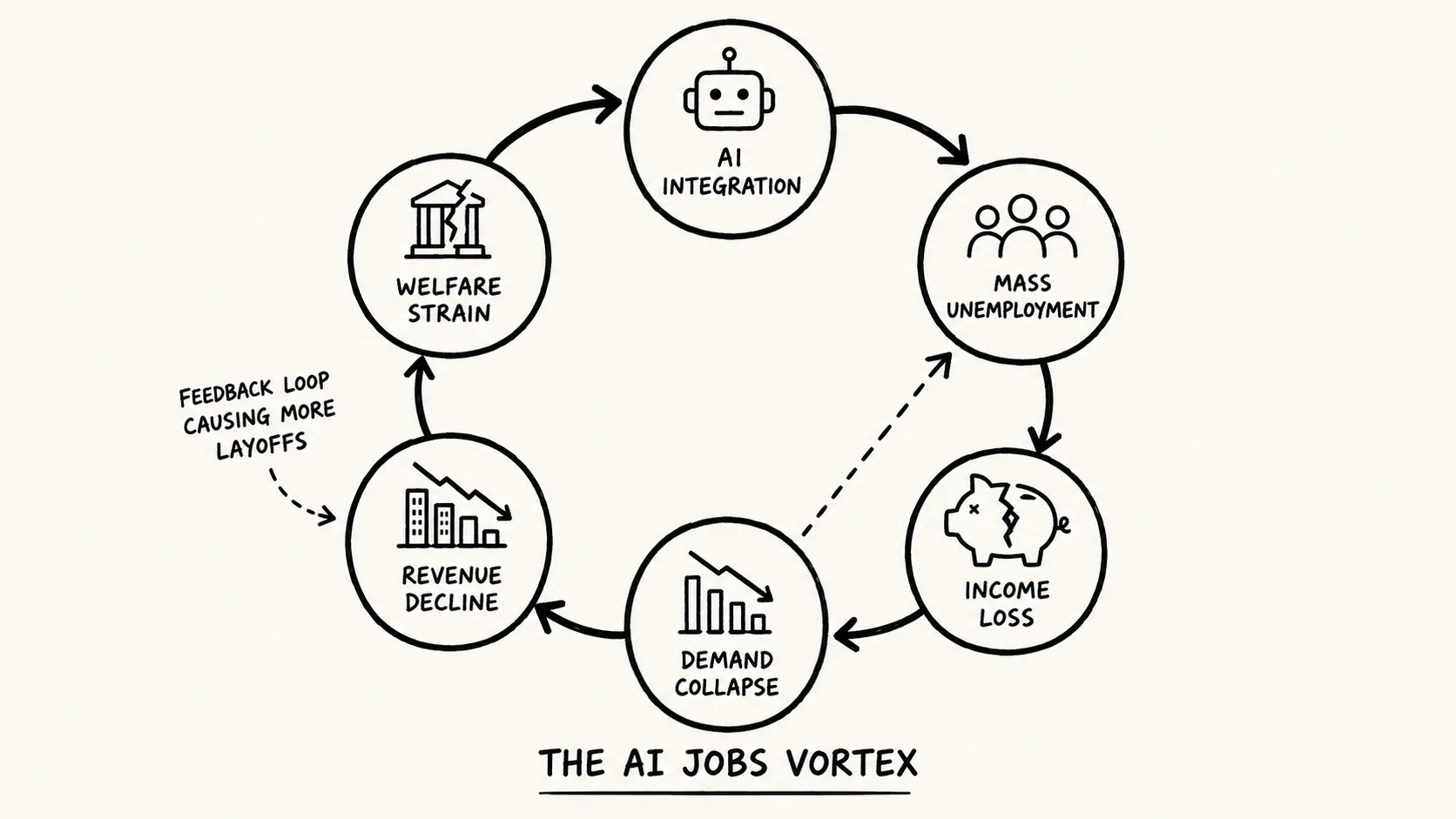
How AI Layoffs Can Trigger an Economic Spiral
A source-grounded explainer on how AI-driven displacement creates a self-reinforcing demand contraction — and what policy interventions are being proposed as circuit-breakers.

US PPI Surges 1.4% in April 2026, Fastest Since 2022
April 2026 US PPI jumped 1.4% month-over-month and 6.0% annually, driven by a 15.6% gasoline spike and rising freight costs, complicating the Fed's rate path.
Comments (0)
Please sign in to join the discussion.
No comments yet.
Be the first to share your perspective on this topic.