

The companies that spent decades obscuring tobacco's harms didn't exit the food supply. They bought into it. A special issue of the American Journal of Public Health released this week argues that the same corporate playbook used to delay cigarette regulation is now shielding ultra-processed foods from meaningful government action — and that blaming consumers for what they eat is the wrong frame.
How Tobacco Science Became Food Science
When Philip Morris acquired Kraft in 1988 and RJ Reynolds took over Nabisco, they didn't just absorb brands. They transferred methods. Flavor-enhancing technologies developed for cigarettes were applied to fat-free cheeses and processed meats. Formulations were tuned to deliver carbohydrates and fats in ways that maximized what industry researchers called "hedonic impact" — a rapid reward signal that fades quickly, prompting repeat consumption. The mechanism was the same one that made filtered cigarettes addictive while appearing milder.
Lunchables offers a precise illustration. Philip Morris used psychological research and what it described as consumer-driven product development to design the product around children's unconscious desire for independence and play. The strategic logic was explicit. When health concerns threatened to erode the market for full-fat products, companies introduced "light" and "reduced-fat" ultra-processed lines — a direct parallel to the "light cigarette" introduced to retain health-conscious smokers rather than lose them. Portion sizes tracked the same trajectory: "king-sized" food items borrowed directly from "king-sized" cigarette branding.
Marion Nestle, a food politics scholar at NYU, described the dynamic plainly in commentary tied to the special issue: the system is rigged because these products are among the most profitable in the supermarket. The structural incentive is to keep consumers buying, and the formulation science exists to serve that incentive. The chart below maps how specific tobacco-era tactics transferred into the food system.
What the Health Evidence Actually Shows — and Where It Stops
Ultra-processed foods have been associated in epidemiological research with cardiovascular disease, obesity, type 2 diabetes, and certain cancers. The most striking findings highlighted in the AJPH issue concern cognitive health. An observational study cited by Harvard nutrition researcher Cindy Leung found that diets high in ultra-processed foods were associated with a 58% higher risk of dementia and a 46% higher risk of mild cognitive impairment.
Those are large relative figures, and they carry significant caveats. Nutrition clinical trials are largely impractical at scale, which means the evidence base rests on observational studies and self-reported dietary recall — a methodology that is notoriously imprecise. The dementia study in particular measured cognitive decline through standardized tests rather than clinical diagnoses, which affects how the findings should be interpreted. The associations are statistically meaningful and consistent across studies, but they do not establish causation. The chart below presents the headline figures alongside the methodological context.
Cross-Partisan Majorities Support Government Intervention
The political landscape around ultra-processed food policy is less divided than the broader nutrition debate might suggest. A survey of 2,000 U.S. adults conducted in connection with the AJPH special issue found majority support for government action across partisan lines. Democrats, Republicans, and independents all agreed at majority levels that ultra-processed foods are addictive, and all three groups supported specific interventions: warning labels on packaging, banning artificial dyes, mandatory testing of food additives for safety, and requirements for manufacturers to reduce sugar and salt content.
That cross-partisan consensus is significant because it shifts the policy obstacle from public opinion to industry lobbying and legislative structure. Marion Nestle's summary — "Do policy!" — captures the researchers' conclusion: the science and the public are aligned; the gap is political will. The bar chart below reflects directional consensus levels from the survey; precise percentages were not published, and bars indicate strong majority support rather than exact figures.
MAHA, Subsidy Reform, and the Preemption Threat
The Trump administration's "Make America Healthy Again" initiative, led by Health Secretary Robert F. Kennedy Jr., has generated the most prominent political attention ultra-processed foods have received in years. Researchers in the AJPH issue offer a split assessment. On the credit side, MAHA has shifted the public frame away from individual willpower and toward industry accountability — particularly on artificial dyes and the herbicide glyphosate. That framing shift is genuine and matters for downstream policy.
The criticism is structural. Nestle characterizes MAHA as a feelings-based movement rather than one grounded in systematic evidence. The same administration that has amplified concerns about food ingredients has also pursued limits on SNAP enrollment, a move researchers see as directly contradicting the stated goal of improving public health. Access to food remains a determinant of diet quality, and restricting SNAP without replacing the lost purchasing power does not improve what people eat.
Researchers identify three specific policy levers that would have measurable effect. First, redirecting federal corn subsidies — which currently support high-fructose corn syrup production — toward whole fruits and vegetables. Second, adopting the widely used Nova classification system as the basis for the FDA's forthcoming formal definition of ultra-processed foods, which would provide regulatory consistency. Third, redirecting SNAP funds in the 22 states that already prohibit soda and candy purchases toward local farmers, turning a restriction into a positive subsidy. The industry's anticipated response to any of these is to invoke preemption — pushing for federal rules that override state, city, and county initiatives before local governments can act. Experts warn this is the most likely mechanism by which industry will attempt to neutralize localized reform efforts.
The central argument running through the AJPH special issue is that the personal responsibility frame has not reduced UPF consumption and has not improved population health outcomes. The policies with the most evidence behind them — subsidy redirection, mandatory reformulation, warning labels — have cross-partisan public support. What they lack is political insulation from the industry preemption strategy that defeated similar efforts in tobacco regulation for decades before the evidence became impossible to contest.
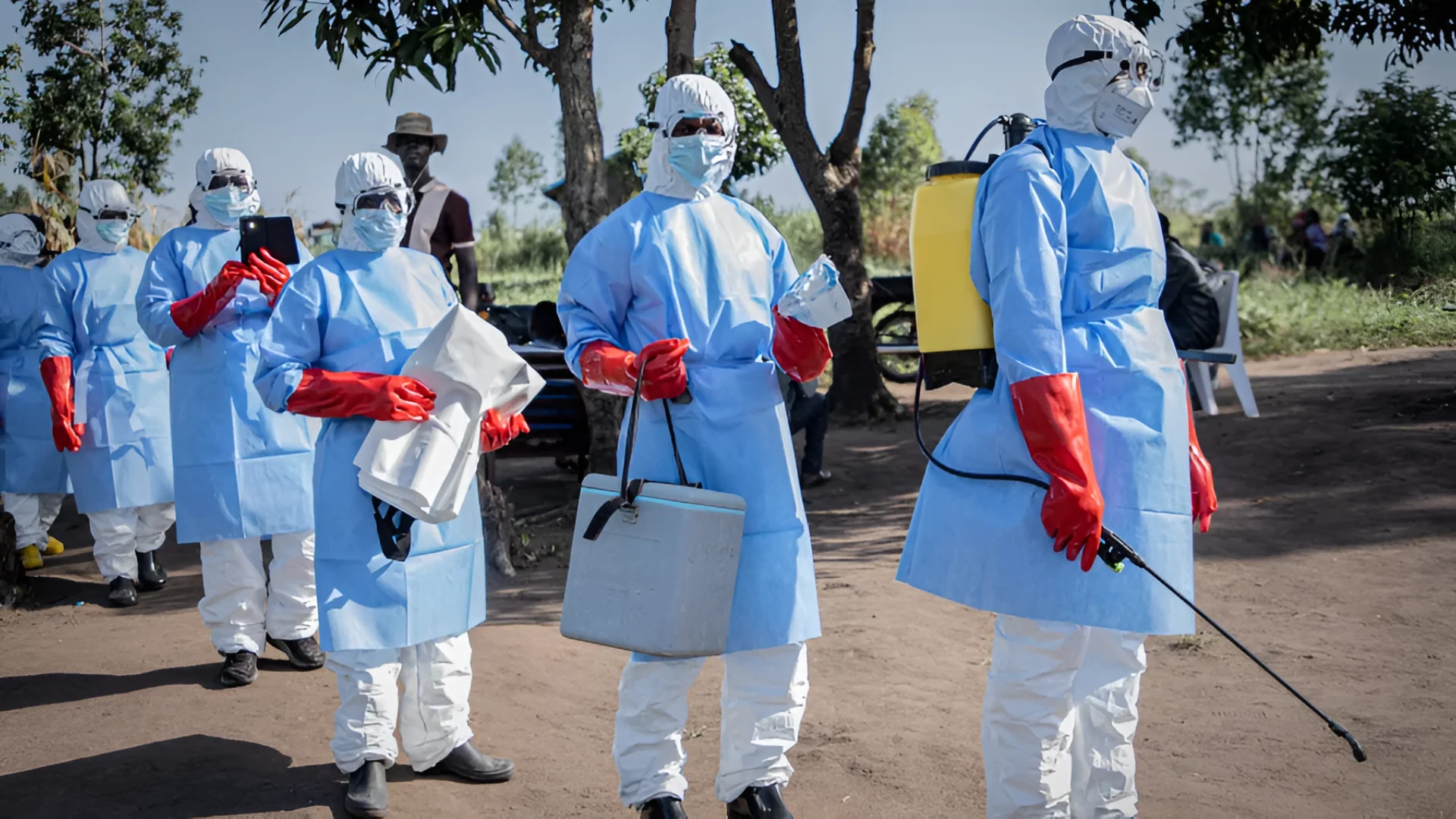
DRC Ebola Outbreak Surpasses 1,000 Cases: Children Most at Risk
A WHO-declared public health emergency, the DRC Ebola outbreak now tops 1,000 cases. Children are dying at nearly twice the rate of adults, contact tracing covers only 58% of known contacts, and a $20 million funding gap threatens the six-month response plan.

Ultra-Processed Foods and Brain Health: What Studies Show
Research from Monash University, Harvard, and studies of tens of thousands of adults connects ultra-processed food intake to measurable cognitive decline, dementia risk, Parkinson's symptoms, and depression — with actionable thresholds in the data.
![DRC health workers retrieve the body of an Ebola virus victim from Rwampara Hospital morgue in Ituri province, June 09, 2026 [Anadolu Agency]](/uploads/1782059208554-More_than_70_medics_infected_with_Ebola_as_DRC_outbreak_spreads____fast___.webp)
DRC Ebola 2026: Why This Outbreak Is Different
The DRC's Bundibugyo Ebola outbreak declared in May 2026 has grown past 800 confirmed cases, reached displacement camps holding 30,000 people, and spread to Uganda, while health systems face 70+ infected workers and no approved treatment.

DRC Ebola Outbreak 2026: Hunger and Funding Gaps
The 2026 DRC Ebola outbreak has recorded 896 confirmed cases and 232 deaths in under a month, driven by Bundibugyo strain, no approved treatment, patient escapes linked to hunger, and $810M in pledged funds still undelivered.
Comments (0)
Please sign in to join the discussion.
No comments yet.
Be the first to share your perspective on this topic.