
The Commerce Department's CHIPS Research and Development Office signed non-binding letters of intent on May 21, 2026 with nine quantum computing firms, committing up to $2.013 billion in federal incentives — and, for the first time in this program, requiring companies to give the government a minority equity stake in return.
Nine Companies, Two Tiers of Federal Bet
The nine recipients divide cleanly into two groups with different mandates.
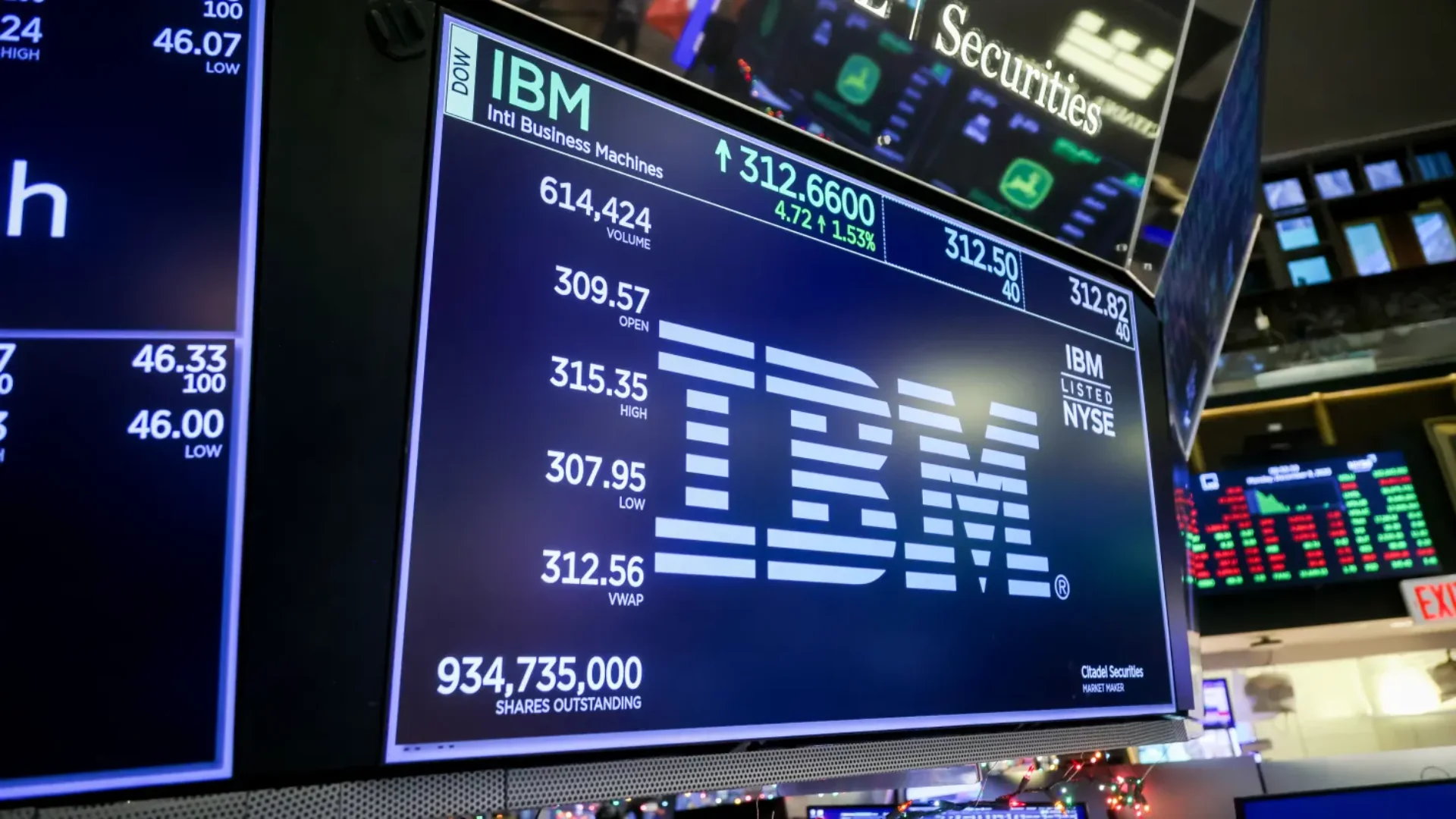
Two companies are being asked to build foundry infrastructure: IBM and GlobalFoundries. IBM announced it would pair $1 billion of its own capital with $1 billion in CHIPS incentives to launch a new facility it calls "Anderon," described as a pure-play U.S. quantum foundry oriented toward scaling multi-modality wafer fabrication. GlobalFoundries is slated for $375 million to build a separate domestic quantum foundry supporting multiple hardware architectures, including superconducting, trapped ion, photonic, topological, and silicon spin approaches, according to the CHIPS Research and Development program.
The remaining seven companies — D-Wave Quantum, Rigetti Computing, Infleqtion, Diraq, Atom Computing, PsiQuantum, and Quantinuum — represent targeted bets on distinct modalities. D-Wave confirmed its deal is structured entirely as an equity investment and involves up to $100 million. Diraq is slated for up to $38 million to advance silicon spin qubit array scaling. Individual allocations for Rigetti, Infleqtion, Atom Computing, PsiQuantum, and Quantinuum have not been publicly confirmed as of this writing.
The foundry tier and the portfolio tier carry different practical risks. Foundry commitments fund physical infrastructure with relatively measurable milestones — buildings, fabrication equipment, wafer-output targets. The portfolio tier funds research-stage engineering work where timelines are uncertain and success criteria are harder to verify from outside. IBM CEO Arvind Krishna compared quantum computing's current state to where AI chips stood a decade ago, projecting high-margin multi-billion-dollar annual revenues by the mid-2030s. That projection is IBM's own, not an independent assessment.
The chart below shows the known and sourced funding allocations across the nine recipients; amounts marked "undisclosed" reflect companies whose individual figures had not been publicly confirmed at time of publication.
How Equity in Place of Grants Changes the Federal Calculus
The more structurally significant element of this announcement is not the dollar total — it is the ownership condition attached to every dollar.
Under the approach Commerce Secretary Howard Lutnick has applied since taking office, the government takes a minority, non-controlling equity stake in each company receiving CHIPS incentives. The intent, as stated by officials, is to improve taxpayer returns if recipients succeed commercially. D-Wave confirmed that its entire award is structured as equity. The Commerce Department applied the same model to its earlier deal with USA Rare Earth and, according to sourced reporting, took approximately a 10% stake in Intel under a prior round.
For quantum computing specifically, the equity structure introduces a tension that grants do not. Grant recipients have an obligation to hit technical milestones; equity recipients have that obligation plus an implicit alignment with the company's commercial trajectory. If a company pivots its modality, gets acquired, restructures its equity, or simply fails to reach the thresholds needed for quantum utility, the government's stake may return little. Tech analysts cited by sourced reporting noted that the quantum sector remains unproven at commercial scale, and officials have acknowledged these bets may take many years to resolve.
The letters of intent are non-binding. Final awards require the parties to negotiate and execute definitive agreements. That distinction matters: the announcements signal federal commitment and direction, but no company has received a dollar yet, and terms could change.
The three-panel metric card below maps the key structural features of the new funding model as described by the Commerce Department and confirmed company statements.
Stocks Moved, But the Engineering Hasn't
The announcement triggered sharp moves in publicly traded quantum computing stocks on May 21. D-Wave, Rigetti, and Infleqtion each rose 20% or more. GlobalFoundries, which is not a pure-play quantum company, climbed roughly 10%.
Those moves reflect investor sentiment about federal backing, not evidence that any engineering milestone was reached. The quantum computing sector's core technical problems — error rates, device reproducibility, qubit coherence at scale — remain unsolved. The applications most frequently cited to justify these investments, including GPS-independent navigation, biopharmaceutical protein simulation, and financial modeling, require fault-tolerant quantum computers that do not yet exist at commercial scale.
IBM's IBM framing of the current moment as analogous to AI chips a decade ago is analytically interesting but self-serving: IBM is also a recipient of federal funds. A decade ago, AI chips referred to a market that was already producing measurable, commercial training runs. Quantum computing has not yet demonstrated equivalent utility-scale output outside controlled research environments.
The Trump administration is also reportedly drafting a separate executive order on quantum computing to formalize federal posture, though no text had been published at time of writing. The CHIPS R&D program has stated that applications spanning national defense and materials science underpin the strategic rationale for the investment.
The bar chart below shows the reported single-day stock price changes for the three publicly traded pure-play quantum recipients and GlobalFoundries on the day of the announcement.
What the Applications Rationale Does and Does Not Establish
The federal case for the investment rests on a set of applications — GPS alternatives, protein folding, financial modeling, national defense — that are frequently cited in quantum computing investment rationales but carry different timelines and technical dependencies.
GPS-independent navigation using quantum inertial sensors is among the nearer-term applications, as it involves quantum sensing rather than fault-tolerant gate-model computing. Biopharmaceutical protein simulation and materials science discovery require fault-tolerant quantum computers with error rates far below what current hardware achieves. Financial modeling at quantum advantage requires not just hardware improvements but also algorithm development that is still in early research stages.
The tiered structure of the nine recipients — two foundries and seven modality specialists — suggests the CHIPS R&D Office is hedging across approaches rather than committing to a single winning architecture. That is a defensible engineering posture given how early the field is, but it also means the $2.013 billion is distributed across hardware bets that could take the better part of a decade to produce a clear comparative verdict. Officials have acknowledged that directly.
A separate executive order is reportedly being drafted by the Trump administration to formalize the federal quantum strategy, though no draft had been released at time of publication. How that order interacts with the CHIPS funding structure — including oversight, milestone requirements, and the government's equity exit conditions — will determine whether the equity model produces the taxpayer return that Commerce officials have described as its rationale.

Why Bonds Tokenize Easily and Real Estate Still Doesn't
Tokenized Treasuries top $13B on-chain; tokenized real estate stays under $250M combined. The reason: bonds were already digital, buildings never were.

What Get-Rich Books Don't Show You: The Data Behind Survivorship Bias
Studies of bestselling wealth books, mutual funds, and startups show the same pattern: winners get studied, losers get erased, and the lesson is often wrong.

The Market for Lemons: How Hidden Quality Wrecks a Market
Asymmetric information about quality can push good products out of a market entirely. Akerlof's 1970 lemons model explains why, and how markets adapt.

How Two-Sided Platforms Solve the Chicken-and-Egg Problem
Airbnb, Uber, and Etsy each recruited one side of the marketplace first, then let it pull in the other. Here's the sequence, and where it can fail.
Comments (0)
Please sign in to join the discussion.
No comments yet.
Be the first to share your perspective on this topic.