

More young people are treating "get a job" as optional. In 2026, that shows up in survey data, in funding rounds for teenage founders, and in one founder's own decision to rebuild a site from scratch after a framework bet went sideways.
Why 43% of Gen Z Would Rather Start a Company Than Climb a Ladder
Entry-level hiring is getting harder at the same time starting a business is getting cheaper. A recent Graduate Management Admission Council survey of more than 600 recruiters found that a third of employers are already swapping some entry-level roles for AI, concentrated in technology and manufacturing, according to Fortune's reporting on the survey. That's part of the labor-market pressure hiding behind the official unemployment number — and a similar graduate squeeze is already playing out across Asia.
At the same time, AI has made the tools to start a company — a business plan, a website, marketing copy, a working prototype — cheap and fast to produce, which is pushing more people toward starting a business or side hustle, per Intuit's 2026 Entrepreneurship report, and Gen Z shows the strongest intent of any generation. Harvard Business School has watched the same shift among its own graduates: the share of the class of 2025 who skipped a traditional job to launch their own company was more than double the share who said the same in 2021.
None of this means the corporate ladder is gone. Blackstone president Jon Gray is still telling incoming analysts to treat their job like they're working at a startup, acting as "an agent of change". But that pitch is competing with a much easier exit ramp than it used to.
Nineteen-Year-Olds Are Raising Millions While Blackstone's Door Barely Opens
The clearest sign of where capital is willing to bet: some of it is going to founders who can't legally rent a car yet. Nozomio, an API index that helps AI agents find and use software services, was built by a 19-year-old who cold-messaged Y Combinator founders on LinkedIn until one wrote him an angel check at 17, and the company has since raised more than $6 million. Attention Engineering, an AI desktop assistant startup, was co-founded by a 20-year-old and has raised around $1.6 million to date.
Meanwhile, the traditional entry point is narrowing hard. Blackstone's acceptance rate for its 2026 summer analyst class was under 0.1%, down from 0.4% in 2021, according to a firm spokesperson. Fewer seats at the table, more capital willing to skip the table entirely.
That gap between "easy to raise" and "hard to hire" is also changing what founders under 20 owe the market. As one 19-year-old founder put it to TechCrunch, the mindset among his peers is blunt: "I either win or lose, and a lot of young founders have the same mindset." Investors describe a market with less patience than it used to have — funding is easier to get, but the runway to prove it was worth it is shorter, and every stumble along the way now happens in public.
My Own Nine Months Learning That Framework Choice Is a Business Decision
I built BytePith myself, and I made a mistake a lot of founders make: I picked the stack I already knew instead of the stack the content needed. I started with Angular for the admin side and Next.js for the reader-facing site, mainly because I wanted strong SEO out of the gate. Nine months in, indexing was still inconsistent and page speed was fighting me instead of helping me. That's nine months I don't get back.
The fix wasn't a clever hack — it was admitting the framework was wrong for a content-heavy, SEO-first publication and rebuilding the reader frontend on Astro, which handles static and server rendering without shipping a heavy JavaScript bundle to every visitor. I go into the fuller technical case for content-heavy sites choosing Astro over Next.js elsewhere, but the short version is: the framework you pick early is a business decision, not a technical preference, and it's one of the few decisions a solo founder makes that quietly costs months if you get it wrong.
Founders Are Becoming Their Own Marketing Department, Whether They Meant To or Not
Founder-led content is no longer a personal-brand side project — for a growing share of small-business owners, it's the job. A Constant Contact survey of more than 5,000 people found that nearly three out of four small-business owners are now adopting a "creator" identity, and nearly half personally manage their company's social media presence. A separate, larger Constant Contact survey of over 1,500 small-business owners found that 68% say social media posting and paid ads will drive the most value for their business in 2026, ahead of every other channel. Business Insider has also covered how founders are leaning on social platforms to grow their companies, part of the same broader shift.
Put the four charts together and the shape of 2026 gets clearer: fewer traditional entry points, cheaper tools to skip them, capital that doesn't wait for a résumé, and a job description that now includes "post about it yourself." None of that guarantees the businesses survive — most startups still don't — but it does explain why so many people under 20 are betting on themselves instead of waiting for an offer letter.
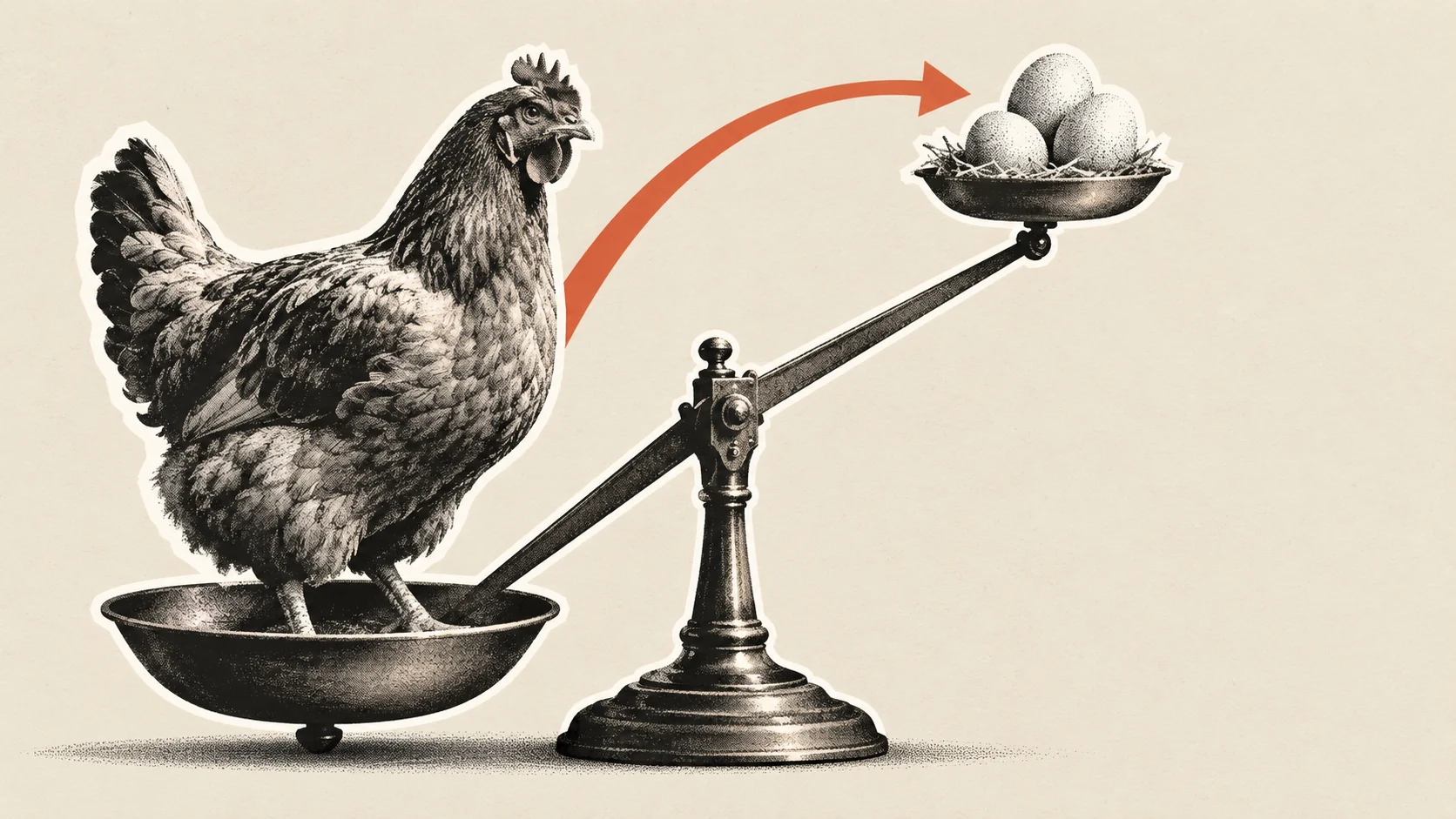
How Two-Sided Platforms Solve the Chicken-and-Egg Problem
Airbnb, Uber, and Etsy each recruited one side of the marketplace first, then let it pull in the other. Here's the sequence, and where it can fail.

Harvard Built AI Clones of Its Professors to Coach Startups for $699
Harvard Business School's Foundry pairs founders with AI avatars of faculty for $699 — about 1% of a year's full-time MBA tuition, per new reporting.

How a $27 Instagram Payout Turned Into Kale's 8-Figure Creator Marketplace
Kale, the creator marketplace co-founded by ex-LinkedIn product leads, grew revenue roughly 9,119% in three years after a single $27 brand payout in 2021.
Comments (0)
Please sign in to join the discussion.
No comments yet.
Be the first to share your perspective on this topic.