

New 3D models of how Venus's crust stretches and fractures suggest three of its rift valleys are still moving, or stopped only a few tens of millions of years ago — recent enough, in geological terms, that Venus may not be the tectonically dead world it's long been assumed to be.
A 3D Thermomechanical Model Tests Three Crusts and Three Extension Rates
Researchers built 3D numerical simulations of Venusian rifting using visco-elasto-plastic rock physics, run through the I3ELVIS modeling code at ETH Zürich. Rather than assuming a single crust type, the team tested three: plagioclase, dry diabase, and mafic granulite, each layered over a 150-kilometer-thick starting lithosphere. They also varied how fast the crust was pulled apart — slow (1 cm/yr), moderate (3 cm/yr), and fast (10 cm/yr) — extension rates well above what's commonly assumed for Venus.
The crust's strength turned out to matter as much as the pulling speed. Weak plagioclase crust stretched and thinned without ever forming a clean fault; it produced flank uplifts averaging under 100 kilometers wide. Stronger diabase and granulite crusts, pulled at moderate-to-fast rates, localized strain into a dominant fault and threw up flank uplifts exceeding 120 kilometers — wide enough, the authors argue, to qualify as a signature of recent activity. Notably, when the same tests were repeated on a thinner, 100-kilometer lithosphere, none of the models produced a faulted rift at all, suggesting Venus's rift-capable crust needs real thickness to work with.
This bar chart lines up the three crust types against the paper's own dividing line for what counts as an "active" signature.
Isostatic Relaxation Reveals How Long a Rift's Signature Survives
A wide flank uplift on its own doesn't prove a rift is active today — it could just be a fossil that hasn't eroded yet. To test that, the team let their two best-fit models (D3, the fast diabase case, and G2, the moderate granulite case) keep running with the extension switched off, watching how the topography settled under its own weight over time.
The two crusts behaved differently. The diabase rift's flank uplift collapsed fast: from about 120 kilometers while active down to under 90 kilometers after roughly a million years, under 40 kilometers by 15 million years, and under 30 kilometers by about 105 million years. The granulite rift held its shape far longer — its flank uplift narrowed from about 130 kilometers to 80, then 60, then around 50 kilometers over a comparable relaxation sequence, because mafic granulite is the strongest, most ductile-resistant of the three tested crusts. Either way, both models fall below the ~100 km threshold well before 100 million years have passed, which is what lets the authors treat a present-day flank uplift above that width as evidence the rift is either still moving or stopped very recently.
Dali, Ganis and Devana Chasmata Match the Model's Active-Rift Profile
To connect the models to the real planet, the authors extracted topographic profiles — 32 per rift, sampled at the same 16-kilometer resolution as Magellan radar data — from three rift valleys using the VenusTopo719 topography model. Dali Chasma, in the Atla Regio, showed a median flank-uplift width around 110 kilometers with a steep west-side fault, structurally similar to the diabase and granulite models. Ganis Chasma, also in Atla, came in wider still at about 160 kilometers, again with a single dominant fault consistent with the modeled active rifts. Devana Chasma, in the Beta Regio, had the widest flank uplift of the three, over 180 kilometers — though its valley shows steep slopes on both sides rather than the asymmetric profile the models produce, meaning its overall geometry isn't a clean match even as its flank width alone still clears the activity threshold.
Taken together, all three real rift valleys sit above the ~100 kilometer line the relaxation experiments identified as the point past which a fossil rift's flank uplift has mostly worn away. That's the paper's central claim: not that Venus definitely has active plate tectonics, but that these three specific rifts are more likely moving now, or stopped only in the last tens of millions of years, than they are ancient and inert.
None of this settles whether Venus has plate tectonics in the Earth sense — the authors are explicit that their models assume a uniform lithosphere, extension in a single direction, and no surface erosion, all of which real rifts likely violate. But it does give mission planners a concrete way to flag which chasmata are worth the closest look when ESA's EnVision orbiter arrives in the early 2030s.
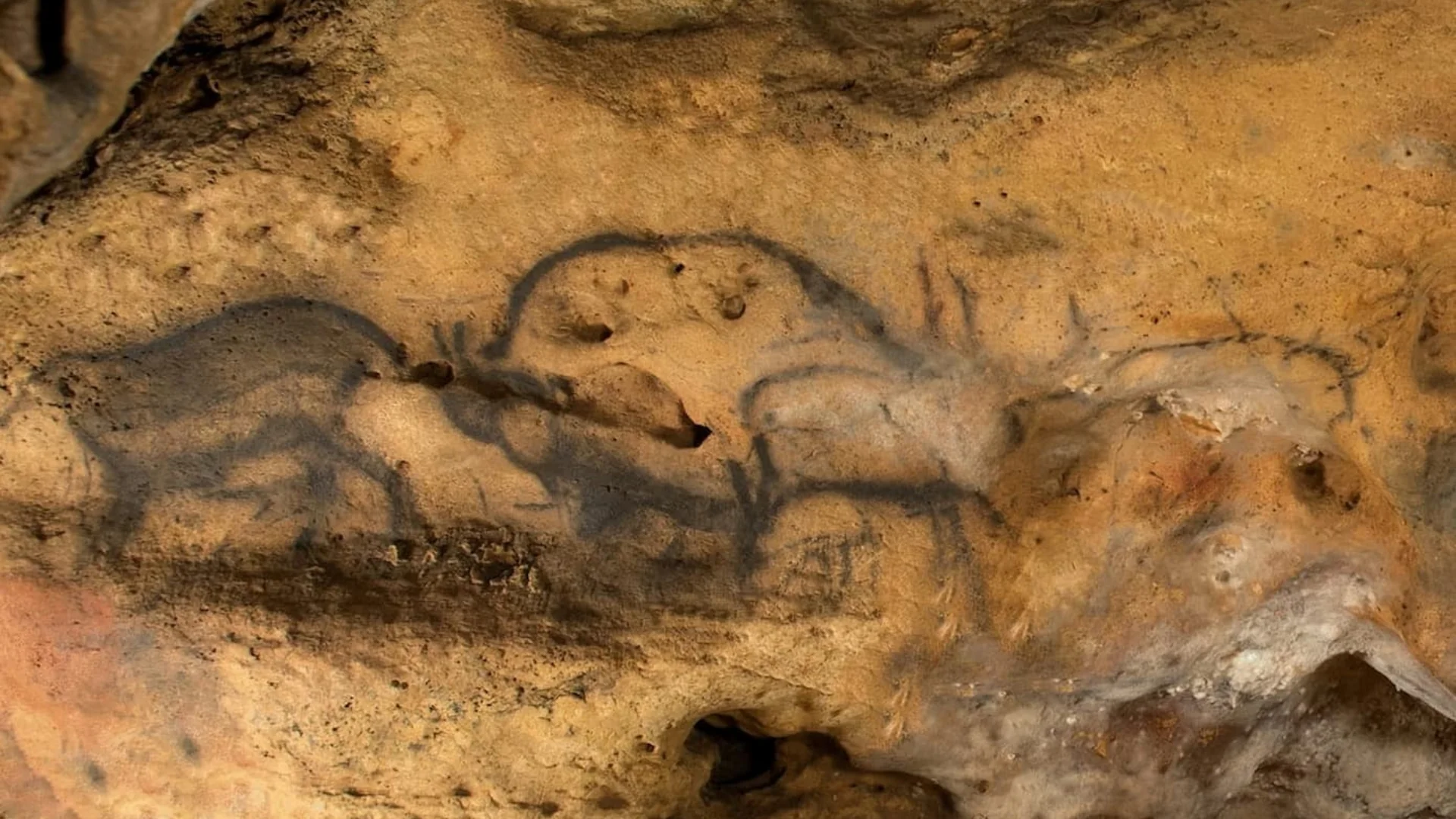
Font-de-Gaume Cave Art Gets Its First Confirmed Radiocarbon Dates
Chemical imaging found charcoal pigment in Font-de-Gaume cave art, letting scientists radiocarbon-date a bison and mask, confirming their Paleolithic age.
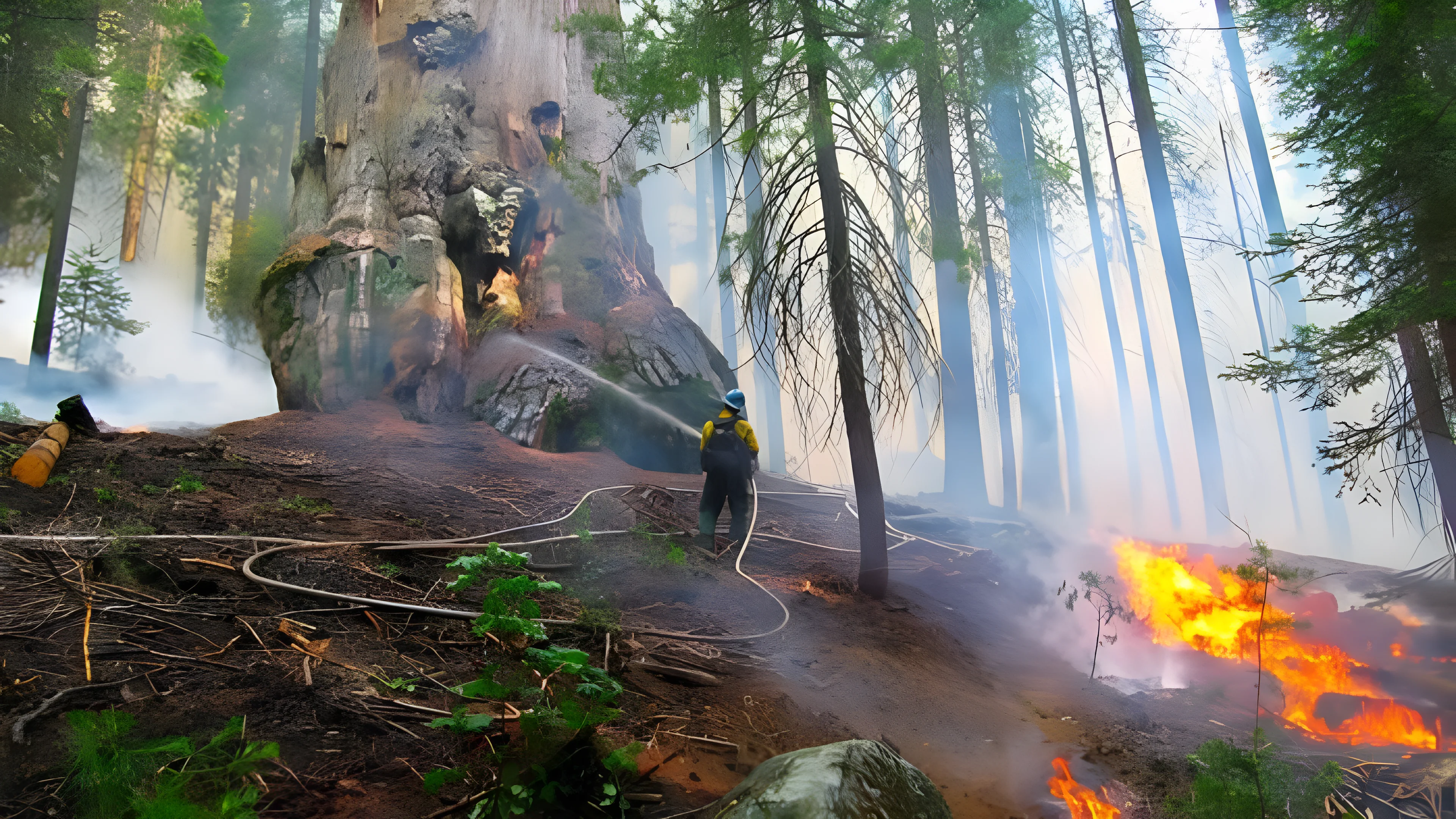
Prescribed Burns Cut Giant Sequoia Wildfire Deaths by 77%, Study Finds
A Nature Communications study of 26,403 giant sequoias found prescribed fire cut wildfire mortality odds 77%, already saving nearly 1,900 ancient trees.

New Antiviral GHP-88310 Blocks Airborne Measles-Like Transmission in Ferret Study
GHP-88310, an oral antiviral, blocked airborne CDV spread in ferrets and cut sources' contagious period by 5 days, a new Nature Microbiology study finds.
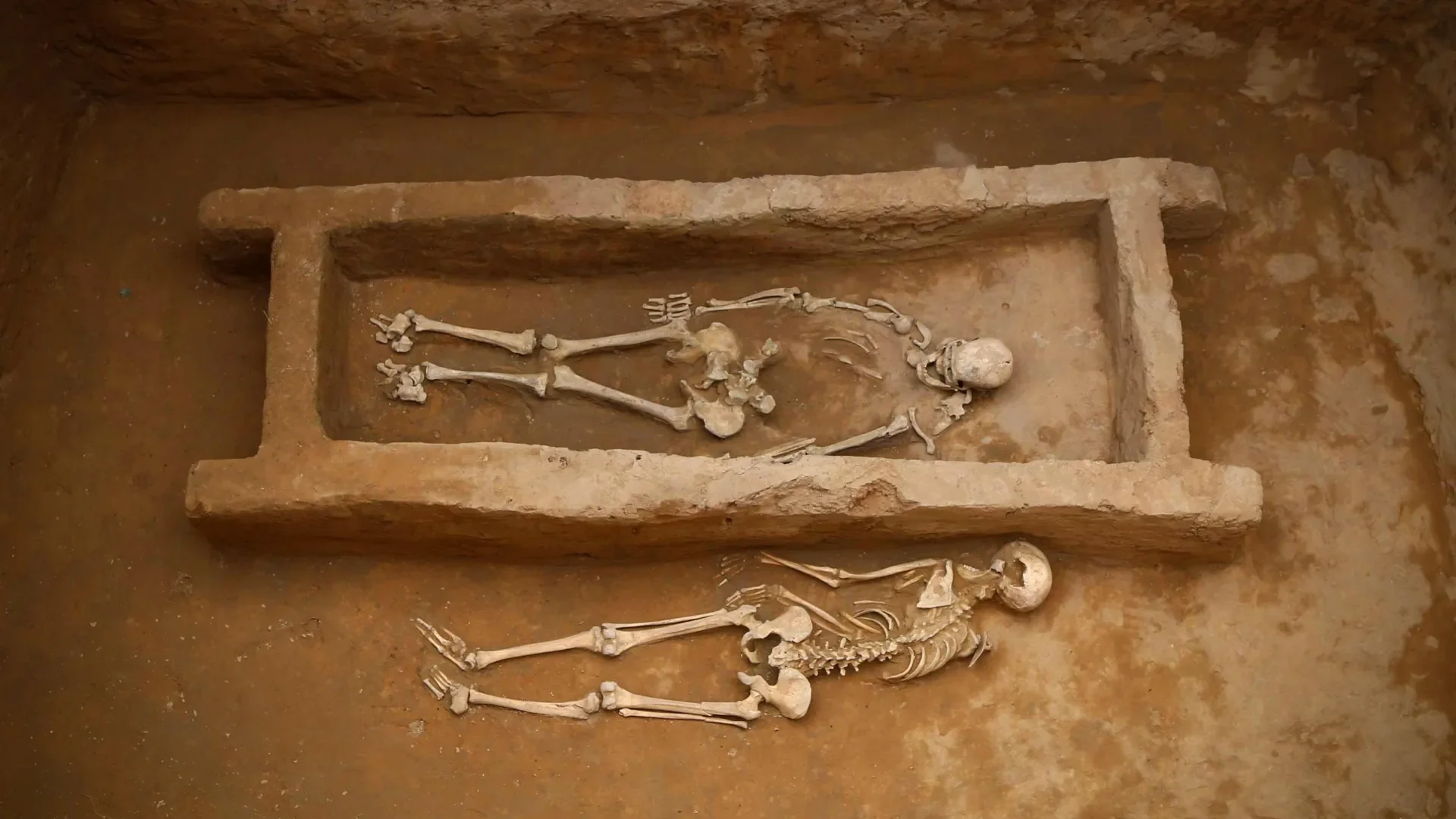
Ancient DNA Overturns Assumptions About Who Was Sacrificed at Shimao
Ancient DNA from 144 Neolithic Shimao burials shows nine of ten East Gate sacrifice victims were male, reversing earlier morphology-based assumptions.
Comments (0)
Please sign in to join the discussion.
No comments yet.
Be the first to share your perspective on this topic.