
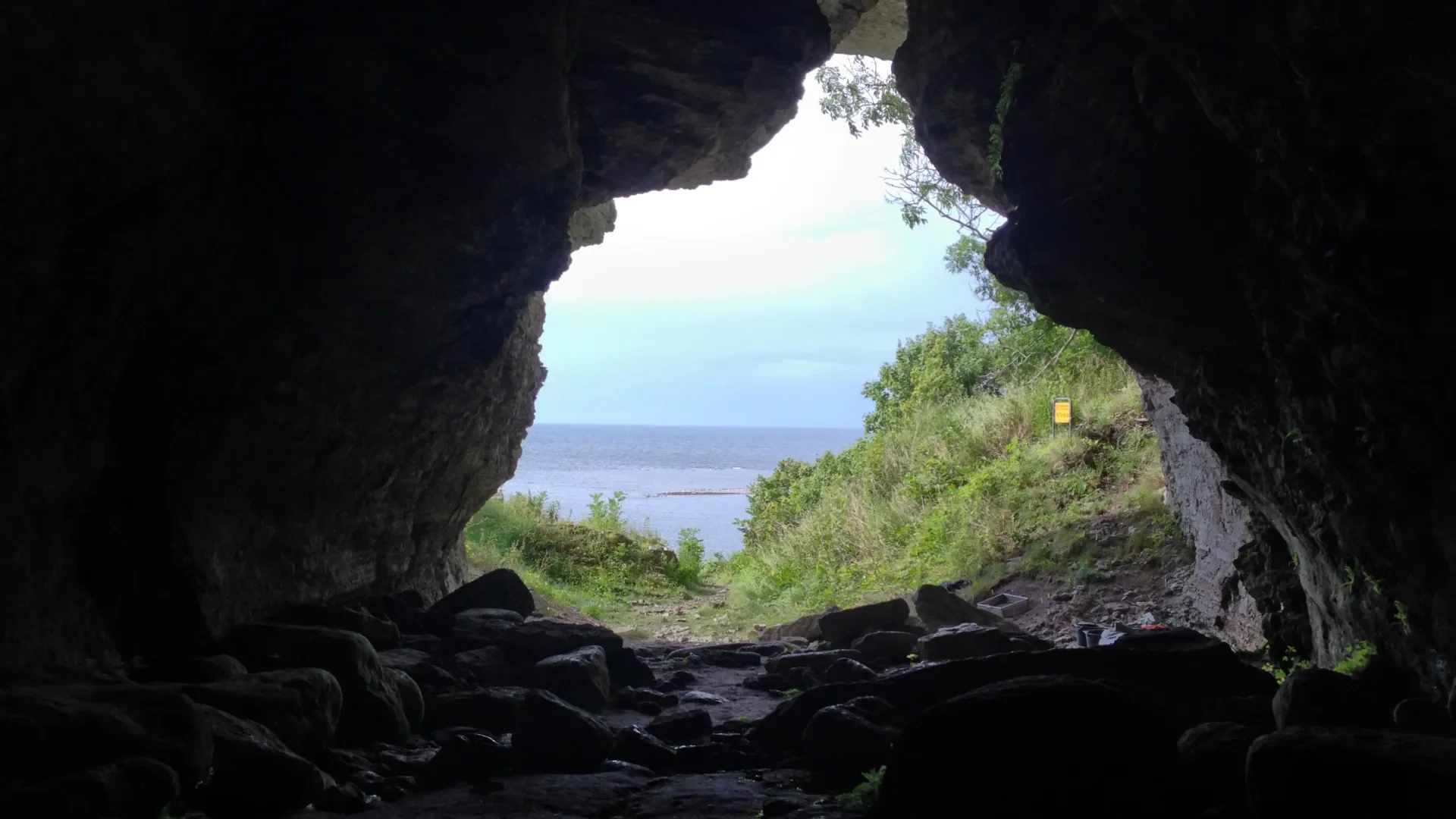
Two canid bones pulled from a limestone cave on a two-and-a-half-square-kilometer Baltic island carry genomes indistinguishable from wild Eurasian wolves — yet everything else about how they lived points to human hands.
Genomes place two Baltic island canids firmly among wolves, not dogs
The remains, a juvenile's metapodial bone labeled G.7 and an adult's distal humerus labeled G.11, come from Stora Förvar cave on Stora Karlsö, an island off the coast of Gotland in the Baltic Sea. Direct radiocarbon dating places G.7 in the Middle Neolithic, between 4,804 and 4,601 calibrated years before present, and G.11 roughly 1,500 years later, in the Bronze Age, between 3,304 and 3,094 cal BP. Genome-wide sequencing of both individuals shows ancestry that falls squarely within the range of Eurasian wolves, with no detectable genomic contribution from domestic dogs. That result rules out the simplest explanation for canids on a human-occupied island — that they were ordinary dogs accompanying seasonal visitors.
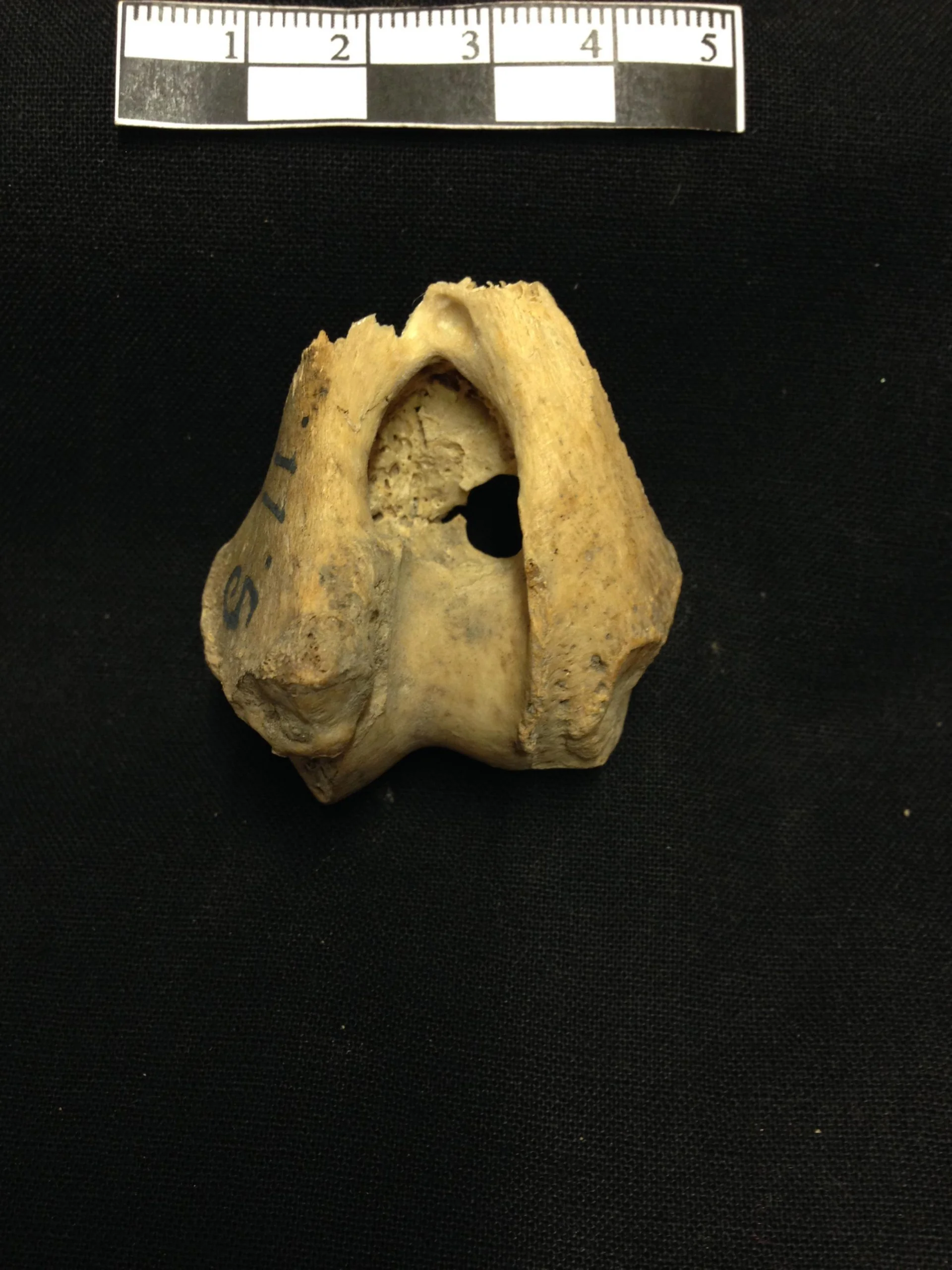
A bottleneck in heterozygosity points to a closed breeding population
Wolf ancestry alone would not be unusual near a coastline where wolves could plausibly wander. What breaks that pattern is heterozygosity. Compared with 72 previously sequenced ancient wolf genomes, both G.7 and G.11 show markedly reduced genome-wide heterozygosity — diversity levels that instead resemble domestic dogs, animals whose breeding humans actively restrict. This suggests the two individuals descended from a small, isolated, or deliberately managed breeding population rather than a freely mixing wild one. On its own, a bottleneck could arise from a small natural founder population rather than human intervention, so the study leans on additional evidence to narrow the explanation.
Marine-heavy diets and skeletal decline tie the wolves to human provisioning
Stable carbon and nitrogen isotope values from both bones show a diet dominated by marine protein, most plausibly seal meat. That signature closely tracks the diet of the humans who used Stora Karlsö, a station associated with seasonal seal hunting, fishing, and sea-fowling rather than permanent settlement. Wild wolves subsisting on terrestrial prey would not be expected to carry this isotopic profile; a marine-heavy diet on a small island is easiest to explain if the animals were fed, or fed themselves, from the same catch that sustained the people there. The skeletal evidence adds a second, independent thread: both individuals sit at the extreme lower end of known wolf body-size variation, and the Bronze Age adult, G.11, shows advanced bone pathology consistent with severely restricted mobility — the kind of condition that would be difficult for a wild wolf to survive without some form of care or confinement.
Gotland's biogeography rules out a wild wolf population
The strongest constraint in the study is geographic. Neither Stora Karlsö nor the larger neighboring island of Gotland was ever connected to mainland Scandinavia after the last glaciation, and neither island supports native large terrestrial mammal populations. No other wolf remains appear anywhere in Gotland's paleontological record. A wolf population could not have established itself there naturally and persisted; the presence of these two individuals, separated by well over a thousand years, is difficult to reconcile with anything other than deliberate transport across open water by boat.
What the evidence can and cannot settle about human control
Taken together — wolf-specific ancestry, dog-like heterozygosity, a shared marine diet with the island's human occupants, small body size, mobility-limiting pathology, and an island biogeography that excludes natural colonization — the study's authors treat human transport and some degree of ongoing management as the most parsimonious explanation. That conclusion stops short of claiming domestication in the genetic sense that produced dogs; these wolves remain genetically wild. The researchers are explicit that an alternative scenario, in which wolves reached the island through an unprecedented natural swimming colonization and then underwent rapid inbreeding, cannot be entirely excluded, even though it strains the available evidence. Nor does the study resolve what role these animals actually played in the lives of the people who kept them — whether as tamed companions, subjects of ritual, or captive sources of fur or meat. What the genomic and isotopic analysis does establish is a case, spanning two separate periods more than a millennium apart, of humans maintaining wolves under conditions of restricted breeding and provisioned diet well before, and apparently separate from, the lineage that gave rise to domestic dogs.
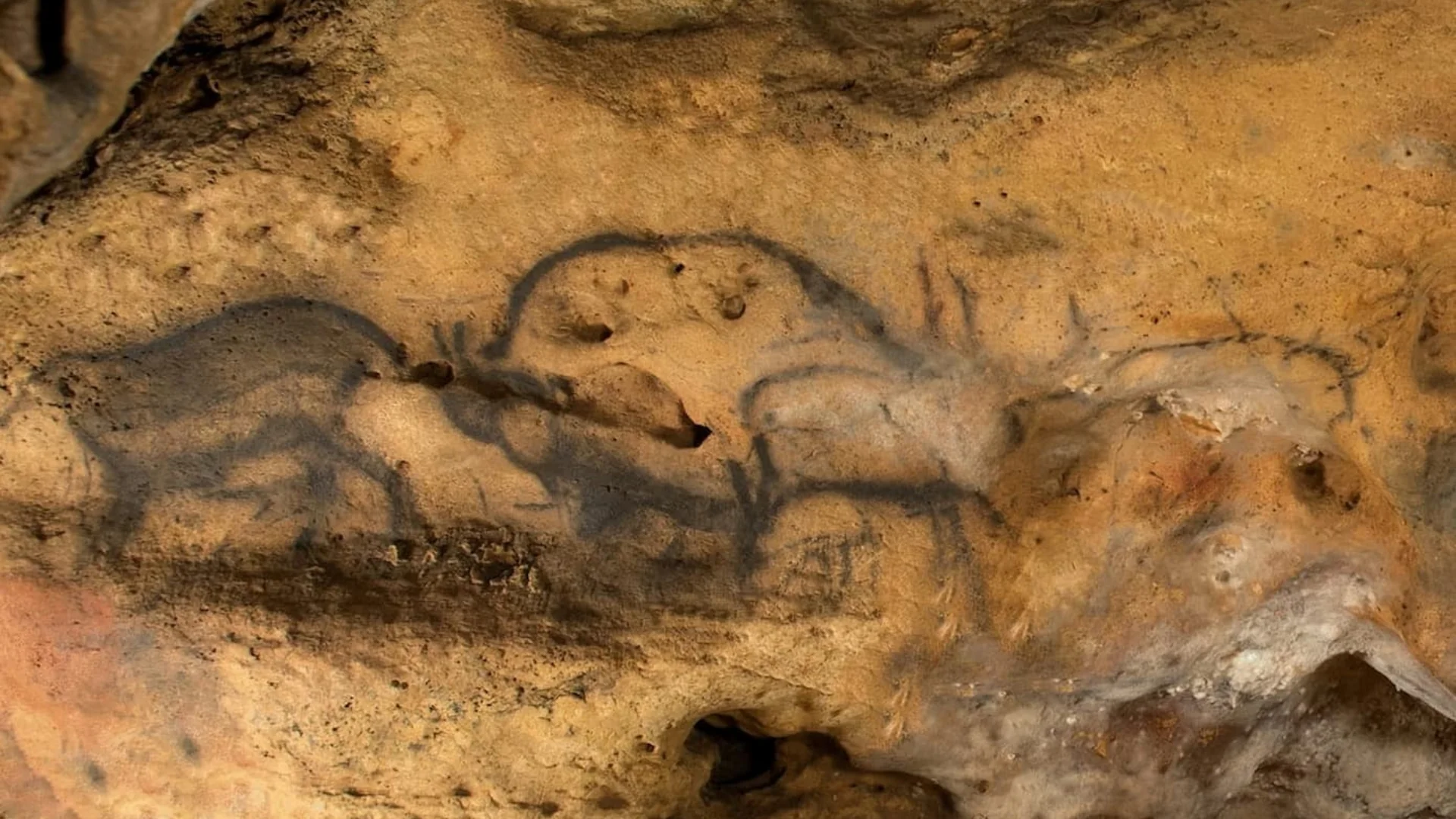
Font-de-Gaume Cave Art Gets Its First Confirmed Radiocarbon Dates
Chemical imaging found charcoal pigment in Font-de-Gaume cave art, letting scientists radiocarbon-date a bison and mask, confirming their Paleolithic age.
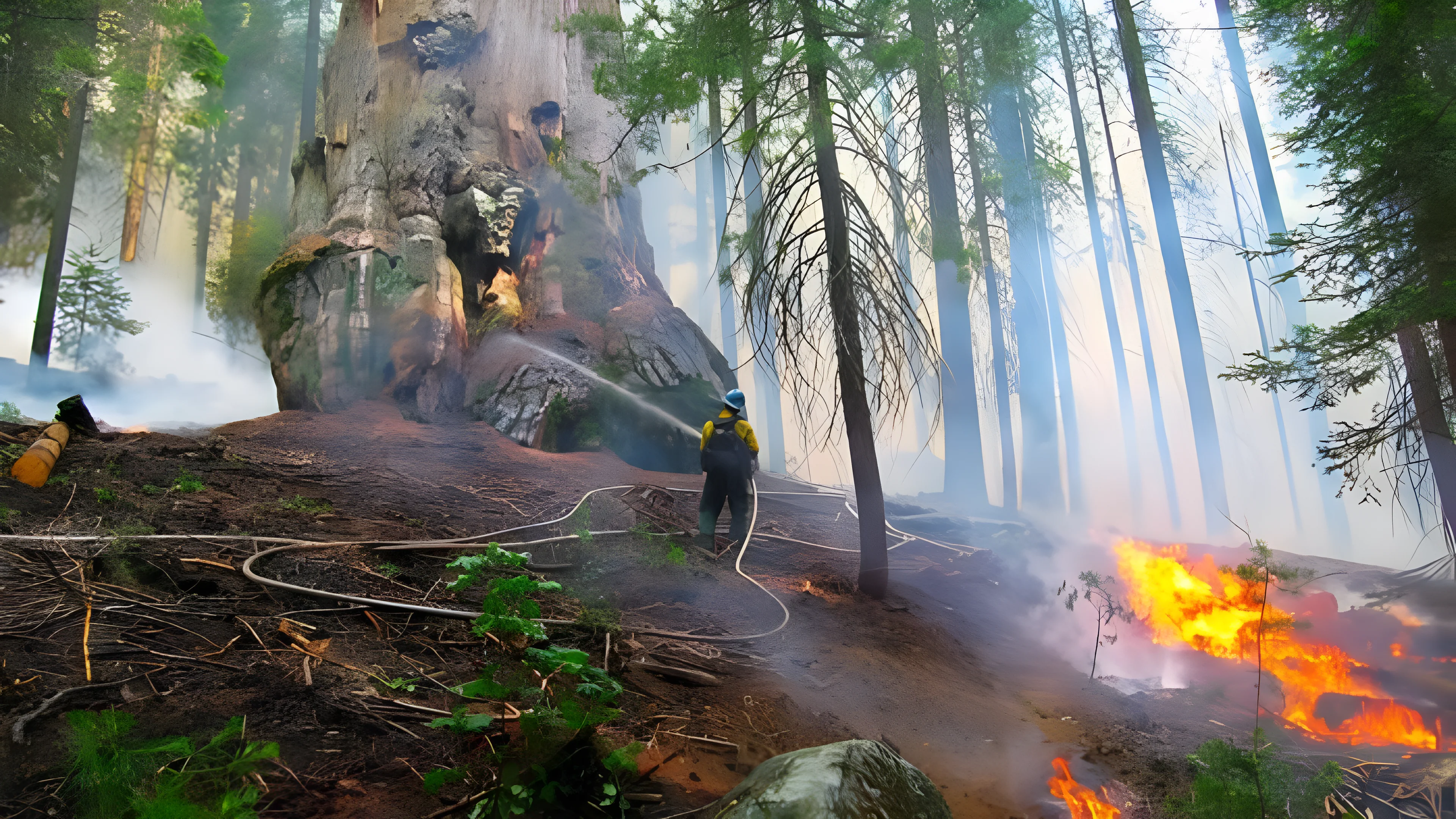
Prescribed Burns Cut Giant Sequoia Wildfire Deaths by 77%, Study Finds
A Nature Communications study of 26,403 giant sequoias found prescribed fire cut wildfire mortality odds 77%, already saving nearly 1,900 ancient trees.

Three Venus Rift Valleys May Be Tectonically Active Today
New 3D models of Venus rifts show extension rates of 3–10 cm/yr; wide flank uplifts at Dali, Ganis and Devana Chasmata suggest active rifting, a new study finds.

New Antiviral GHP-88310 Blocks Airborne Measles-Like Transmission in Ferret Study
GHP-88310, an oral antiviral, blocked airborne CDV spread in ferrets and cut sources' contagious period by 5 days, a new Nature Microbiology study finds.
Comments (0)
Please sign in to join the discussion.
No comments yet.
Be the first to share your perspective on this topic.