
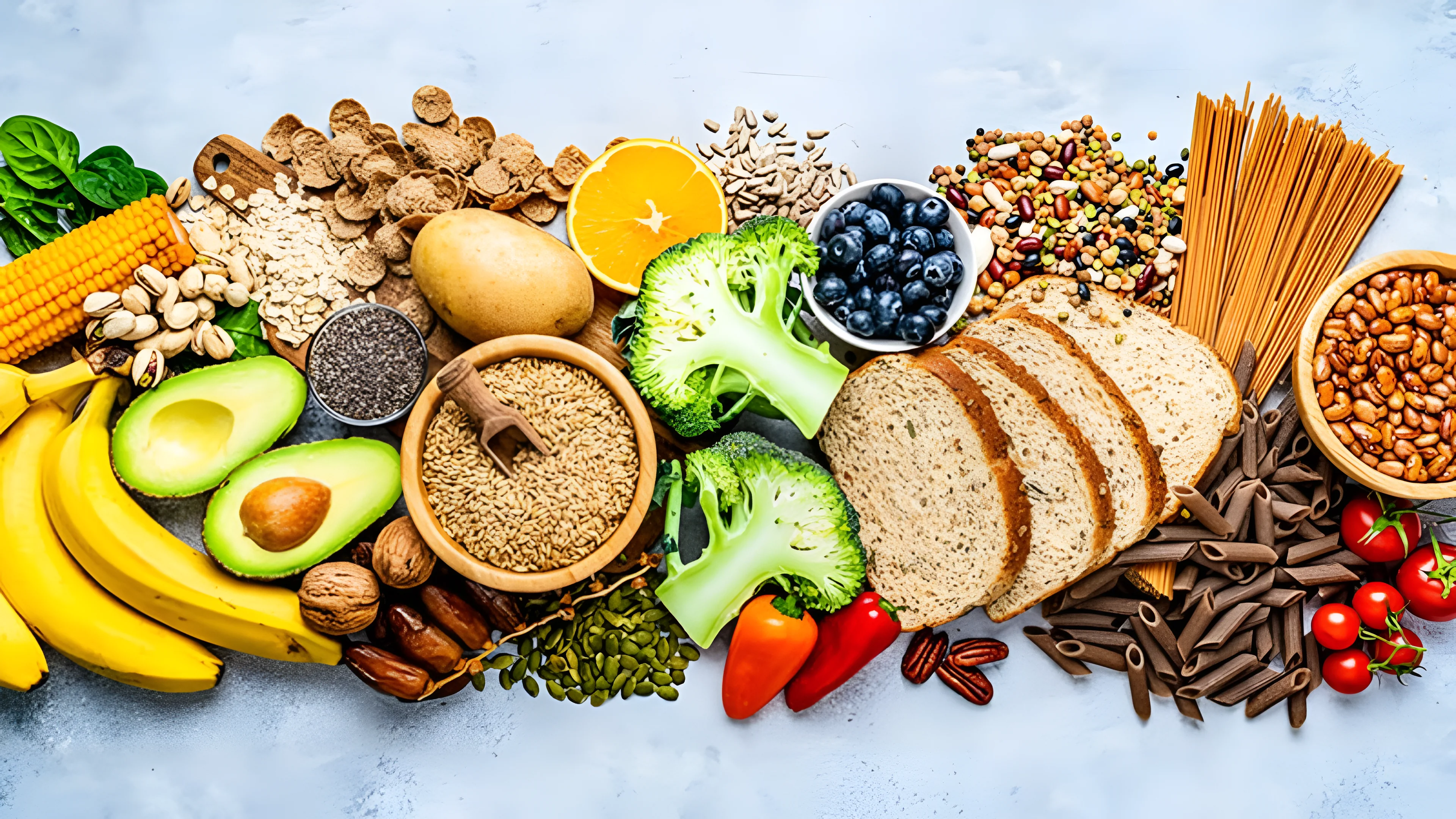
The wellness conversation in 2026 has moved past protein. After years of high-protein diets dominating grocery shelves and diet culture, a new trend called "fibermaxxing"—the practice of aggressively meeting or exceeding daily fiber targets through whole foods or supplements—has spread widely on social media. The science behind fiber's role in gut health and metabolism is solid. The "maxxing" framing is where clinicians are raising concerns.
How Fiber Types Work in the Body—and Why the Difference Matters
Dietary fiber is the collective name for a group of carbohydrates that human digestive enzymes cannot break down. That definition covers a wide range of compounds with meaningfully different effects on the body, and Medscape's 2026 clinical review is direct on this point: not all fiber is equal, and treating it as a single nutrient misses most of the relevant biology.
The broadest practical split is between soluble and insoluble fiber. Soluble fiber dissolves in water to form a gel-like substance in the digestive tract. That gel slows digestion, dampens sudden blood glucose spikes, increases satiety, and binds to LDL cholesterol before it can be absorbed—reducing circulating levels. Common sources include oats, apples, bananas, avocados, and legumes. Insoluble fiber does not dissolve. It acts mechanically, drawing water into the colon, softening stool, and promoting regular bowel movements. Whole grains, nuts, and seeds are primary sources. Unlike many other carbohydrates, insoluble fiber contributes no net calories.
A third property—fermentability—adds further complexity. Highly fermentable fibers, often called prebiotics, are metabolized not by human cells but by gut bacteria. That fermentation produces short-chain fatty acids (SCFAs), which research has linked to improved insulin sensitivity, reduced systemic inflammation, and weight regulation. Harvard and Stanford multiomics research cited in the Medscape review suggests that even minor structural differences between fiber molecules can leave distinct metabolic "fingerprints" in the gut microbiome—a finding that points toward personalized fiber recommendations in the future but does not yet constitute clinical guidance.
Dr. Lee, cited in source reporting, advises a roughly 2:1 ratio of insoluble to soluble fiber as a practical target—around 20 grams insoluble to 10 grams soluble—though this guidance has not been formally adopted in US Dietary Guidelines. The chart below maps the functional properties of each fiber type against their primary food sources.
How Much Fiber You Actually Need—By Age and Sex
The US Dietary Guidelines 2020–2025 set fiber recommendations by age and sex, using a general rule of 14 grams of fiber per 1,000 calories consumed. In practice, that produces explicit daily targets that vary by life stage. Women aged 50 and under are advised to consume 25 grams per day; women over 50, 21 grams. Men aged 50 and under are advised to aim for 38 grams per day; men over 50, 30 grams.
These targets are well above typical US consumption. NPR's May 2026 coverage of the fibermaxxing trend notes that most Americans fall significantly short of the recommended amounts, which is part of what drives the appeal of social media challenges centered on meeting or exceeding them. The problem, as gastroenterologists point out, is that the guidelines describe a maintenance target for gradual attainment—not a floor to sprint toward. The metric cards below show the current recommended daily targets.
Where Fibermaxxing Goes Wrong—Six Clinician-Identified Risks
The biological case for adequate fiber is not in dispute. The concern clinicians raise is specifically about the "maxxing" framing—the social-media-amplified pattern of rapidly and aggressively increasing fiber intake rather than gradually building toward recommended levels. Dr. Saurabh Sethi, a gastroenterologist with training at both Stanford and Harvard, is among the sources cited in ETimes Wellness coverage of the trend, and the risks he and other dietitians identify are specific.
The most immediate risk is gastrointestinal distress. Jumping from a low-fiber intake—say, 10 grams per day, which is not unusual in Western diets—to 40 grams or more over a short period causes the gut microbiome insufficient time to adapt. The result is gas, bloating, cramps, and in some cases diarrhea. The mechanism is straightforward: the bacterial populations that ferment fiber need time to scale up in proportion to the new substrate load.
Dehydration is a closely related risk that fibermaxxing content rarely addresses clearly. Fiber draws water into the colon to perform its bulking function. Increasing fiber intake without a parallel increase in fluid intake causes the opposite of the intended effect: the gut becomes drier, stool hardens, and constipation worsens rather than improves. Clinicians advising patients on fiber increases consistently pair that guidance with explicit hydration targets.
For people with irritable bowel syndrome, small intestinal bacterial overgrowth (SIBO), or chronic bloating, the risks are compounded. High-raw-food approaches—large cruciferous salads, heavy fiber bars, large servings of raw legumes—can significantly aggravate symptoms in these populations. The prebiotic fermentation that benefits healthy guts can fuel bacterial overgrowth or gas production in compromised ones.
Two less-discussed risks are worth flagging. The first is nutrient displacement: filling a significant portion of meal volume with high-fiber foods to suppress appetite can inadvertently crowd out adequate protein and healthy fat intake. The second is the psychological dimension of the "maxxing" framework itself. Counting fiber grams, following rigid daily targets, and treating food choices as optimization problems can reinforce nutritional perfectionism and—in vulnerable individuals—mask or normalize patterns consistent with disordered eating.
Finally, the processed food industry's adoption of the fiber trend introduces a consumer safety dimension. Many products marketed as "high fiber" achieve their fiber content by adding isolated functional fibers—inulin, psyllium husk, chicory root extract—to otherwise ultra-processed foods. Clinical trial data cited by Medscape indicates that high doses of isolated fiber such as pure inulin have been shown in some individuals to spike systemic inflammation markers and liver enzymes (ALT). Isolated fiber additions do not make ultra-processed foods healthy, and the source packages that carry them do not carry the vitamins, phytonutrients, and structural food components present in whole plant sources.
The practical guidance from gastroenterologists and dietitians converges on three points: increase fiber gradually rather than all at once; prioritize diversity of whole plant food sources—berries, lentils, oats, pistachios, seeds—over supplemental isolates; and treat simultaneous hydration as non-negotiable. Clinicians are also being advised to ask patients presenting with sudden digestive complaints whether recent aggressive dietary changes, particularly those tied to social media trends, preceded the onset of symptoms.
The chart below gives an ordinal sense of how clinicians weight the severity of each identified risk, based on the qualitative descriptions in source reporting. These are not measured population frequencies—they reflect the relative concern expressed in clinical and dietitian commentary.
What the Trend Gets Right—and What a Smarter Approach Looks Like
The protein saturation of the US market is real. Leger's 2026 Health and Wellness survey found that 85 percent of US consumers consider protein vital to their wellness goals, with nearly half incorporating it into their daily routine. Brands across every food category have added protein claims to their packaging. The shift in attention toward fiber and digestive health represents a genuine and useful nutritional correction—most Americans do consume less fiber than guidelines recommend, and the downstream effects of low fiber intake on gut microbiome diversity, metabolic health, and cardiovascular risk are well-documented.
The category called "Fibermaxxing 2.0"—a term Mintel uses in 2026 market reporting—attempts to move beyond raw gram-counting toward fiber variety and biological balance alongside protein rather than in opposition to it. That framing is closer to what the science supports. The goal is not to maximize a single number but to achieve consistent intake of diverse whole-plant sources that deliver a range of fiber types, fermentation substrates, and accompanying nutrients together. No supplement isolates that combination reliably.
The practical translation for consumers is modest: add fiber sources incrementally over weeks, not days; drink enough water that urine remains pale; favor variety—a serving of lentils, a handful of berries, an apple, and some seeds across a day covers more biological ground than a fiber bar with an impressive gram count; and treat any packaging claim about "added fiber" in processed food as a marketing signal, not a health guarantee.

Ebola Bundibugyo Outbreak DRC 2026: What's Driving It
A Bundibugyo ebolavirus outbreak declared a PHEIC by WHO in May 2026 has surpassed 900 suspected cases in eastern DRC, with no approved vaccine and containment blocked by war, displacement, and community mistrust.

Ebola 2026: US Travel Ban and Dulles Screening Explained
A Bundibugyo ebolavirus outbreak declared a PHEIC by the WHO has prompted the CDC to issue a 30-day entry ban and route all at-risk US-bound passengers through Washington Dulles for health screening.

QuEChERS-GC-MS Detects PAHs in Food: Key Findings
A peer-reviewed 2025 study from SeoulTech optimized a QuEChERS-GC-MS method for PAH detection in foods, reporting validated recovery rates of 86–109% and LODs as low as 0.006 µg/kg.


Tap vs. Bottled Water: PFAS and Microplastics Risk
New research shows bottled water carries far more nanoplastics than treated tap water, while tap water faces PFAS contamination in nearly half of U.S. systems. What consumers can actually do.
Comments (0)
Please sign in to join the discussion.
No comments yet.
Be the first to share your perspective on this topic.