
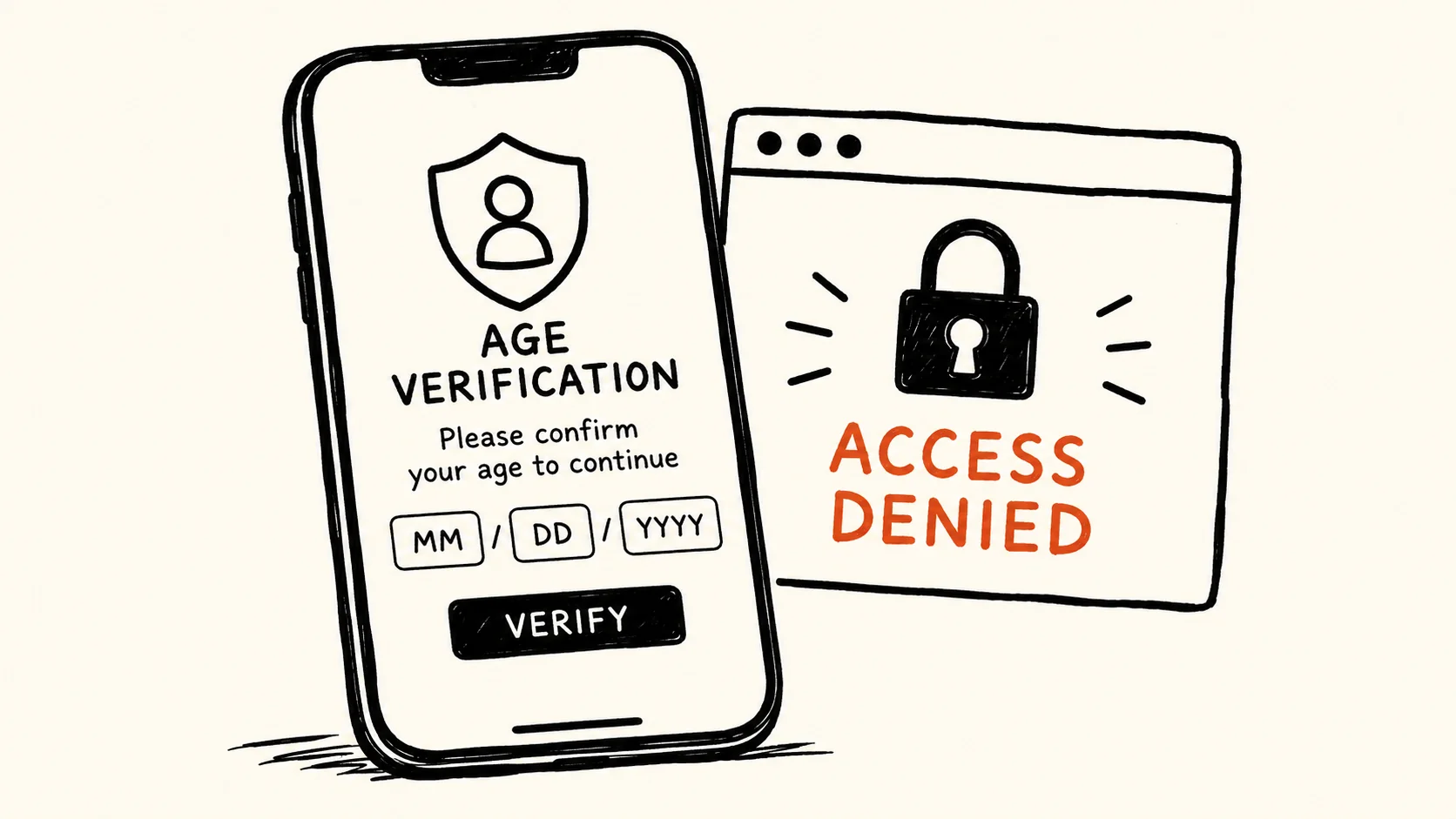
Congress is moving to fast-track the KIDS Act, a sprawling package that folds a revised Kids Online Safety Act (KOSA) together with the SAFE BOTS Act and the SCREEN Act into a single, expedited vote. Supporters say none of the bills require age verification. A close read of the legal standard each one relies on suggests otherwise.
Why "Knows Or Should Have Known" Pushes Platforms Toward Universal Age Checks
The KOSA section of the package states plainly that it should not be read to require age verification. But that disclaimer sits alongside a separate legal trigger that runs through the whole bill: special protections, parental controls, and messaging restrictions all switch on whenever a platform "knows or should have known" that a user is a child under 13 or a teen between 13 and 16.
That phrase matters because it is a negligence standard, not an actual-knowledge standard. A platform does not need to be told a user's age to be exposed; a court or regulator can later decide, after a complaint or a lawsuit, that the platform "should have" figured it out. For a company facing that kind of after-the-fact judgment, the cautious move is not to guess. It is to start collecting age signals from everyone before any dispute exists, which is exactly the dynamic that turns a bill without an explicit mandate into one with a de facto one.
The compliance pressure is not limited to KOSA. The SAFE BOTS Act applies the same "knows or should have known" minor threshold to restrict certain AI chatbot features, and the SCREEN Act requires platforms hosting sexually explicit content to block users who are "more likely than not" minors. Three different legal tests, all converging on the same operational answer: check ages broadly, or accept open-ended liability.
For people, that broader sweep is not abstract. Age-estimation tools that scan faces or analyze account activity make mistakes most often for the groups least able to absorb being wrongly locked out: people of color, people with disabilities, and transgender or nonbinary users. A standard built to single out minors ends up burdening adults whose age the system simply estimates incorrectly.
How the Bundled Bills Expand Moderation Duties for Lawful Speech
The revised KOSA drops the original "duty of care" clause that drew the most criticism in earlier versions of the bill. In its place, the bill requires platforms to establish and actively enforce policies covering specific content categories: narcotics, tobacco, cannabis, gambling, alcohol, and financial fraud.
That sounds narrow until it meets how people actually talk about these subjects online. A teenager asking for help with a parent's gambling problem, a young adult discussing addiction recovery, or someone seeking advice after being scammed are all engaging in lawful speech that touches the bill's enumerated categories. The bill does not ban those conversations directly, but it puts platforms under enough legal pressure that the safer business decision is often to remove or restrict the discussion rather than risk getting the moderation call wrong. That pattern has shown up before with other content-liability laws aimed at online speech.
What the KIDS Act Means for Encrypted and Disappearing Messages
The package also reaches into private communication. It states that certain KOSA requirements should not be read to override strong encryption. But that carve-out is narrow: it covers specific features and messaging controls, not KOSA's separate, broader duty requiring platforms to "address" a list of harms to minors wherever those harms occur, including inside private and encrypted chats.
That leaves an unresolved question. A platform cannot address harmful content it cannot read. The practical pressure that creates is for providers to weaken encryption protections or scale back features like disappearing messages, which are a privacy tool rather than a design flaw, so that the platform retains enough visibility to claim compliance. Like the rest of the package, this provision still depends on a platform identifying who is a minor in the first place, feeding back into the same age-verification pressure described above.
None of this has happened yet. The KIDS Act has not passed, and how courts would eventually interpret "should have known" is untested. But the legislative text itself is what advocacy groups point to when arguing the bill's effects will reach far beyond the minors it is meant to protect, touching adult privacy, lawful speech, and the design of private messaging tools across the platforms it covers.

Could AI Create a "Permanent Underclass"? What the Data Actually Shows
Stanford payroll data show AI-exposed 22-25 year-olds losing jobs at 3.8% a year, while wages diverge by income. What that means for a 'permanent underclass.'


Teenage Gunman Kills Grandparents, Then Attacks Bangkok-Area School
A teenage student in Thailand killed his grandparents and then opened fire at his school outside Bangkok, in the country's deadliest attack in years.

UOB Sells UOBAM to Allianz Global Investors for S$555 Million
UOB Group has agreed to sell UOB Asset Management to Allianz Global Investors for S$555 million while keeping a long-term distribution tie for wealth clients.

Explosive-Laden Drone Shuts Down Leipzig Airport, Second Object Strikes DHL Cargo Plane
A drone carrying explosives shut both Leipzig/Halle Airport runways overnight after a second object struck a DHL cargo plane, Germany's interior minister said.
Comments (0)
Please sign in to join the discussion.
No comments yet.
Be the first to share your perspective on this topic.