
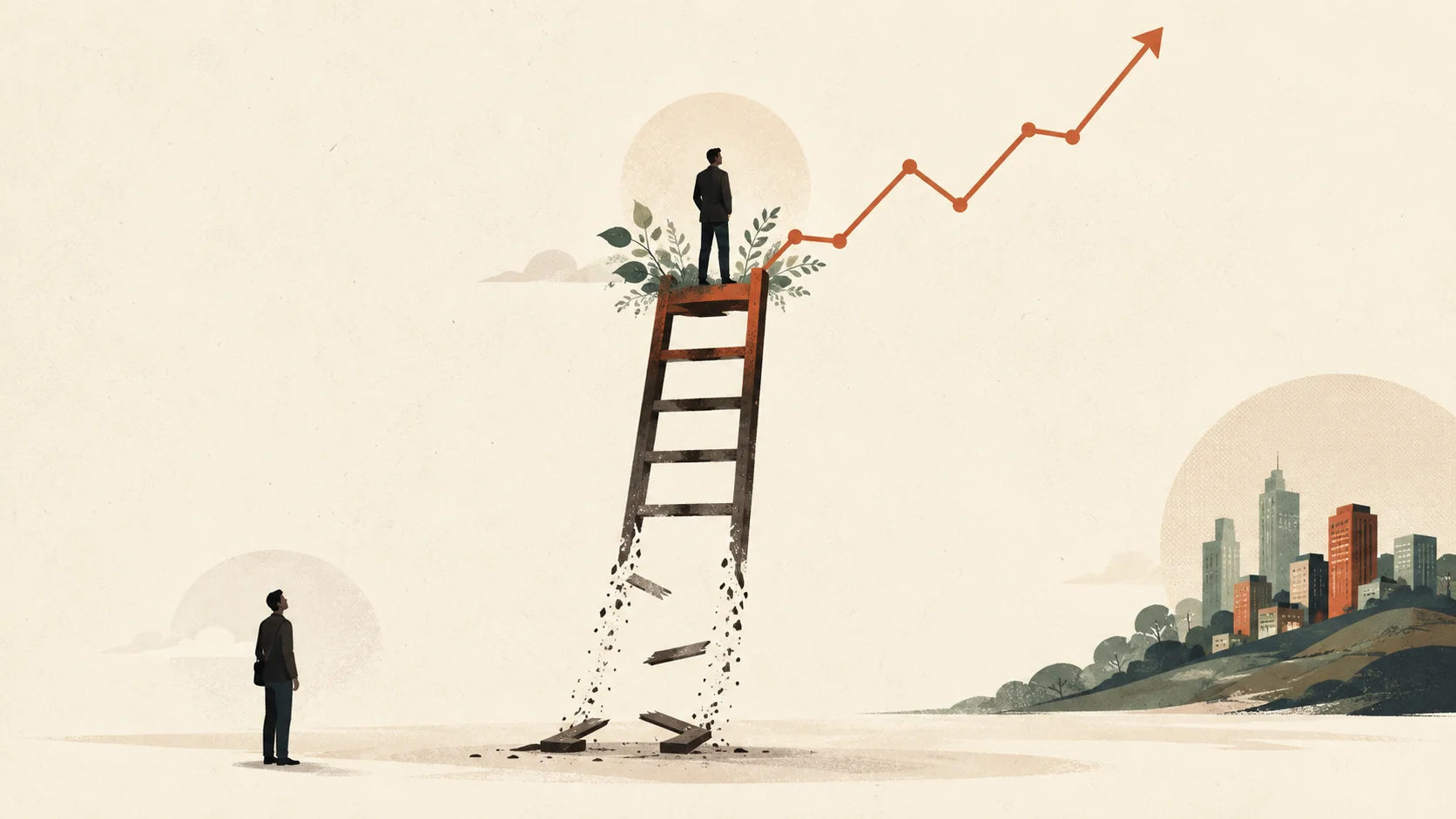
Some economists warn AI is building a class of people permanently locked out of good jobs. Others call that panic dressed up as analysis. Neither side is working from thin air. Real payroll and wage data show a split economy taking shape. Here is what that data says, and where it stops.
Stanford's Payroll Data Shows AI Removing the Bottom Rung, Not the Whole Ladder
Picture a company as a small pyramid. At the bottom are junior employees who learn the job by doing routine, repeatable work: data entry, first-draft writing, basic customer support, entry-level code. At the top are people whose judgment, relationships, and experience are hard to replace. AI is very good at the bottom of that pyramid and still weak at the top, and that's exactly the pattern showing up in the numbers.
The Stanford Digital Economy Lab's payroll analysis, built on ADP records covering millions of U.S. workers, found that employment for 22- to 25-year-olds in the most AI-exposed occupations has been shrinking since the effect became statistically significant in 2024. A June 2026 update reported by Fortune put the current pace at a 3.8% annual decline for that group, compared with 2% annual growth for similarly aged workers in low-exposure jobs. Workers in their early thirties in exposed occupations are also contracting, while workers in their late thirties and beyond are growing. The lab's researchers stress-tested the finding against the obvious alternative explanations, including interest rates, the tech sector alone, and remote-work effects, and the pattern held in every version.
That's the mechanism worth understanding. This isn't evidence that AI is shrinking the total number of jobs; overall employment has kept growing. It shows AI closing the door at the entry point of specific career ladders, while leaving the top of those same ladders intact or growing.
Wages Are Splitting Into a K-Shape, and the Split Is Widening by Income Tier
If jobs are the ladder, wages are how fast you climb it. Right now, how fast you climb depends heavily on which rung you started on.
The International Monetary Fund's January 2026 analysis found that about one in ten job vacancies in advanced economies now requires at least one new AI- or IT-related skill. That demand is raising pay disproportionately for high-skill workers, while pressuring the middle of the labor market. Separately, Federal Reserve Bank of New York researchers tracking household finances since 2023 found wealth gains concentrated among higher-income households, with earnings for the highest earners growing faster than earnings for the lowest. The clearest single number comes from consumer-banking data: Bank of America Institute figures reported by CPA Practice Advisor show higher-income households saw wage growth of about 5.6% year-over-year in March 2026, the strongest pace since 2021, while middle-income households saw about 2% and lower-income households saw about 1%. That gap is the widest the bank has recorded since it started tracking the data in 2015.
It's worth being precise about what this does and doesn't show. The gap isn't fixed in place. Axios reported in July 2026 that the wage-growth gap between lower- and middle-income workers had actually narrowed, even as the broader wealth divide between the top and everyone else stayed intact. In plain terms, pay growth for people already employed has been more resilient than the doom narrative suggests. The strain shows up less in existing paychecks and more in who gets hired for the next rung up.
Economists Are Sharply Split on Whether This Divergence Becomes Permanent
Here is where the honest disagreement starts. One camp argues the data above is the leading edge of something structural: AI keeps getting cheaper and more capable, and once a company stops hiring juniors, it rarely resumes at the old pace. The IMF itself frames the risk in exactly those terms, warning that new-skill demand is deepening labor-market polarization and could contribute to a shrinking middle class if left unaddressed.
The opposing camp accepts the numbers but rejects the conclusion drawn from them. Big Technology's analysis of the "permanent underclass" theory argues the pessimism underestimates human initiative. If AI tools are powerful enough to generate outsized returns for their owners, they're also powerful enough for ordinary people with ideas to put them to use, the same way cheap software let a generation of non-programmers build small businesses. That view lines up with earlier reporting on how 43% of Gen Z say they'd rather start a company than take a traditional job, a sign that the youngest workers most exposed to entry-level displacement are also the ones most likely to route around it.
There's a third, more unusual warning worth including. Some critics argue that the policies typically proposed to prevent an AI-driven underclass, particularly a poorly designed universal basic income or open-ended jobs guarantee, could themselves entrench the very outcome they're meant to avoid. This echoes older debates about how badly structured safety nets discouraged people from re-entering the workforce. That argument doesn't deny AI is disruptive. It's a caution about which fixes help and which quietly make the trap permanent.
The Policy Fork That Decides Whether the Gap Narrows or Calcifies
Every past wave of automation looked frightening from inside it, and looked, in hindsight, like a disruptive but temporary adjustment, provided two things happened: workers displaced from old roles could move into new ones, and the income gains from higher productivity got shared widely enough to keep demand growing. The IMF's own recommendation follows that logic directly: pair AI adoption with training investment and skills policy, or risk letting the divide harden into something structural.
The risk case is just as mechanical. If entry-level hiring keeps shrinking the way Stanford's data shows, fewer young workers build the experience needed for mid-career roles. That's also why AI-driven layoffs can snowball into a wider economic slowdown: fewer paychecks at the bottom means less consumer spending, which pressures the businesses that depend on it. That dynamic is compounded by the fact that AI's productivity payoff tends to show up on a lag, meaning companies often cut headcount before the promised gains materialize, not after. And because the official unemployment rate is already missing a good deal of labor-market strain, the entry-level erosion in the Stanford data may be showing up in the headline numbers even less than it should.
None of this makes a permanent underclass inevitable. It makes it a live policy question with a measurable starting condition, which is a different, more useful thing to know than either "AI will strand millions forever" or "the panic is overblown." The data says the gap is real and growing. Whether it calcifies is still, genuinely, undecided.
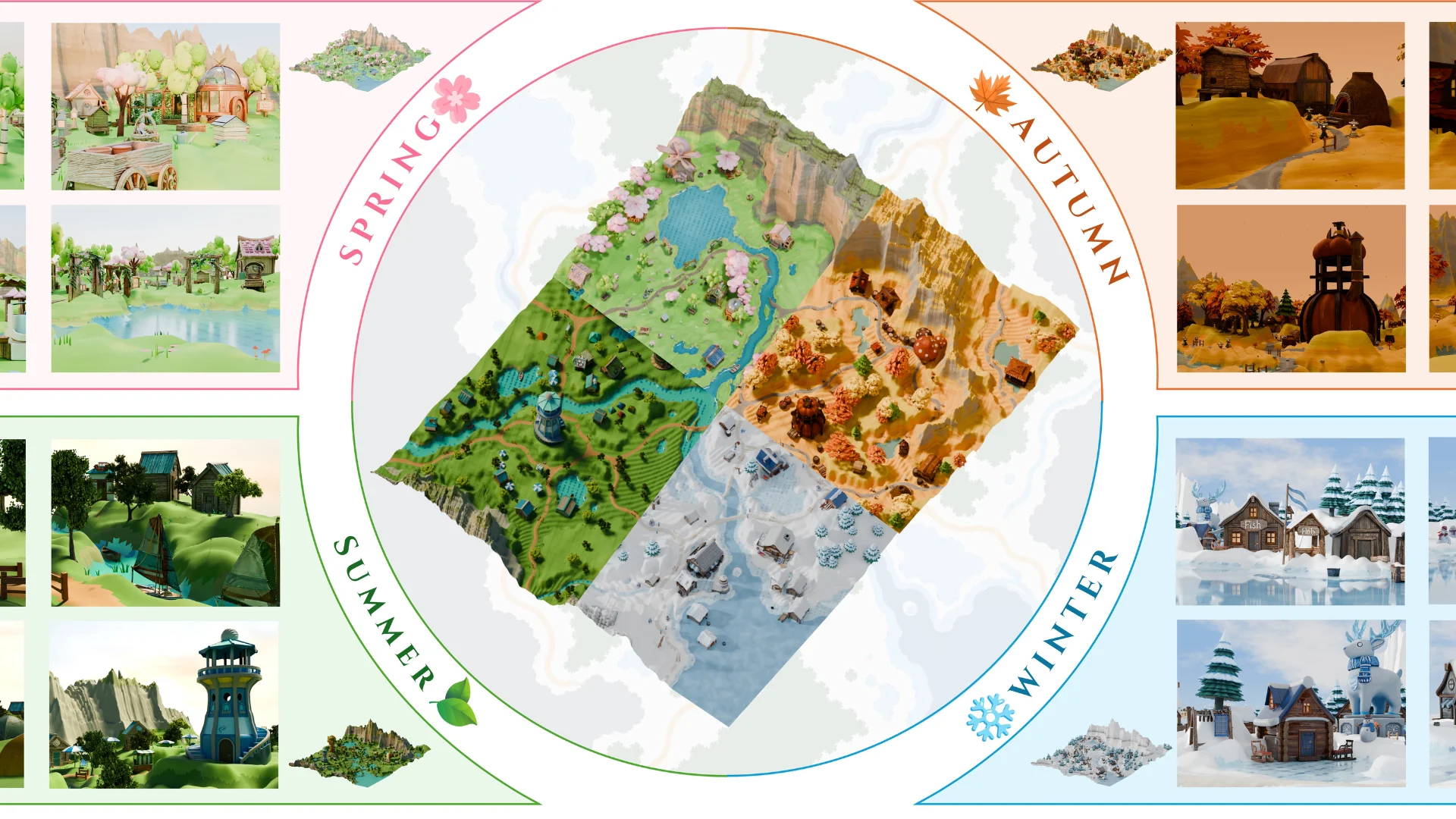
Tencent's WorldClaw Turns One Text Prompt Into an Editable 3D World
Tencent's WorldClaw uses a 3-stage AI agent pipeline to plan, build terrain, and place editable 3D objects from a single text prompt, per a new arXiv paper.

Claude Opus 5 Edges Past Fable 5 on the Artificial Analysis Intelligence Index
Anthropic's Claude Opus 5 scored 61 on the Artificial Analysis Intelligence Index at launch, edging past Fable 5's 60 while cutting cost per task 26%.
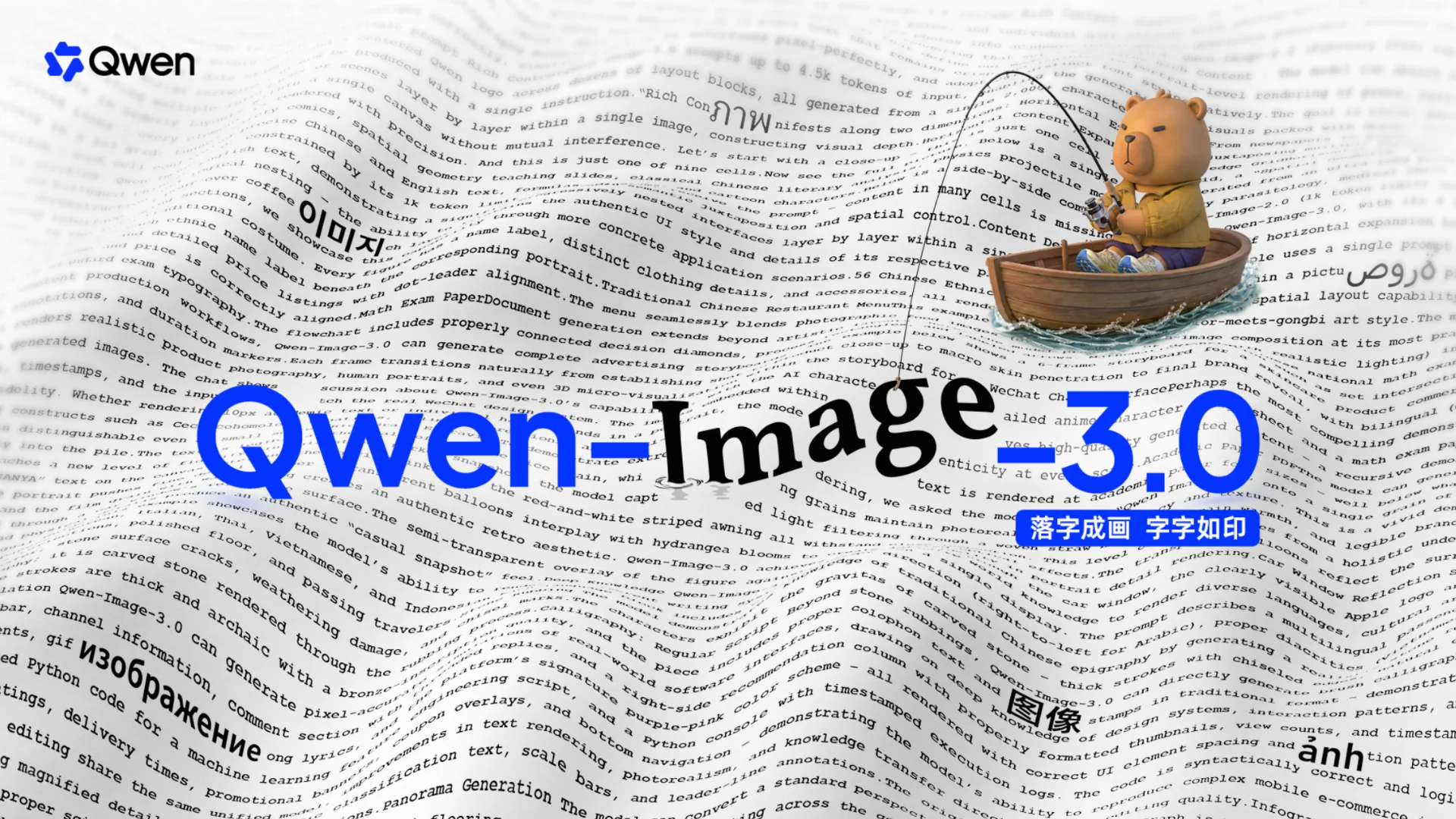
Qwen-Image-3.0 Claims 4.5K-Token Prompts, Ships No Benchmarks
Alibaba's Qwen-Image-3.0 accepts 4,500-token prompts, 4.5x its predecessor, but launched without a technical report, benchmark score, license, or weights.
Kimi K3 Debuts as the First Open 3-Trillion-Parameter Model, Trailing Fable 5 and GPT 5.6 Sol
Moonshot AI's Kimi K3 is the first open 2.8-trillion-parameter model, beating open rivals on benchmarks but trailing Claude Fable 5 and GPT 5.6 Sol overall.
Comments (0)
Please sign in to join the discussion.
No comments yet.
Be the first to share your perspective on this topic.