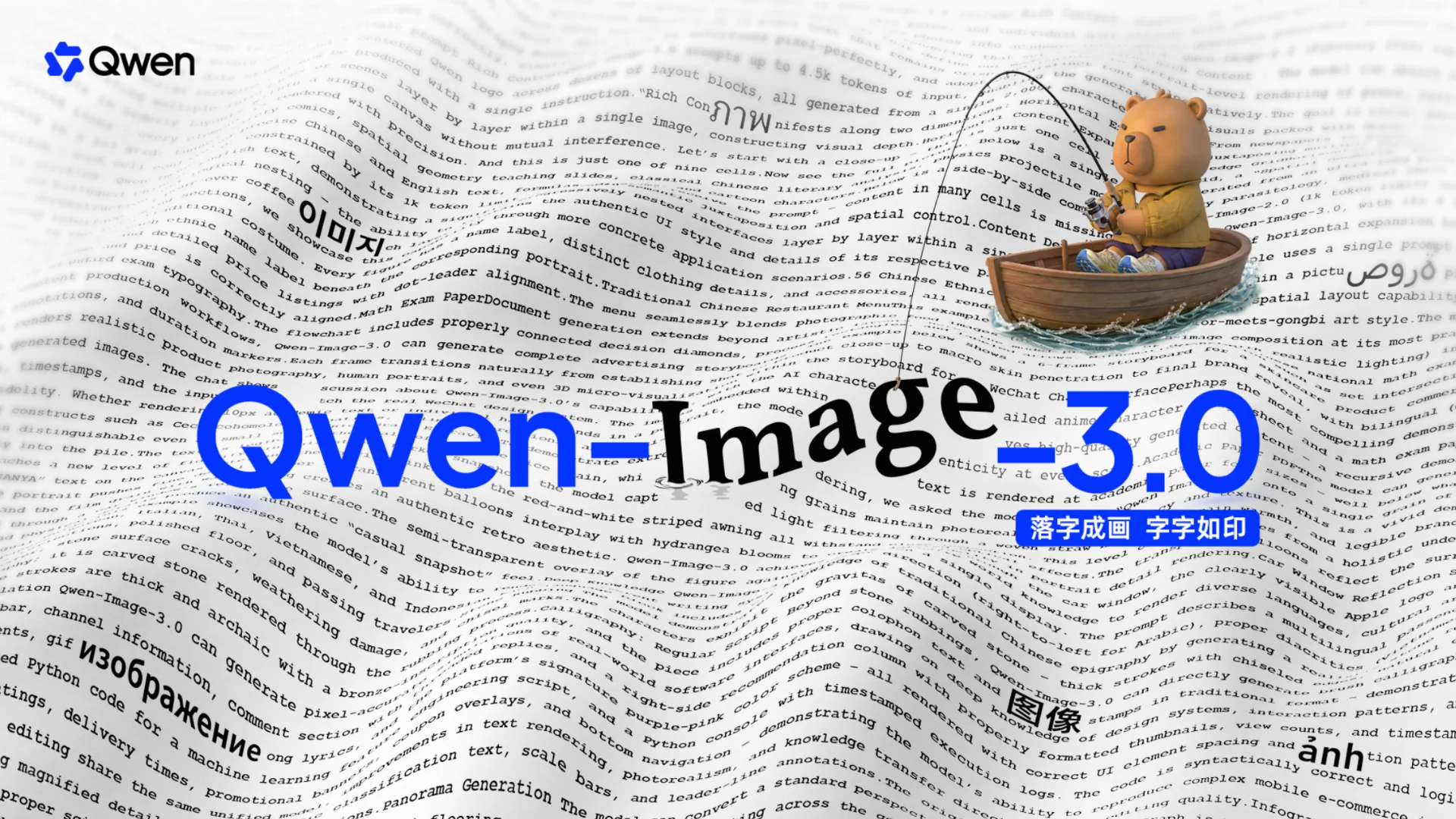
Alibaba's Qwen team released Qwen-Image-3.0 on July 21, 2026, built around a single pitch: images dense enough to work as a production tool rather than a demo. The launch post carries no benchmark table, model card, or downloadable weights to back that pitch up.
Alibaba Says Qwen-Image-3.0 Handles Prompts 4.5 Times Longer
The company's central technical claim is prompt length. Qwen-Image-3.0 accepts instructions of up to 4,500 tokens, up from roughly 1,000 tokens on Qwen-Image-2.0 — a jump the company says lets the model compose information-dense images, such as a nine-panel grid of unrelated infographics, in a single pass rather than stitching together separate generations. A second showcased example nests a code editor around a chat window around a messaging app, testing whether the model can hold layered structure across a long instruction. Alibaba also says the model renders text as small as 10 pixels legibly and reproduces skin, hair, and paper textures close to photographic quality, illustrated with a full academic-paper page of equations and a simulated newspaper front page. Every one of these examples, though, is an output the company selected for the launch post rather than a result from a fixed, repeatable test set.
Two Prior Releases Shipped Open Weights and Reports; This One Didn't
The gap between demo and evidence is sharper because of how the series shipped before. Qwen-Image 1.0 arrived in August 2025 with open weights under an Apache 2.0 license and a same-day technical report, and Qwen-Image-2.0 followed with its own technical report and a stated limit of roughly 1,000 tokens — the number that makes the new 4,500-token figure the most concrete claim in this release, and the one furthest from outside verification. Qwen-Image-3.0's launch post, by contrast, carries no benchmark table, no parameter count, no license, and no downloadable weights. Rivals have shown that a closed, chat-only debut is a choice rather than a technical necessity: Tencent released HunyuanImage 3.0 with open weights, and Moonshot's open-weight Kimi K3 launch landed the same week as Alibaba's most recent open-weight preview on the text side of Qwen's own lineup.
The Model's Only Public Ranking Belongs to Its Predecessor
Alibaba does have one recent, candid data point on where its image models stand — it just isn't a data point about Qwen-Image-3.0. In Qwen-Image-Bench, a text-to-image evaluation the Qwen team published itself, the previous flagship, Qwen Image 2.0 Pro, placed fifth overall. OpenAI's GPT Image 2 led the ranking, with Google's Nano Banana models and OpenAI's GPT Image 1.5 filling out the rest of the top four. The benchmark uses an automated judge model that its authors say tracks human raters closely, but it remains Alibaba's own test, and it scored the prior generation, not the one released this week. A fifth-place starting point leaves Qwen-Image-3.0 room to claim real gains, but nothing in the launch offers a measured way to confirm them.
Three Gaps Stand Between the Demo Reel and a Verified Model
None of this means Qwen-Image-3.0's claims are wrong — it means they're currently untestable outside Alibaba's own selection of outputs. Image quality is subjective, and text rendering in particular tends to look strongest in hand-picked demos and weakest under systematic testing, which is exactly the axis Qwen-Image-3.0 is built to showcase. The signals worth watching are whether Alibaba eventually posts weights and a model card, as it did for both earlier Qwen-Image releases, and whether an independent lab runs the long-prompt and small-text claims through a fixed test set.
For now, Qwen-Image-3.0 is a claim about what's possible, made through a gallery Alibaba chose. Until weights, a report, or a third-party evaluation arrive, the most that can be said with confidence is that it looks strong in the images its maker decided to show.
Tencent's WorldClaw Turns One Text Prompt Into an Editable 3D World
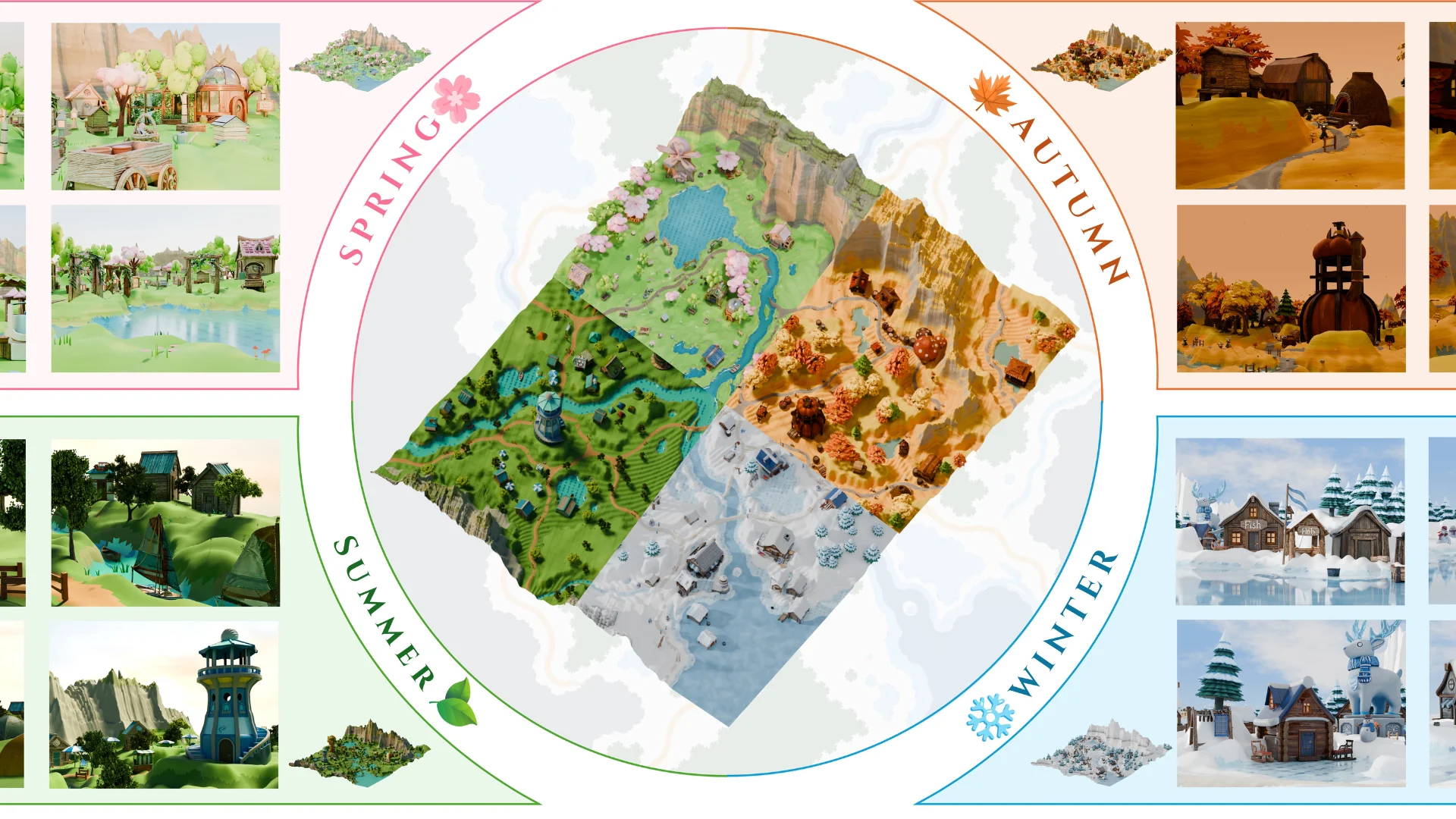
Tencent's WorldClaw uses a 3-stage AI agent pipeline to plan, build terrain, and place editable 3D objects from a single text prompt, per a new arXiv paper.

Could AI Create a "Permanent Underclass"? What the Data Actually Shows
Stanford payroll data show AI-exposed 22-25 year-olds losing jobs at 3.8% a year, while wages diverge by income. What that means for a 'permanent underclass.'
Claude Opus 5 Edges Past Fable 5 on the Artificial Analysis Intelligence Index
Anthropic's Claude Opus 5 scored 61 on the Artificial Analysis Intelligence Index at launch, edging past Fable 5's 60 while cutting cost per task 26%.
Kimi K3 Debuts as the First Open 3-Trillion-Parameter Model, Trailing Fable 5 and GPT 5.6 Sol
Moonshot AI's Kimi K3 is the first open 2.8-trillion-parameter model, beating open rivals on benchmarks but trailing Claude Fable 5 and GPT 5.6 Sol overall.
Comments (0)
Please sign in to join the discussion.
No comments yet.
Be the first to share your perspective on this topic.