

A drone carrying an explosive device was found and defused at Germany's Leipzig/Halle Airport overnight, and a second object struck a DHL cargo plane diverted to Hannover — an escalation Germany's interior minister called "a new quality of danger."
An Explosive-Armed Drone Idles Near a Ukrainian Antonov at Leipzig/Halle
Shortly before midnight on Tuesday, an unidentified flying object was sighted near Leipzig/Halle Airport's south runway, and several flights, including one passenger jet, were diverted elsewhere. An airport employee then found a drone in the area carrying what Saxony regional police and prosecutors described as an unknown explosive device. Police deployed a bomb-disposal robot and removed the detonator before it could be used.
The drone was found close to a Ukrainian Antonov cargo aircraft parked at the airport, a major European freight hub that also hosts Ukrainian transport planes. Germany's interior minister, Alexander Dobrindt, cut short his vacation to travel to the scene and told reporters the discovery amounted to "a new quality of danger," describing the episode as a hybrid attack scenario. He said the type of explosive, the drone's origin, and who was responsible remained under investigation. Saxony's regional interior minister, Armin Schuster, said authorities were also searching for parts of a possible second drone.
A Second Object Strikes a DHL Freighter Diverted to Hannover
The runway closure set off a separate chain of events. A cargo aircraft — reported by Reuters to be operated by DHL — aborted its landing at Leipzig/Halle because the runway was shut, and then collided with an unidentified flying object. The plane diverted roughly 125 miles northwest to Hannover Airport, where inspectors found slight damage; there were no reported injuries. Police and prosecutors have not confirmed whether the object was a second drone, though Saxony's interior minister said investigators were looking for drone parts consistent with that possibility.
Leipzig's Two-Hour Closure Is Short Next to 2025's Munich and Copenhagen Shutdowns
By the standard of Europe's recent run of airport drone disruptions, Tuesday night's Leipzig closure was brief. The north runway reopened after about two hours. That's shorter than Munich Airport's roughly seven-hour shutdown in December 2025, which cancelled 17 flights and disrupted travel for nearly 3,000 passengers, and shorter than Copenhagen Airport's roughly four-hour closure during a multi-night wave of Danish sightings in September 2025. What sets Leipzig apart isn't duration — it's that this is the first of the three where the drone itself was found carrying explosives rather than only triggering a precautionary shutdown.
IISS Data Ties the Incident to a Wider Pattern Tracked Since Late 2024
Leipzig's explosive-laden drone is the sharpest data point yet in a pattern security researchers have been documenting for nearly two years. A July report from London's International Institute for Strategic Studies covered by Fox News tallied 144 suspected drone incidents near sensitive military and nuclear sites across Germany, France, Belgium, the Netherlands, the UK and Denmark between August 2024 and February 2026, and linked the activity to vessels in Russia's sanctioned "shadow fleet." Moscow has denied involvement in the broader European drone wave.
Germany's own numbers are larger still: the head of the Federal Criminal Police Office said more than 1,000 suspicious drone flights were recorded nationwide in 2025 alone, most often near military facilities, airports, defense firms and port infrastructure — though he cautioned that Russian attribution can't be confirmed in every case. Germany has since stood up a Joint Drone Defence Centre in Berlin and a roughly 130-officer federal drone-defense unit built around AI-assisted jamming and interceptor drones. Whether any of that new capacity could have stopped an explosive-armed drone from reaching a runway at Leipzig is now the question German investigators, not just European security researchers, have to answer.
Ukraine's ambassador to Germany, Oleksii Makeiev, has already pointed a finger at Moscow, telling German broadcaster Welt TV, "Who else could it be but Russia?" German officials have stopped short of that. Dobrindt's own framing was narrower but pointed in the same direction: the assessment security agencies made months ago — that the threat level was high — "was justified," he said, without naming a suspect. For now, the explosives are in an evidence locker, the second object's origin is unconfirmed, and Leipzig/Halle is back to scheduled traffic on one runway while investigators work the other.

Could AI Create a "Permanent Underclass"? What the Data Actually Shows
Stanford payroll data show AI-exposed 22-25 year-olds losing jobs at 3.8% a year, while wages diverge by income. What that means for a 'permanent underclass.'


Netanyahu Rejects Trump-Backed Gaza Plan, Citing Disarmament Sequence
Israel's PM rejected the U.S.-backed 15-point Gaza plan Sunday, demanding Hamas disarm fully before any IDF withdrawal, deepening a sequencing standoff.

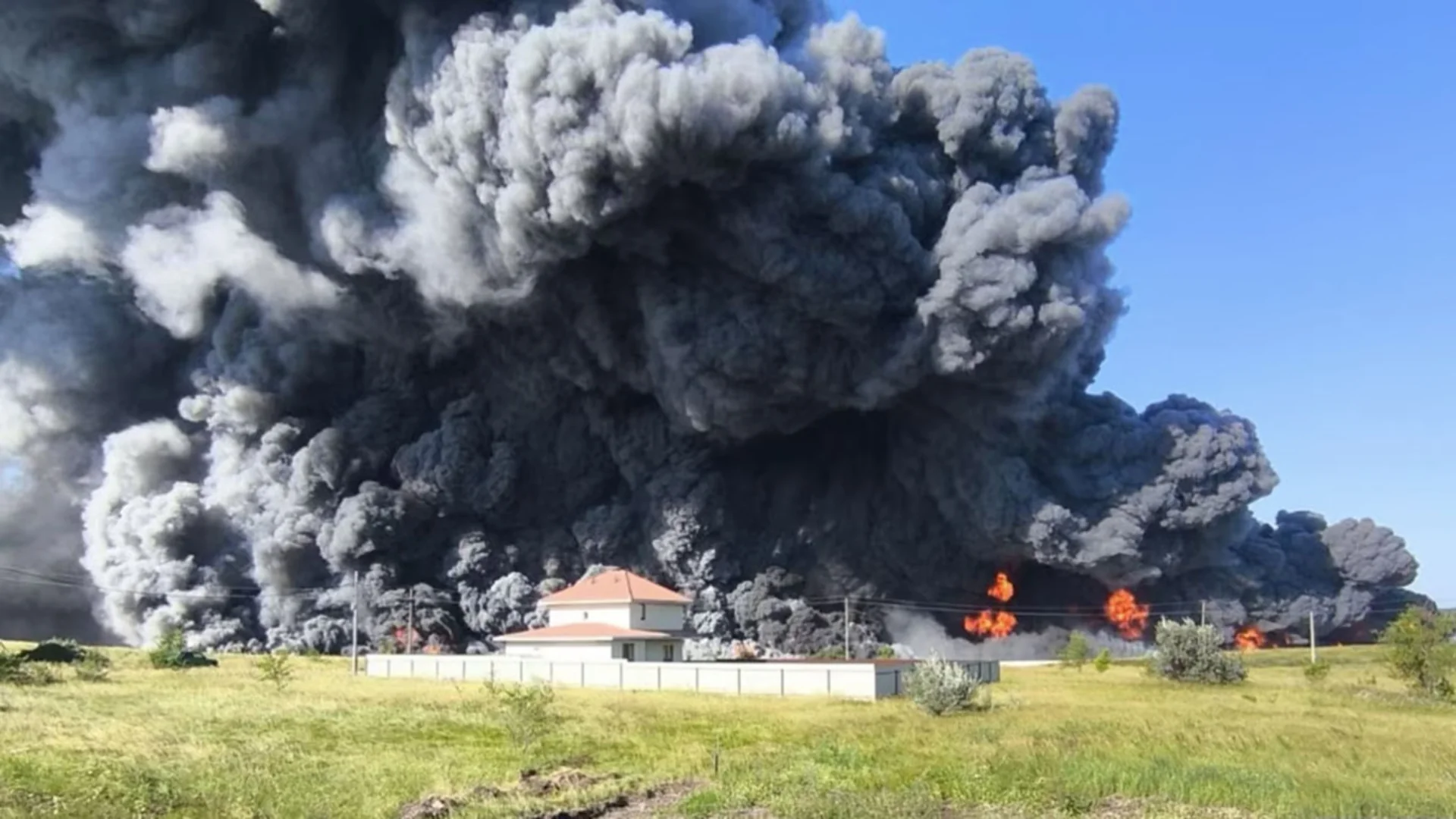
Ukraine's Drone Campaign Has Wiped Out a Fifth of Wildberries' Warehouse Capacity
Ukrainian drone strikes have damaged over 1.18 million square meters of Wildberries warehouse space, pushing Russia's top retailer toward years of losses.

The Slow Squeeze: Three Systems Under Strain, Moving at Different Speeds
Atmospheric CO2 levels, East Asian demographic exhaustion, and the AI capital race are converging on different clocks. An examination of how climate limits, human reproduction, and state infrastructure face simultaneous systemic strain without a single coordinating hand.
Comments (0)
Please sign in to join the discussion.
No comments yet.
Be the first to share your perspective on this topic.