

Researchers at Tohoku University have demonstrated that deliberately engineered microscopic surface irregularities — invisible to the naked eye — can reduce aerodynamic drag by up to 43.6%, directly contradicting a principle that has shaped aircraft and vehicle design for eight decades.
Why Roughness Was Always Assumed to Hurt, and Why DMR Works Differently
The standard model in fluid dynamics held that surface roughness disrupts airflow, accelerating the transition from ordered laminar flow to chaotic turbulent flow and increasing drag as a result. That assumption shaped the design of aircraft skins, racing bodies, and high-speed train exteriors: keep surfaces as smooth as manufacturing tolerates, and drag will be minimized.
Distributed micro-roughness (DMR) does not fit that model. Rather than disturbing the flow boundary layer in ways that provoke earlier turbulence onset, the Tohoku team's surface treatment delays the laminar-to-turbulent transition itself. Large eddy simulations confirmed that the dominant effect is suppression of frictional drag — not manipulation of pressure drag, which is the mechanism behind shark-skin-inspired riblet surfaces that have attracted significant research attention over the past two decades. The two strategies are mechanistically distinct. Riblets create microscale channels that isolate near-wall turbulent structures and reduce pressure drag at the surface. DMR keeps the flow laminar for longer, reducing the total frictional work the airstream exerts on the surface. The chart below illustrates the diverging paths the two approaches take once flow encounters the surface.
How a Magnetically Levitated Wind Tunnel Made the Measurement Credible
The finding rests heavily on the measurement apparatus. Demonstrating small drag reductions accurately requires eliminating the mechanical supports — struts, rods, mounting fixtures — that conventional wind tunnel setups rely on to hold test models in airflow. Those supports generate their own aerodynamic interference that contaminates delicate drag readings, particularly for surface effects as subtle as micro-roughness.
The Tohoku team used the world's largest 1-meter Magnetic Support and Balance System (1m-MSBS), which magnetically levitates test models inside the wind tunnel with no physical contact at all. With the model floating freely in the airstream, the drag data is uncontaminated by mechanical coupling effects. That precision matters: a result as counterintuitive as surface roughness reducing drag requires a measurement method robust enough to rule out instrument artifact. The 1m-MSBS provides that robustness. The key experimental parameters are summarized below.
What the 43.6% Finding Means for Aircraft, Vehicles, and the Commercialization Clock
A passive, omnidirectional surface treatment that requires no moving parts, no power supply, and no active control systems is an unusually practical result for fundamental research. Most drag reduction strategies — active boundary layer suction, plasma actuators, adaptive surface morphing — introduce mechanical complexity that limits where and how they can be deployed on a real aircraft or vehicle. A surface coating or micro-texture, by contrast, can in principle be applied during manufacturing or maintenance without redesigning the underlying structure.
The potential application scope is broad: commercial aircraft fuselage and wing skins, automobile body panels, and high-speed train exteriors are all surfaces where sustained frictional drag reduction at this scale would translate into meaningful fuel savings and reduced carbon emissions over a fleet's operating lifetime. But the Tohoku result is a wind tunnel demonstration, not a certified production technology. Aerospace commercialization typically spans a decade or more, moving through materials qualification, fatigue and environmental durability testing, manufacturing process development, regulatory type-certification, and airline adoption decisions. The path from laboratory validation to an Airbus or Boeing airframe is long by design. The timeline below maps the stages between the current discovery and plausible commercial deployment.
The research does not claim that DMR is ready for production. What it establishes is that the underlying aerodynamic principle — that micro-scale surface texture can delay turbulent transition rather than provoke it — is real and measurable under controlled conditions. That shifts the question from whether DMR works in a wind tunnel to whether it can be manufactured, sustained, and certified at the tolerances a commercial airframe demands. Those are engineering and regulatory problems, not physics problems, and they are considerably harder to solve quickly.
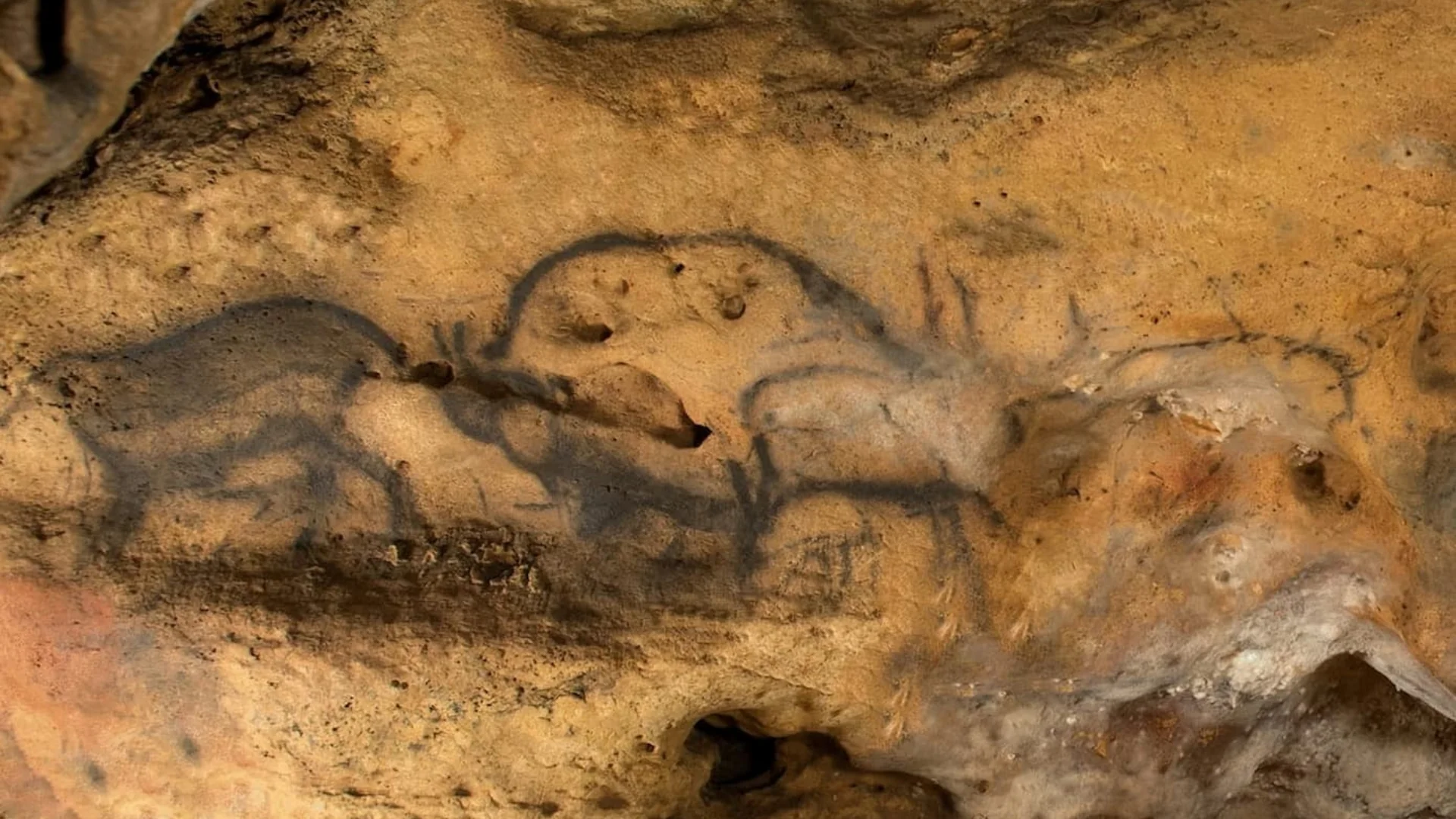
Font-de-Gaume Cave Art Gets Its First Confirmed Radiocarbon Dates
Chemical imaging found charcoal pigment in Font-de-Gaume cave art, letting scientists radiocarbon-date a bison and mask, confirming their Paleolithic age.
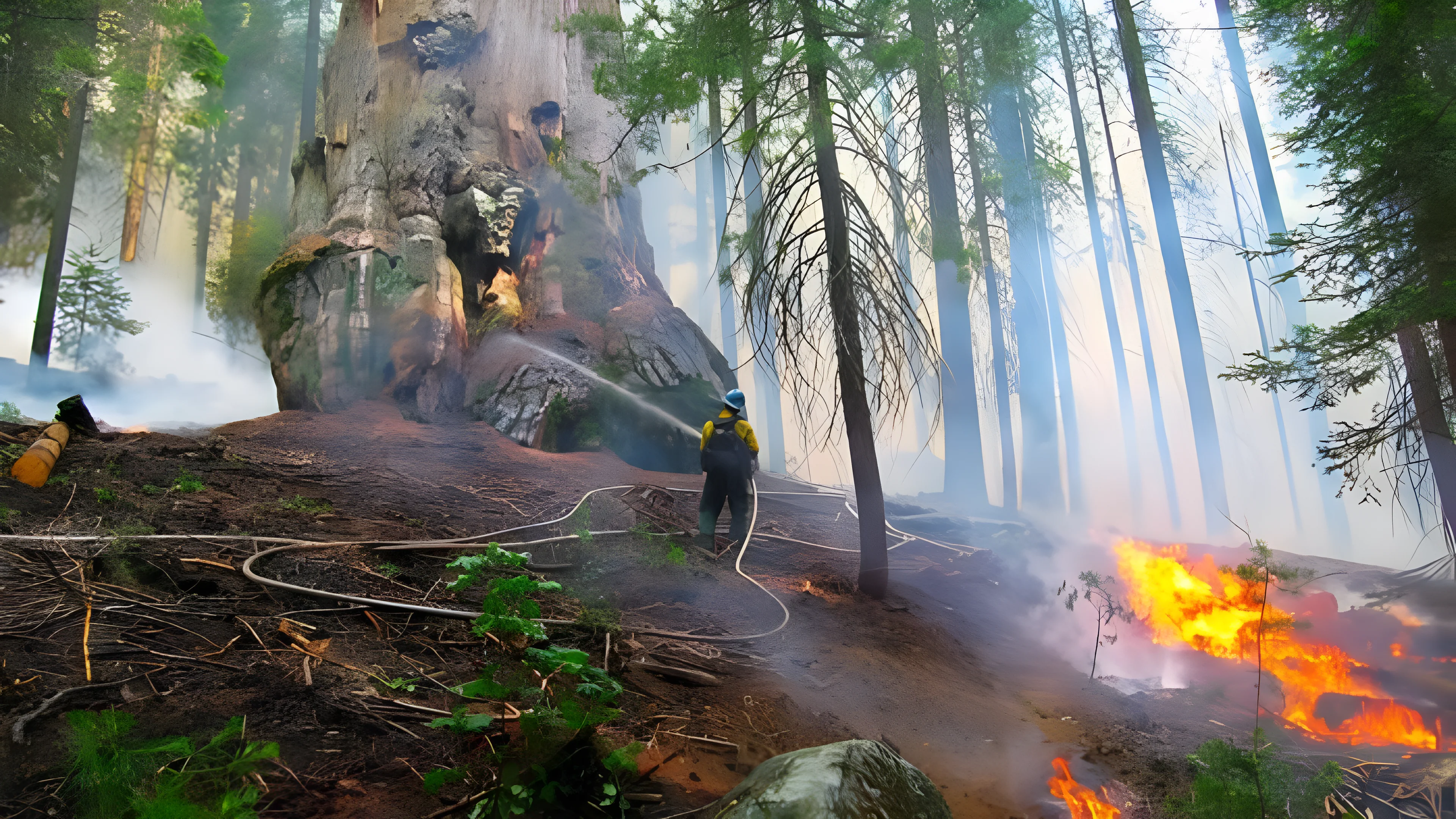
Prescribed Burns Cut Giant Sequoia Wildfire Deaths by 77%, Study Finds
A Nature Communications study of 26,403 giant sequoias found prescribed fire cut wildfire mortality odds 77%, already saving nearly 1,900 ancient trees.

Three Venus Rift Valleys May Be Tectonically Active Today
New 3D models of Venus rifts show extension rates of 3–10 cm/yr; wide flank uplifts at Dali, Ganis and Devana Chasmata suggest active rifting, a new study finds.

New Antiviral GHP-88310 Blocks Airborne Measles-Like Transmission in Ferret Study
GHP-88310, an oral antiviral, blocked airborne CDV spread in ferrets and cut sources' contagious period by 5 days, a new Nature Microbiology study finds.
Comments (0)
Please sign in to join the discussion.
No comments yet.
Be the first to share your perspective on this topic.