
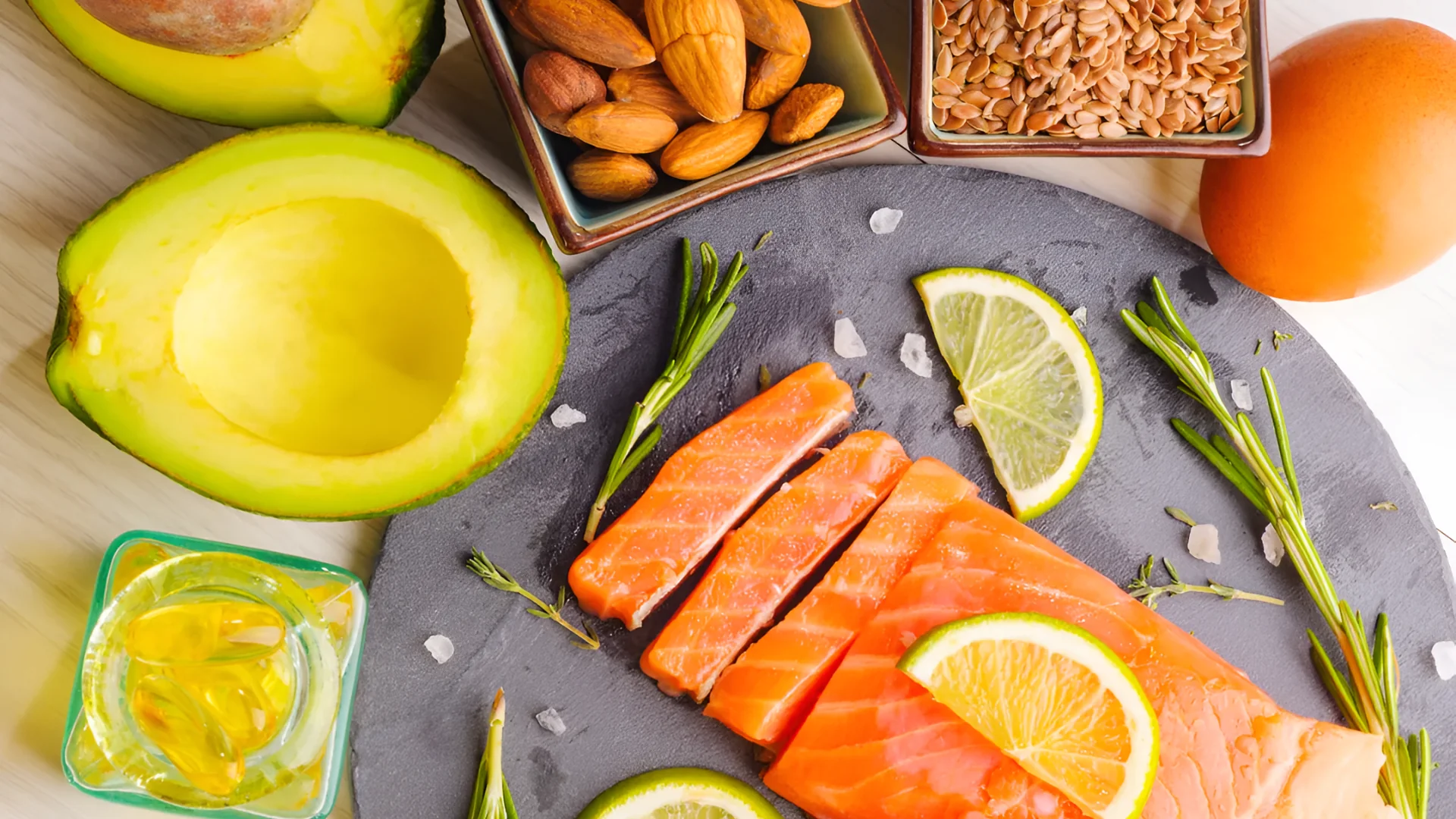
A peer-reviewed longitudinal study published in April 2026 found that older adults who regularly took omega-3 supplements experienced statistically faster cognitive decline across three separate assessment scales over five years — a finding that cuts against the popular view of fish oil as a reliable brain-health aid.
What the 5-Year ADNI Analysis Found Across Three Cognitive Scales
The study, led by researchers at Chongqing Medical University and the Army Medical University in China, analyzed data from the Alzheimer's Disease Neuroimaging Initiative (ADNI) covering 273 adults who regularly used omega-3 supplements and a matched control group of 546 who did not. The five-year follow-up period and matched design distinguish this from shorter or less controlled observational work, though the study remains observational and cannot establish cause.
Cognitive performance was tracked using three validated tools. On the Mini-Mental State Examination (MMSE), which measures memory, orientation, and language, supplement users showed a significantly faster rate of decline (β = −0.266, p < 0.001). On the ADAS-Cog13, a more sensitive Alzheimer's-specific measure where higher scores reflect worse function, users worsened more quickly (β = 0.823, p < 0.001). On the Clinical Dementia Rating Sum of Boxes (CDR-SB), a clinician-rated scale of daily functioning and cognition, decline was also faster (β = 0.205, p < 0.001). All three findings met conventional thresholds for statistical significance.
To contextualise the magnitude, the researchers estimated the accelerated decline rates as proportions of typical yearly Alzheimer's progression: roughly 7.8% on the MMSE, 15% on the ADAS-Cog13, and 10.7% on the CDR-SB. These are not small signals within an Alzheimer's research context, though the authors note the comparison is approximate. The chart below shows the beta-coefficient effect sizes and the share of decline each cognitive scale captured.
The Mechanism: Synaptic Glucose Metabolism, Not Amyloid or Tau
What makes the study's findings unusual is not just the direction of the association but the biological pathway the researchers identified. When the team examined brain scan data, the accelerated decline was not accompanied by increased amyloid-beta plaque burden, tau protein tangles, or gray matter atrophy — the classical markers of Alzheimer's progression.
Instead, FDG-PET imaging revealed a significant decrease in glucose metabolism in brain regions typically affected in Alzheimer's disease. Reduced FDG-PET uptake is a well-established marker of synaptic dysfunction: the brain is consuming less glucose, which suggests neurons in those regions are less active or less efficient. The researchers used mediation analysis to estimate how much of the cognitive worsening was statistically explained by this hypometabolism. Across the three scales, the mediation estimates were 30.8% for MMSE decline, 40.8% for ADAS-Cog13 worsening, and 19.0% for CDR-SB worsening.
The authors interpreted this as evidence that omega-3 supplementation may, in some contexts, impair synaptic integrity and metabolic function in vulnerable brain tissue. They wrote that their results "suggest a previously underrecognized possibility that omega-3 supplementation may, in some contexts, adversely affect synaptic integrity, ultimately counteracting its short-term benefits." That framing is deliberate: they are not claiming a general neurotoxic effect of omega-3 fatty acids but flagging a context-dependent mechanism that warrants further investigation.
This distinction matters for how the finding should be read. Omega-3 fatty acids, particularly DHA, are structural components of neuronal membranes and have established roles in synaptic signalling. A finding that they reduce synaptic metabolic activity in older adults with or near dementia risk is mechanistically surprising and has no clear prior explanation in the literature. The mediation analysis supports the finding but does not prove the causal chain. The chart below shows the FDG hypometabolism mediation pathway as the study described it.
Why the Observational Design and Supplement Quality Leave Key Questions Open
The study is careful about its own limits, and those limits are material. The most important is that it is observational. Participants were not randomly assigned to take or avoid supplements; they chose to do so, and their reasons — pre-existing concern about cognitive health, family history, physician recommendation — could themselves correlate with the very decline the study measured. The researchers adjusted for baseline variables including age, medical history, and APOE ε4 carrier status, but residual confounding in observational data of this kind is difficult to fully rule out.
A second limitation with direct mechanistic implications involves the supplements themselves. The study tracked use of commercial, over-the-counter omega-3 products — primarily fish oil, but also krill and flaxseed oil — without measuring dosing, adherence, or product quality. Commercial fish oil is chemically susceptible to oxidation and rancidity, particularly under real-world storage and usage conditions. Oxidised lipid products, including peroxidised DHA, can trigger mitochondrial dysfunction and oxidative stress in neural tissue. This matters because well-controlled randomised controlled trials, which typically use highly purified, stabilised EPA and DHA formulations under tightly monitored conditions, have historically yielded null results on cognition rather than harmful ones. A 2012 Cochrane Review concluded there was no cognitive benefit from omega-3 supplementation in cognitively healthy older adults; it did not find harm. The divergence between the RCT literature and this observational finding may reflect not a true neurotoxic effect of omega-3 but a signal from degraded commercial products.
A third consideration involves dose. A 2025 systematic review cited in the source material found that while very low doses of omega-3 may offer modest cognitive benefits, higher doses — above approximately 1,500 mg per day — may reverse that advantage. The ADNI study lacked precise dosing data to test whether this threshold is relevant to its findings.
Finally, the ADNI cohort is predominantly White and highly educated, which limits generalisability. The chart below places the 2026 findings alongside these prior reference points to show where the evidence currently sits.
The study authors concluded that "the cognitive impact of omega-3 in aging brain may be more complex and context dependent than previously assumed." That framing is measured and appropriate. The finding is statistically robust within its own dataset, the biological pathway identified is specific and testable, and the scale of the associations is not trivial. But the study cannot rule out confounding, cannot attribute the effect to omega-3 itself rather than degraded commercial formulations, and draws from a cohort that does not represent global older populations.
For people currently taking omega-3 supplements for cognitive reasons, the study is not a directive to stop. It is a reason to be cautious about assuming benefit, to be aware that product quality and dose may matter more than the supplement category, and to note that the detailed clinical analysis published in the journal makes no clinical recommendation either way. Whole-food sources of omega-3 — oily fish, walnuts, seeds — remain outside the scope of what this study can address.

Ebola Bundibugyo Outbreak DRC 2026: What's Driving It
A Bundibugyo ebolavirus outbreak declared a PHEIC by WHO in May 2026 has surpassed 900 suspected cases in eastern DRC, with no approved vaccine and containment blocked by war, displacement, and community mistrust.

Ebola 2026: US Travel Ban and Dulles Screening Explained
A Bundibugyo ebolavirus outbreak declared a PHEIC by the WHO has prompted the CDC to issue a 30-day entry ban and route all at-risk US-bound passengers through Washington Dulles for health screening.

QuEChERS-GC-MS Detects PAHs in Food: Key Findings
A peer-reviewed 2025 study from SeoulTech optimized a QuEChERS-GC-MS method for PAH detection in foods, reporting validated recovery rates of 86–109% and LODs as low as 0.006 µg/kg.


Tap vs. Bottled Water: PFAS and Microplastics Risk
New research shows bottled water carries far more nanoplastics than treated tap water, while tap water faces PFAS contamination in nearly half of U.S. systems. What consumers can actually do.
Comments (0)
Please sign in to join the discussion.
No comments yet.
Be the first to share your perspective on this topic.