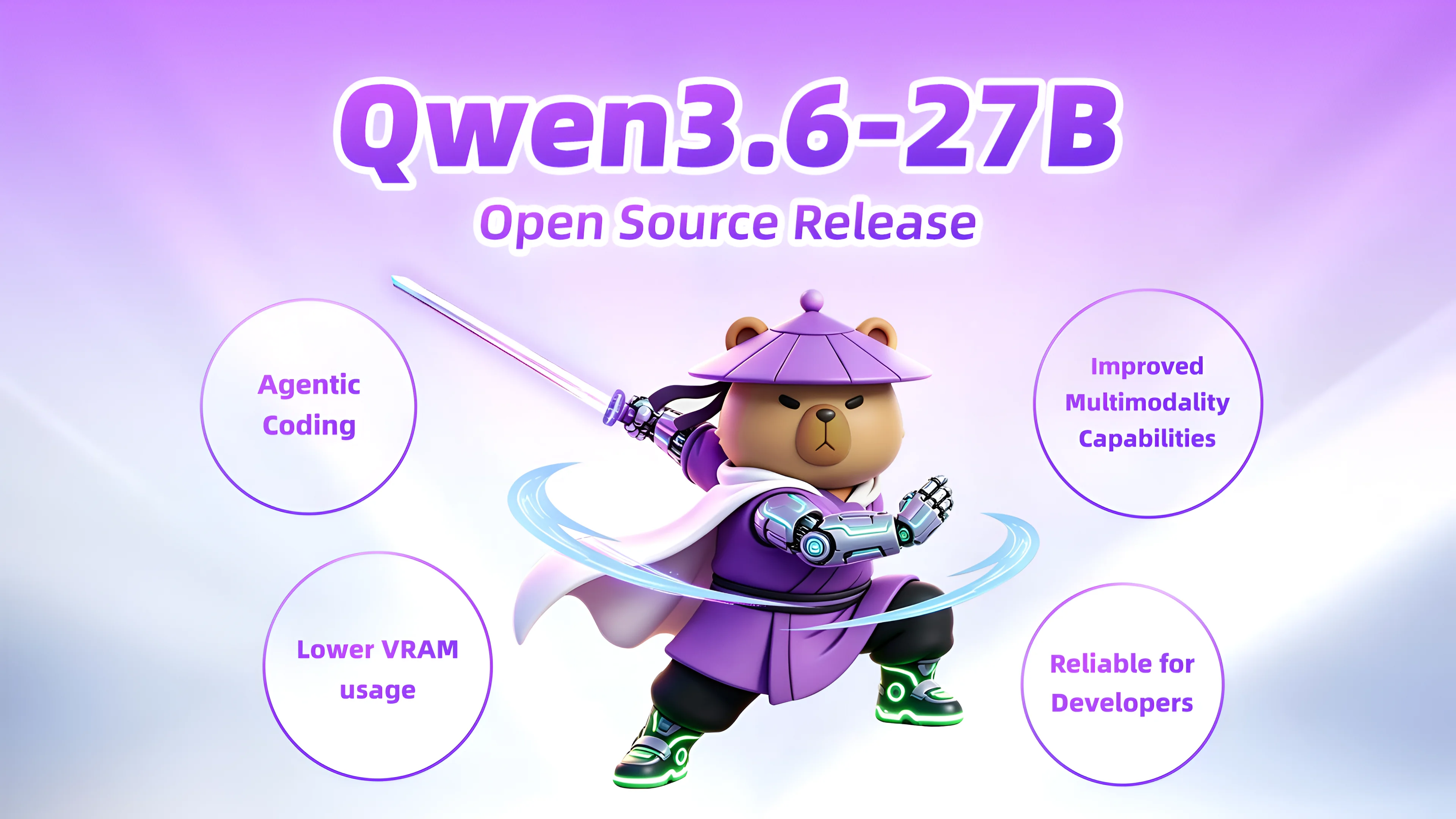
A new hands-on review of Qwen 3.6 finds the dense 27B variant outperforming its faster Mixture-of-Experts sibling on real coding tasks, while scoring close to mid-2025 frontier models on the Artificial Analysis intelligence index.
Qwen 3.6 27B beat the faster MoE variant on a single-prompt coding test
Qwen 3.6 ships in two forms: a dense 27B model and a Mixture-of-Experts model, Qwen 3.6 35B A3B, which activates only a fraction of its parameters per token. In a review published on the Quesma engineering blog, developer Piotr Migdał tested both inside the OpenCode coding agent, asking each to build a hexagonal minesweeper using the pnpm package manager from a single prompt.
The dense 27B model completed the task correctly on the first attempt, producing a proper Node package as instructed. The 35B A3B model generated working code faster, but ignored the packaging instruction and dumped everything into a single index.html file instead. Migdał also reported that 27B handled constrained writing tests, including Simon Willison's penguins-on-a-bicycle prompt, and produced an eight-line poem connecting Zouk dance and quantum physics with reasoning that tracked both the science and the rhyme scheme.
That tradeoff, a third of the throughput in exchange for output that follows instructions more reliably, is the reviewer's core argument for recommending 27B over the MoE variant for development work. The same tradeoff shows up directly in the generation-speed numbers below.
Running it requires llama.cpp, 8-bit quantization, and a trimmed context window
Migdał recommends native llama.cpp over Ollama for running Qwen 3.6, citing ethical objections to the latter rather than a performance gap. The setup pulls an 8-bit GGUF quantization, such as unsloth/Qwen3.6-27B-MTP-GGUF:Q8_0, which the review describes as cutting model size roughly in half with little measurable quality loss compared to the full-precision weights.
Generation speed comes from a multi-token prediction flag, --spec-type draft-mtp, which lets a fast draft mechanism propose multiple tokens at once for the main model to confirm. On Migdał's MacBook Max M5 with 128 GB of RAM, that flag took the 27B model from 18 tokens per second to 32, and the 35B A3B model from 93 to 105, in each case for a modest increase in RAM use. Qwen 3.6's native context window is 256,000 tokens, but the reviewer configured llama.cpp to 64,000 tokens for the local setup, a tradeoff between usable context length and memory pressure on consumer hardware. The same server then plugs into a coding agent, in this case OpenCode, by pointing its configuration file at the local API endpoint.
On Artificial Analysis benchmarks, Qwen 3.6 27B reaches mid-2025 frontier territory
Beyond hands-on testing, the review cites scores from Artificial Analysis, a third-party model benchmarking site, placing Qwen 3.6 27B at a level the site associates with mid-2025 frontier models such as GPT-5 and Claude Sonnet 4.5. The MoE variant, Qwen 3.6 35B A3B, scores lower, in a band the site associates with early-2025 models, while Gemma 4 31B, which Migdał notes many developers default to for local coding, scores lowest among the four at a late-2024 level.
DeepSeek V4 Flash scores highest of the group, but it was tested at a more aggressive 2-to-4-bit quantization rather than the 8-bit setting used for the Qwen models. Migdał's own assessment is that the 8-bit Qwen 3.6 27B feels subjectively on par with, or slightly better than, the more heavily quantized DeepSeek model, attributing the gap partly to quantization artifacts rather than a genuine capability difference, while allowing that DeepSeek's architecture may have an edge on longer-context work.
Local models are gaining ground as proprietary pricing strain grows
The review frames Qwen 3.6 as part of a broader shift toward local deployment, pointing to instability among proprietary offerings, such as the withdrawal of a hosted model the reviewer refers to as Claude Fable 5, and to API pricing that Migdał describes as running at a heavy, likely unsustainable, subsidy. Running models locally, by contrast, guarantees that the weights cannot be withdrawn and keeps sensitive corporate or medical data off third-party servers.
Migdał also points to GLM 5.2, a newer open-weight model that pushes capability further but requires infrastructure beyond a single laptop, as evidence the open-weight frontier is still moving. His longer-term prediction, stated as a personal view rather than a confirmed roadmap, is that future models will separate raw reasoning ability from factual knowledge, offloading lookups to tool calls so that highly capable models can eventually run on smaller consumer devices, including phones. For now, Qwen 3.6 27B is offered as the more immediate, concrete data point: a model that ran a real coding task correctly on a single try, at benchmark scores in range of the rankings reported for Qwen's newer preview model, on hardware a developer can buy today.
How SQLite Databases Actually Get Corrupted
A breakdown of how SQLite databases get corrupted despite the engine's built-in crash resistance, drawn from SQLite's official corruption documentation.
Samsung, SK Hynix, Micron Sued Over DRAM Price-Fixing
Fourteen consumers and three small businesses sue Samsung, SK hynix and Micron, alleging coordinated DRAM supply cuts behind chipflation and a 700% price climb.

China's 360 Security Claims Mythos Rival After Export Ban
Qihoo 360 CEO Zhou Hongyi unveiled Tulongfeng at ISC.AI 2026, positioning it as China's answer to Anthropic's Mythos. The claim rests on an agentic workaround, not a benchmark result — and remains unverified by independent parties.
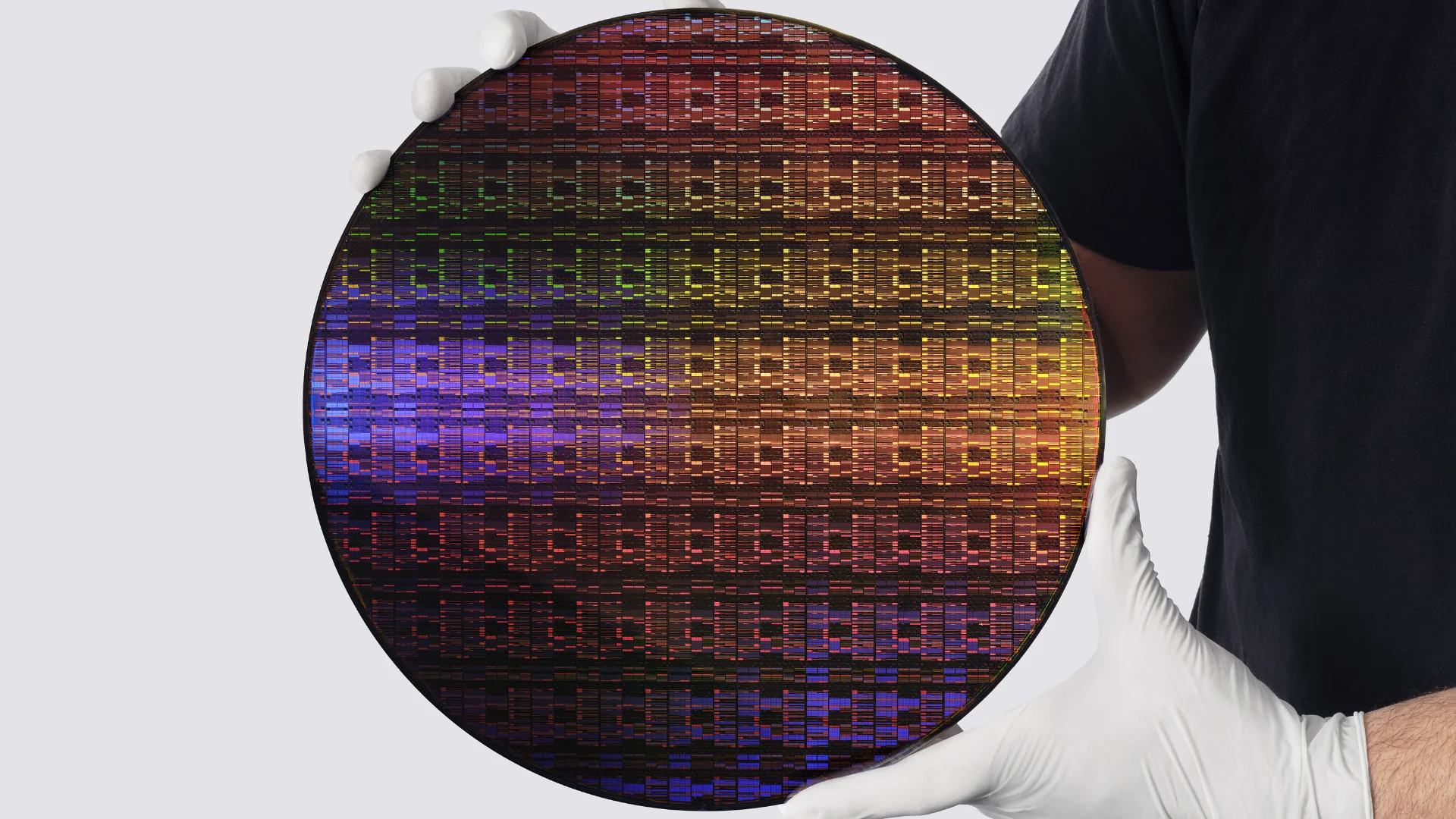
IBM 0.7nm Chip: What Nanostack Changes for AI Hardware
IBM's Nanostack architecture stacks transistors in 3D at 0.7nm, doubling density over its 2nm node, with up to 50% performance gains or 70% energy efficiency gains and a 5-year path to commercial production.
Comments (0)
Please sign in to join the discussion.
No comments yet.
Be the first to share your perspective on this topic.