
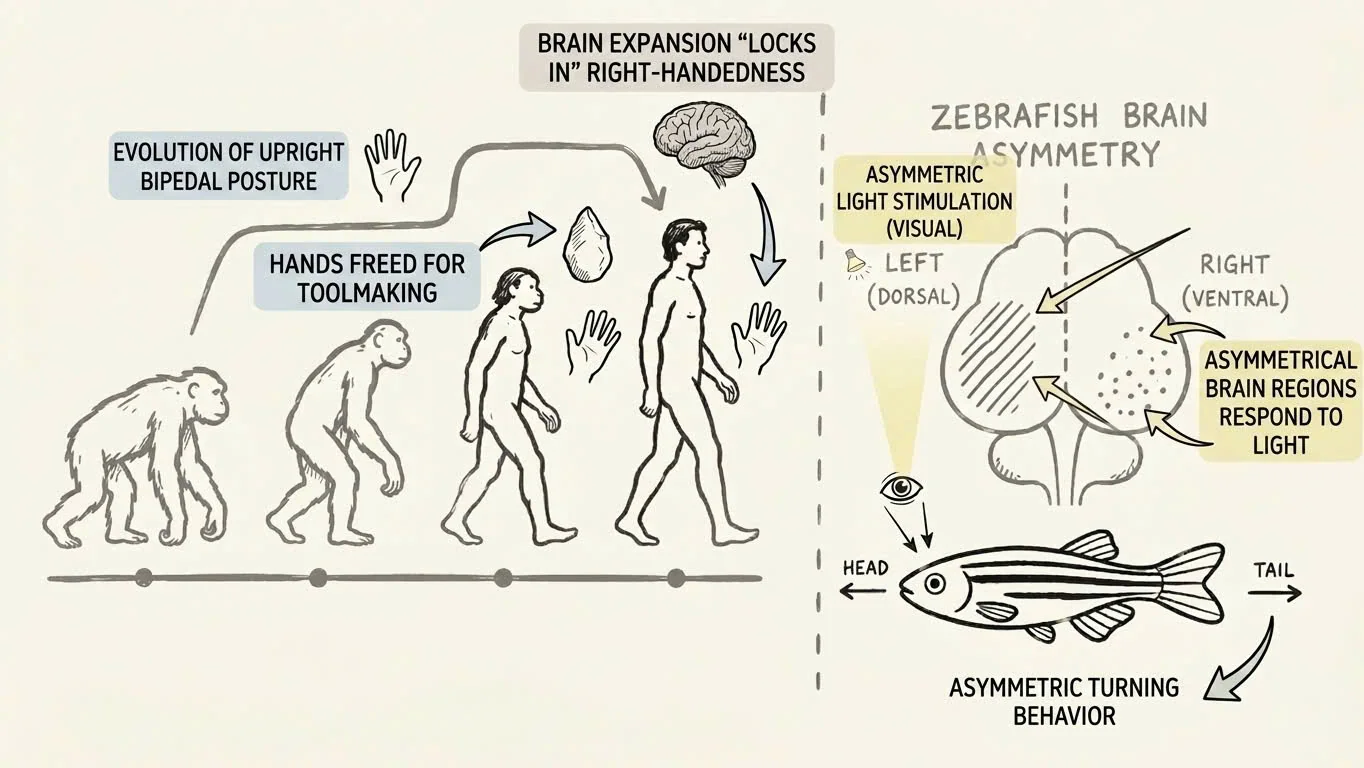
A new Bayesian analysis of 2,025 individuals across 41 primate species has identified the two evolutionary developments that set humans apart from every other primate in their degree of manual lateralization. Walking upright came first. Then brains expanded. Together, they produced the near-universal right-hand dominance that no other species shows at scale.
How a Bayesian Model Resolved a Long-Standing Anthropological Puzzle
The question has circulated in evolutionary biology for decades. Roughly 90% of humans, across every culture studied, prefer their right hand for skilled tasks. No other primate comes close to that consistency. Chimpanzees, gorillas, and orangutans show weak group-level tendencies but nothing approaching the population uniformity seen in Homo sapiens.
Led by Dr. Thomas A. Püschel at the University of Oxford and published in PLOS Biology in May 2026, the study applied Bayesian modeling across 2,025 individuals from 41 primate species, testing which variables could account for each species' pattern of lateralization. When the researchers evaluated factors including tool use, diet, habitat, body mass, and social organization, humans sat entirely outside the expected primate distribution. They were an outlier with no clean fit.
That changed when two specific variables were added to the model. The first was endocranial volume, a proxy for brain size. The second was the intermembral index — the ratio of arm length to leg length — which functions as a reliable anatomical marker for locomotion mode. Species that walk upright on two limbs have a lower intermembral index than those that rely on all four. Once both variables were integrated, humans aligned with the broader evolutionary tree. The paradox dissolved.
The chart below maps the two-stage evolutionary sequence the model implies: bipedal locomotion as the catalyst that freed the hands, followed by encephalization as the process that hardened a moderate bias into near-universality.
Where Humans Sit in the Primate Lateralization Spectrum
The Oxford study's value is partly comparative. Most primate species do show some directional manual preferences at the individual level, but these preferences rarely cohere into strong population-level signals. A chimpanzee group might trend slightly rightward on certain tasks, but the distribution is much flatter than in humans, and the pattern varies by task and population.
The Bayesian model captured this gradient. When neither endocranial volume nor intermembral index were included, humans looked anomalous — too far outside the distribution to fit any clean evolutionary explanation. The model flagged them as unexplained. That unexplained status is precisely what made the solution informative: only after adding anatomy that reflects bipedalism and brain size did the human data slot neatly into the evolutionary tree. The fit was not approximate. According to the coverage of the study, it was clean.
One species tested the model's predictions in the other direction. Homo floresiensis, the small-bodied hominin from Indonesia sometimes called the "hobbit," possessed a markedly smaller brain than Homo sapiens and an anatomy described as adapted to a mixture of climbing and upright walking rather than full terrestrial bipedalism. The model predicted a weaker rightward preference for this species, and the prediction held. That alignment between prediction and anatomical profile is what gives the two-variable explanation its credibility as more than a post-hoc story.
The reference card below places the model's directional predictions for key hominin and primate groups in the context the Oxford team's framework implies.
What Zebrafish Reveal About the Developmental Trigger for Lateralization
The Oxford study addresses evolutionary deep time — why the human lineage, across hundreds of thousands of years, moved toward population-level right-hand dominance. A separate line of 2026 research, led by Associate Professor Eric Horstick at West Virginia University, addresses a different but complementary question: how does individual lateralization get established during development, and is that process genetic or environmental?
Horstick's lab uses zebrafish. When lights are extinguished, zebrafish exhibit a consistent lateral bias: they circle either left or right to forage for prey, and that preference is stable within individuals. The WVU team found that this bias is not purely inherited. Instead, it is shaped by which eye receives light first during a specific critical developmental window. Whichever side gets light first influences the formation of asymmetric neural circuits in the brain, and those circuits in turn dictate whether the fish becomes a left-preferring or right-preferring forager.
The use of zebrafish rather than mice is methodologically deliberate. Mice are nocturnal, which means their behavioral lateralization is not driven by vision in the way human lateralization appears to be. Zebrafish are diurnal — active during daylight hours — making them a closer functional model for studying how light-sensitive asymmetric development might apply to the visual systems of day-active species like humans.
To make the asymmetry directly observable, the WVU team uses two techniques. Optogenetics allows researchers to manually activate the neurons responsible for left or right turning, confirming the circuit's role. Transgenic zebrafish expressing fluorescent green proteins derived from jellyfish allow asymmetric brain activity to be captured in real time as it occurs. Neither technique proves a direct mechanistic link to human handedness, but the developmental principle — that an external sensory stimulus during a critical window can bias lateralized neural architecture — is consistent with the evolutionary model the Oxford team described.
The pipeline below maps the zebrafish developmental sequence from environmental trigger to lateralized behavior, as described in the WVU research.
What the Two Studies Together Do and Do Not Establish
Taking the Oxford and WVU findings together produces a coherent but incomplete picture. The Oxford model identifies the evolutionary-scale variables — bipedalism and brain expansion — that statistically explain why human handedness reached population-level consistency. The WVU research demonstrates that lateralization at the individual developmental level is partially environmental, shaped by which sensory input arrives first during a formative window. These are complementary mechanisms at different timescales, not competing explanations.
What neither study fully resolves is the persistence of left-handedness. Roughly 10% of humans remain left-handed across populations, a proportion too stable to be explained by random genetic drift alone. One hypothesis, sometimes called the fighting advantage hypothesis, proposes that a minority of left-handers maintains a frequency-dependent advantage in competitive or adversarial contexts where opponents are calibrated to face right-handed opponents. Another possibility is that left-handedness represents a neutral variant maintained by the absence of strong selection against it, rather than any direct advantage. The Oxford study's modeling does not speak directly to this question, and neither does the WVU zebrafish work.
The Oxford model also does not account for how cumulative culture — language, social learning, tool-making traditions passed across generations — may have further stabilized right-hand dominance once it emerged. Whether cultural reinforcement amplified a biological predisposition or simply reflected it remains an open question the researchers acknowledged.
What the Oxford study does establish is that among the measurable anatomical and behavioral variables available across 41 primate species, the combination of bipedal anatomy and larger brain size is sufficient to explain why humans sit where they do on the lateralization spectrum. That is a narrower but more defensible claim than many popular explanations for handedness, and it is one the fossil record can, in principle, continue to test as more hominin specimens are studied.
Related Stories

Why Scientists Still Can't Measure Big G Precisely
Despite centuries of effort and modern precision instruments, Newton's gravitational constant G is known to only 3 significant figures. NIST and BIPM are running a rare cross-laboratory replication to find out why high-precision experiments keep disagreeing.

NASA Psyche Spacecraft Completes Mars Gravity Assist
The Psyche spacecraft completed a Mars gravity assist on May 15, 2026, swinging past the planet at over 12,000 mph to redirect its trajectory toward metallic asteroid 16 Psyche without burning extra propellant.
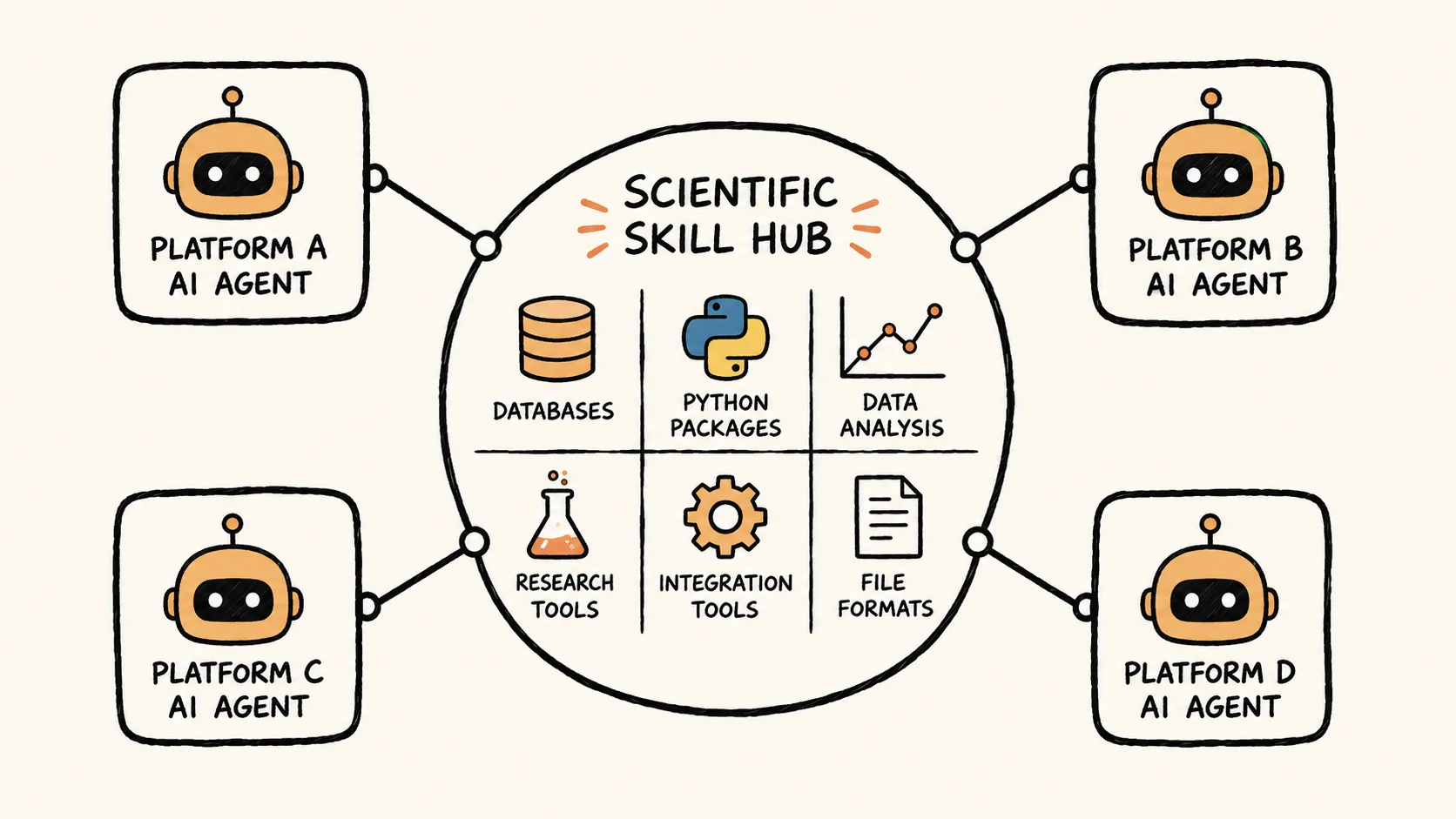
Scientific Agent Skills: 135 Open-Source AI Research Tools
K-Dense has renamed its open-source repository to Scientific Agent Skills and launched K-Dense BYOK, a desktop co-scientist supporting 40+ models and local-to-cloud scaling via Modal.

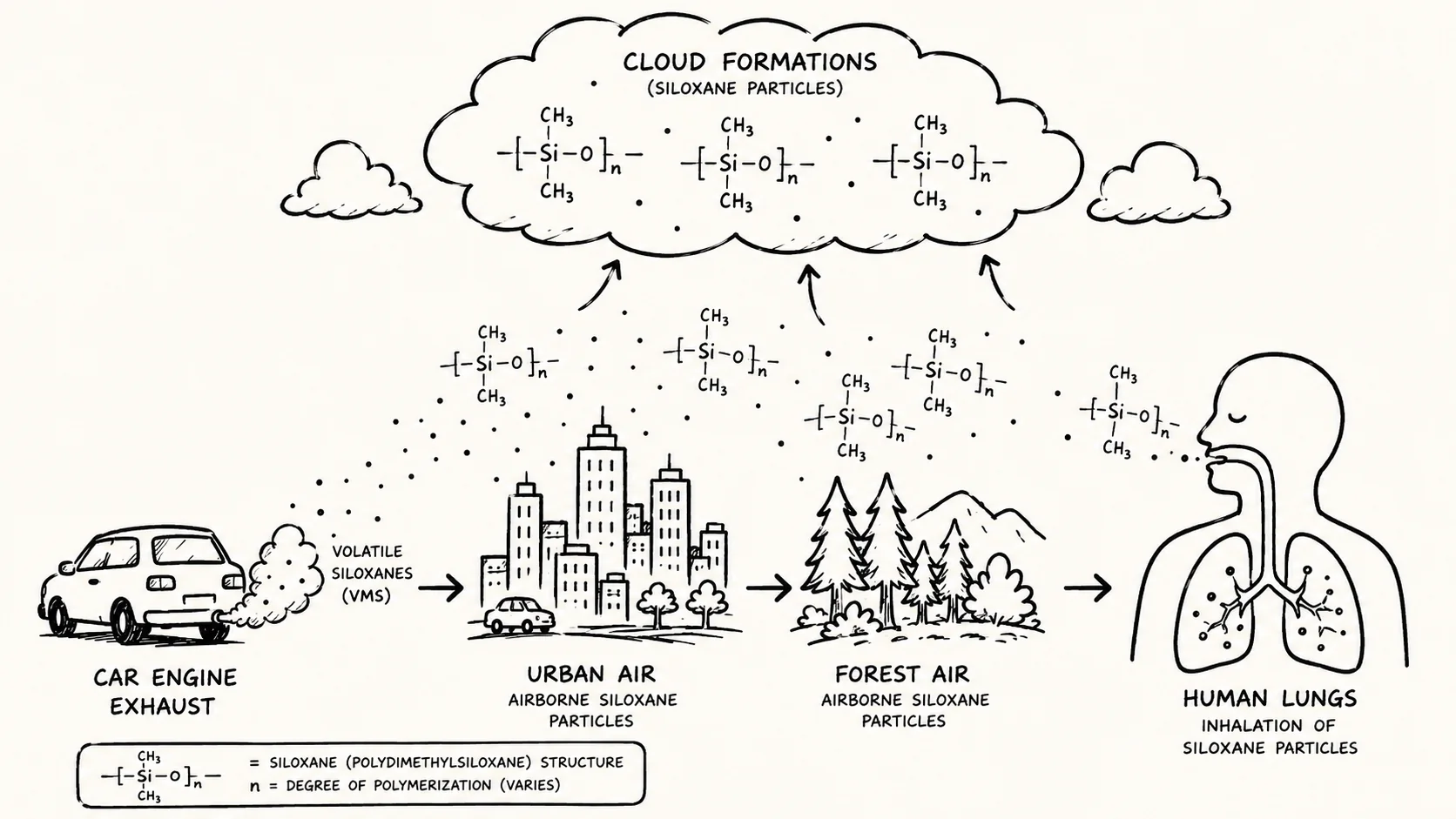
Silicone Pollutants From Car Exhaust Found Globally
Researchers measured methylsiloxanes in atmospheric samples globally, tracing the source to vehicle exhaust and raising questions about human inhalation exposure and cloud formation interference.
Comments (0)
Please sign in to join the discussion.
No comments yet.
Be the first to share your perspective on this topic.