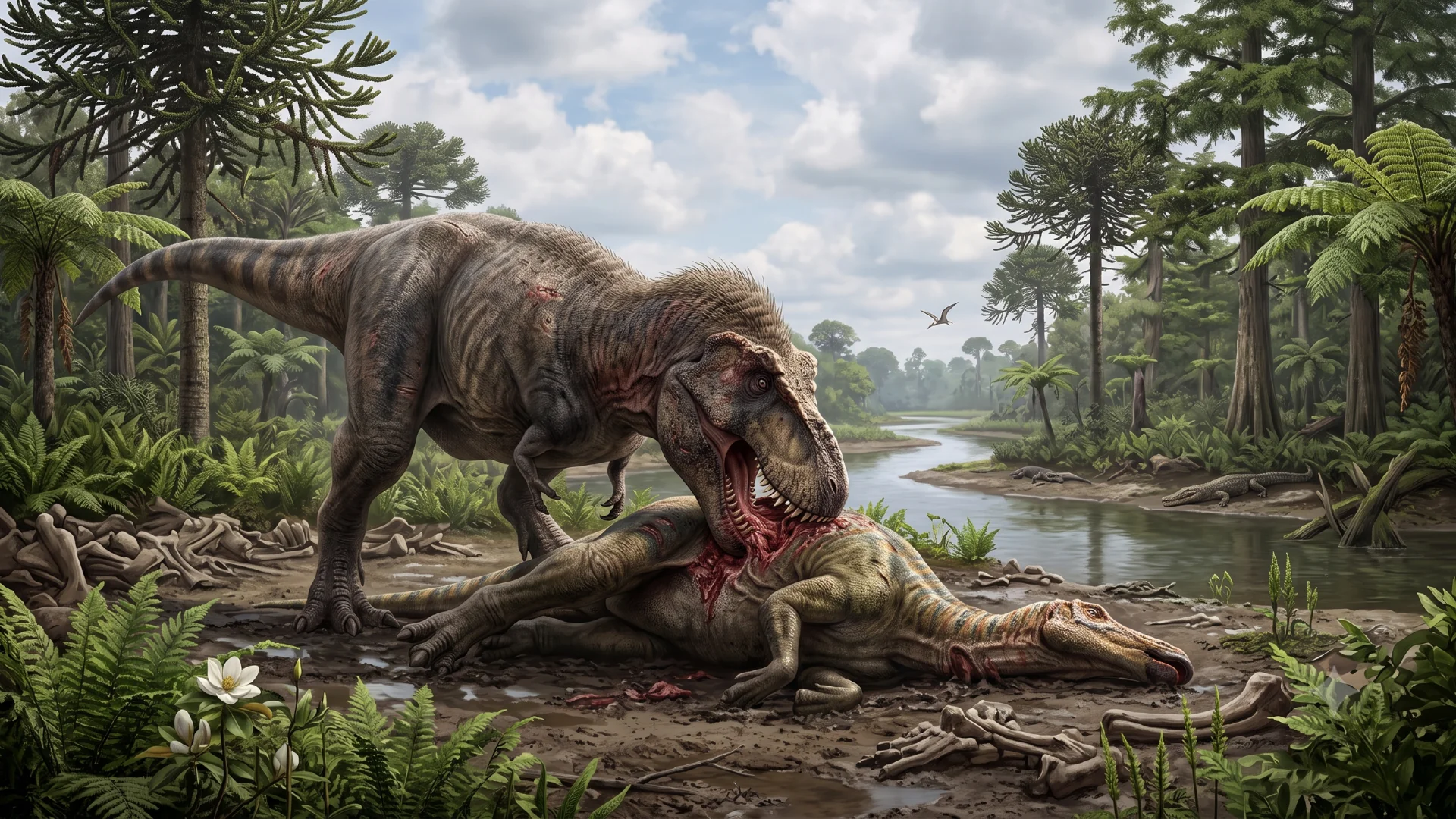
A survey of more than 3,000 fossil bones from a Wyoming hadrosaur bonebed found only a handful of genuine bite traces — and just four bones preserved enough detail to name Tyrannosaurus rex as the biter.
Screening 3,013 Bones Turned Up Only 13 Candidate Marks
The bonebed sits in the Lance Formation of northeastern Wyoming, a Late Cretaceous deposit dominated almost entirely by a single hadrosaur species, Edmontosaurus annectens. Researchers examined 3,013 bones from the site for any depression, puncture, or groove that might record a bite. Only 13 passed that first visual screen — a fraction small enough that the study's authors treat it as evidence of how rare unambiguous bite evidence actually is in a bonebed this size, not as a limitation of their search.
That low yield sets up the paper's central argument: most features that look like tooth marks at a glance turn out, on closer inspection, to have other causes. The researchers describe checking each candidate against disease-related bone changes, natural passageways for blood vessels and nerves, and damage from insects or weathering after death — categories that are easy to mistake for bites if the surrounding bone isn't examined carefully.
A CT Scan Turned a Suspected Crocodile Bite Into a Blood-Vessel Canal
One case illustrates why the team didn't stop at visual inspection. A jaw fragment carried a row of small, evenly spaced polygonal perforations. Loose crocodilian teeth had already turned up elsewhere in the bonebed, so a crocodile bite looked like the obvious explanation at first. A CT scan told a different story: each hole angled inward from a different direction and converged inside the bone, the pattern of a natural vascular or neurovascular canal rather than a puncture wound. The fragment was pulled from the confirmed count entirely.
That single reclassification is doing real editorial work in the paper. It's the concrete case the authors use to argue that spacing and shape alone — the criteria most often cited in older tooth-trace literature — aren't sufficient on their own, and that internal bone structure has to be checked before a mark is called a bite.
Serration Spacing Ties Four Bones to Tyrannosaurus rex, Not the Rest
With the false lead removed, 12 bones remained as confirmed tooth-marked specimens. Only four preserved enough surface detail to be assigned to named bite-trace categories — Knethichnus parallelum and Linichnus serratus, ichnotaxa used to classify tooth-scoring patterns on bone. For those four, the researchers compared the spacing of striations and serration marks against the denticle density of carnivore teeth recovered from the same bonebed, including Tyrannosaurus rex, and found the match consistent with T. rex specifically.
The other eight tooth-marked bones don't get the same certainty. Their traces are real bite evidence, but not detailed enough to pin to one predator. Other carnivores were present at the site, including crocodilians, so the paper leaves the inflictor of those eight marks as unresolved rather than defaulting to T. rex by assumption.
Unhealed Wounds Point to Scavenging on an Exposed Carcass
Most of the marked bones show no sign of healing around the damaged areas. In bone biology, healing takes time the animal has to survive to complete, so its absence means these bites landed at or after the time of death rather than during a survived attack. Combined with earlier evidence from the site, the pattern is consistent with carcasses left exposed and scavenged before burial, rather than active predation captured mid-fight.
That distinction matters for how the find gets used elsewhere. Lead author Bethania Siviero, of Loma Linda University's Department of Pathology and Human Anatomy, frames the paper's contribution as much about method as about T. rex: separating true bite marks from disease-related depressions and postmortem damage is what makes a mark usable as behavioral evidence in the first place, rather than a coincidental resemblance mistaken for one.
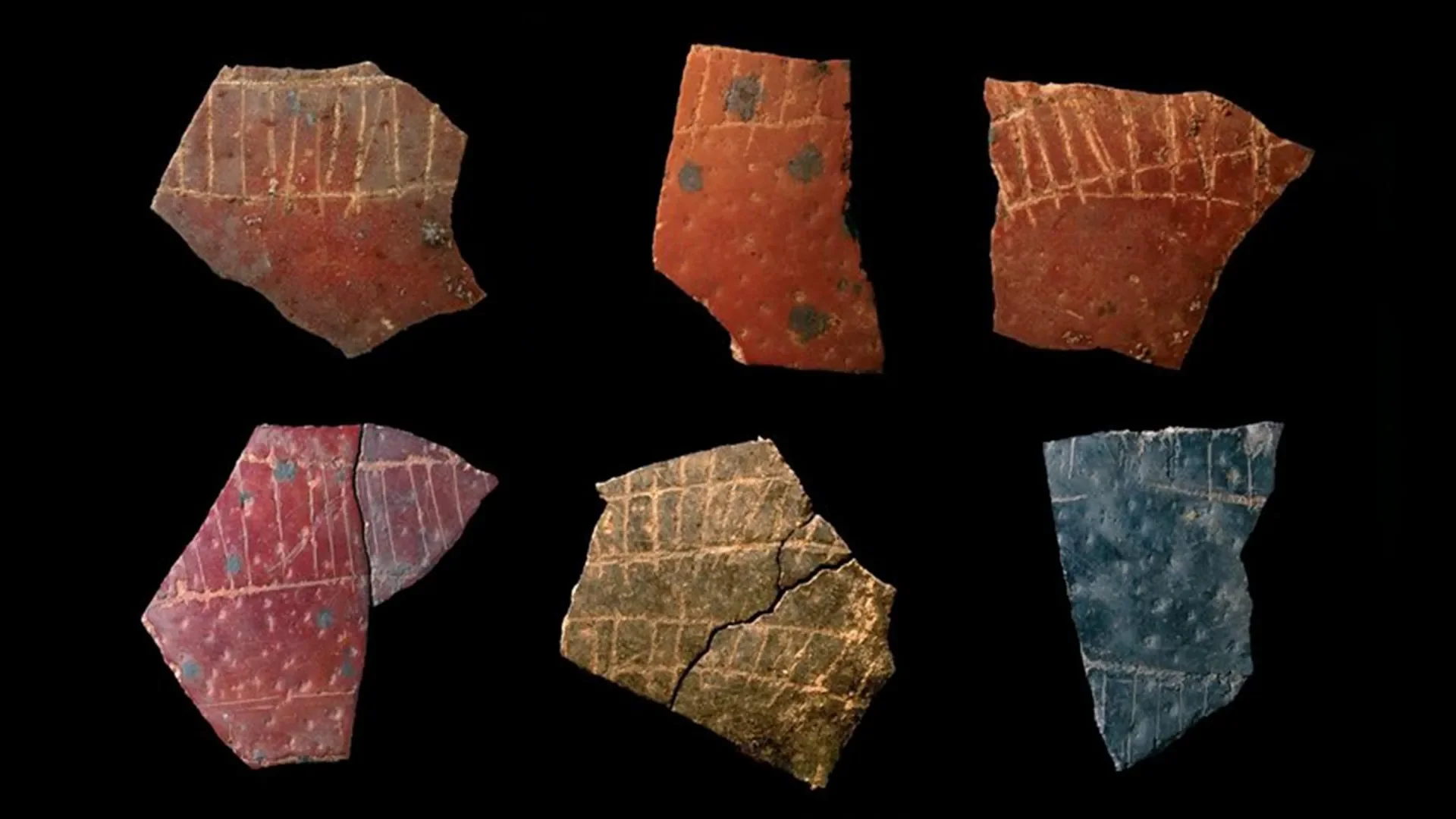
Study Finds a 'Geometric Grammar' in 60,000-Year-Old Engraved Ostrich Eggshells
A PLOS ONE study of 1,275 engraved lines on Howiesons Poort ostrich eggshells finds 83.4% run parallel, with orthogonality the strongest structural signal.
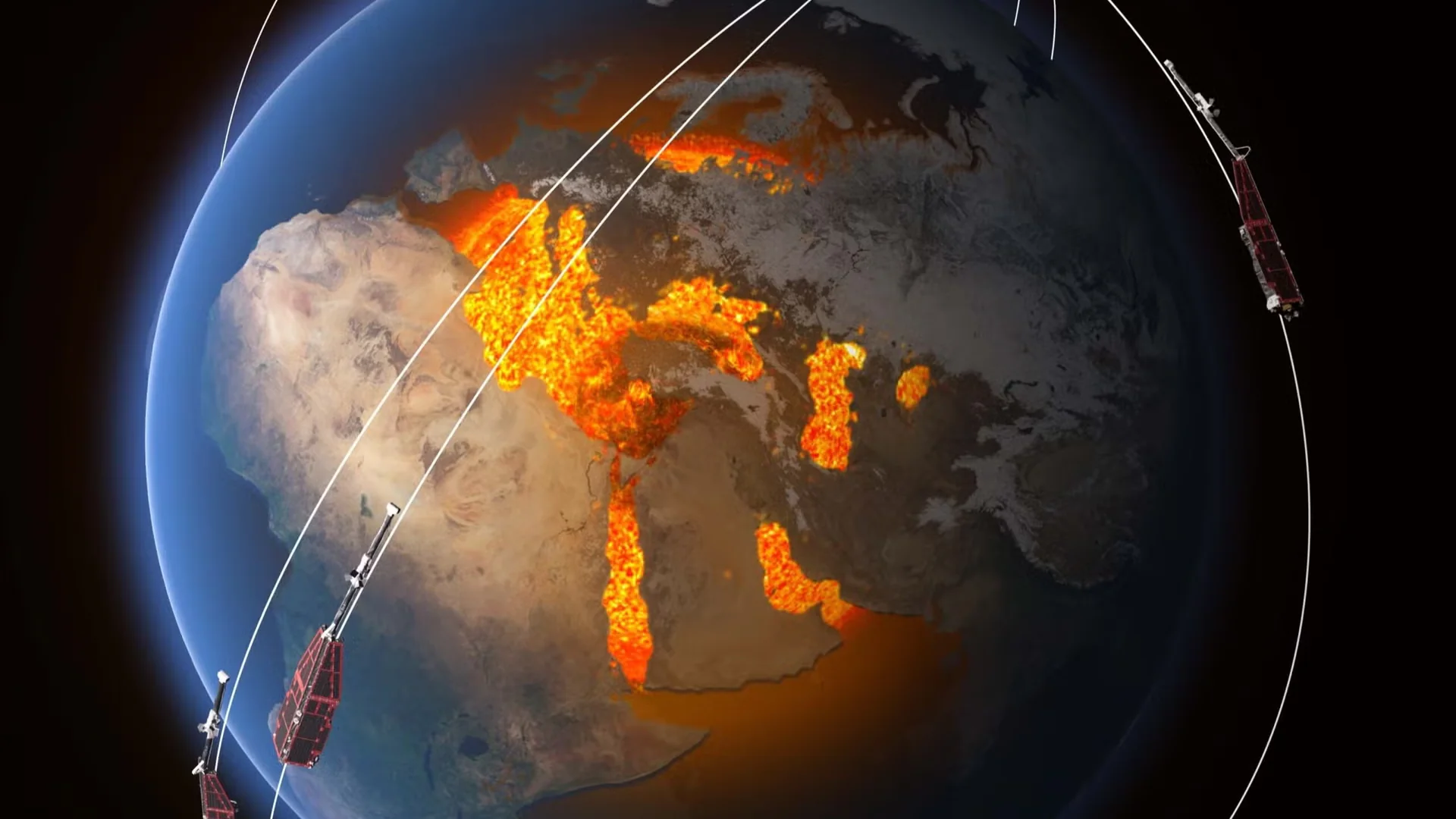
Earth's Molten Core Reversed Direction Beneath the Pacific in 2010 — and Scientists Still Don't Know Why
A new PCA study of 1997-2025 satellite and ground data confirms Earth's outer core flow beneath the Pacific flipped eastward in 2010.

A Cell-Inspired Nanoreactor Boosts Solar Hydrogen Peroxide Output by Relaying Protons Instead of Pumping Them
Chinese researchers built a hollow CdS@polydopamine nanoreactor whose catechol/quinone shell relays protons, lifting H2O2 photosynthesis to 3,238 μmol g⁻¹ h⁻¹.
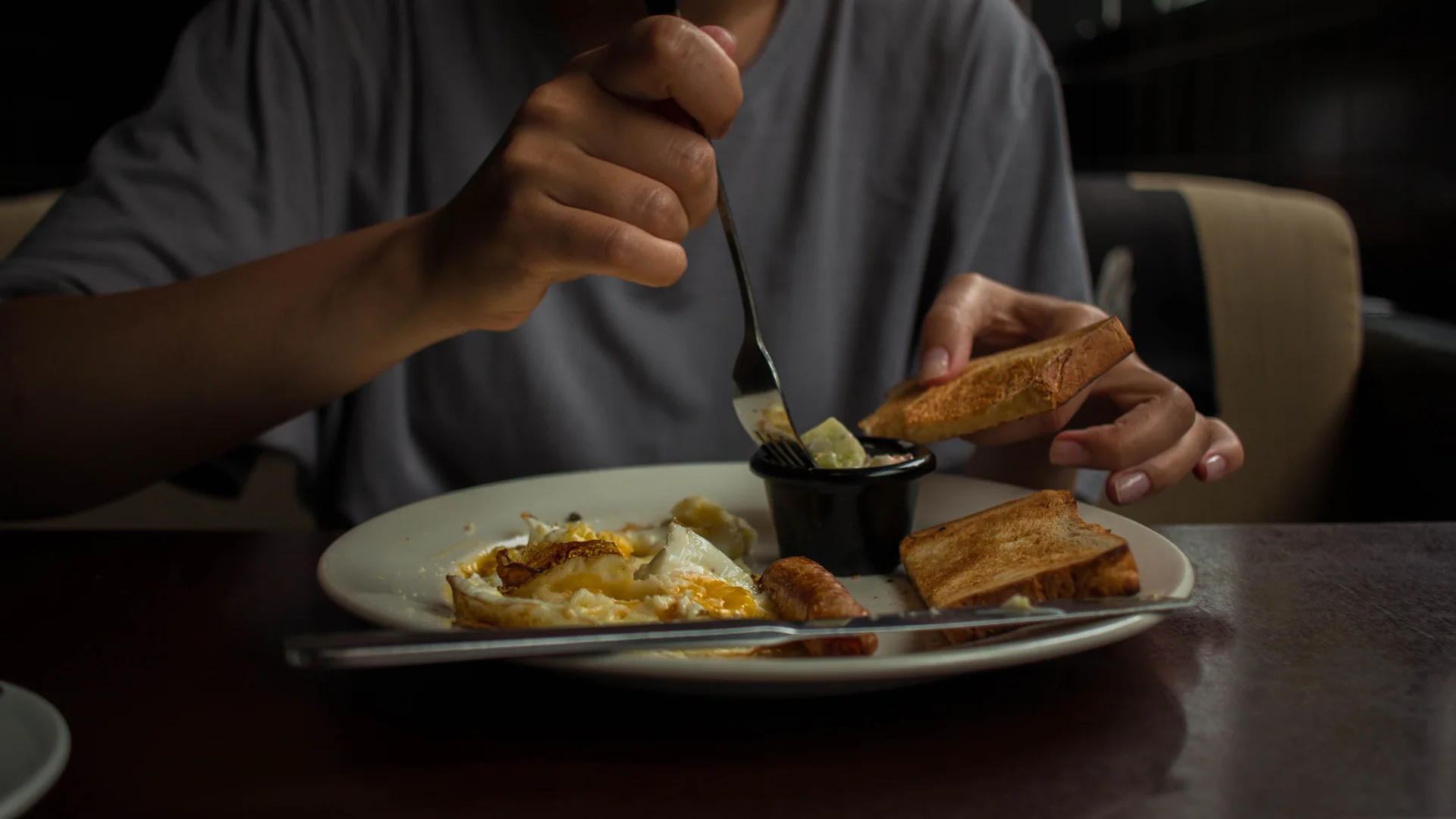
A 350-Study Review Questions Whether More Protein Really Means Healthier Aging
A Cell Press Blue review of 350+ studies ties lower protein intake to FGF21 activity and slower aging — but leucine findings still conflict.
Comments (0)
Please sign in to join the discussion.
No comments yet.
Be the first to share your perspective on this topic.