
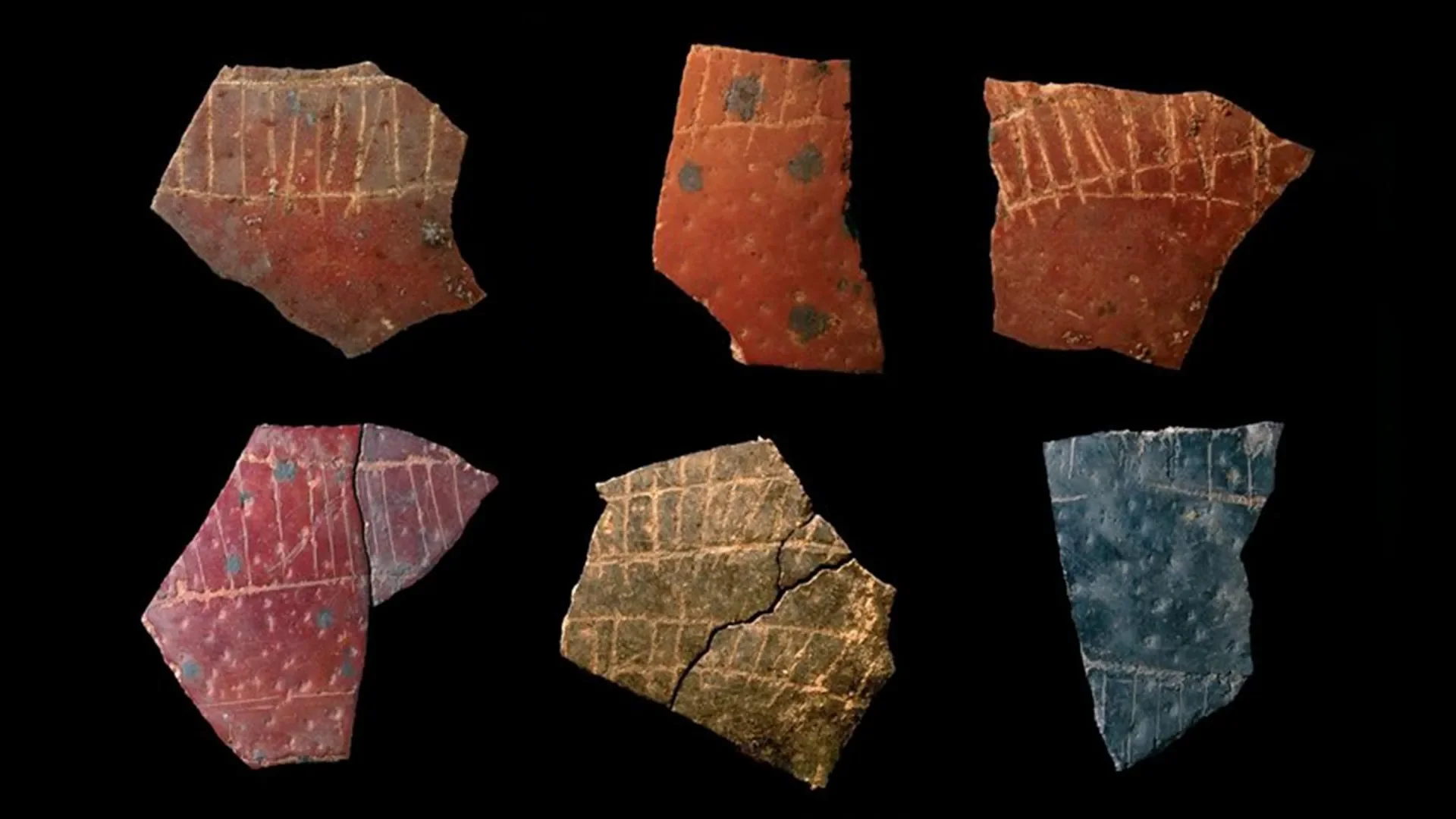
A statistical analysis of 109 engraved ostrich eggshell fragments from three southern African sites finds that most incised lines are straight, parallel, and repeatedly organized into right angles — patterns the study's authors argue reflect planned geometric construction rather than casual mark-making.
78.9% of Engraved Lines on Howiesons Poort Eggshells Run Straight and Parallel
Researchers from the University of Bologna and Sapienza University of Rome retraced 1,275 lines, broken into 1,635 individual segments, across engraved ostrich eggshell (EOES) fragments from the Howiesons Poort technocomplex, a Middle Stone Age industry dated to roughly 65,000 to 60,000 years ago. Each line was digitized in QGIS and normalized using "non-accidental properties" — features such as curvature and parallelism that stay stable regardless of viewing angle — to control for distortion in the second-hand photographic source material.
The resulting dataset shows 78.9% of lines are straight rather than curved, and 83.4% of segments belong to a parallel pair, differing in inclination by no more than 3.5 degrees. Of the 1,405 line intersections measured, a third — 33.6% — form a minor angle within 7 degrees of 90°. A follow-up principal component analysis ranked orthogonality as the single most influential variable in separating fragment types, ahead of parallelism and spatial regularity, even though right angles account for only about a third of all measured angles overall.
A Regression Model Explains Over 90% of the Fragments' Angular Consistency
To move beyond simple frequency counts, the team ran multiple regression with residual analysis on two properties: how tightly grouped parallel segments are, and how consistent the intersection angles are within a fragment. For parallelism, the number of segments and the number of parallel groups together predicted angular spread with a strong model fit (R² = 0.736). For minor angles, only the number of intersections was a significant predictor — grouping structure was not, a gap the authors attribute partly to 17 fragments that show no angular grouping at all.
Residual analysis showed that 91.6% of 107 fragments assessed for parallelism, and 93.0% of 86 fragments assessed for minor angles, closely matched the model's predictions — evidence, the authors argue, of consistent visual planning across the assemblage rather than one-off decoration. The outliers are informative in their own right: fragments such as D14, D52, and D58 show looser alignment than predicted, which the paper links to tool constraints, shell curvature, or layered compositions (D58 appears to combine two grids at slightly different angles). Fragments such as D49, D50, and D98 show the opposite pattern — tighter alignment than the model expected — which the authors read as evidence of unusually deliberate, controlled engraving on those larger, rejoined pieces.
Moran's I Test Finds Spatially Clustered Angles in 18 of 76 Fragments
A third test asked a different question: not just whether angles repeat, but whether similar angles cluster at regular distances across a fragment's surface — the signature of a grid built through repeated, evenly spaced translation. The team applied Moran's I, a spatial-autocorrelation statistic, to the 76 fragments with at least four intersections (27 fragments were excluded for having too few).
Twenty-nine fragments returned a positive Moran's I, meaning similar angles tend to sit at regular spacing. Of those, 18 reached statistical significance, while 11 did not — a result the authors attribute to low intersection counts or fragmentary, incomplete patterns rather than an absence of underlying structure. The remaining 47 fragments returned a negative Moran's I, indicating that intersection points are spatially spread out but their angles vary — a pattern consistent with the regression analysis's finding of layered or surface-distorted compositions. The authors are careful not to treat a negative result as proof of randomness: several of these fragments show other forms of internal regularity, such as evenly spaced parallel lines that simply don't intersect the surrounding band.
Diepkloof's 249 Fragments Anchor a Three-Site Assemblage Spanning Roughly 65,000 to 60,000 Years
The engravings come from three Howiesons Poort sites. Diepkloof Rockshelter in South Africa's Western Cape holds by far the largest count, 249 EOES fragments out of more than 17,044 total ostrich eggshell pieces recovered there. Klipdrift Shelter, also in South Africa, has yielded 95 EOES fragments, and Apollo 11 Cave in southern Namibia has produced 2. The study's authors worked from published photographs covering a minority of that total assemblage — 93 of Diepkloof's 249 fragments, 17 of Klipdrift's 95, and both of Apollo 11's — and excluded three additional Diepkloof pieces as too worn for precise tracing, leaving 109 fragments in the final statistical dataset.
Motif distribution differs by site and phase: the orthogonal hatched-band motif appears only at Diepkloof; the diamond-shaped motif appears only at Klipdrift's final Howiesons Poort phase; and the sub-parallel intersecting-lines motif is present at Diepkloof and Apollo 11 but entirely absent at Klipdrift. The authors note that Diepkloof's absolute chronology remains debated in the archaeological literature, and they adopted an intermediate dating range (roughly 65,000 to 60,000 years) to align it with the other two sites. Rather than treating the sites and motifs as separate case studies, the researchers analyzed the assemblage as a whole, arguing that the region's shared material, cultural, and chronological context justifies looking for the same underlying geometric operations — rotation, translation, iteration, and embedding — across all three locations. It's this combination, not any single site's toolkit, that the paper frames as a "geometric grammar": a repeatable, rule-based system, rather than proof of symbolic meaning, which the authors explicitly leave for future work.
The picture that emerges from all four analyses is consistent rather than absolute: a large majority of the Howiesons Poort assemblage shows measurable, repeatable geometric structuring, while a smaller set of outlier fragments — whether looser or unusually precise — mark the edges of that pattern. The authors present this as statistical support for planned visuo-spatial construction in a 60,000-year-old engraving tradition, while stopping short of claiming it as evidence of symbolic writing or language.
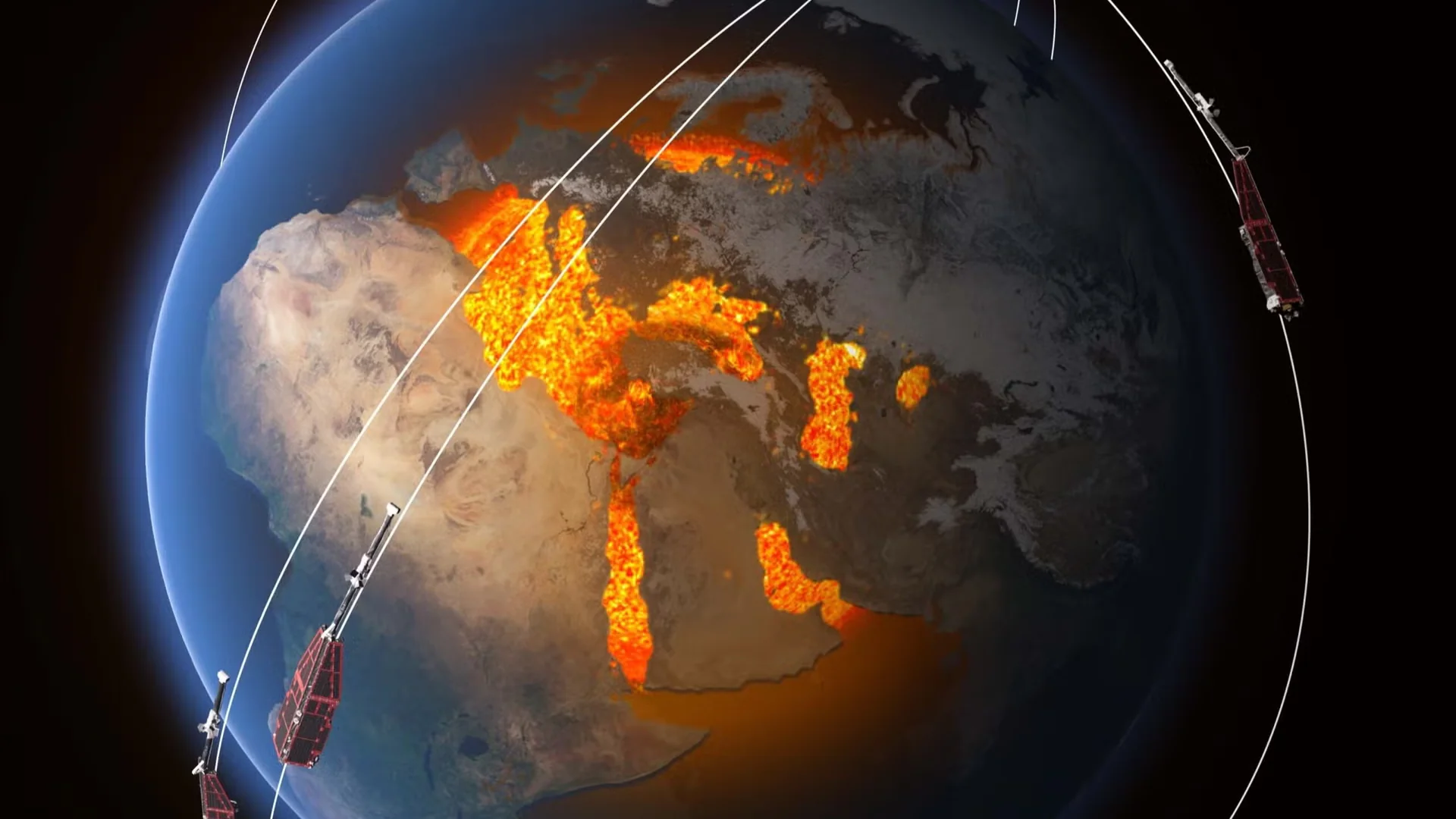
Earth's Molten Core Reversed Direction Beneath the Pacific in 2010 — and Scientists Still Don't Know Why
A new PCA study of 1997-2025 satellite and ground data confirms Earth's outer core flow beneath the Pacific flipped eastward in 2010.

A Cell-Inspired Nanoreactor Boosts Solar Hydrogen Peroxide Output by Relaying Protons Instead of Pumping Them
Chinese researchers built a hollow CdS@polydopamine nanoreactor whose catechol/quinone shell relays protons, lifting H2O2 photosynthesis to 3,238 μmol g⁻¹ h⁻¹.

Four Bones, 3,013 Screened: Confirming Tyrannosaurus rex Tooth Marks in a Wyoming Bonebed
A study of 3,013 Wyoming dinosaur bones found just 4 with tooth-mark spacing matching T. rex, after a CT scan ruled out a false crocodile-bite lead.
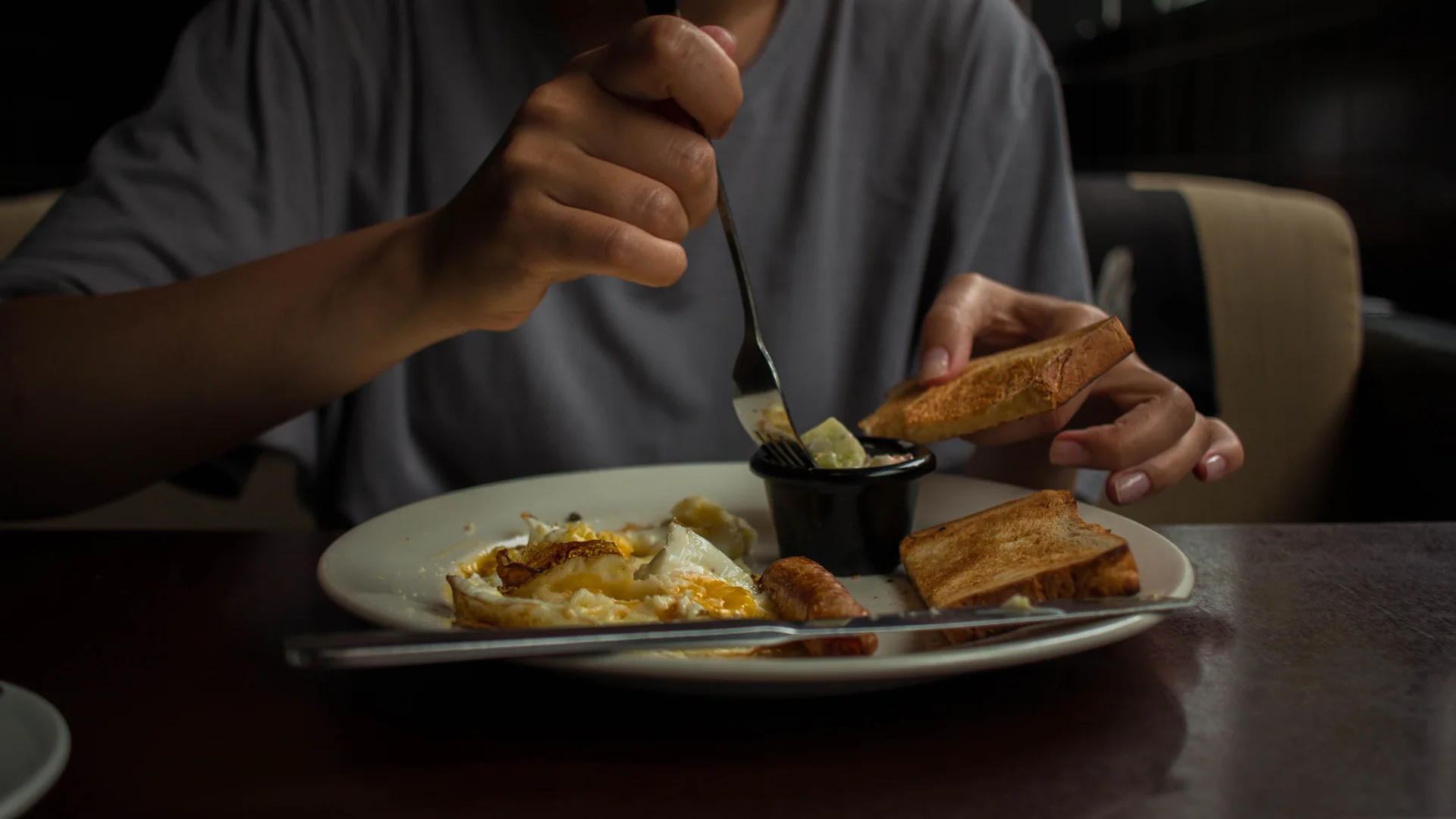
A 350-Study Review Questions Whether More Protein Really Means Healthier Aging
A Cell Press Blue review of 350+ studies ties lower protein intake to FGF21 activity and slower aging — but leucine findings still conflict.
Comments (0)
Please sign in to join the discussion.
No comments yet.
Be the first to share your perspective on this topic.