
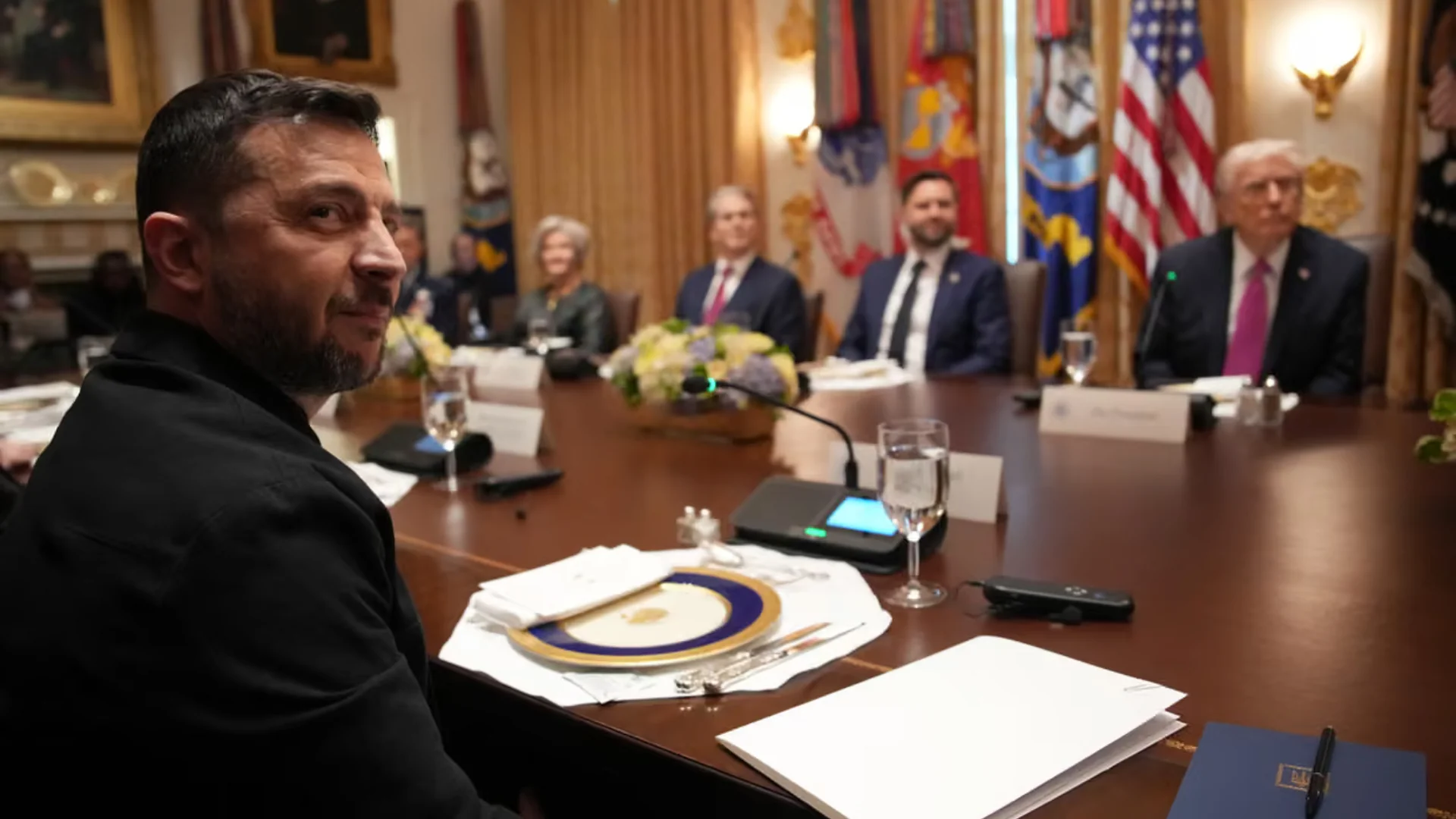
The G7 opens in Evian-les-Bains, France on June 15 with two wars on the agenda and one dominating Donald Trump's attention. As Ukrainian President Volodymyr Zelenskyy prepares to attend a working session on June 16, U.S. officials have confirmed there will be no formal bilateral between the two leaders — a signal that reads as clearly as any communiqué.
A War Sidelined by Another War
The reason for Ukraine's diminished standing at Evian is structural, not personal. Since U.S. airstrikes against Iran in February 2026 triggered the closure of the Strait of Hormuz, the global energy shock that followed has restructured Washington's diplomatic calendar. Trump arrives at the G7 with what U.S. officials and reporting from CNBC describe as a primary goal: finalizing a peace agreement with Iran that would reopen the strait. A deal could be signed on the summit's sidelines. That priority determines the bilateral schedule. Trump will hold formal meetings with French President Emmanuel Macron and with leaders from Qatar, the UAE, Egypt, and India — the countries most directly relevant to a Hormuz resolution. Zelenskyy is not on that list.
The war in Ukraine is now in its fifth year. Senior U.S. officials briefed reporters this week that Russian advances have "more or less come to a halt," according to The Guardian's June 14 briefing. Ukraine has been conducting deep strikes against Russian logistics, with significant effects reported in occupied eastern and southern regions, including Crimea. That battlefield picture — a grinding stalemate punctuated by Ukrainian disruption — is not the same as a negotiating window. But it is the context in which European partners are now trying to force one open.
The chart below maps the sequence of key events in the five weeks leading into the summit.
Trump's Bilateral Schedule Signals His Actual Priorities
The absence of a Trump-Zelenskyy bilateral is notable not just symbolically. At a summit where the formal agenda includes both Ukraine and the global economy, bilateral meetings are where real signaling happens. Trump's confirmed schedule — Macron, Qatar, UAE, Egypt, India — maps precisely onto the Iran-Hormuz diplomatic track. Macron is the host and a key interlocutor on a potential Iran framework. The Gulf states and Egypt are central to any energy and security arrangement around the strait. India has maintained economic relationships with both Iran and Russia throughout the current conflict period.
Zelenskyy will speak in a G7 working session on June 16, according to reporting from The Guardian. That is a multilateral format, not a one-on-one engagement. The difference matters: a working session produces communiqué language. A bilateral produces commitments, or at minimum a clearer read of American intent.
The flow below maps Trump's G7 engagement structure and the two policy paths it implies.
Europe's Ceasefire Push Into the Vacuum
The United Kingdom, France, and Germany — the E3 — are not waiting to see how the Iran track resolves. According to reporting from The Guardian and The Independent, the three countries plan to use the Evian summit to press for an immediate ceasefire based on current front lines, framed explicitly as a starting point for negotiations rather than a final settlement. The proposal would be backed by multinational security guarantees for Ukraine — a significant structural commitment that goes well beyond a simple halt in fighting.
The proposal requires Trump's support to carry meaningful weight. Russia is unlikely to treat a European-only ceasefire call as diplomatically binding, and Ukraine has consistently sought ironclad security assurances, not declarations. The E3 framing — current lines as starting point, with guarantees — attempts to thread that needle. Whether Trump will endorse it, or whether it will register as a communiqué footnote while he focuses on the Hormuz deal, is the central question of the summit's Ukraine dimension.
The battlefield context complicates and potentially enables the proposal at the same time. U.S. officials described Russian advances as having "more or less come to a halt," according to The Guardian. Ukraine's deep strike campaign against Russian logistics has altered the operational tempo in the east and south, including Crimea. But Russia's early June use of hypersonic Oreshnik missiles and Iranian-designed drones — including a strike that damaged a spent nuclear fuel storage facility near Chornobyl, though radiation levels reportedly remained normal — signals that Moscow is not signaling an interest in stopping. Putin's public rejection of Zelenskyy's direct-talks offer, calling it "weak" while reaffirming unchanged war goals, reinforces that posture.
The diagram below maps the three components of the E3 ceasefire proposal and what each element requires from summit participants.
What the summit is unlikely to resolve, regardless of what Trump signs or endorses on Iran, is the core structural problem: Russia has not indicated any willingness to negotiate, and Ukraine has not signaled willingness to accept territorial losses as part of a ceasefire. The E3 proposal's framing — current lines as starting point — implicitly acknowledges the territory Russia currently holds, which Kyiv has consistently refused to treat as a negotiating baseline. That gap did not close before Evian, and there is no mechanism on the summit's confirmed agenda that would close it during the three-day meeting.
What the summit can do is clarify the degree to which the United States remains a participant in Ukraine diplomacy, or has effectively delegated that role to its European partners while it manages a more immediate energy and security crisis in the Middle East. Trump's bilateral schedule has already answered part of that question.

Could AI Create a "Permanent Underclass"? What the Data Actually Shows
Stanford payroll data show AI-exposed 22-25 year-olds losing jobs at 3.8% a year, while wages diverge by income. What that means for a 'permanent underclass.'

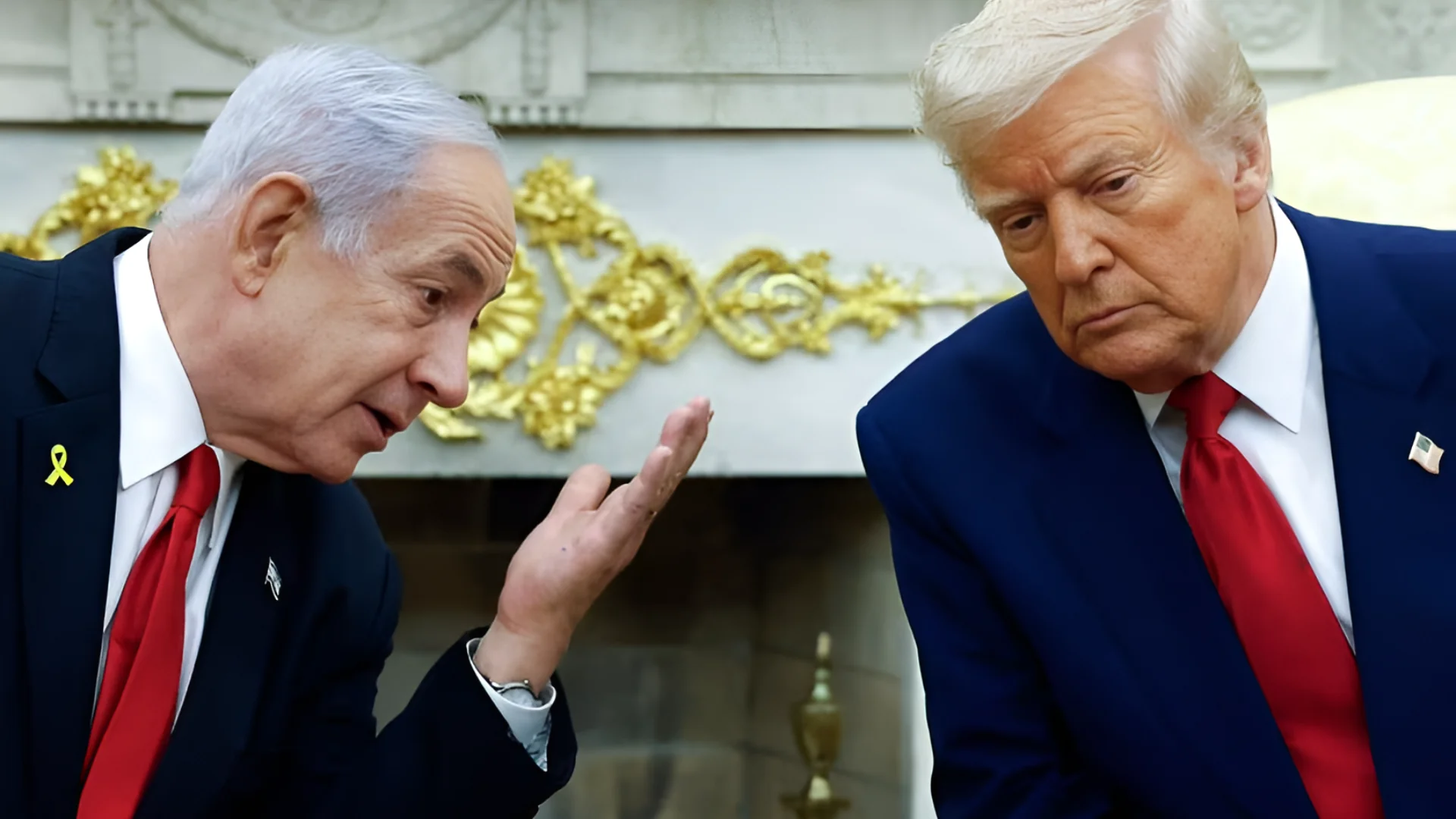
Netanyahu Rejects Trump-Backed Gaza Plan, Citing Disarmament Sequence
Israel's PM rejected the U.S.-backed 15-point Gaza plan Sunday, demanding Hamas disarm fully before any IDF withdrawal, deepening a sequencing standoff.
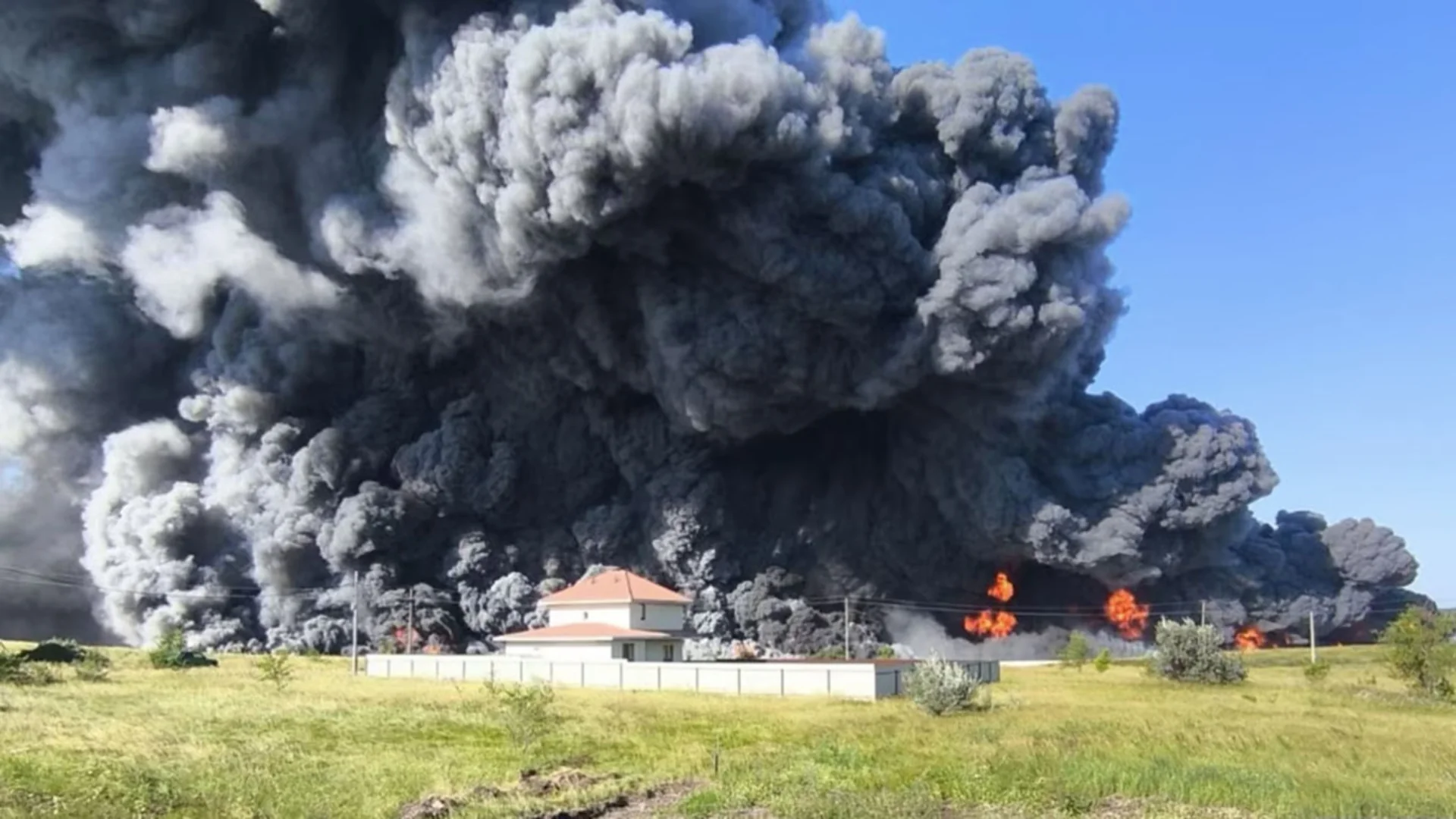
Ukraine's Drone Campaign Has Wiped Out a Fifth of Wildberries' Warehouse Capacity
Ukrainian drone strikes have damaged over 1.18 million square meters of Wildberries warehouse space, pushing Russia's top retailer toward years of losses.


The Slow Squeeze: Three Systems Under Strain, Moving at Different Speeds
Atmospheric CO2 levels, East Asian demographic exhaustion, and the AI capital race are converging on different clocks. An examination of how climate limits, human reproduction, and state infrastructure face simultaneous systemic strain without a single coordinating hand.
Comments (0)
Please sign in to join the discussion.
No comments yet.
Be the first to share your perspective on this topic.