
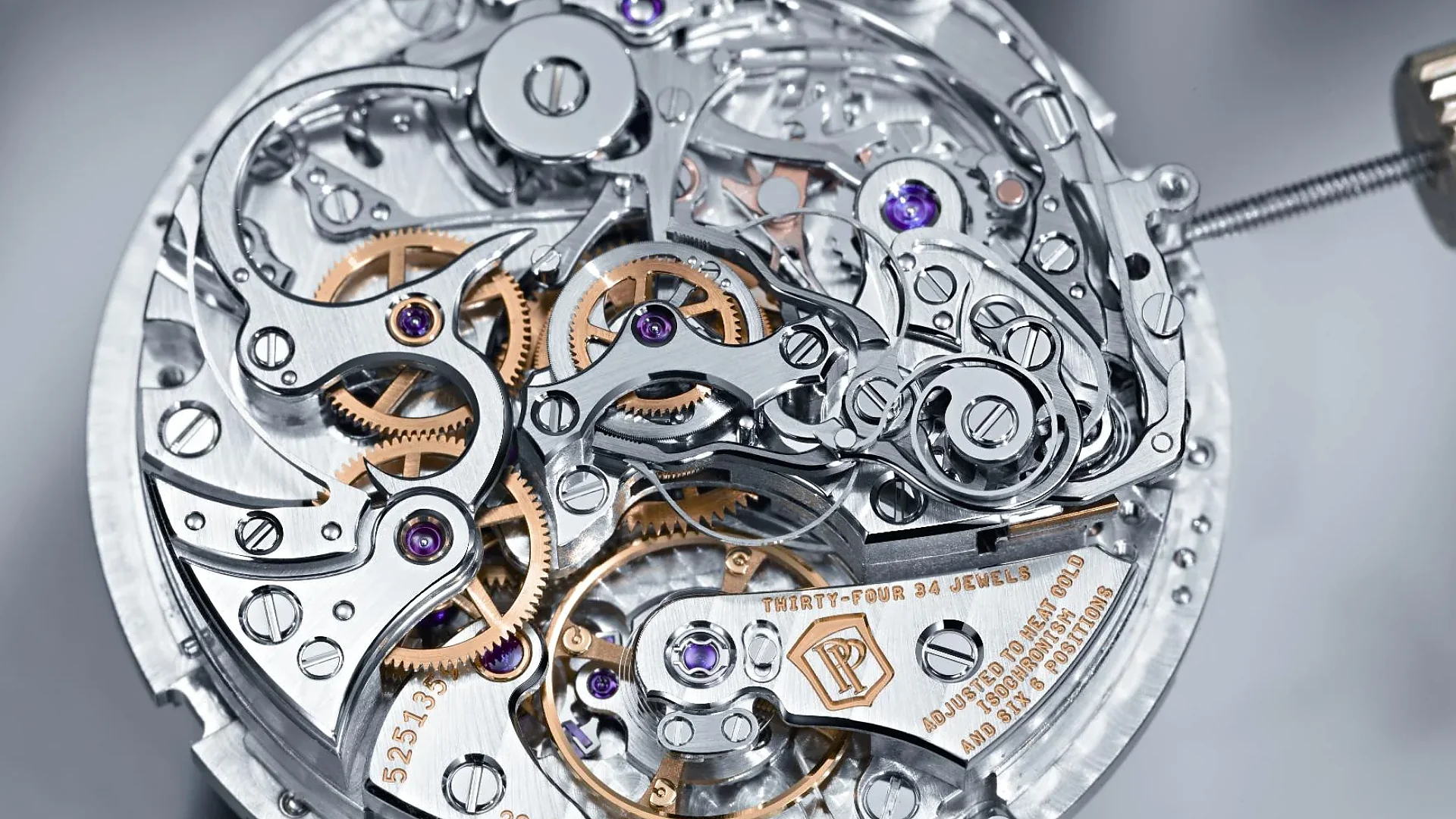
A vibrating crystal and a binary counter keep a quartz watch accurate to about fifteen seconds a month. A mechanical watch, built from a mainspring, an escapement, and a balance wheel, cannot match that on its own, yet mechanical movements still make up the large majority of Swiss watch export value.
How the Quartz Oscillator Turns a Vibrating Crystal Into a Second
Every quartz watch starts with a tiny sliver of synthetic quartz, usually cut into the shape of a tuning fork. Quartz is piezoelectric: apply a voltage and the crystal flexes; flex the crystal and it generates a voltage. A watch battery uses that property to drive the crystal into a steady mechanical vibration at 32,768 cycles per second, a frequency chosen because it equals 2 to the 15th power. That power-of-two relationship matters because the watch's integrated circuit keeps time by halving the signal repeatedly rather than counting to an arbitrary number: fifteen successive binary divider stages turn 32,768 vibrations a second into exactly one electrical pulse a second. In an analog quartz watch, that one-second pulse drives a small stepping motor, which advances a gear train connected to the hands one increment at a time. In a digital watch, the same pulse updates the display directly, with no motor or gears involved.
Inside the Escapement: How a Mechanical Watch Keeps Time Without a Battery
A mechanical watch has no battery and no circuit. Power comes from a mainspring, a coiled ribbon of metal wound by hand or by a rotating weight, which unwinds slowly through a gear train. Left alone, that spring would release all its energy at once. The escapement stops it from doing that: one wheel in the train, the escape wheel, is repeatedly locked and released by a small lever called the pallet fork, and each release delivers a tiny, controlled push to the balance wheel. The balance wheel, a weighted ring attached to a coiled hairspring, swings back and forth at a fixed rate, commonly somewhere between five and ten oscillations a second depending on the caliber. It is that back-and-forth swing, not the gear train, that actually regulates the watch; the escapement's job is only to keep feeding it enough energy to keep swinging at the same rate. The distinctive tick of a mechanical watch is the sound of the pallet fork catching and releasing the escape wheel once per swing. Manufacturers such as NOMOS Glashütte regulate finished movements in six physical positions over roughly a week to compensate for the small rate differences gravity introduces as a watch changes orientation on a wrist.
Accuracy, Compared: What "Losing a Few Seconds" Actually Means
The gap between the two technologies comes down to what happens when the regulator is disturbed. A quartz crystal's resonant frequency barely shifts with temperature, position, or battery state, which is part of why a typical quartz movement is described as accurate to within roughly fifteen seconds a month under normal use. A mechanical balance wheel is more sensitive: as the mainspring unwinds, torque reaching the escapement drops, the balance's swing narrows, and the rate shifts, a phenomenon watchmakers call isochronism error. NOMOS states that its regulated calibers stay within ten seconds of deviation per day after that six-position adjustment. One recent attempt to close the gap further replaces the balance wheel and hairspring entirely: Zenith's Defy Lab uses a single monolithic silicon flexure that oscillates without pivots, without sliding escapement contact, and without lubrication, reaching a theoretical accuracy of about 0.3 seconds a day and a quality factor more than ten times that of a conventional escapement. It is still a mechanical oscillator in the sense that nothing is counted electronically, but it borrows the rigor of a crystal problem to solve a mechanical one.
Why Mechanical Watches Still Sell in a World of Quartz Precision
None of this explains why anyone still buys a mechanical watch when a much cheaper quartz movement keeps better time. The 2025 export figures from the Federation of the Swiss Watch Industry suggest the answer has stopped being about accuracy at all. Mechanical watches accounted for 86 percent of Swiss watch export value in the January-to-November period, even as total export value slipped 2.2 percent and unit volume fell to a multi-decade low. Within that decline, mechanical export volume dropped 4.3 percent year over year, but mechanical export value fell only 2.1 percent, evidence that buyers paid more per watch even as fewer watches shipped. The pattern sharpens further at the top of the market: watches retailing above CHF 50,000 made up only 1.4 percent of units shipped but accounted for more than a third of export value and an estimated 89 percent of the industry's total growth. Broader market research puts quartz and mechanical watches together at roughly 59 percent of the 85-billion-dollar global luxury watch market in 2025, with collector demand for hand-finished Swiss calibers cited as the main driver. Quartz settled the question of which movement keeps better time decades ago. What the export data show is a market that has moved past asking that question, pricing mechanical watches instead the way it prices any hand-made object with a visible, audible, decades-old mechanism inside it.

IonQ's Revenue Jumped 287% in Q2 2026, but Its Stock Is Still 47% Below Its High
IonQ's Q2 2026 revenue rose 287% to $80.1 million and guidance climbed to $280-$290 million, yet IONQ shares still trade 47% below their October peak.
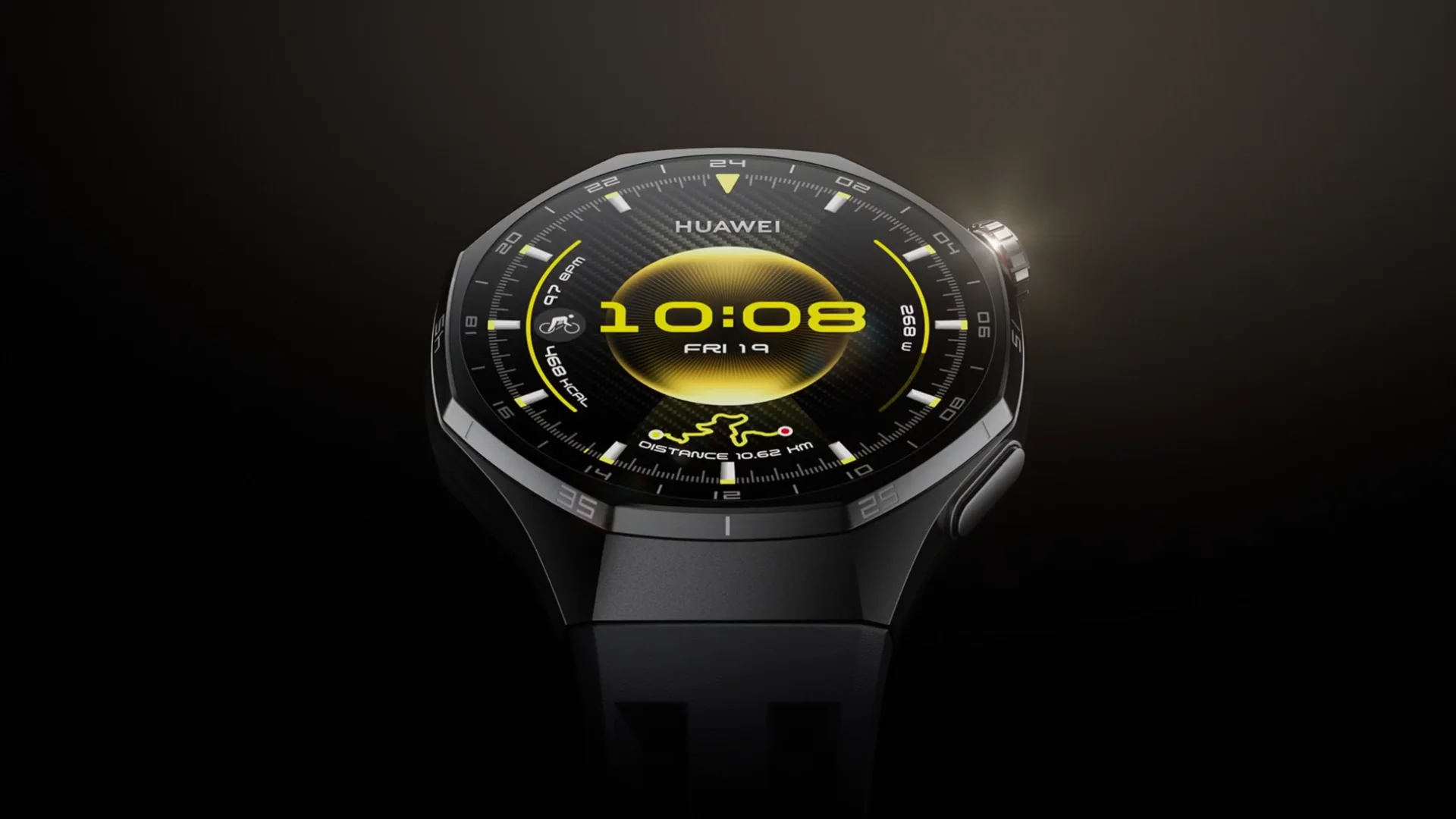
Huawei Watch GT 7 Series Leak Reveals 11 Colorways and a Possible August 5 Debut
Leaked promo images show 11 Huawei Watch GT 7 colorways split across a titanium Pro model and steel standard editions, with rival leaks pointing to an August 5 event.

Google Confirms Pixel 11 Price Hikes, Citing a Sixfold RAM Cost Spike
Google confirms Pixel 11 price hikes are coming as RAM costs jumped sixfold to $12/GB, with leaked pricing pointing to a $100 increase across the lineup.
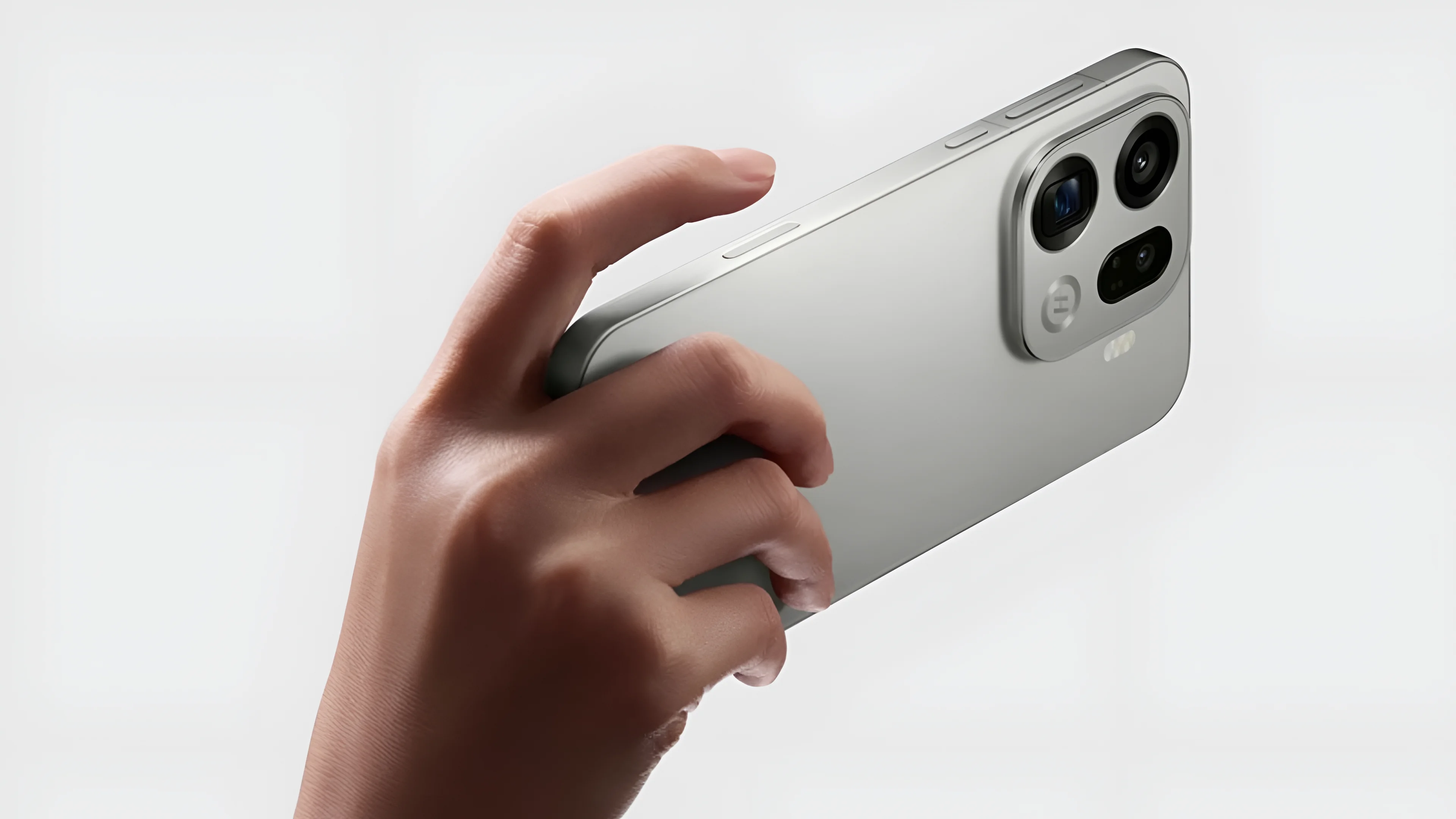
Oppo's Find X10 Pro Max Prototype Still Packs Triple 200MP Cameras
Oppo's Find X10 Pro Max prototype still uses three 200MP Hasselblad sensors, leaker Digital Chat Station says, with a September–October 2026 launch tipped.
Comments (0)
Please sign in to join the discussion.
No comments yet.
Be the first to share your perspective on this topic.