
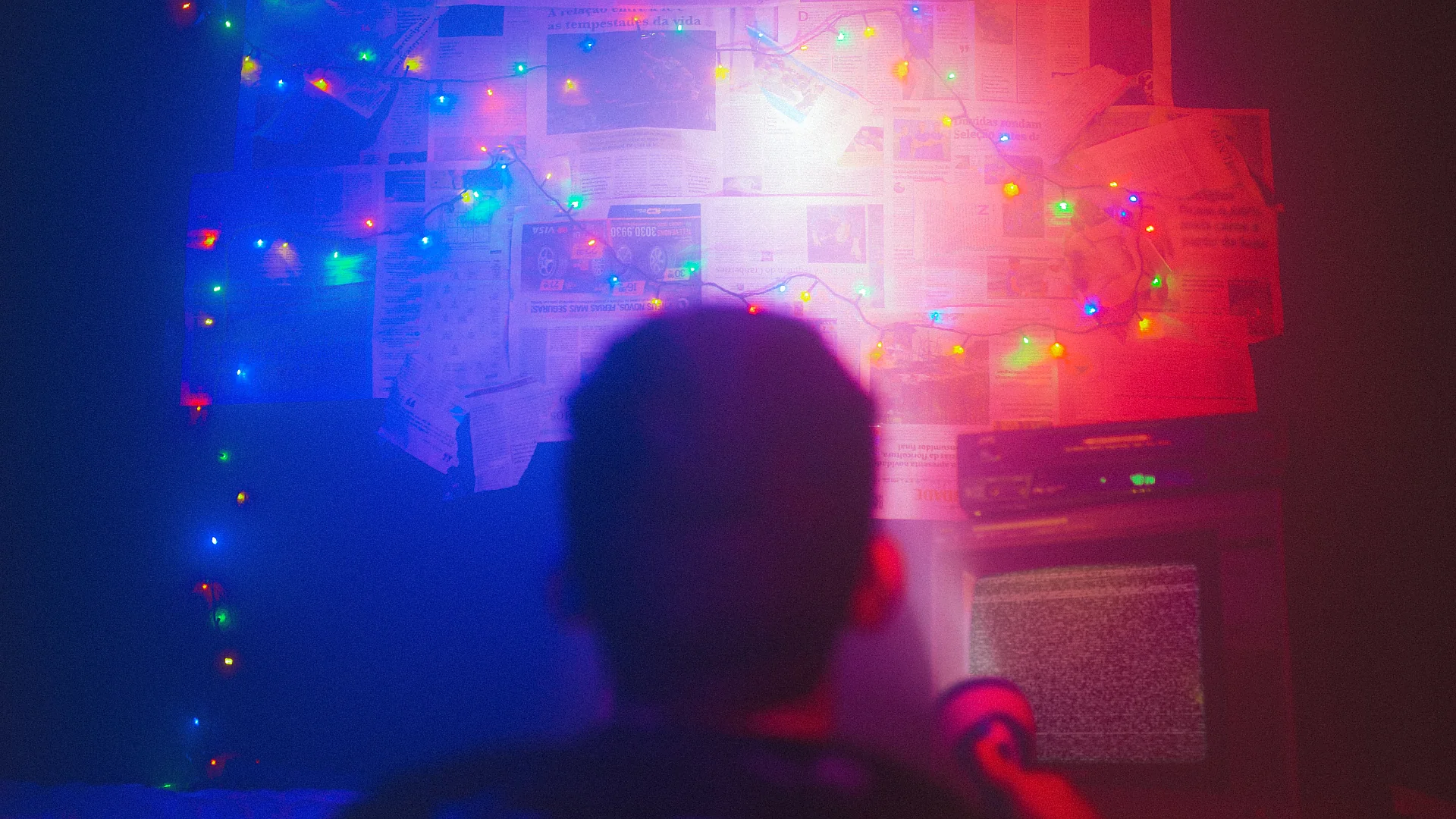
A study of 11,071 UK Biobank participants found that people exposed to more than 3 lux of light overnight, roughly the brightness of light leaking under a door, showed measurable changes in heart chamber size and function three years later, and a higher rate of heart failure, stroke, and other cardiovascular events over the following 8 to 10 years.
What Researchers Measured Inside 11,071 Bedrooms
The research, led by Professor Lu Qi at Tulane University and published in the European Heart Journal, asked a question earlier work hadn't answered directly: prior studies had already tied nighttime light exposure to higher cardiovascular disease risk, but not to any specific change inside the heart itself.
All 11,071 participants wore a wrist-mounted light sensor for seven days, giving researchers an objective measure of how much light reached them at night rather than a self-reported estimate. About three years later, each participant underwent a cardiac MRI scan, which let the team measure the size, wall thickness, and pumping function of all four heart chambers directly. Researchers then compared two groups: those who recorded more than 3 lux of nighttime light on average, and those who recorded next to none.
How Light Above 3 Lux Reshapes the Heart's Chambers
The MRI data showed a consistent pattern. Participants in the high-exposure group had thickening of the left ventricular wall, which reduced the space available inside that chamber to fill with blood, along with early signs that the heart muscle's ability to flex and relax between beats was reduced. Researchers describe this as an early marker of diastolic dysfunction, a stage before symptoms typically appear.
The right ventricle and left atrium showed smaller but statistically distinct changes in the same adverse direction. Right ventricular volumes were modestly larger, and left atrial volume was larger while its ejection fraction, the share of blood the chamber pumps out with each beat, was slightly lower. The chart below arranges these four secondary-chamber findings by size so the relative magnitude is visible at a glance, something the original paper reports only as separate figures in its results section.
The Longer-Term Risk: More Light, More Heart Failure and Stroke
The MRI comparison captured a single point in time, but the study also followed participants forward for 8 to 10 years using health records. Over that period, people in the high nighttime light group had a 29% higher risk of developing heart failure, a 15% higher risk of atrial fibrillation, a 24% higher risk of myocardial infarction, a 33% higher risk of stroke, and a 26% higher risk of dying from cardiovascular disease, each relative to the near-zero exposure group.
Every one of those associations followed a linear dose-response pattern: risk rose in step with exposure rather than jumping at a single threshold, which is the kind of pattern researchers typically look for as evidence that an association is unlikely to be a statistical artifact. Ranked by size, stroke shows the largest relative increase and atrial fibrillation the smallest, though all five outcomes remain clinically significant given the size of the underlying cohort.
Why Sleep Duration Only Partly Explains the Link
The researchers also tested a specific mechanism: whether nighttime light was simply cutting sleep short, and whether shorter sleep was doing the actual cardiovascular damage. Statistical mediation analysis found that shorter sleep duration accounted for an estimated 24% to 49% of the association between nighttime light and adverse cardiac outcomes, depending on the specific measure. That leaves roughly half or more of the association unexplained by sleep duration alone, which points to other possible pathways, such as direct circadian disruption of blood pressure regulation, heart rate, or myocardial metabolism, that the study's design couldn't isolate.
In an editorial accompanying the paper, Professor Thomas Münzel of University Medical Center Mainz and colleagues argued that clinicians treating heart failure or atrial fibrillation should start asking patients about their sleep environment, including bedroom darkness, shift work, and evening screen use. The editorial pointed to low-cost interventions already available to individuals and cities, such as blackout curtains, warmer-toned bedside lighting, covering standby LEDs on electronics, and shielded or dimming streetlights, as steps worth evaluating rather than settled recommendations.
Why an Observational Design Still Leaves the Causal Question Open
The study cannot establish that nighttime light directly causes cardiac remodeling. Light exposure was measured once, over seven days, and cardiac outcomes were assessed years later in the same population without repeated exposure measurements in between, so the researchers cannot rule out that people with certain existing health risks were simply more likely to sleep in bright environments. Shift work, urban residence, and other lifestyle factors correlated with nighttime light exposure could still be doing some of the work the study attributes to light itself.
What the data do establish is a large, dose-dependent, and biologically plausible association across two independent lines of evidence, imaging at a single time point and health outcomes tracked for nearly a decade, that points in the same direction. Professor Qi's team has framed light pollution as a newly identified, modifiable risk factor worth further controlled study, not yet as proof that dimming a bedroom will change any individual's cardiovascular outcome.
Mitochondria's Acetyl-CoA Switch Explains How 'Zombie' Cells Fuel Chronic Inflammation
Senescent 'zombie' cells use a mitochondrial acetyl-CoA switch to activate inflammatory SASP genes, and blocking it eased frailty in aged mice, Nature reports.
Blocking IL1RAP Sensitizes Pancreatic Tumors to Chemoimmunotherapy in New Trial and Mouse Data
New research letter links IL1RAP on pancreatic tumor, stromal, and myeloid cells to chemoresistance, and shows an anti-IL1RAP antibody restores drug sensitivity.

The Sea Squirt Lipid That Reversed Aging Signs in Old Mice
A 2022 mouse study found a sea-squirt-derived lipid eased brain aging; recirculated coverage credits "Stanford," but the senior author works in China.

A Two-Step Nanozyme Imaged, Then Destroyed, Residual Glioblastoma in Mice
A platinum single-atom nanozyme spotted glioblastoma clusters as small as 44 micrometers during surgery, then attacked residual tumor cells afterward, in a new mouse study.
Comments (0)
Please sign in to join the discussion.
No comments yet.
Be the first to share your perspective on this topic.