

In 2015, GDP per capita in South Korea was about $37,100. In North Korea, it was about $1,700. Same peninsula. Same population until a border split it in 1948. Daron Acemoglu, Simon Johnson, and James Robinson won the 2024 Nobel Memorial Prize in Economic Sciences largely for explaining gaps like this one. Their answer is not geography or culture. It is the design of political and economic institutions.
A 22-to-1 Gap Between One People, Split by a Border
The Korean peninsula makes an unusually clean comparison because so many other variables are held constant: language, culture, geography, and, until 1948, a shared government and history. According to a 2021 study in the Australian Economic History Review, the reversal was not always in South Korea's favor. Before the 1960s, North Korea's GDP per capita was 30 to 50 percent higher than the South's, a legacy of Japanese colonial-era industrial investment concentrated in the north. The two economies stayed roughly comparable into the mid-1970s, then diverged, and the gap has widened in every decade since.
By 2015, on the CIA World Factbook's Maddison-based estimate, North Korea's GDP per capita at purchasing power parity stood near $1,700 against South Korea's roughly $37,100. More recent World Bank figures put South Korea's GDP per capita near $36,200 in 2024, while independent estimates for North Korea place it between $1,300 and $1,500.
The two governments made different choices starting in the 1960s. South Korea's government built export-oriented industrial policy on secure property rights and opened itself to foreign investment and technology transfer. North Korea's government prioritized political survival and self-sufficiency, cutting itself off from the creative destruction that let its neighbor catch up and then pull far ahead.
What 'Inclusive' Actually Means in the Acemoglu-Robinson Framework
The central claim of Why Nations Fail, the authors' 2012 book, is that a country's trajectory depends on whether its institutions are inclusive or extractive, not on its endowments. Inclusive political institutions distribute power broadly and place real constraints on those who hold it, while still centralizing enough authority to enforce law and order. Inclusive economic institutions extend from that foundation: secure property rights, an unbiased legal system, and equal access to markets and public services. The Harvard Weatherhead Center's summary of the book describes these two kinds of institutions as mutually reinforcing, so that economic openness supports political openness and the reverse.
Extractive institutions run the opposite loop. A narrow elite concentrates political power, then shapes economic rules that funnel resources toward itself.
The mechanism doing the real work in the theory is creative destruction, economist Joseph Schumpeter's term for the process by which new technologies and firms displace old ones. Inclusive institutions tolerate this churn because no single elite depends on the old order surviving. Extractive institutions resist it, because new entrants threaten whoever currently controls the extraction. A review of the book published by the Cato Institute describes the authors' account of China this way: an extractive political system can sustain rapid catch-up growth for years by copying technology developed elsewhere, then runs into a ceiling once it needs the bottom-up innovation that only survives when losers, including politically connected ones, are allowed to lose.
Diamonds Didn't Save Sierra Leone. Institutions Explain Why They Helped Botswana
The clearest test of the institutions argument against a resource-curse or geography-based explanation is Botswana. In a research paper by Acemoglu, Johnson, and Robinson, the authors found that Botswana had the highest rate of per-capita economic growth of any country in the world over the 35 years following its 1966 independence, despite a landlocked, largely arid territory and minimal colonial-era investment.
The explanation the authors give is institutional continuity rather than luck. Pre-colonial Tswana political structures already placed constraints on chiefs through community assemblies. British colonial rule touched Botswana lightly, since the territory held little economic interest for London, and left those structures largely intact. At independence, the country's main rural interests, cattle-owning elites, had a direct economic stake in defending secure property rights rather than looting them. When large diamond deposits were discovered, the resulting revenue reinforced the existing constraints on power instead of triggering a scramble to capture the state, a pattern the authors credit partly to decisions made by early post-independence leaders Seretse Khama and Quett Masire.
Sierra Leone entered independence with agricultural resources, a natural deep-water port, and West Africa's oldest English-language university, on paper a stronger starting position than Botswana's. Its post-independence institutions concentrated power instead of constraining it, and its economic trajectory diverged sharply from Botswana's in the decades that followed. Natural resources did not determine the outcome on their own. Diamond wealth reinforced good institutions in one country and helped entrench bad ones in the region more broadly.
The Iraq and Afghanistan Problem: Institutions Resist Being Installed by Design
The theory's own logic creates an uncomfortable conclusion for policymakers who want to use it. Acemoglu and Robinson treat the emergence of inclusive institutions as heavily dependent on specific historical junctures rather than as a recipe that outside actors can install on request. Deliberate attempts to engineer inclusive institutions from outside, using Iraq and Afghanistan as their examples, tend to fail, because the underlying distribution of power among domestic groups does not shift just because a new set of laws gets written down.
The book has also drawn direct criticism on points of historical detail. The same Cato Institute review credits the authors' central thesis while arguing that their account of nineteenth-century United States economic history contains factual errors and understates how much earlier economic thought had already identified property rights and the rule of law as growth drivers. A framework with strong explanatory power and a poor record when governments try to apply it directly is the honest state of institutional economics more than a decade after the book's publication, and the year after its authors shared economics' highest honor. It explains a great deal about why nations diverge. It offers far less confidence about how a poor country moves from one loop to the other.

The Market for Lemons: How Hidden Quality Wrecks a Market
Asymmetric information about quality can push good products out of a market entirely. Akerlof's 1970 lemons model explains why, and how markets adapt.
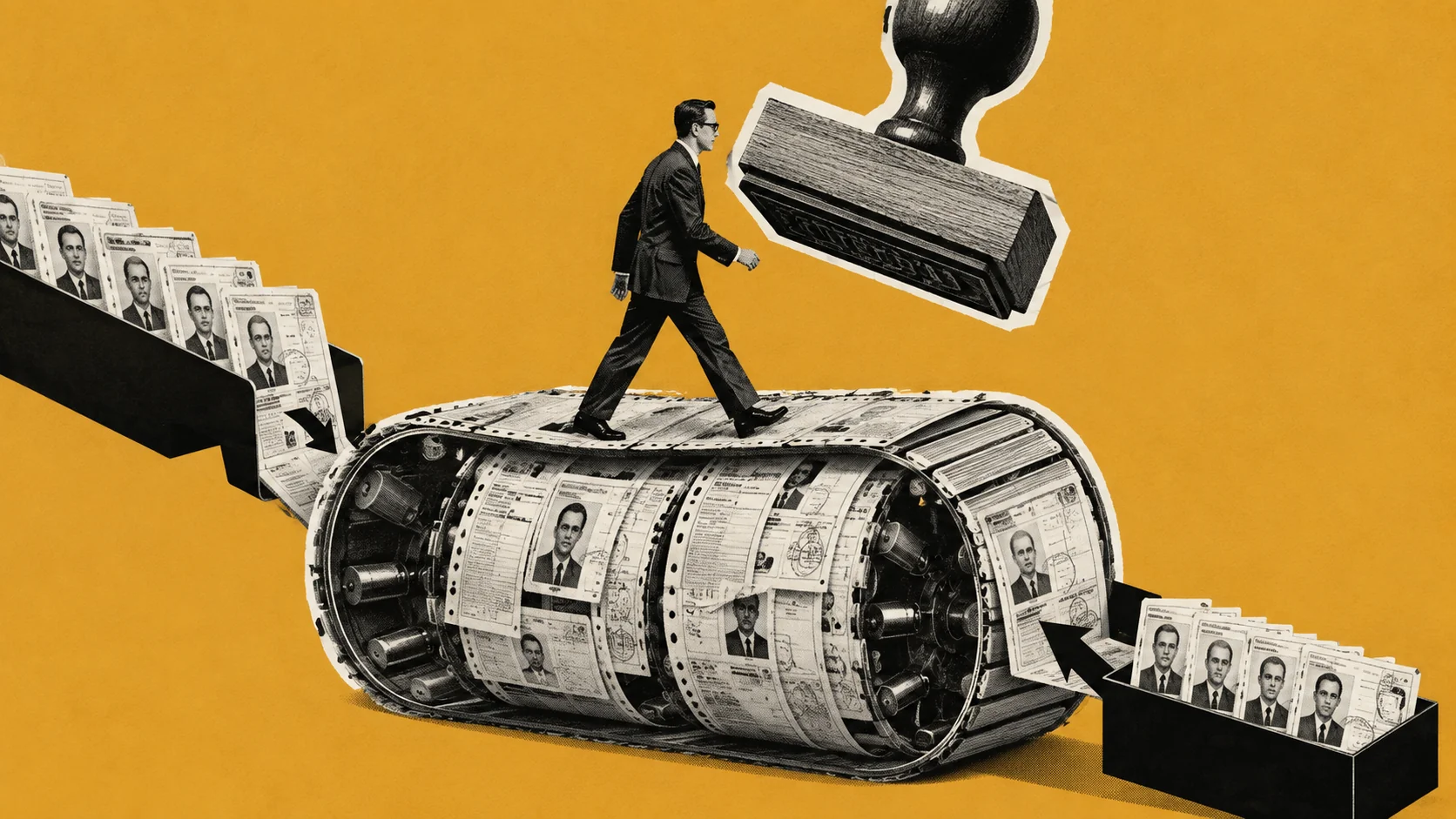
Why AML and KYC Compliance Costs Keep Rising for Banks
Rising AML and KYC compliance costs come from structural drivers: manual case review, ongoing customer re-verification, and duplicated work across borders.
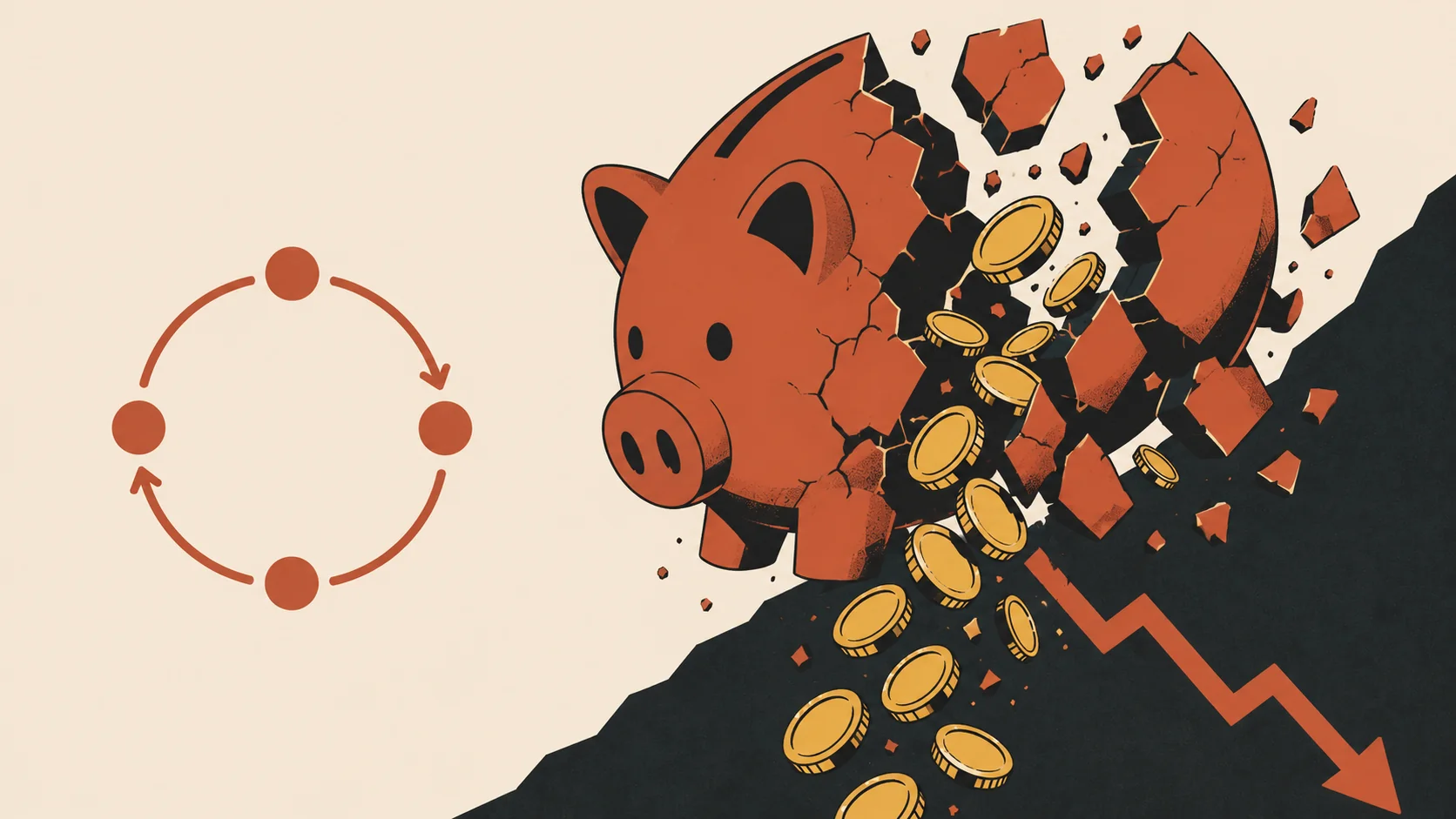
The Paradox of Thrift: Why Saving More Can Make a Recession Worse
Keynes's paradox of thrift explains why saving more in a downturn can shrink the economy. The mechanism, real U.S. saving-rate data, and where the theory breaks down.
The Middle-Income Trap Has Two Growth Engines, and the Handoff Between Them Isn't Automatic
The middle-income trap isn't one problem: it's the handoff between labor-intensive growth and a knowledge economy, and automation is making it harder.
Comments (0)
Please sign in to join the discussion.
No comments yet.
Be the first to share your perspective on this topic.