
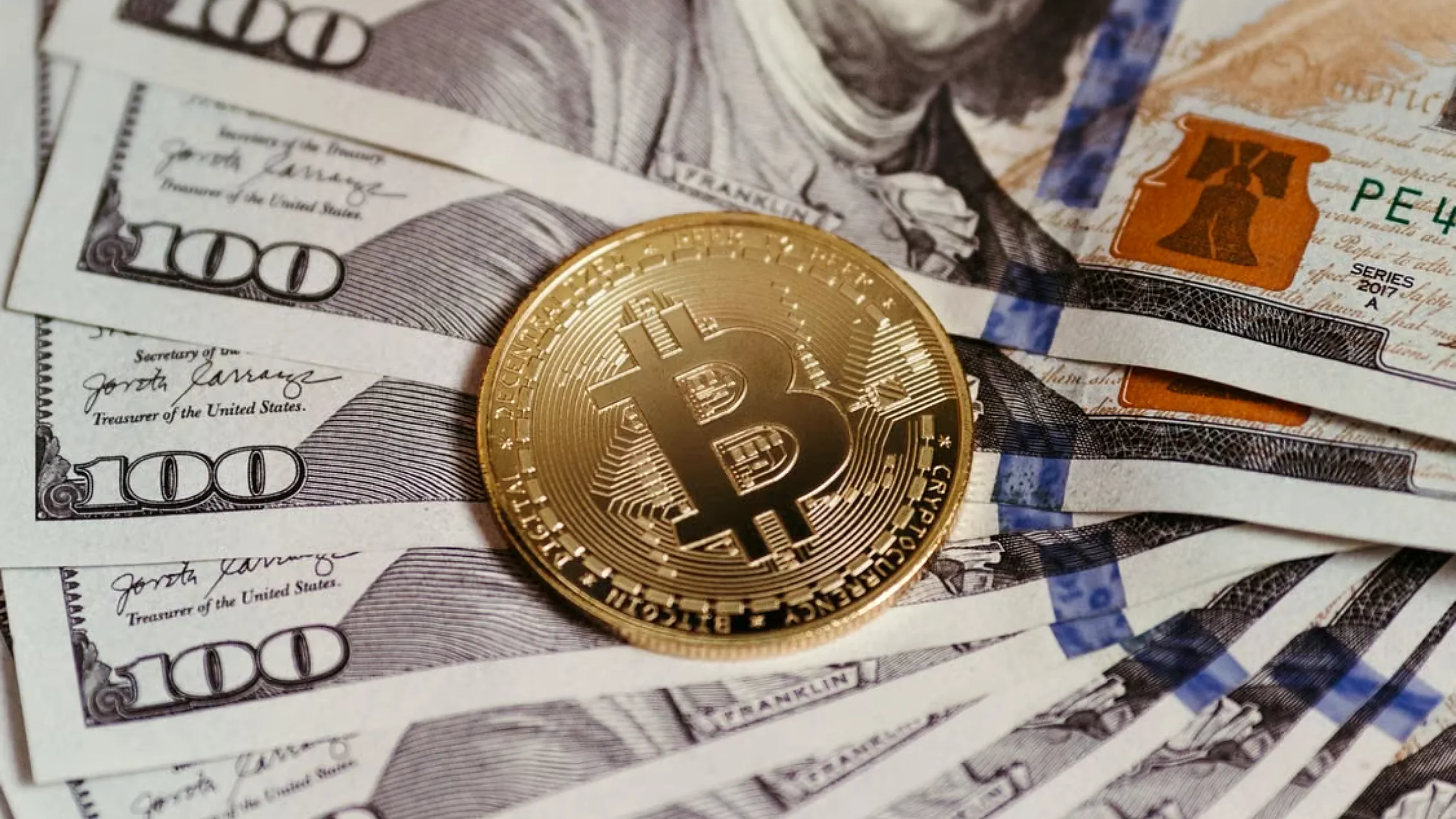
The Treasury Department doubled the size of its long-bond buybacks on Wednesday, hours after the 30-year yield touched its highest level since 2007. Gold and bitcoin both jumped within the day, and bitcoin's move triggered the largest wave of short-position liquidations on record.
A 19-year high in long bond yields preceded Treasury's move
The 30-year Treasury yield reached about 5.34% on Tuesday, its highest level since 2007, capping a sell-off in long-dated government debt that strategists trace back to June. Analysts point to a widening budget deficit, inflation running above target, and a rash of corporate debt issuance competing with Treasurys for investor demand.
Treasury responded the next day. In a statement, the department said it would at least double the maximum size of liquidity-support buyback operations for the 10-to-20-year and 20-to-30-year sectors, from $2 billion to at least $4 billion per operation. The change takes effect September 9 and runs through November 4, 2026, the end of the current refunding quarter. Treasury said the increase reflects its aim to provide greater liquidity support in longer-dated sectors where it routinely sees strong demand from market participants, and that it will address future buyback sizes at the next quarterly refunding.
The timing drew notice on trading desks. Natixis North America's head of U.S. rates strategy, John Briggs, said the move came just two weeks after Treasury had published its regular quarterly buyback schedule, which he read as a deliberate signal rather than a routine adjustment.
Bond yields fell within hours, but less than the percentage move suggests
Yields turned lower almost as soon as Treasury's statement went out. The 10-year note closed down about 6 basis points to 4.647%, and the 30-year bond gave up roughly 9 basis points to 5.196%, according to CNBC's Wednesday close figures. Working backward from those confirmed changes puts both yields at approximately 4.71% and 5.29% just before the announcement, a modest absolute move given how much attention it drew.
The size of the intervention helps explain why the yield reaction was contained rather than dramatic. Treasury's overall debt load stood at roughly $32.2 trillion as of the prior Monday, with about $5.5 trillion of that in outstanding 20-to-30-year securities. The $2 billion increase in buyback capacity per operation is well under a tenth of one percent of that pool, so the yield move likely reflects the market reading the announcement as a signal of Treasury's intent rather than a large new source of demand capable of absorbing the actual supply overhang. That distinction matters for anyone tracking the parallel build-out of on-chain Treasury products, since those instruments are priced off the same underlying yield curve this week's intervention was aimed at calming.
Bitcoin's short squeeze produced a record liquidation total, and a contested price peak
Bitcoin had been stuck between roughly $62,000 and $67,000 for weeks, a range that drew a heavy build-up of short positions betting the price would stay capped. When yields fell and the dollar weakened after Treasury's announcement, bitcoin broke above $67,000 on Wednesday, forcing short sellers to buy back the asset to close their positions and adding fuel to the climb.
The unwind was unusually concentrated. CoinDesk and Bloomberg, both citing CoinGlass data, reported a record $2.7 billion in crypto short positions liquidated within 24 hours, the largest such wave in records going back to 2021, spread across roughly 172,000 trader accounts. Bitcoin alone accounted for about $1.42 billion of that total, with more than $1 billion closed in roughly one hour. By those two aggregators' tallies, bitcoin peaked near $69,500.
Other trackers logged considerably higher prints in the following two days. Forbes reported a high of $71,570 on Thursday; Bitcoin News put Friday's peak near $72,500; ForkLog, citing Binance's order book specifically, recorded a brief touch of $75,744. The roughly $6,200 spread among reputable sources within about 48 hours is itself informative: fast, thin-liquidity squeezes routinely produce exchange-specific spikes that don't reflect a single, agreed market price, which is why the CoinGlass-based aggregate figure is the more defensible reference point even though it isn't the highest number reported. The $300 billion stablecoin market that underpins much of this trading liquidity faces the same measurement problem during fast moves, where headline totals can outrun what any single venue actually settled.
The same day as Treasury's announcement, President Trump urged Congress to move quickly on crypto legislation, according to wire reporting, which also noted Trump earned about $1.2 billion last year from various crypto holdings. The legislative push coincided with the price move; the reporting reviewed for this article does not establish that one caused the other.
Gold's steadier climb looks like the more durable signal
Gold rose more than 4% on Wednesday alone. By Friday it was trading above $4,500 an ounce, up about 4.7% for the week, its third consecutive weekly gain and its highest level since mid-May. UBS commodity analyst Giovanni Staunovo attributed the strength to rising global debt levels combined with sustained dollar weakness, and told CNBC he expects gold to reach $5,400 an ounce over the next 12 months.
Unlike bitcoin's move, gold's climb wasn't amplified by forced liquidations, which is part of why some market observers, cited in CoinDesk's Friday analysis, described gold rather than bitcoin as the clearer hedge against currency and debt concerns this week. On the crypto side, caution is still warranted. CryptoQuant's head of research, Julio Moreno, said bitcoin remains officially in a bear market by his firm's framework, meaning a further correction is possible even after this week's rally. Zeus Research analyst Dominic John said the short-covering that drove most of the week's gain is a finite source of demand, and that sustaining the move will depend on real spot buying rather than further forced closures. Some traders quoted by Forbes went further, warning the rally could still give way to a slide toward $44,000 to $48,000.

Why the U.S. Stepped In to Save Japan's Yen — and What It Risks
The U.S. Treasury sold euros, not dollars, to buy yen in the first joint U.S.-Japan intervention since 1998, after USD/JPY hit a 40-year low of ¥163.73.

Markets Aren't Uniformly Bullish on AI — the 2026 Data Shows They're Discriminating, and Correctly
AI stock valuations in 2026 aren't blanket hype. Google Cloud grew 63% while capex-heavy bets got punished. Here's what the earnings data actually shows.
Markets Surge While Economy Strains: May 2026
U.S. stock markets climbed back to record territory in May 2026 even as crude oil hovers near $110, wholesale inflation runs at 6%, and bond yields signal the Fed's rate-cut path may be closing.
Comments (0)
Please sign in to join the discussion.
No comments yet.
Be the first to share your perspective on this topic.