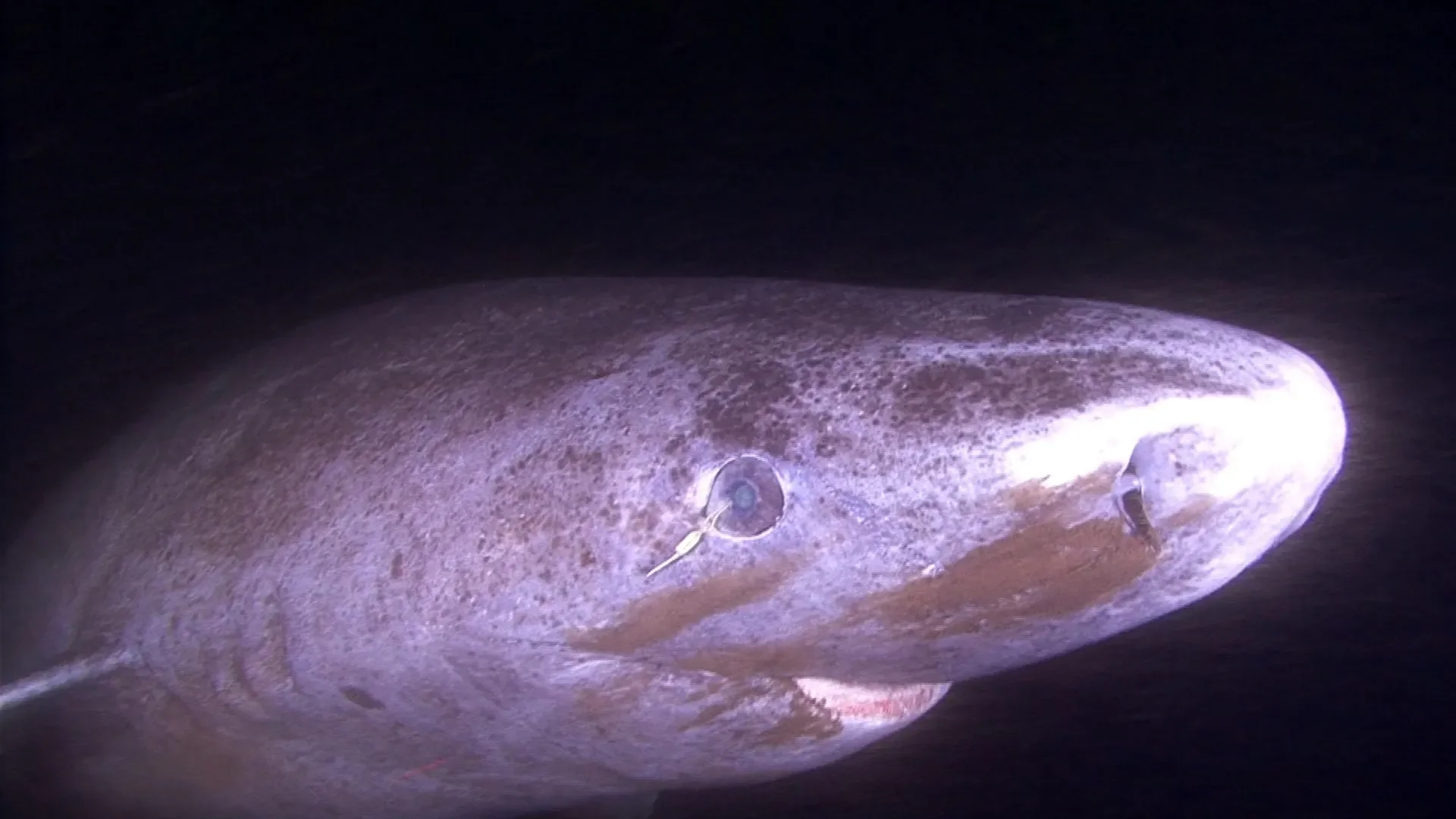
The Greenland shark can live up to roughly 400 years, and a new genomic and histological analysis finds its retinas show no obvious sign of aging even in specimens over a century old.
What the Retinal Tissue and Genome Actually Show
Researchers led by Dorota Skowronska-Krawczyk at the University of California, Irvine, working with the University of Basel and the University of Copenhagen, examined eye tissue from Greenland sharks caught off Disko Island, Greenland, between 2020 and 2024. Published in Nature Communications, the study combined histology, genome sequencing, retinal RNA sequencing, and in vitro protein analysis on specimens estimated to exceed 100 years of age, one likely older than 130.
The retinas were structurally intact. All four major layers were present, and a DNA-fragmentation assay found no sign of the cell death that typically accompanies retinal degeneration. The genome carries a full set of rod-based phototransduction genes, while most cone-based genes are pseudogenized or missing entirely, pointing to a visual system built exclusively around low-light, black-and-white vision. The retina also showed an unusually high share of docosahexaenoic acid and very-long-chain fatty acids that stabilize photoreceptor membranes, at levels well above those measured in bovine retina.
The team also purified the shark's rhodopsin protein and measured its peak light sensitivity directly. It absorbs most strongly at 458 nanometers, a shorter wavelength than in most shallow-water sharks and even shorter than in several other deep-sea fish. That blue shift matches the light spectrum that actually penetrates deep, high-latitude Arctic water, which is dominated by blue wavelengths once red and green light have been filtered out by depth.
Why Researchers Long Assumed the Shark Was Nearly Blind
The suspicion of blindness rested on two things: extreme age, and a parasitic copepod that frequently attaches to the cornea. Radiocarbon dating of eye lens tissue in a 2016 study put the oldest sampled shark at roughly 392 years, with a wide margin of uncertainty, well beyond the previous record holder among vertebrates.
At documented human rates of age-related rod loss, a person living to 400 would lose the majority of their rod photoreceptors long before then. Elephants and long-lived turtles show comparatively stable photoreceptor counts, but the Greenland shark's oldest sampled individuals are two to four times older than the eldest animals examined in those groups, which is part of why the intact retinas stood out to the research team.
How Light Still Reaches a Parasite-Covered Cornea
To test whether the copepod actually blocks vision, researchers measured how much light passed through fixed corneas from six Greenland sharks, all carrying attached parasites, and compared the results to human donor corneas. Human corneas transmitted about 95 percent of light on average. Shark corneas ranged from 70 to 100 percent, overlapping with the human range despite the parasite's presence.
That overlap does not rule out any localized loss of image quality directly beneath the parasite's attachment point, since the measurement reflects overall transmittance rather than a spatial map of the cornea. Still, it undercuts the assumption that the copepod alone would leave the shark effectively blind.
What Remains Unproven, and Why It Matters for Aging Research
The study's structural and molecular evidence is strong, but several assays, including the chromatin staining and DNA-fragmentation test, relied on tissue from a single individual, and the genome and lifespan estimates carry their own uncertainty ranges. The researchers also found elevated expression of DNA repair genes linked to retinal maintenance in other species, a pattern that may help explain the lack of visible decline, though the study stops short of establishing a direct causal mechanism.
The DNA repair angle gets some support from comparing gene inventories across species. The researchers report that among the shark species examined, the longer-lived ones, including the Greenland shark, retained a working copy of the ercc1 repair gene, while several shorter-lived species in the same comparison had lost it. In humans, mutations in the equivalent repair complex cause a rare disorder marked by early vision loss, which is part of why the research team singled out this pathway rather than treating DNA repair capacity as a generic aging signal.
The authors frame the shark as a natural model for studying what protects a retina from the wear that other vertebrates accumulate. Whether any of that machinery translates into treatments for age-related vision loss in humans is an open question the researchers say they intend to pursue next, not a conclusion this paper reaches on its own.
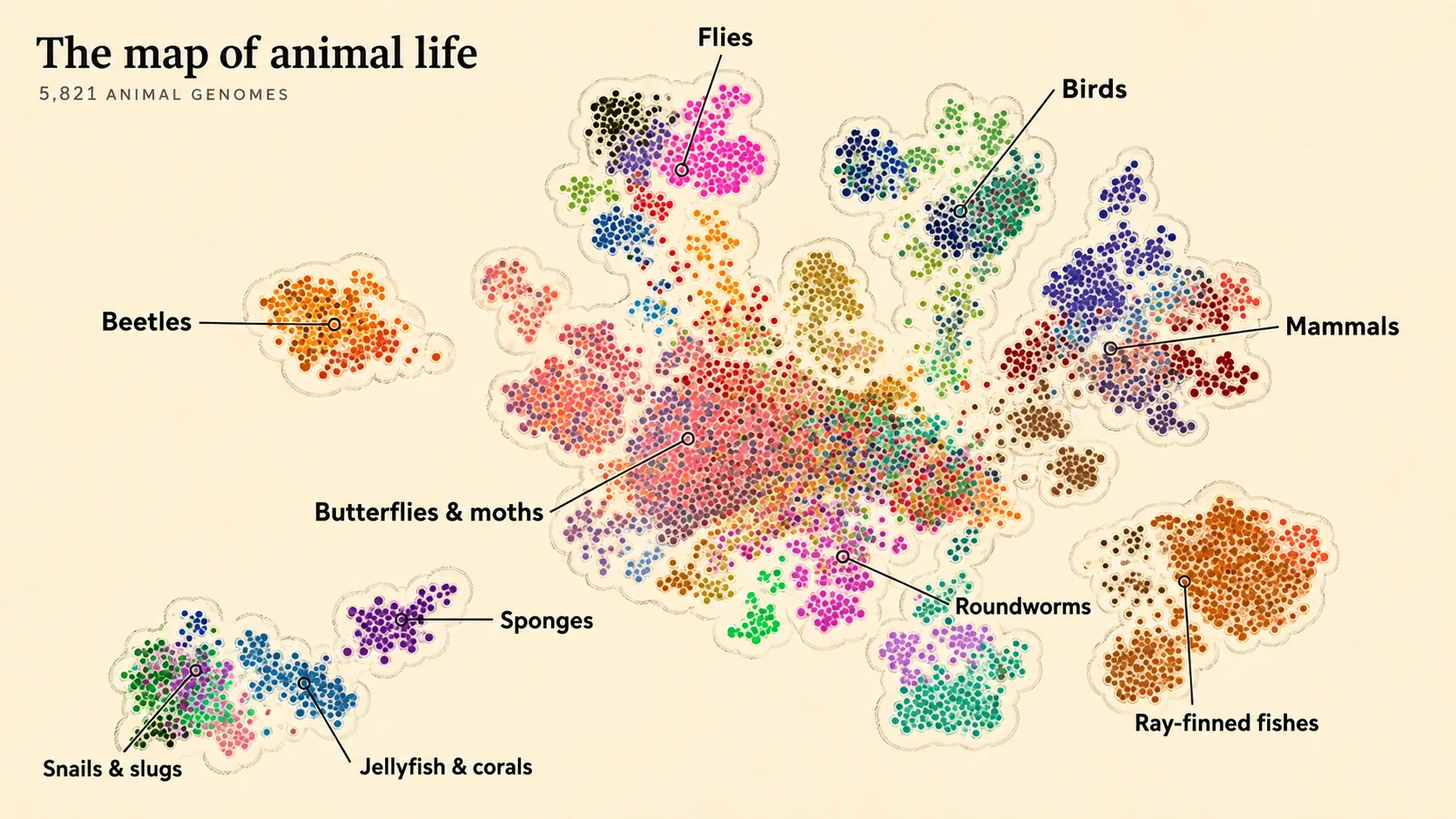
A Map of 5,821 Animal Genomes Shows Chromosomes Fuse Along Fixed Paths
A University of Vienna-led study compared 5,821 chromosome-scale animal genomes and found all 406 possible ancestral chromosome fusions have already occurred.
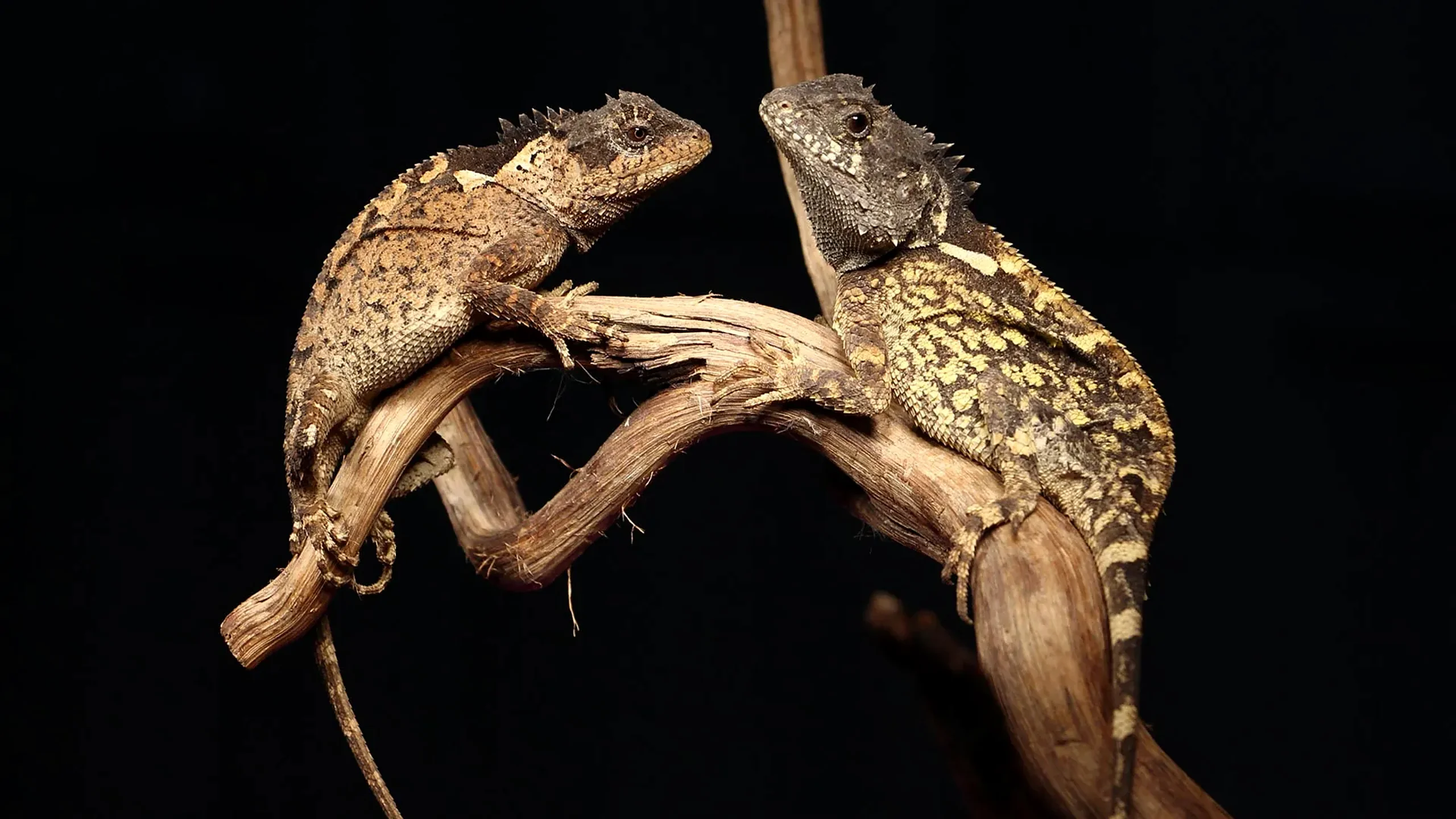
New Mountain Horned Dragon Species Discovered in Thailand, Named After House of the Dragon's Syrax
Researchers describe Acanthosaura syrax, a new Thai lizard found above 1,300 meters in Mae Wong forest, with COI distance up to 28% from its closest kin.
Comments (0)
Please sign in to join the discussion.
No comments yet.
Be the first to share your perspective on this topic.