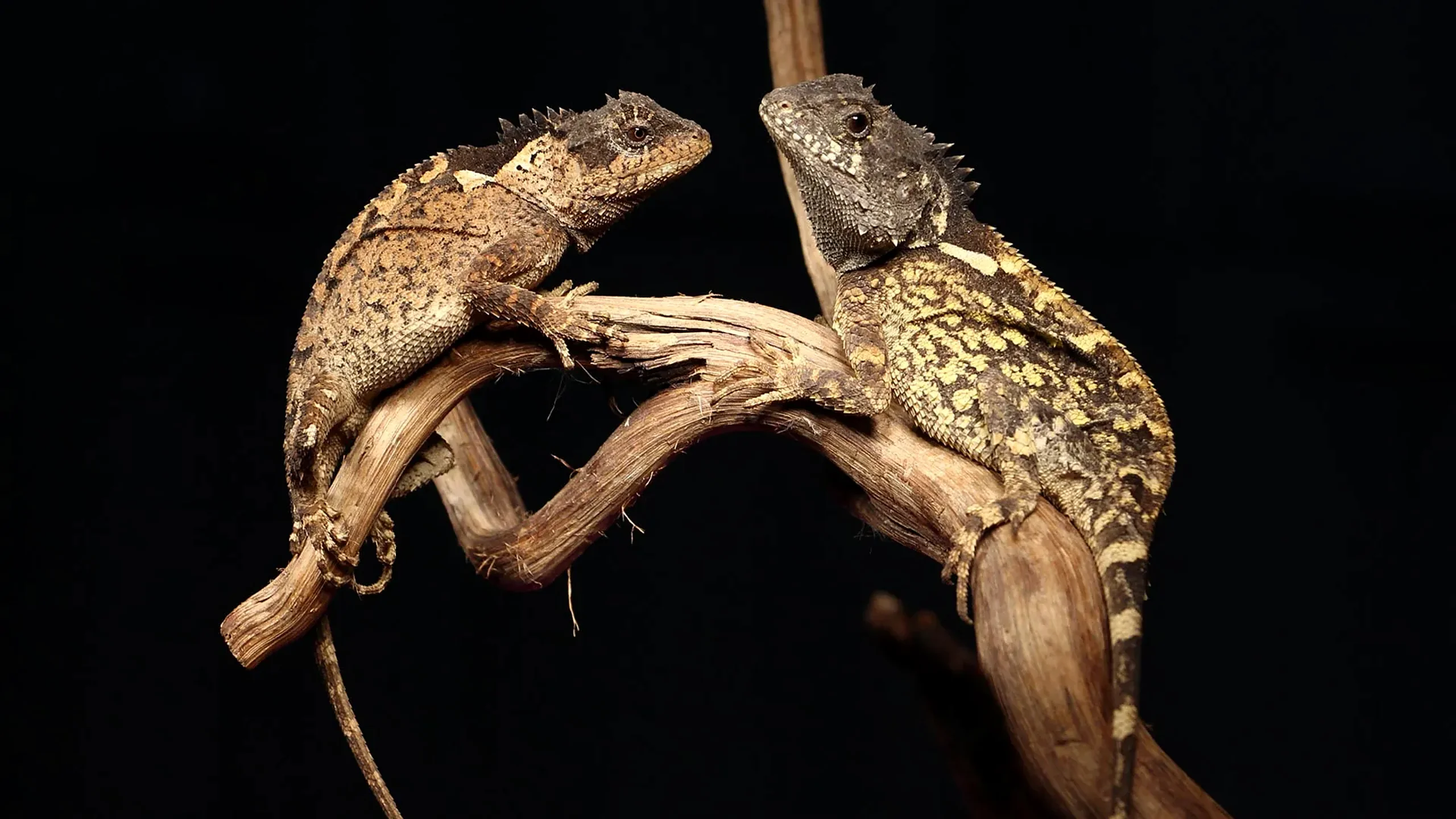
Researchers have described Acanthosaura syrax, a new species of mountain horned dragon found only above 1,300 meters in Mae Wong National Park, and named it for the dragon ridden by Queen Rhaenyra Targaryen in House of the Dragon.
Genetic distance separates the new species from every known relative
Acanthosaura belongs to the agamid lizard family, the same broad group that includes bearded dragons, and its members are recognized across Southeast Asia by the spiny crests running along the head, neck, and back. The species description published in ZooKeys, led by Poramad Trivalairat and colleagues from Chulabhorn Royal Academy and Kasetsart University, rests on two separate lines of evidence: detailed anatomical comparison across eight specimens, and DNA sequencing of two mitochondrial genes, ND2 and COI.
Both genes placed A. syrax in its own evolutionary lineage, distinct from its closest known relative, A. lepidogaster, and from every other sampled species in the genus. Support for that split was strong in the COI analysis, with 99% support under maximum likelihood and a Bayesian value of 1.00; the ND2 analysis was somewhat weaker, at 76% and 0.78 respectively. Pairwise genetic distance to other Acanthosaura ran from 14.1 to 15.9% in ND2 and from 14.96 to 28.13% in COI, while the COI distance specifically to A. lepidogaster measured 16.64 to 17.53%. Variation within A. syrax itself, by contrast, stayed at 0 to 0.01% in ND2 and 0 to 0.34% in COI. At minimum, that means the genetic gap to its nearest relative is roughly 49 times larger than the largest variation recorded within the new species, a gap wide enough that the researchers treated the molecular and morphological evidence as mutually reinforcing rather than needing a third method to settle the question.
Small body size, reduced crest scales, and unusually large egg clutches define the species
Physically, A. syrax is one of the smaller members of its genus. The largest male examined measured 69.6 mm from snout to vent, while the largest female reached 101.2 mm, with females consistently larger than males. Its crest scales follow the same pattern: the species carries the smallest nuchal and dorsal scales yet documented anywhere in Acanthosaura. It also lacks the black patch around the eye seen in several relatives, showing a dark collar across the neck instead, and its coloring runs to yellowish-green tones, a detail the researchers cited directly when choosing its name.
Reproduction stood out as much as anatomy. Four of the five adult females examined were gravid, with clutch sizes ranging from six to sixteen eggs, a notably large brood for a lizard of this size. That combination of modest stature, muted coloring, and outsized egg production is what led the team to name the species for Syrax, the dragon whose fictional traits happened to line up with the real animal's biology.
The species is known only from a narrow high-elevation band in Mae Wong National Park
Field records place A. syrax almost entirely above 1,300 meters, with no confirmed sightings below 1,000 meters. About 50 kilometers to the north, a broader account of the survey work notes that the team found A. lepidogaster occupying lower, warmer terrain instead, a pattern consistent with A. syrax being tied specifically to cooler mountain conditions rather than to the region generally.
Observations of the animals' daily habits back up that picture of a specialist. Individuals were seen basking on rocks, fallen logs, shrubs, and even concrete structures through the morning and midday, and searching for earthworms near dawn. Later in the day they retreated beneath logs and rocks or into tree cavities. Most encounters clustered between April and mid-June, spanning the tail of the dry season into the start of the monsoon. Mountain terrain of this kind tends to divide populations into separated pockets once a species is restricted to a narrow elevation band, which may explain why A. syrax went undescribed until now.
Isolated mountain populations raise conservation questions for Mae Wong's forest
A species confined to a thin band of high-elevation forest is also a species with limited room to retreat if that forest shrinks or fragments further. The researchers' public summary of the discovery frames the find in exactly those terms, describing populations already scattered by the mountains' rugged terrain and vulnerable to any additional pressure on their habitat.
The team is proposing A. syrax as a flagship species for Mae Wong, arguing that its distinctive appearance and fantasy-adjacent name could draw attention to a forest that also supports the Asian forest tortoise, Oldham's leaf turtle, and the Indochinese tiger. What remains unresolved is how far the species actually extends beyond the park boundary; the researchers say surveys of neighboring mountain systems in western Thailand could reveal whether additional isolated populations, or entirely undescribed relatives, are still waiting to be found in the region's higher forests.
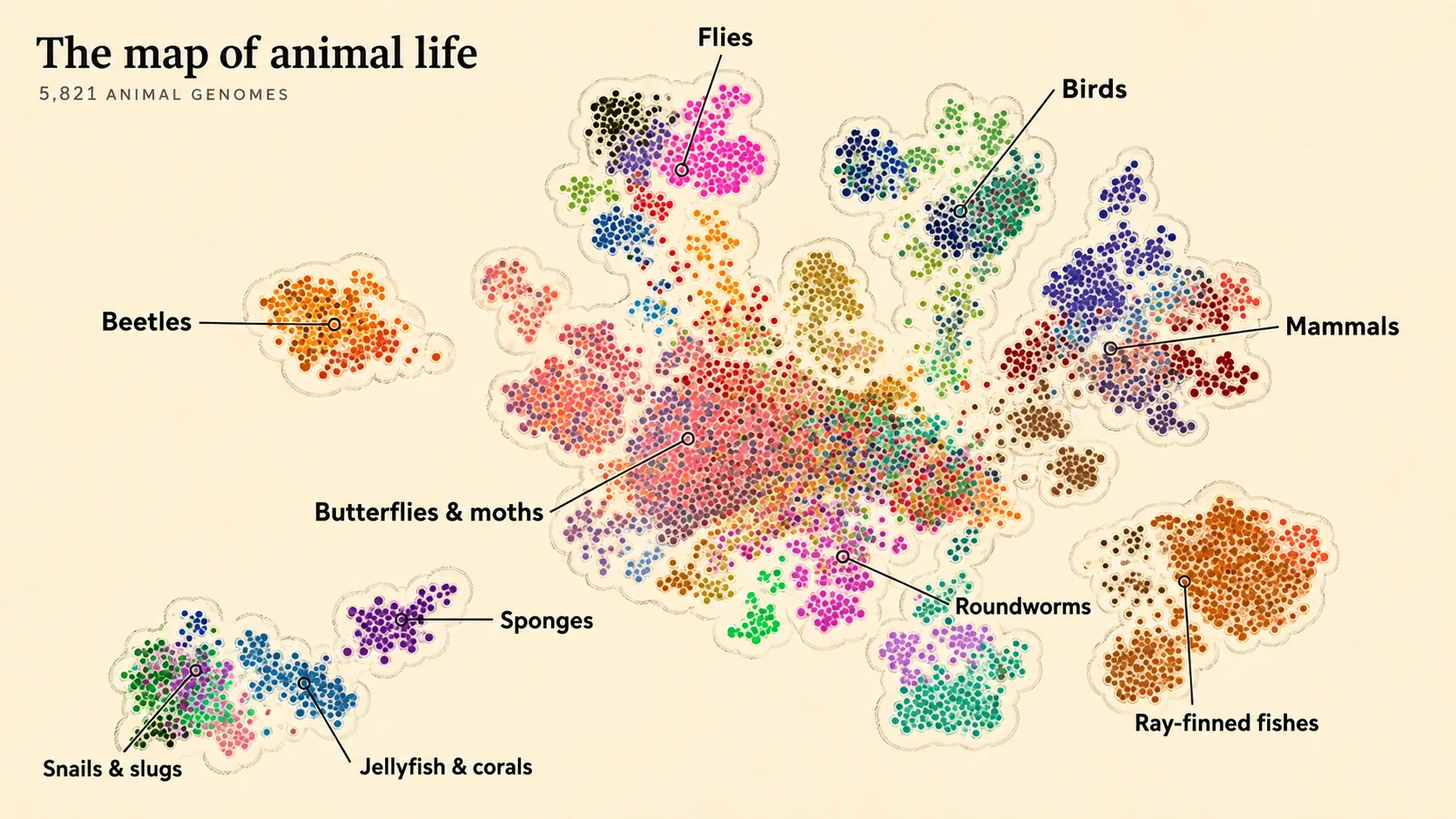
A Map of 5,821 Animal Genomes Shows Chromosomes Fuse Along Fixed Paths
A University of Vienna-led study compared 5,821 chromosome-scale animal genomes and found all 406 possible ancestral chromosome fusions have already occurred.
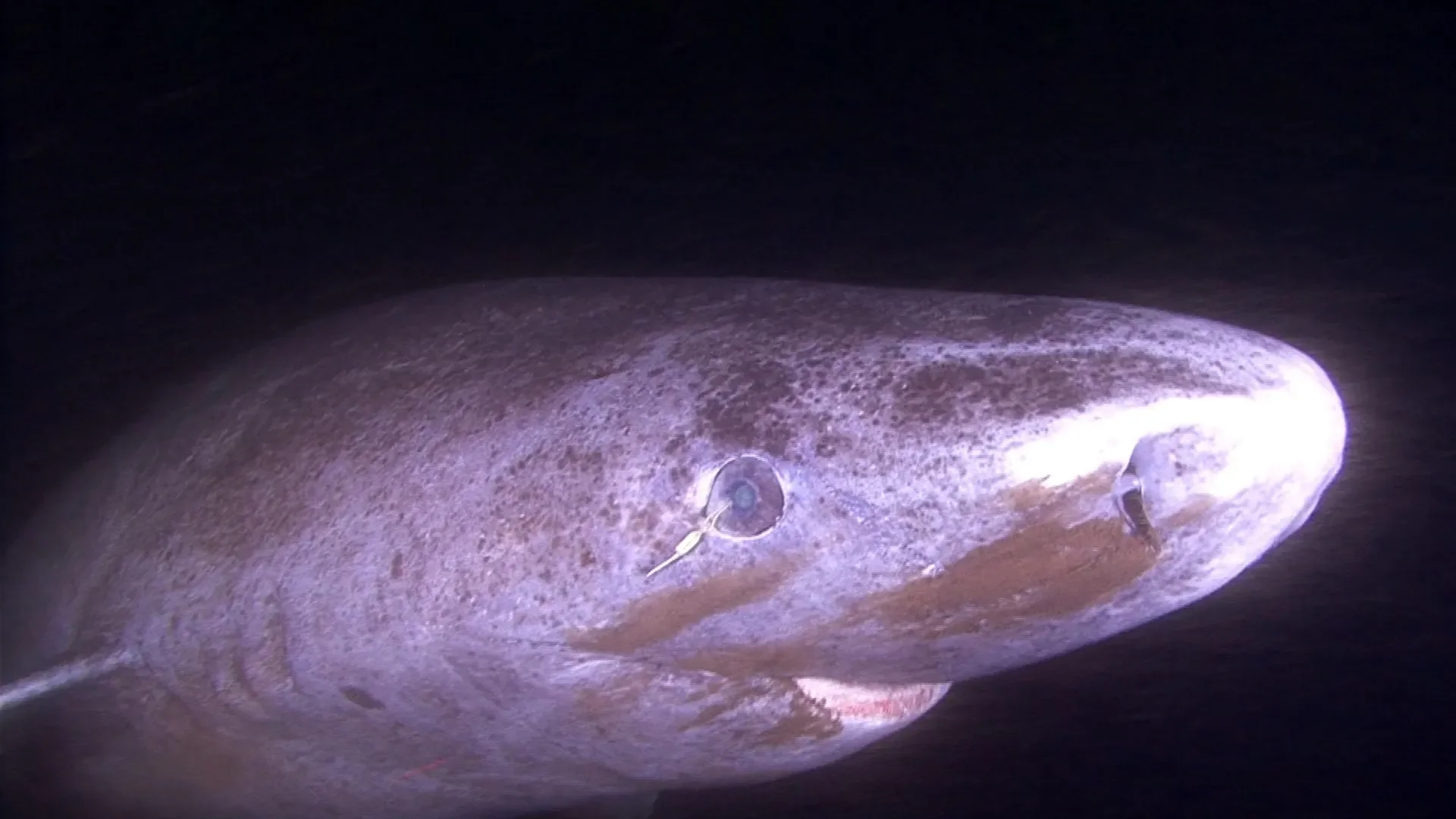
Greenland Sharks Keep Working Eyes for Centuries, New Study Finds
A Nature Communications study of century-old Greenland sharks finds intact retinas, working rod vision, and no visible sign of age-related eye decline.
Comments (0)
Please sign in to join the discussion.
No comments yet.
Be the first to share your perspective on this topic.