

A 36-patient randomized run-in trial reports that the vitamin D receptor agonist paricalcitol can be given with gemcitabine and nab-paclitaxel in metastatic pancreatic cancer, with grade 2–4 hypercalcemia in 42% of the oral-paricalcitol arm. The trial's registry record says the randomized phase 2 meant to follow was not pursued, citing futility based on the NAPOLI-3 results.
Oral paricalcitol raised grade 2–4 hypercalcemia in 42% of its arm
The published trial report randomized 36 patients to gemcitabine plus nab-paclitaxel (GA) with placebo, intravenous paricalcitol or oral paricalcitol. Safety was the primary endpoint, with tumor biopsies taken before and during treatment for pharmacodynamic analysis. Five patients in the oral arm (42%) had grade 2–4 hypercalcemia and needed a dose reduction. Paricalcitol is a synthetic vitamin D analog used for secondary hyperparathyroidism in chronic kidney disease, and the registry entry states that the FDA has not approved it as a pancreatic cancer treatment.
The percentage fixes the size of the arm. Five of 12 is 41.7%, while 5 of 11 is 45% and 5 of 13 is 38%, so the oral arm almost certainly held 12 patients. That matches an equal three-way split of 36, which a 2020 abstract describing the trial design called 1:1:1 randomization. The denominator is this article's inference from the reported figures.
The registry shows how much protection the protocol already built in. Enrollment required albumin-corrected calcium at or below the institutional upper limit of normal, and participants had to stop vitamin D supplements, calcium supplements and regular thiazide diuretics, which the registry names as hypercalcemia risks. Grade 2–4 hypercalcemia still occurred in 42% of the oral arm. That suggests a later oral-agonist protocol would need calcium monitoring and dose-reduction rules built in from the start.
The sponsor was Dana-Farber Cancer Institute, with Stand Up To Cancer, the Lustgarten Foundation and the American Association for Cancer Research listed as collaborators. The paper states that the funders had no role in study design, data analysis or the decision to publish, and its competing-interest statement lists industry research funding and advisory roles for several authors.
Fibroblast and CD8 findings in the paricalcitol arms rest on 10 on-treatment samples
Preclinical work summarized in the abstract found that VDR agonists push cancer-associated fibroblasts toward quiescence and improve chemotherapy efficacy in pancreatic cancer models. The trial asked whether biopsies would move in the same direction in patients. The authors report that on-treatment biopsies from the paricalcitol arms, compared with pretreatment specimens, had a lower proportion of αSMA+ fibroblasts, an altered fibroblast VDR-activation signature, and greater density and spatial colocalization of CD8+ T cells with tumor cells. They also report that VDR expression predicted tumor response in those arms.
The sample counts show how far those comparisons reach. The table uses the multiplex immunofluorescence VDR-panel counts printed in the Extended Data Fig. 2 legend; the last column is this article's arithmetic.
| Arm | Pre-treatment samples | On-treatment samples | On-treatment as a share of pre-treatment |
|---|---|---|---|
| GA plus placebo | 9 | 8 | 89% |
| GA plus paricalcitol (IV and oral combined) | 23 | 10 | 43% |
Across the whole trial, Extended Data Fig. 1 allocates 35 pre-treatment and 25 on-treatment biopsies to analysis, so on-treatment biopsies number 71% of pre-treatment ones. Mixed-effects models can handle unbalanced samples, though a second biopsy exists only for patients who stayed on treatment long enough to have one, and those patients can differ from the starting group for reasons unrelated to the drug. Extended Data Fig. 4 plots progression-free survival by arm, including the reasons treatment stopped.
Six arm-by-time tests, none below P = 0.05
The chart plots the six interaction P values printed in the legends of Extended Data Fig. 2 and Extended Data Fig. 3. Each tests whether the change from pretreatment to on-treatment differed between the placebo and paricalcitol arms, the comparison that separates the drug from the effect of chemotherapy alone.
Within-arm results look more selective. The TIGIT transcript changed significantly within the paricalcitol arms (P = 0.003) and showed no significant change within the placebo arm (P = 0.64), yet the interaction value is 0.11. The nearest-neighbor distance between CD8+ T cells and tumor cells follows the same layout, with P = 3e-5 in the paricalcitol arms against 0.43 in the placebo arm and no interaction value in the legend. A significant result in one arm and a non-significant one in the other does not establish that the arms differ. The groups are also small (7–8 placebo and 10–11 paricalcitol on-treatment samples), so a real difference could fail to reach significance.
The placebo arm adds a complication. Nuclear VDR fraction changed significantly within the placebo arm (P = 4e-6) and showed no significant change within the paricalcitol arms (P = 0.13). Chemotherapy alone may therefore shift the share of VDR-positive cells, which would make VDR change a weak readout of paricalcitol exposure. That reading is an inference, since the legend does not state the direction of the change.
Likewise, a predictive-biomarker claim needs a comparison showing the relation is absent without the drug. The abstract confines the VDR-and-response finding to the paricalcitol arms, and the placebo arm contributed 9 evaluable pre-treatment samples. Whether VDR level marks sensitivity to paricalcitol or to the chemotherapy backbone is the question a placebo comparison has to answer.
NAPOLI-3 and the registry's futility note on the halted phase 2
The registry entry lists the study as terminated and gives the reason in one line: the phase 2 was not pursued due to futility based on the results of NAPOLI-3. The study started on December 5, 2018, and enrolled 36 participants at Dana-Farber Cancer Institute and Penn Medicine. Labels differ across documents tied to the work. The registry and the journal's research briefing call it phase 1, while the journal's one-line summary of the article and the code repository call it phase 2. The paper's own title says run-in phase trial.
NAPOLI-3 randomized 770 patients to NALIRIFOX or to nab-paclitaxel plus gemcitabine, the same backbone used in this trial. Median overall survival was 11.1 months with NALIRIFOX and 9.2 months with nab-paclitaxel plus gemcitabine (hazard ratio 0.83, 95% CI 0.70–0.99), a 1.9-month difference in medians. The Nature Cancer paper's reference list includes NAPOLI-3.
The registry does not say how that result made a phase 2 futile. This suggests, as an inference from the two documents, that GA was no longer the only first-line benchmark, so a randomized test of GA plus paricalcitol against GA alone would no longer settle which regimen to build on. The registry update, posted in March 2025, predates the paper's publication by about 14 months.
Whether the CD8 shift survives an arm-by-time test is the open question
The data to test it are public. The multiplexed immunofluorescence cell tables are posted under a CC BY 4.0 license (version 1.0.1, 263.2 MB, December 1, 2025), the paper's data statement gives the spatial transcriptomics accession as GSE313748, the R analysis code is public, and statistical source data for Figures 3–6 and Extended Data Figures 2–4 accompany the paper. The immunofluorescence files hold the cells and tissue regions that passed quality control, from one panel for VDR and immune phenotypes and a second for fibroblasts defined by αSMA and FAP.
With data and code public, an outside group can in principle repeat the authors' mixed-effects analyses and add the interaction test for CD8+ T cell distance whose P value is absent from the legend. Even a clean result there would describe tissue changes in 36 patients, and the registry says the phase 2 meant to test efficacy was not pursued.

Five Candidate Depression Phenotypes Emerge From MEG Brain Oscillations
MEG depression phenotypes: 263 patients cluster into five oscillation profiles, yet brain–symptom links explain only 3–4% of shared variance in the cohort.

A Seven-Day Water Fast Moved 1,044 Blood Proteins, and Day 3 Was the Turning Point
A 7-day water fast changed 1,044 blood proteins, few before day 3. A second 2025 cohort shared 49 significant hits with no conflicting direction of change.

Mouse and Stem Cell Data Show the Brain Has Two Separate Origins
A Stanford lineage-tracing study finds two separate progenitor cells, marked by Otx2 and Gbx2, build the forebrain/midbrain and hindbrain from gastrulation.
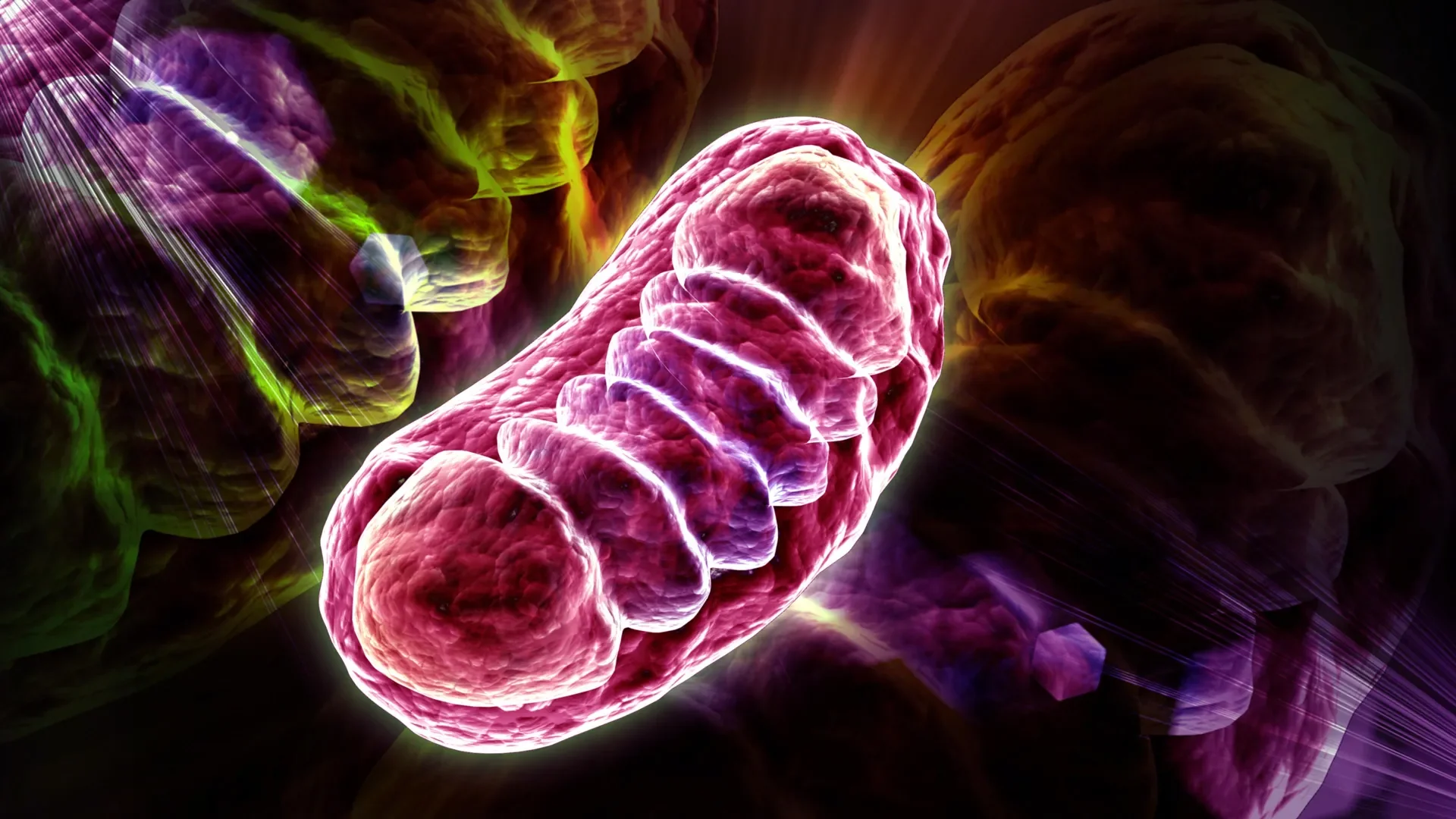
Mitochondria's Acetyl-CoA Switch Explains How 'Zombie' Cells Fuel Chronic Inflammation
Senescent 'zombie' cells use a mitochondrial acetyl-CoA switch to activate inflammatory SASP genes, and blocking it eased frailty in aged mice, Nature reports.
Comments (0)
Please sign in to join the discussion.
No comments yet.
Be the first to share your perspective on this topic.