
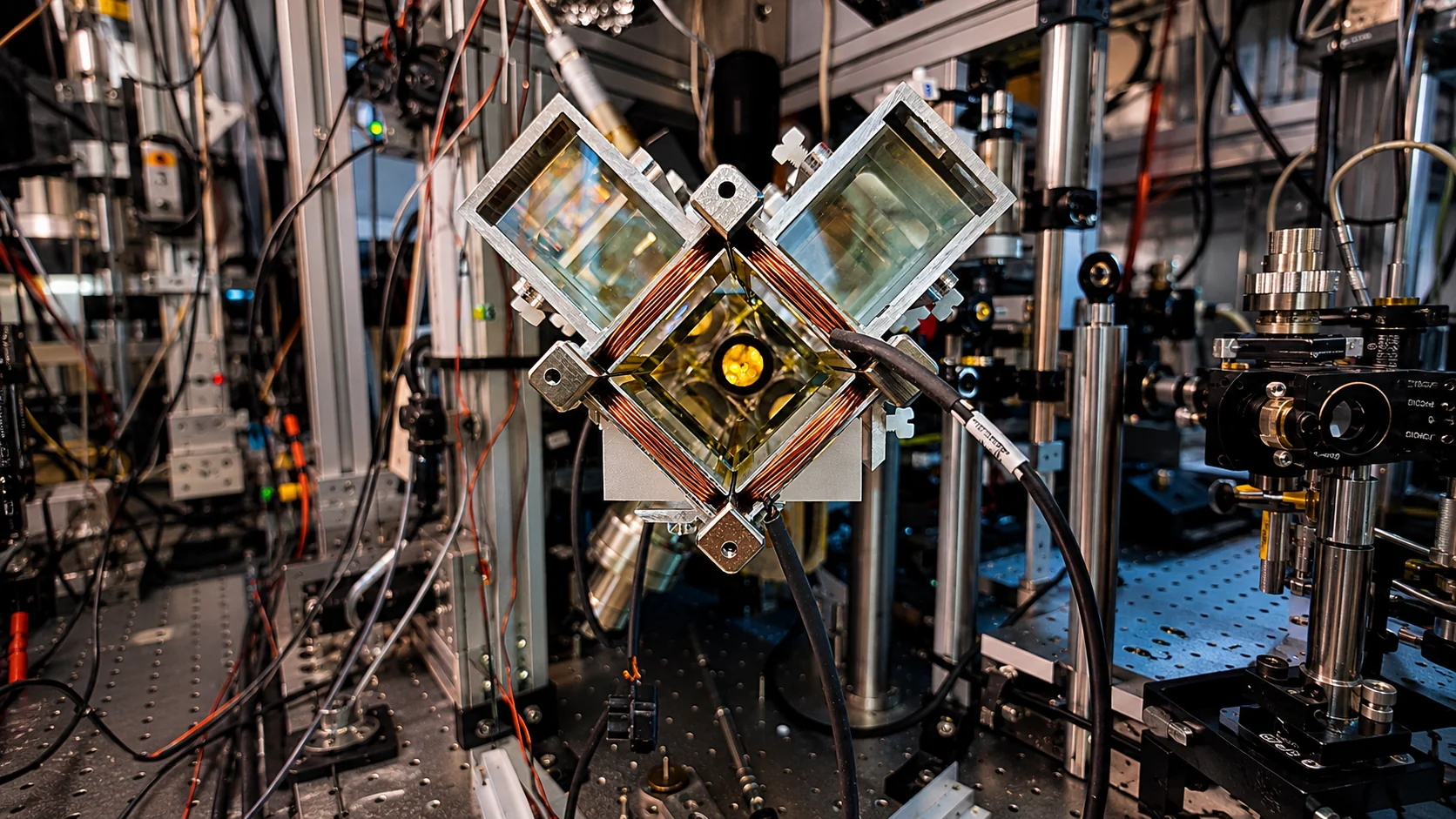
A team at Ben-Gurion University of the Negev has built an interferometer that directly measures something physicists have predicted since 1927 but never observed: the quantum phase a falling object picks up simply by falling. The result, published in Science Advances, is a direct test of how Einstein's equivalence principle behaves when applied to a genuinely quantum object.
A Phase Predicted Since 1927, Never Measured
The prediction is old. In 1927, Charles Darwin and Earle Kennard independently worked out that a quantum wave packet accelerating in a uniform field, like gravity, accumulates a phase that grows with the cube of the elapsed time. Decades later, theorists including Daniel Greenberger and Albert Overhauser connected that same phase to the equivalence principle itself: if you calculate it one way, by treating gravity as an external force in the lab frame, and another way, by assuming the equivalence principle holds and the falling object feels no force in its own frame, you get identical answers. That agreement is what lets quantum mechanics and the equivalence principle coexist mathematically. Nobody had confirmed it experimentally.
The reason is technical, not conceptual. Atom-interferometer gravimeters have measured Earth's gravitational acceleration for three decades, and some have tested the equivalence principle by comparing free-fall rates of atoms in different internal states. But none of those setups had one interferometer arm truly at rest in the lab frame while the other was truly in free fall, the specific configuration needed to isolate this particular cubic-in-time phase term with its predicted prefactor of mg²/6ħ.
Two Atoms, Two Reference Frames
The new instrument, which the team calls the quantum Galileo interferometer, splits a single rubidium-87 atom's wave function into two internal spin states about 113 micrometers below an atom chip. One state is held stationary by a magnetic-gradient pulse tuned to cancel gravity exactly, what the paper calls the levitation condition. The other is launched upward and then allowed to fall freely, with no applied force, for a set time before the two paths are recombined and their interference measured.
Recombining the two paths is the hard part. The falling arm and the stationary arm end up with very different momenta, and bringing them back into full overlap in both position and momentum, a problem physicists call the Humpty-Dumpty effect, required careful control of the magnetic pulses shaping each trajectory. The team achieved a maximum spatial separation between the two arms of about 7.5 micrometers before recombination.
Thirteen Oscillations Over Twenty Months of Review
The measurement itself came from 633 experimental runs of 30 seconds each, about 5.3 hours of data collection, during which the interference signal traced out 13 complete oscillations and accumulated roughly 80 radians of phase. Fitting that oscillation pattern to a third-order polynomial and comparing it to a parameter-free numerical simulation left residuals of about 2.5%, and the data were precise enough to rule out deviations of more than 5% from either the predicted cubic time dependence or its specific mg²/6ħ prefactor.
Roughly twenty months separate the first preprint from acceptance, time the authors spent refining the numerical model that had to account for the wave packets' three-dimensional shape, rotation, and residual atom-atom interactions, each of which can shift the measured phase by up to a couple of radians.
How This Fits Among Prior Gravity-and-Quantum Tests
The result sits in a lineage of experiments that have tested different pieces of the quantum-gravity relationship without measuring this particular phase directly:
| Experiment | Year | What it actually measured |
|---|---|---|
| Colella-Overhauser-Werner neutron interferometry | 1975 | First observed quantum interference shifted by Earth's gravity |
| Kasevich-Chu light-pulse atom interferometer | 1991-92 | Measured gravitational acceleration (g) using atom interference |
| Rosi et al., quantum test of the EP | 2017 | Compared free-fall of atoms in superposed internal energy states |
| Asenbaum et al., atom-interferometric EP test | 2020 | Bounded EP violation at the 10⁻¹² level using different isotopes |
| This work (QGI) | 2026 | Directly measured the predicted T³ free-fall phase itself |
None of the earlier experiments had one arm sitting at rest relative to Earth and the other genuinely in free fall at the same time, which is what let this team isolate the specific phase term tied to the coexistence of quantum mechanics and the equivalence principle, rather than bounding how much the principle might be violated.
Why This Isn't Yet a Quantum Theory of Gravity
The authors are careful about what they have and haven't shown. Confirming the predicted phase is consistent with the equivalence principle holding at the low masses and energies of a single rubidium atom, but it doesn't exclude other models that would predict the same phase for different reasons. The paper's own outlook section introduces the term "quantum equivalence principle" while noting there is no agreed definition of it yet, leaving that for future theoretical work.
The team's next steps, described as an outlook rather than a result, point toward interferometers that manipulate atomic clocks instead of just spin states, and eventually toward using much larger masses such as nanodiamonds. That step would move the experiment from confirming a known quantum-mechanical prediction toward probing genuinely open questions, including proposals like the Diósi-Penrose conjecture on gravitationally induced wave-function collapse. For now, the measurement stands as a specific, sourced confirmation of one predicted number, not a demonstration that the deeper problem of unifying gravity and quantum theory has moved any closer to resolution.

A Reshaped Pulse Could Cut Magnetic Memory's Switching Energy Nearly 100-Fold
Edinburgh physicists simulated optimal-control pulses that cut magnetic-memory switching energy from 91.2 to 0.94 nanojoules, still unverified in hardware.
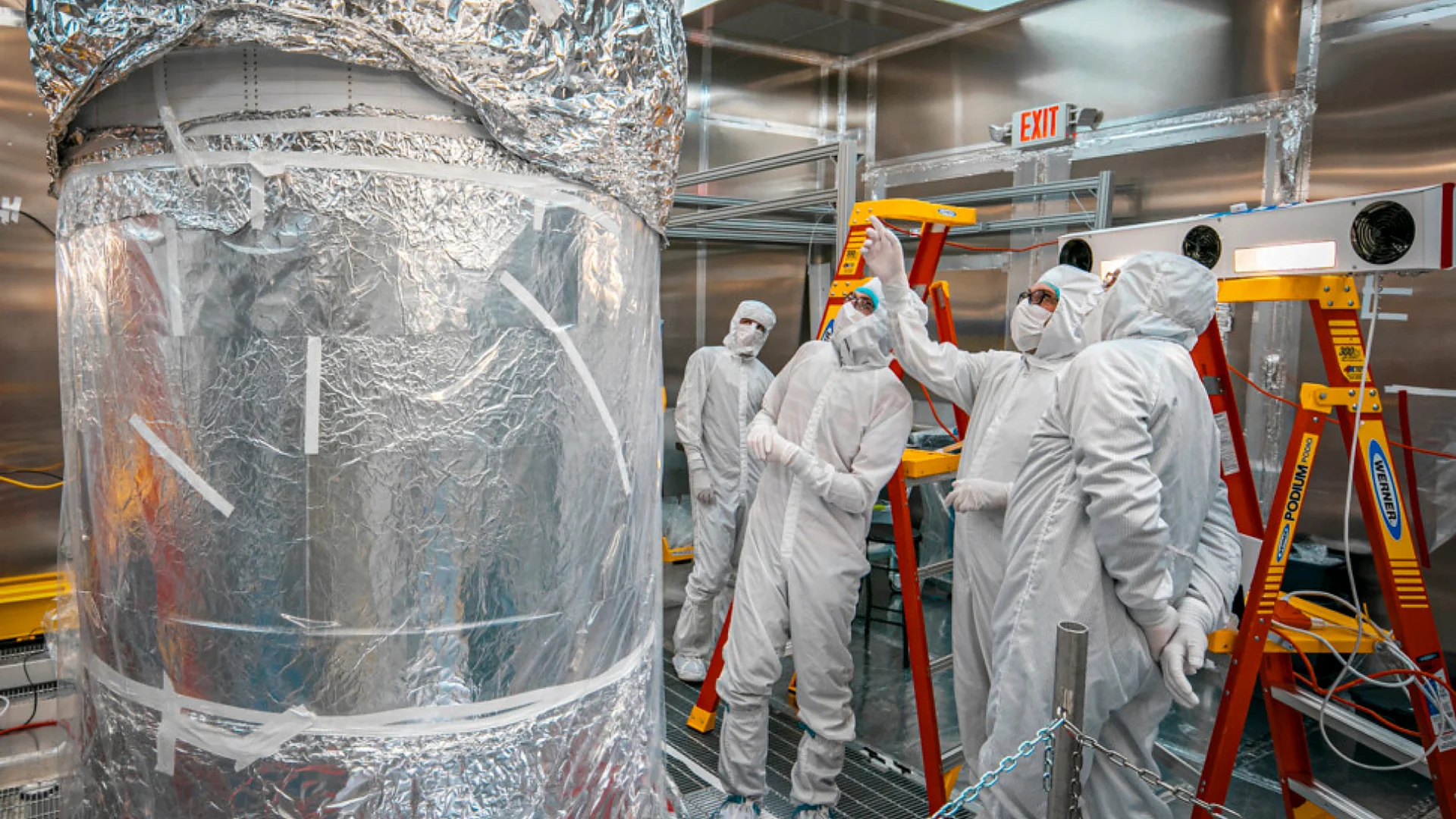
LUX-ZEPLIN's 248 keV Event: A Single Signal Reopens the Dark Matter Hunt
LUX-ZEPLIN recorded one 248 keV xenon recoil at 2.6σ global significance, its strongest dark matter hint yet, and theorists are already racing to explain it.
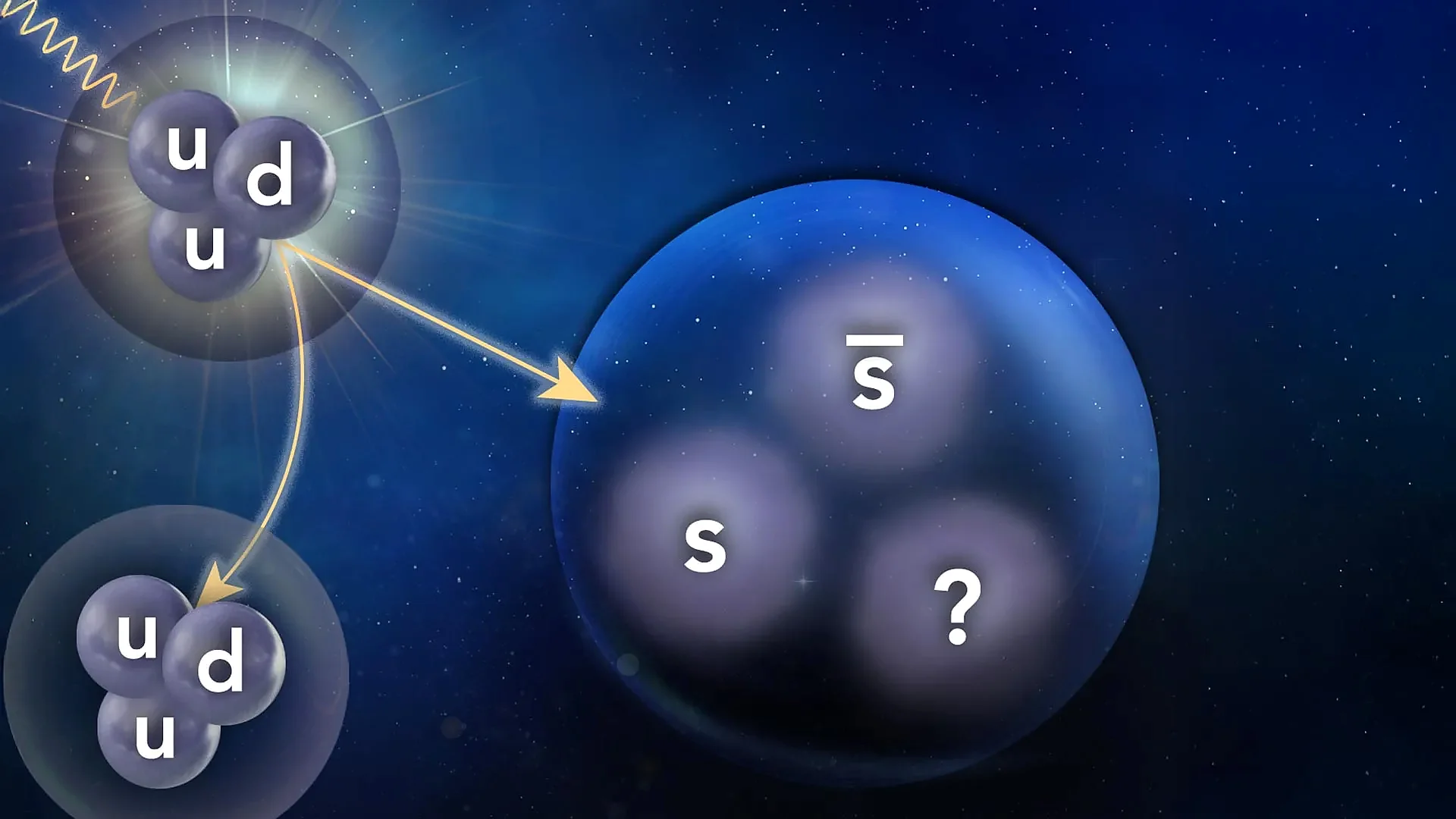
GlueX Searched for Y(2175) in Photoproduction and Found Two New Structures Instead
GlueX ran the first photoproduction search for Y(2175)/φ(2170); the state didn't appear, but two unexpected φπ+π− structures did, one at 5σ significance.
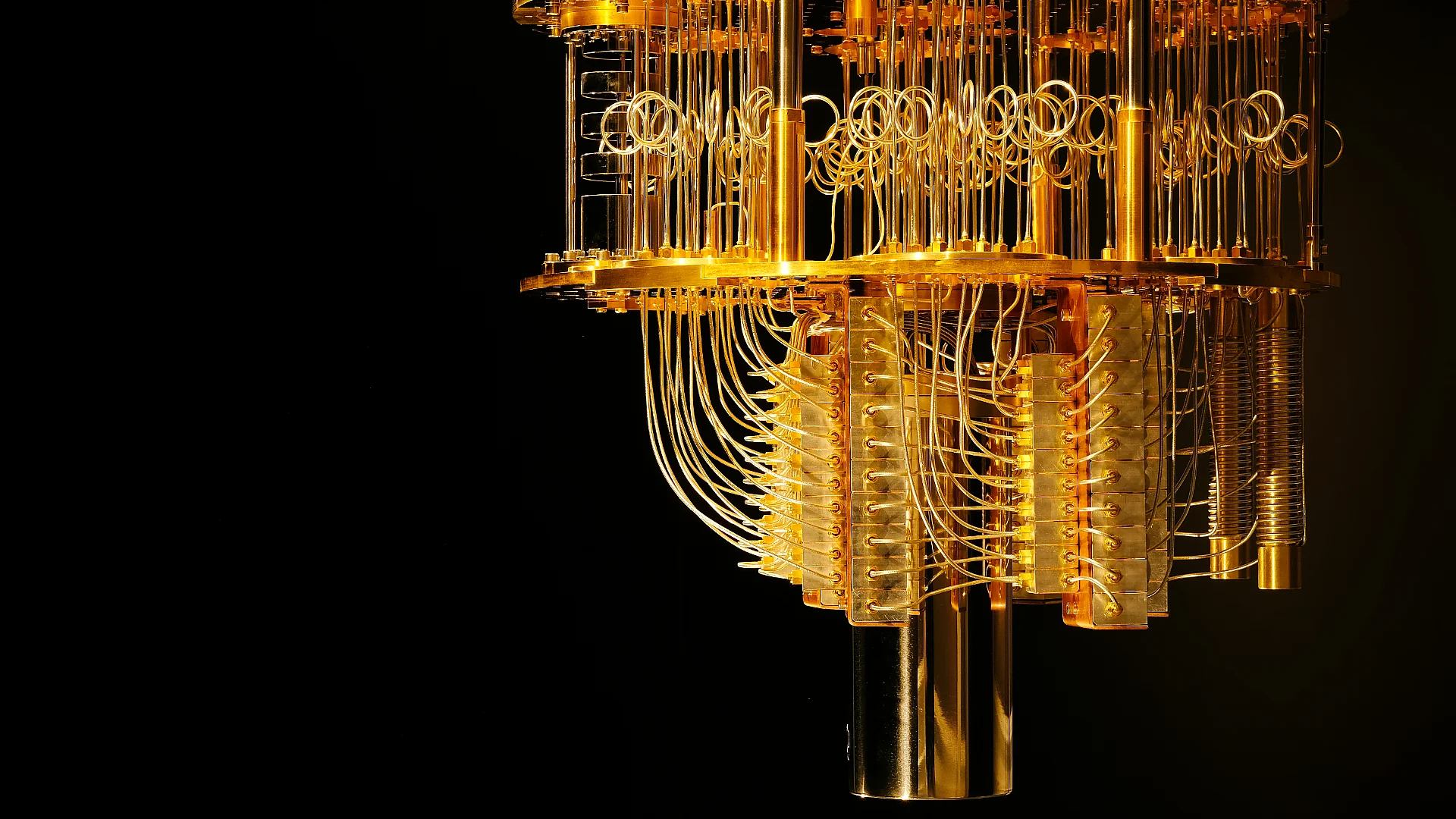
Inside IBM's 15-Minute Quantum Run That Comes With Its Own Fidelity Proof
IBM and UChicago ran a 70-qubit circuit in about 15 minutes and certified a 0.284 fidelity lower bound using quantum codes instead of trust assumptions.
Comments (0)
Please sign in to join the discussion.
No comments yet.
Be the first to share your perspective on this topic.