
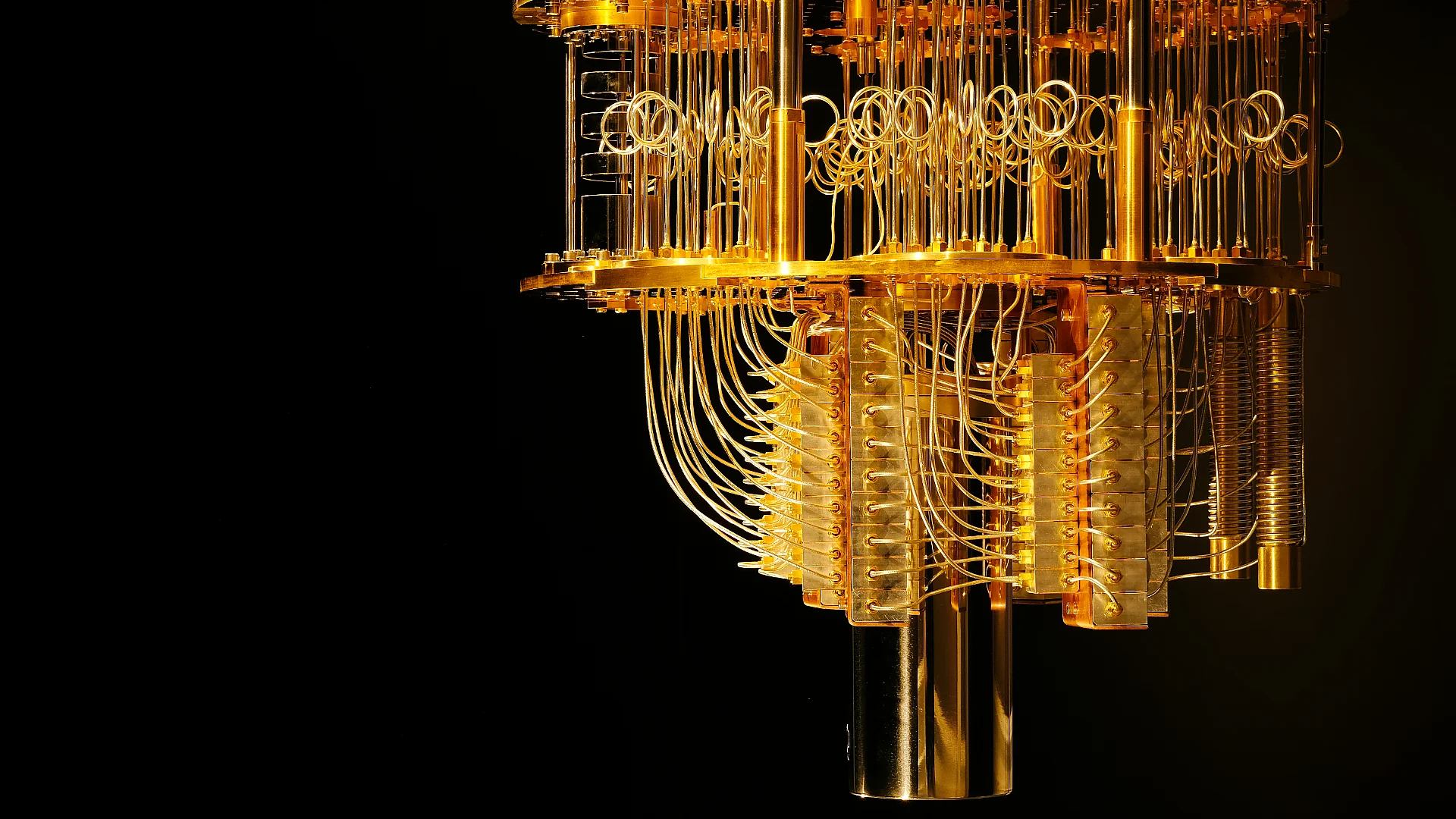
IBM and University of Chicago researchers ran a 70-qubit circuit that would take leading classical simulators an impractical amount of time to reproduce, and for the first time paired that hardness with a built-in way to check the result.
A Structured Circuit Replaces Random Sampling
Random circuit sampling has been the standard way to argue a quantum processor has crossed into territory no classical supercomputer can follow. The approach has a weakness: as the circuits get harder, checking whether the quantum computer actually got the answer right becomes almost impossible without trusting assumptions about the hardware itself.
The paper describing the experiment proposes a fix. The team designed "structured circuits" that keep the same complexity-theoretic hardness guarantees as random circuit sampling but can also be encoded directly into a quantum error-correcting code. That dual property is what let the researchers measure code syndromes, the error signals a quantum code produces, and use them to certify how faithfully the circuit actually ran.
University of Chicago associate professor Bill Fefferman, a co-author on the paper, said verification has remained one of the biggest obstacles to firmly establishing quantum advantage. Fellow co-author Soumik Ghosh added that stronger verification could eventually unlock practical uses for future quantum computers, according to IBM's announcement.
What the 97-Qubit Overhead Actually Buys
The experiment ran on a 70-qubit, depth-70 Clifford circuit doped with 468 T gates, the non-Clifford operations that make a circuit genuinely hard to simulate classically. To protect that computation, the team spread it across 97 physical qubits using what the paper calls spacetime codes.
That works out to roughly 1.4 physical qubits for every logical qubit protected, a modest overhead next to the thousands-to-one ratios often cited for full fault-tolerant error correction. The tradeoff is that this scheme detects errors through syndrome measurement and post-selection rather than correcting them outright, which is why the team frames the result as a step toward, not a claim of, full fault tolerance.
With that encoding in place, the team reported logical error rates roughly ten times lower than the underlying physical gate error rates once syndrome post-selection was applied. IBM's Jay Gambetta, director of IBM Research, said the result establishes a statistical lower bound on how faithfully the circuit was executed, which he described as a new foundation for trusting quantum computers as they scale. The paper puts a number on that bound directly: a fidelity of at least 0.284, reported with 95% confidence.
Why the Certificate Matters More Than the Speed
The 15-minute runtime is the headline most coverage has led with, and IBM's own release frames it that way: the circuit finished in about 15 minutes while the team found that leading classical simulation methods faced prohibitive runtimes for the same task. But raw speed against a moving classical baseline is not new to quantum advantage claims, and past claims in this category have been narrowed or contested as classical algorithms improved.
What differs here is that the fidelity bound does not rest on trusting the device's error model. Because the structured circuit is encoded in a quantum code, the researchers could measure syndromes, the code's built-in error signals, during the run itself and use them to certify fidelity with weaker noise assumptions than existing benchmark proxies require. The paper describes this as a systematic way to turn a stabilizer state into a magic state while keeping that error-detected certificate intact.
The team has also published the underlying circuits and results in an open repository, which lets outside researchers examine the same data rather than take the fidelity bound on faith. That openness is itself part of the verification story: a certificate that only the authors can check is a weaker claim than one built on public circuit definitions and syndrome data.
None of this settles the larger fault-tolerance question. A fidelity lower bound of 0.284 with 95% confidence is a statistical floor, not a guarantee the specific computed sample was correct, and the 97-qubit overhead used here is far short of what full error-corrected logical qubits are expected to require at scale. What the experiment adds to the infrastructure shift already underway in quantum computing is a mechanism other groups can adopt to attach a verifiable fidelity number to their own hard-circuit claims, rather than a one-off speed record.
A Cold-Atom Interferometer Finally Measures the Quantum Phase of Free Fall
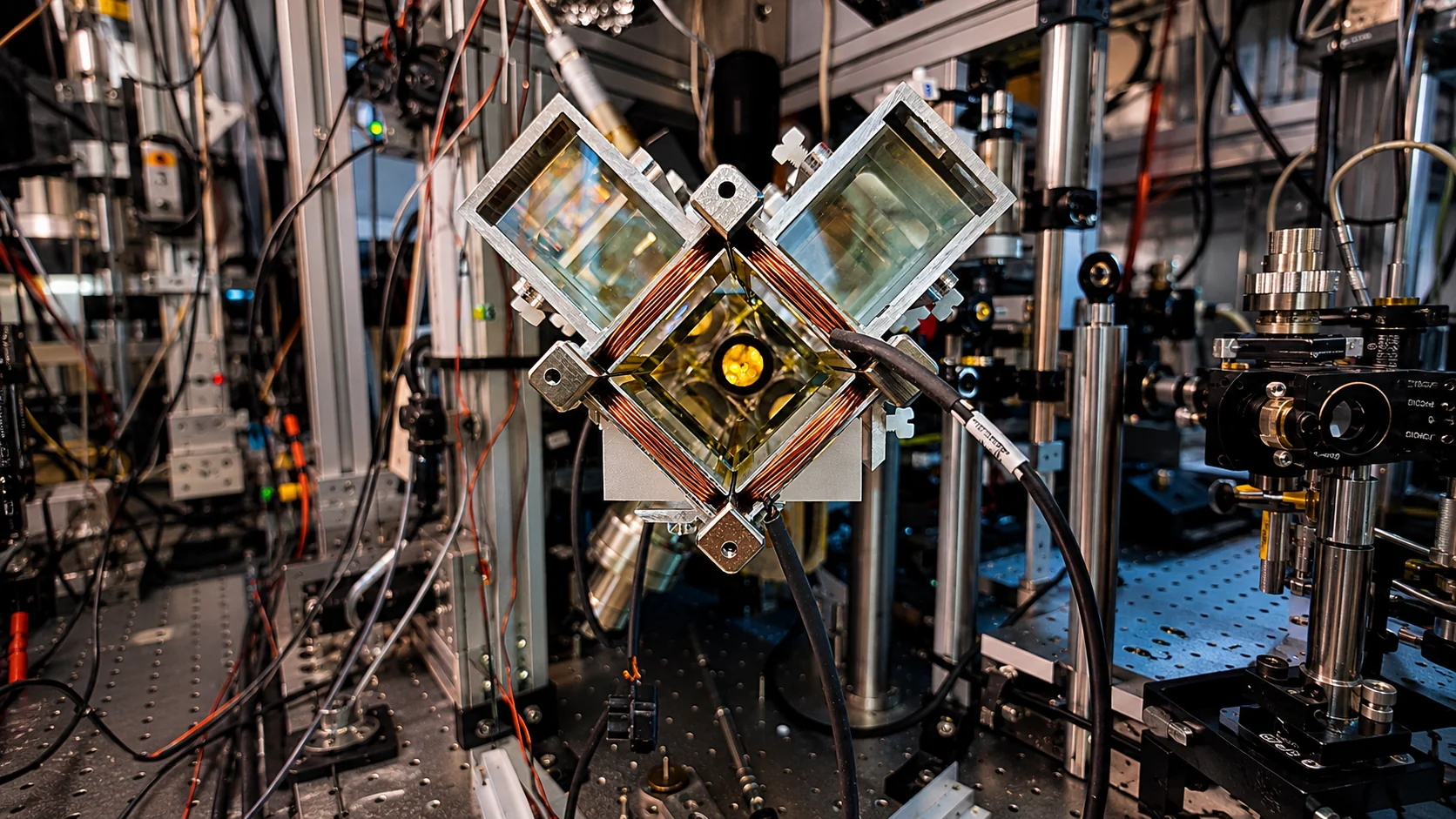
Physicists in Israel measured the quantum phase of a free-falling atom for the first time, confirming Einstein's equivalence principle in the quantum realm.
A Reshaped Pulse Could Cut Magnetic Memory's Switching Energy Nearly 100-Fold
Edinburgh physicists simulated optimal-control pulses that cut magnetic-memory switching energy from 91.2 to 0.94 nanojoules, still unverified in hardware.
LUX-ZEPLIN's 248 keV Event: A Single Signal Reopens the Dark Matter Hunt
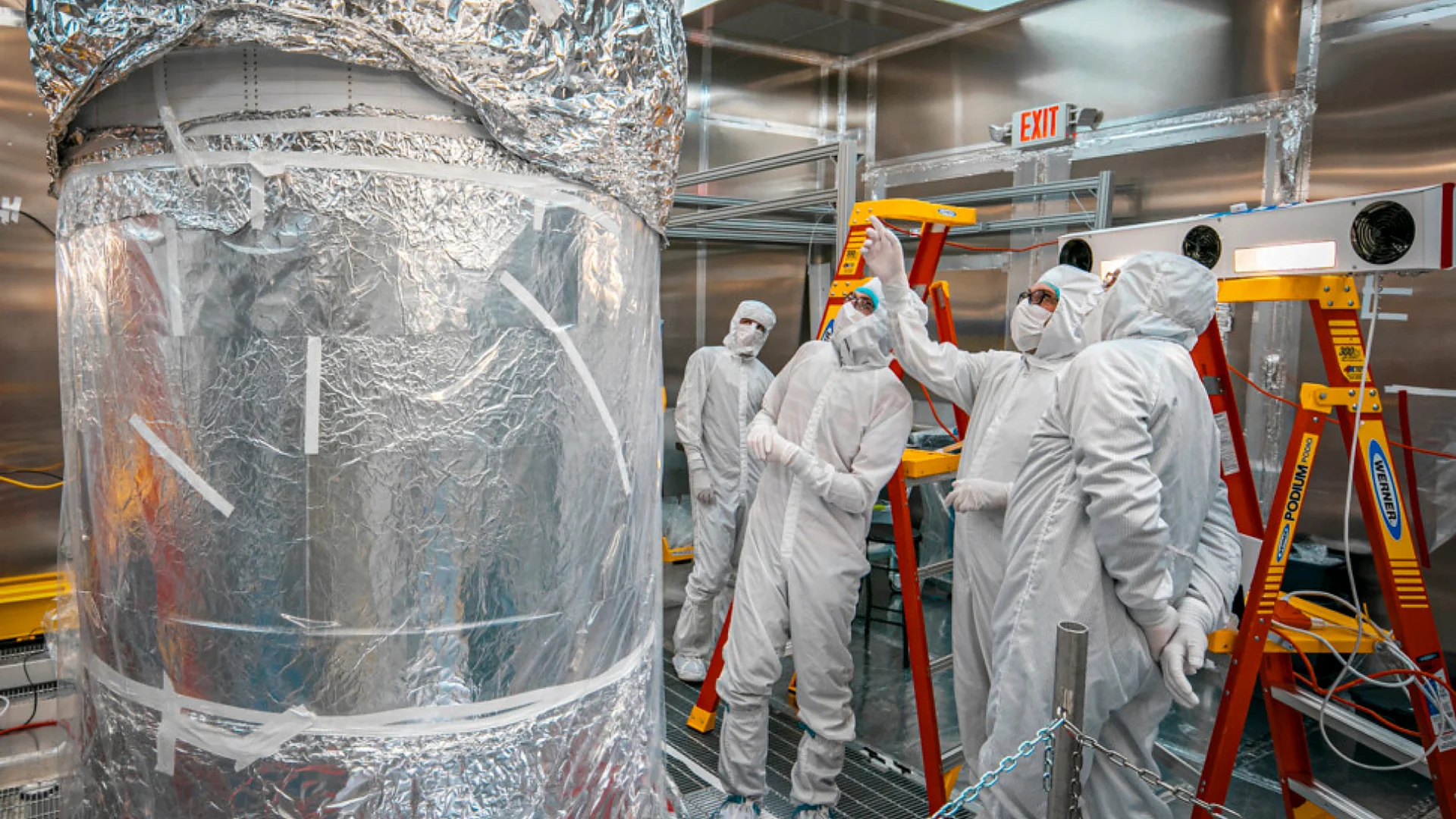
LUX-ZEPLIN recorded one 248 keV xenon recoil at 2.6σ global significance, its strongest dark matter hint yet, and theorists are already racing to explain it.
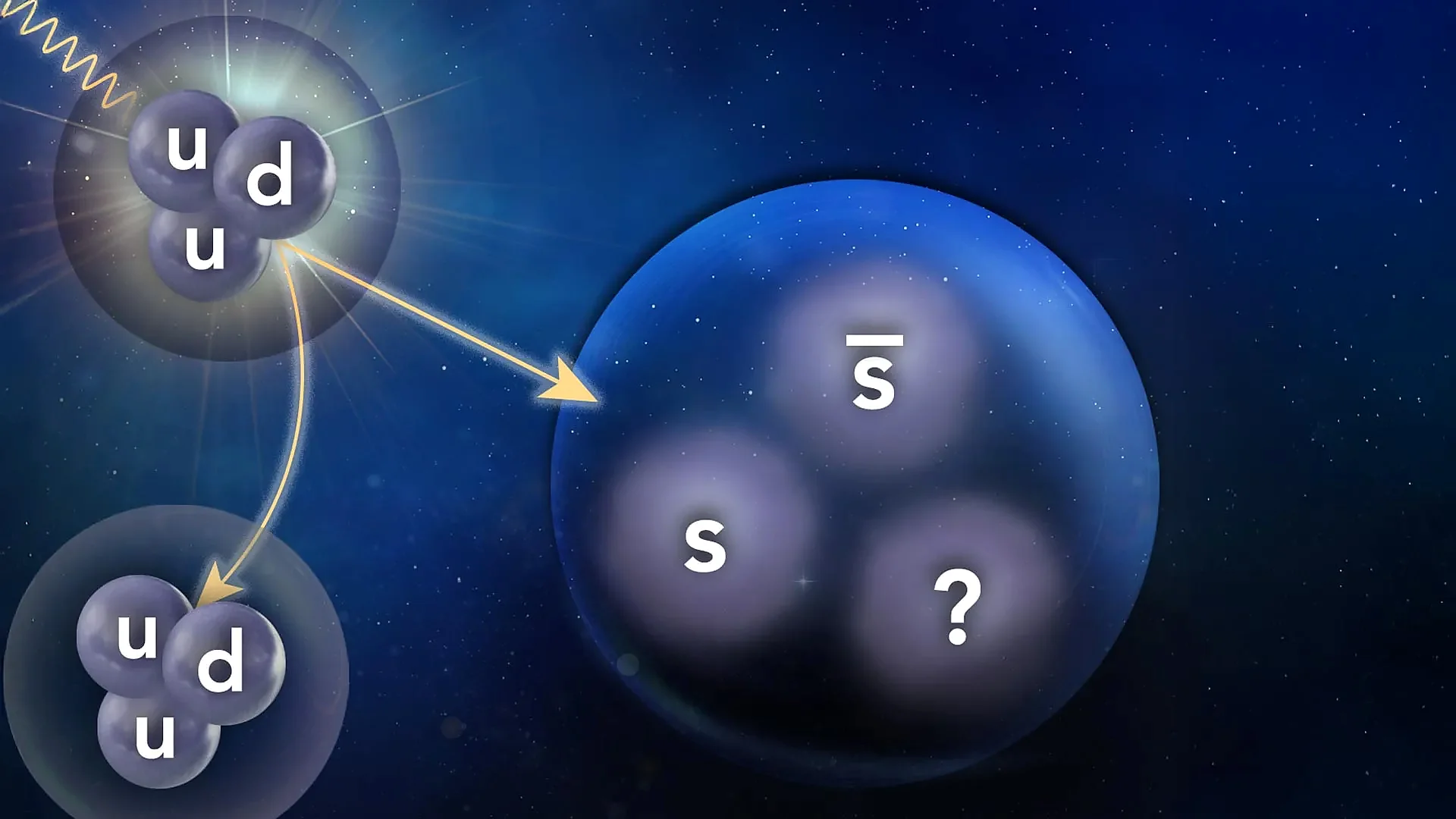
GlueX Searched for Y(2175) in Photoproduction and Found Two New Structures Instead
GlueX ran the first photoproduction search for Y(2175)/φ(2170); the state didn't appear, but two unexpected φπ+π− structures did, one at 5σ significance.
Comments (0)
Please sign in to join the discussion.
No comments yet.
Be the first to share your perspective on this topic.