
Three announcements converging in mid-2026 point to the same shift: quantum computing is moving past isolated demonstrations and toward the manufacturing capacity, funding, and workforce infrastructure a commercial industry actually needs.
Quantinuum's Helios Narrows the Gap to Record-Low Gate Error Rates
Quantinuum has launched Helios, a 98-qubit trapped-ion quantum computer that, according to a detailed look at the Helios launch, matters less for its qubit count than for pairing that scale with unusually high fidelity. Its two-qubit gates average an error rate of about 7.9 in 10,000 operations, approaching a reported industry record of 5 in 10,000.
That gap matters practically. Quantum circuits chain many gate operations together, so a lower per-gate error rate doesn't just look better on a spec sheet — it compounds. A processor running thousands of sequential two-qubit gates accumulates far less total noise at 7.9 errors per 10,000 than it would at, say, double that rate, which is part of why Helios was able to run random circuits considered extremely difficult to simulate classically.
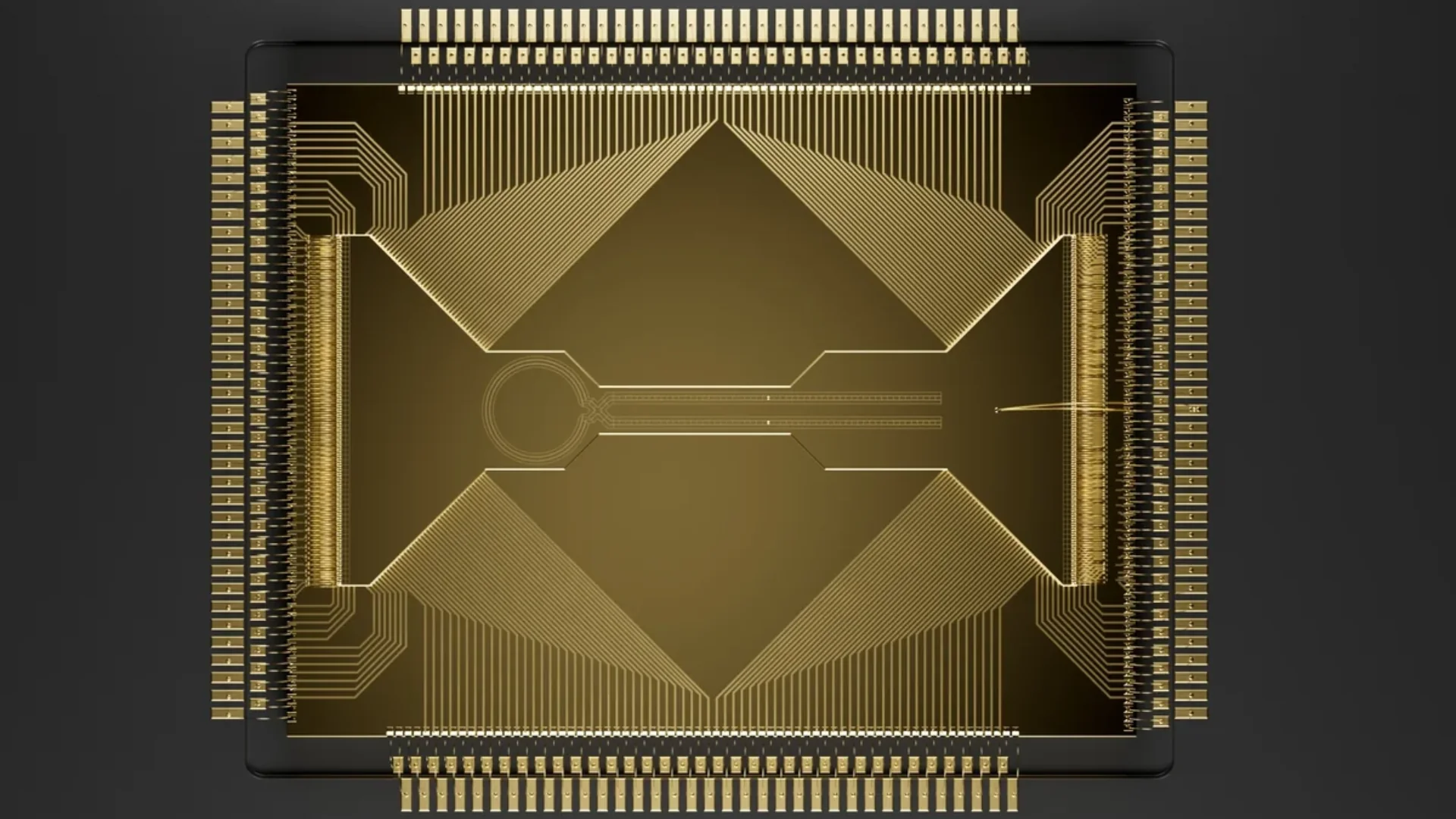
Helios also uses "all-to-all connectivity," meaning any qubit can interact directly with any other rather than only its physical neighbors on a fixed grid. Quantinuum achieves this with an architecture the company describes as a "quantum railway": charged ions held by electric fields are physically routed through a ring-shaped storage loop and junctions into operation zones targeted by lasers. The chart below shows how close Helios's error rate now sits to the reported record.
IBM's $10 Billion Bet Shifts Quantum's Bottleneck From Qubits to Wafers
IBM has committed more than $10 billion over five years across R&D, capital expenditure, and manufacturing-ecosystem scaling, according to IBM's account of its scaling plan. Part of that commitment funds Anderon, a newly spun-off silicon wafer foundry backed by $1 billion from IBM and $1 billion from the Trump administration. Anderon will manufacture and sell quantum processor wafers to IBM and to competing hardware makers — a move that treats wafer supply, not qubit design, as the near-term constraint on scaling. That framing connects to the wafer-manufacturing buildout behind IBM's chip roadmap and to federal equity stakes in quantum computing firms, both of which point to the same pattern: public money increasingly underwrites the physical infrastructure layer of quantum computing, not just the research.
IBM builds on superconducting qubits, which trade fidelity for speed and manufacturability. They're more prone to environmental noise and decoherence and require cooling to near absolute zero, but they run faster and scale more readily on silicon than trapped-ion systems do. IBM already operates more than 90 cloud and on-site systems and a network of 340-plus members, including Cleveland Clinic and RIKEN, and says it expects to demonstrate commercial quantum advantage in late 2026. Longer term, the company is targeting Starling in 2029 — described as the first large-scale, fault-tolerant quantum computer running 20,000 times more operations than today's fleet — followed by Blue Jay in 2033, a 2,000-qubit system running a billion operations. None of these three milestones has occurred yet; each is a company-stated target.
A South Side Steel Mill Becomes Illinois's Quantum Manufacturing Anchor
On Chicago's South Side, a former 20th-century U.S. Steel mill site is being redeveloped into the Illinois Quantum and Microelectronics Park, backed by $500 million in state funding marshaled by Gov. JB Pritzker, according to reporting on the Illinois campus. The project targets a community that never fully recovered from steel mill closures in the 1980s and '90s.
The strategy is explicitly a leapfrog play: Chicago largely missed the digital-tech boom that built up Silicon Valley and Seattle, so local leaders are instead betting on existing regional research assets — the University of Chicago, the University of Illinois Urbana-Champaign, Argonne National Laboratory, and Fermilab — to anchor a quantum-era campus rather than starting from scratch. That's a narrower, more defensible bet than general economic-development boosterism, since it leans on infrastructure that already exists rather than assets the region would need to build.
PsiQuantum is delivering parts for one of the world's largest quantum computers to the site this summer, and IBM is installing its own system there, aiming to build a 750-person research and consulting hub by 2030. The push is reinforced nationally: President Trump signed two executive orders in late June 2026 aimed at accelerating domestic quantum technology development. The jobs and delivery figures below are projections tied to a campus still under construction, not completed outcomes.
Trapped Ions and Superconducting Circuits Are Racing Toward the Same Finish Line
Read together, these three stories aren't really about which qubit technology wins. Quantinuum's trapped-ion approach and IBM's superconducting approach are different answers to the same tradeoff: fidelity and connectivity against speed and manufacturability. Trapped ions, physically shuttled between operation zones, currently offer lower error rates and connectivity that isn't limited to a fixed grid. Superconducting circuits run faster and scale more easily on silicon wafers, but they're noisier and need cooling infrastructure that trapped-ion systems don't require to the same degree.
Neither company has yet demonstrated the kind of fault-tolerant, economically meaningful quantum advantage both are building toward. IBM's own commercial-advantage target is still months away, and its 2029 and 2033 systems remain unbuilt. What has changed is where the money and infrastructure are going: manufacturing capacity through Anderon, workforce and lab space through the Illinois park, and hardware refinement through systems like Helios. For practitioners evaluating these platforms today, the near-term question isn't which architecture ultimately prevails — it's which one offers reliable enough performance, right now, for a specific workload.
How Quartz Watches Actually Work, and Why Mechanical Watches Still Sell
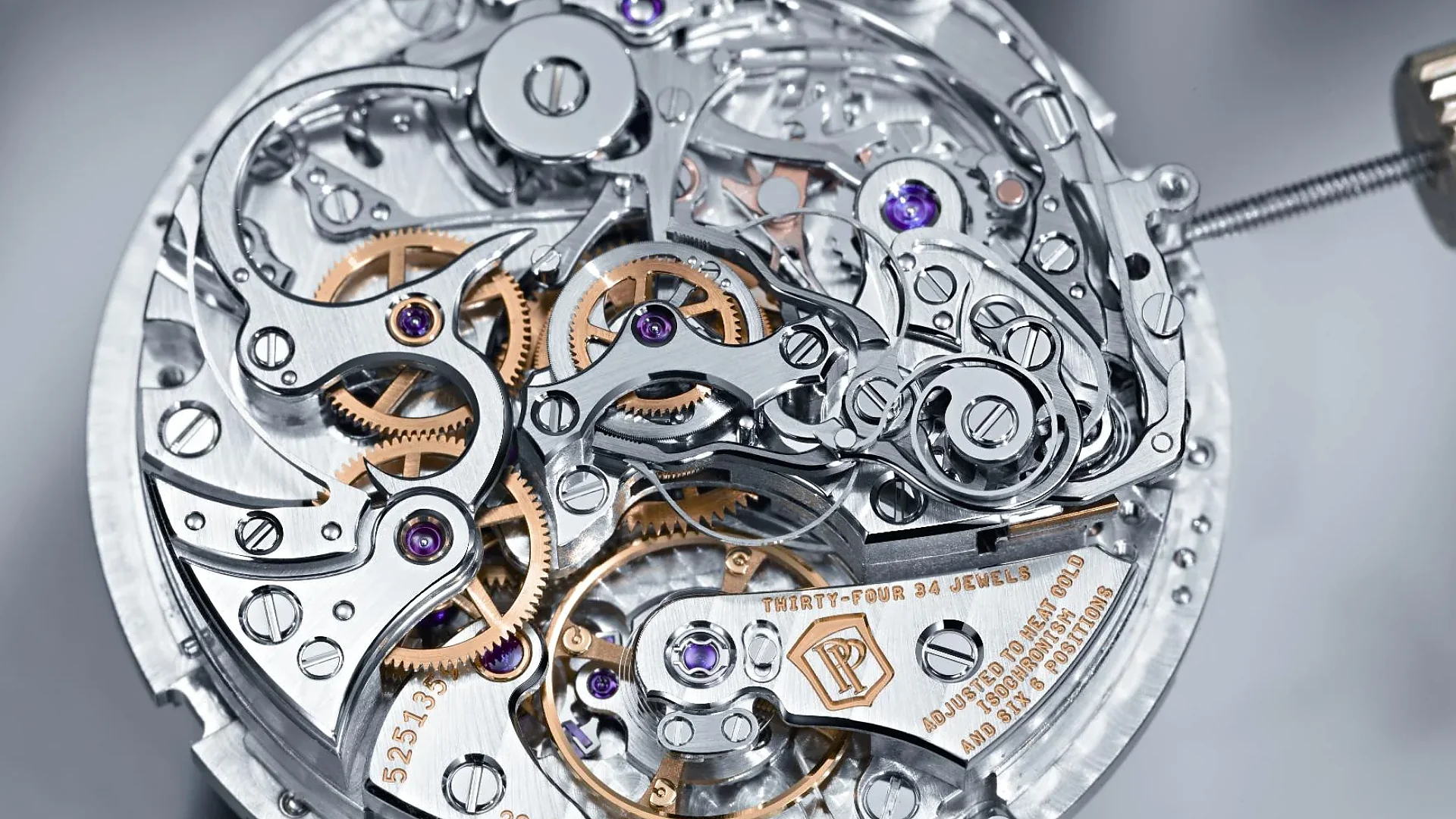
A quartz crystal oscillating at 32,768 Hz, divided into one pulse a second, keeps quartz watches accurate to seconds a month, mechanical still costs more.
IonQ's Revenue Jumped 287% in Q2 2026, but Its Stock Is Still 47% Below Its High
IonQ's Q2 2026 revenue rose 287% to $80.1 million and guidance climbed to $280-$290 million, yet IONQ shares still trade 47% below their October peak.
IBM 0.7nm Chip: What Nanostack Changes for AI Hardware
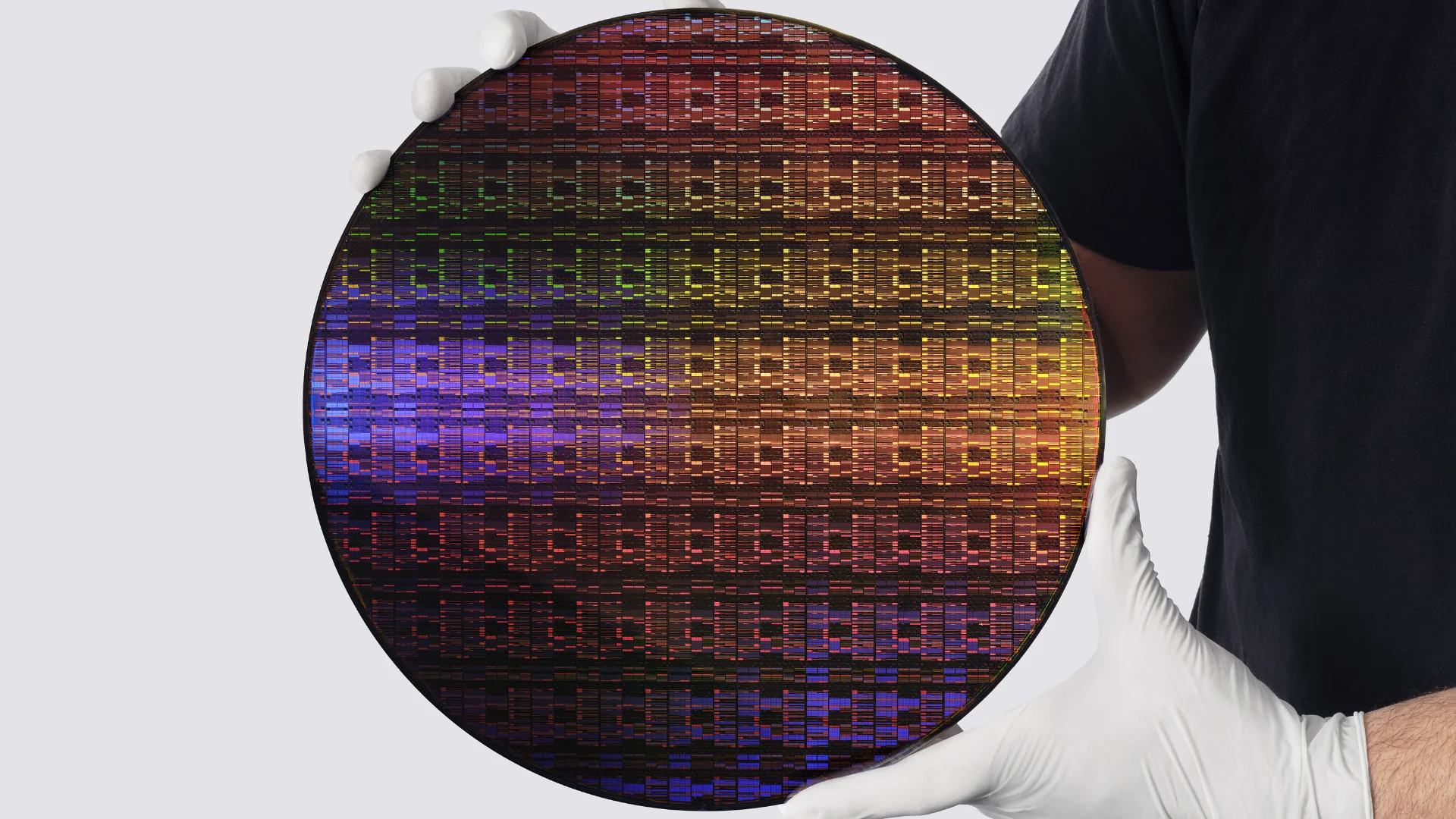
IBM's Nanostack architecture stacks transistors in 3D at 0.7nm, doubling density over its 2nm node, with up to 50% performance gains or 70% energy efficiency gains and a 5-year path to commercial production.
Comments (0)
Please sign in to join the discussion.
No comments yet.
Be the first to share your perspective on this topic.